
Choosing the right laser power is key to transforming your wood projects from “good” to “exceptional.” From 20W to 40W and 100W, it‘s not just about cost—it’s about whether you‘ll easily engrave thin veneers or confidently cut through solid hardwood. This guide breaks it down clearly, helping you match the perfect beam to your creative vision.
| Dimension | 20W Engraver | 40W Engraver | 100W+ (Fiber) |
| Primary Use | Creativity & Thin Cuts | Efficient Production | Mass manufacturing |
| Wood Cutting | Softwoods ≤15mm | Softwoods ≤25mm Hardwoods ≤12mm | Thick Panels >20mm+ |
| Processing Speed | Slower / Prototypes | Fast / Small Batch | Ultra-Fast / Line |
| Target User | Hobbyists / Start-ups | Small Biz / Workshops | Factories / Shops |
| Investment Insight | Low-Cost Trial | Value & Output | High-Volume ROI |
20W Laser Engraver for Wood
The 20W-class laser engraver represents an optimal entry point for woodworking hobbyists and small-scale producers, offering a balance of capability and affordability. Modern advancements have significantly elevated its performance, bringing industrial-grade precision and cutting power to the desktop.
Core Technology
Most contemporary 20W-class systems for wood utilize multi-diode blue laser technology (wavelength ~450-455 nm). It’s important to understand that the “20W” designation typically refers to the combined electrical input power of multiple laser diodes, with the actual optical output power being lower.
The landscape is evolving with hybrid systems. A prime example is our MAXWAVE MW-F25CA Dual-Source Laser Marker. It integrates a high-performance blue diode laser module alongside a fiber laser source in one platform. This innovative design allows users to switch between wavelengths, enabling not only deep engraving and cutting of wood and other organic materials with the blue laser but also direct marking on metals and plastics with the fiber laser, offering exceptional versatility from a single machine.
Performance Specifications: Precision & Speed
For detail-oriented work, 20W-class machines deliver high precision. Typical systems achieve a laser spot size around 0.07×0.13 mm, suitable for intricate patterns and fine text. Movement speeds can reach up to 25,000–36,000 mm/min, ensuring efficient processing while maintaining accuracy.
Cutting Capacity
Cutting performance depends on beam quality, focus, and material.
-
Single-Pass Cutting: A robust 20W-class diode laser can typically cut through 10–15 mm of softwoods like basswood or pine in a single pass under optimal conditions.
-
Multi-Pass Cutting: For thicker materials, the capability can be extended. By employing multiple, slower passes, these systems can process wood sections of 20–25 mm or more, making them suitable for a wide range of craft and prototyping projects.
The modern 20W-class laser engraver, especially versatile dual-source models like the MAXWAVE MW-F25CA, provides a powerful and flexible foundation for woodworking. It successfully bridges the gap between basic engraving and serious material processing, making professional-grade results accessible for workshops and small businesses.

40W Laser Engraver for Wood
Market Position
The 40W-class laser engraver represents the definitive entry point into professional-grade wood processing. It successfully bridges the gap between hobbyist equipment and industrial machinery, offering substantial cutting depth, high production speeds, and robust reliability—all at a compelling price-to-performance ratio that empowers small businesses and serious workshops to scale their operations.
Core Technologies
At the 40W level, two primary and complementary technologies dominate the market, each with distinct advantages for woodworking:
-
High-Power Diode Laser Systems: These represent the cutting edge in desktop laser technology. By integrating arrays of multiple high-efficiency laser diodes, they achieve a combined output of 40W at a wavelength (~450 nm) that wood absorbs exceptionally well. This results in an ultra-fine focused spot, enabling exquisite detail in engraving and precise, clean cuts, even on intricate designs. Their modern drive systems also allow for significantly faster movement speeds compared to traditional options.
-
CO₂ Laser Systems: Utilizing a mature and proven 40W glass tube technology that emits an infrared beam (10.6 µm wavelength), these systems offer exceptional versatility. The longer wavelength interacts effectively with a broader range of materials beyond wood, including acrylic, leather, and fabric. CO₂ lasers typically provide a larger work area and excel at deep, consistent engraving and cutting, making them a reliable all-purpose choice for diverse workshop needs.
For woodworkers, the choice often comes down to prioritizing maximum detail and speed (Diode) versus broader material versatility and proven all-purpose reliability (CO₂).
Performance Specifications & Cutting Capacity
The 40W power level delivers a significant performance leap, enabling true small-scale production.
-
Precision & Speed: Modern diode systems achieve laser spot sizes as fine as 0.08×0.10 mm for high-detail engraving, with maximum travel speeds reaching up to 30,000 mm/min. CO₂ systems offer strong engraving speeds (typically around 18,000 mm/min) over larger work areas (commonly 300×200 mm / 12″x8″).
-
Wood Cutting Capacity: The 40W laser excels in wood cutting capacity. It can cut through 18–25 mm softwoods (e.g., pine, basswood) in a single pass, and handle 6–12 mm hardwoods & plywood with an efficiency several times greater than lower-power machines.
A 40W laser engraver is a transformative tool for woodworking businesses ready to move beyond prototyping into consistent production. Whether you choose the detail-oriented speed of a high-power diode system or the versatile reliability of a CO₂ laser, this power class provides the robust capability needed to handle demanding custom orders and increase output with professional finish quality.

100W Laser Engraver (Fiber/MOPA) – Wood Compatibility Analysis
Market Position
The 100W-class Fiber and MOPA laser markers are unequivocally engineered for industrial-grade metal processing, offering unparalleled precision, speed, and longevity for applications in manufacturing, tooling, and aerospace. While exceptional for metals, it is crucial to understand that their fundamental physics makes them inefficient and generally unsuitable for processing wood and other organic materials.
Core Technology & Material Interaction
These systems utilize a 1064 nm wavelength solid-state fiber laser source. This near-infrared light is highly absorbed by metals and many plastics but is poorly absorbed by natural materials like wood. Wood primarily interacts with shorter wavelengths (e.g., the ~450 nm of blue diode lasers or the 10.6 µm of CO₂ lasers).
-
Beam Quality: Features exceptional beam quality (M² < 1.0), enabling a near-perfect, diffraction-limited focus spot as fine as ~0.01 mm. This is the foundation of its extreme precision.
-
MOPA Flexibility: MOPA (Master Oscillator Power Amplifier) configurations provide advanced control over pulse parameters, allowing for a wide range of effects on metals—from high-contrast annealing and color marking to deep engraving—by finely tuning energy delivery.
Performance Specifications (For Intended Applications)
This technology is designed for maximum productivity in its domain:
-
Speed: Achieves marking speeds up to 10,000 mm/s, far surpassing the capabilities of gantry-based diode or CO₂ systems.
-
Reliability & Lifespan: Built as air-cooled, solid-state systems with no consumable tubes, they offer extreme durability with a mean time to failure (MTTF) often exceeding 70,000 hours.
-
Work Area: Typically employs a high-speed galvanometer scanner for beam steering, ideal for small to medium-sized work areas (common ranges from 110×110 mm to 300×300 mm), perfect for serial numbers, logos, and precision parts.
Primary Applications and Wood Limitation
-
Ideal For: This is the optimal tool for precision marking, engraving, and thin-section cutting of metals (steel, aluminum, brass, titanium, precious metals) and engineered plastics. It excels at creating permanent, high-contrast identifiers like barcodes, serial numbers, and detailed graphics on industrial components.
-
Not Suitable For: Attempting to process wood with a 1064 nm fiber laser typically results in ineffective carbonization (burning) with very poor contrast, negligible engraving depth, and a high risk of uncontrolled fire. It cannot perform meaningful cutting or decorative engraving on wood. For wood, technologies like high-power CO₂ or advanced diode lasers are the correct and effective choices.
A 100W Fiber/MOPA laser is a specialized, high-performance instrument for metal and polymer marking. Its selection should be driven by a primary need for fast, precise, and durable metal processing. If your core business involves woodworking, this technology is not the appropriate solution. Investing in a laser system matched to your primary material—such as a high-power CO₂ laser for deep wood cutting and engraving—will ensure optimal results, safety, and return on investment.

Wood Laser Engraver Selection Guide: Matching Your Workshop Needs
Choosing the right laser power and type is crucial for successful woodworking. This guide helps you align the machine’s technical specifications with your core business needs by asking three key questions about your materials, workflow, and total budget.
1. Analyze Your Core Materials
The wood you work with most frequently dictates the required laser power and technology.
-
Material Thickness: This is the primary driver. Veneers and plywood under 3 mm require precision. Common panels of 3-18 mm form the bulk of many projects, while solid woods over 20 mm demand high-power systems.
-
Wood Species: The density of your wood significantly impacts efficiency. Softwoods (e.g., pine, cedar) cut more easily, whereas hardwoods (e.g., oak, walnut) can require 30-50% more power to achieve similar cutting speeds and depths.
-
Required Precision: Project needs vary. Tight joinery may require tolerances within ±0.1–0.2 mm, which benefits from higher-power systems with superior beam quality and accuracy. Decorative work often allows for more forgiving tolerances.
2. Define Your Primary Workflow
Understand how your machine will be used most of the time to prioritize key features.
-
Engraving-Focused Work: If over 70% of machine time is detailed surface marking or shallow carving, prioritize systems with a fine laser spot size and high engraving speed for optimal detail and efficiency.
-
Cutting-Focused Work: If profile cutting, drilling, or milling thick stock dominates, prioritize sustained high power and robust thermal management to maintain speed and quality without system strain.
-
Priority Ranking: Decide the hierarchy of speed, precision, surface finish, and ease of setup for your typical projects. For example, a craft studio may value finish quality over raw speed, while a production shop needs repeatability and throughput.
3. Plan for Your Total System Budget
The laser marking machine is only part of the investment. A realistic budget must include all necessary ancillary systems.
Total Cost of Ownership: The equipment itself typically represents 60-70% of the initial outlay. A complete budget should also encompass mandatory safety and support systems.
Critical Support Systems:
-
Dust & Fume Extraction: Essential for safety, air quality, and laser performance. Systems range from smaller units to industrial-scale extractors and represent a significant line item.
-
Safety & Compliance: Costs for fire suppression, ventilation, and protective equipment are not optional extras but necessary investments, often adding 10-15% to the base setup cost.
By honestly assessing your materials, workflow, and full financial commitment, you can move beyond guesswork and select a laser system that truly fits your workshop’s capabilities and growth ambitions.
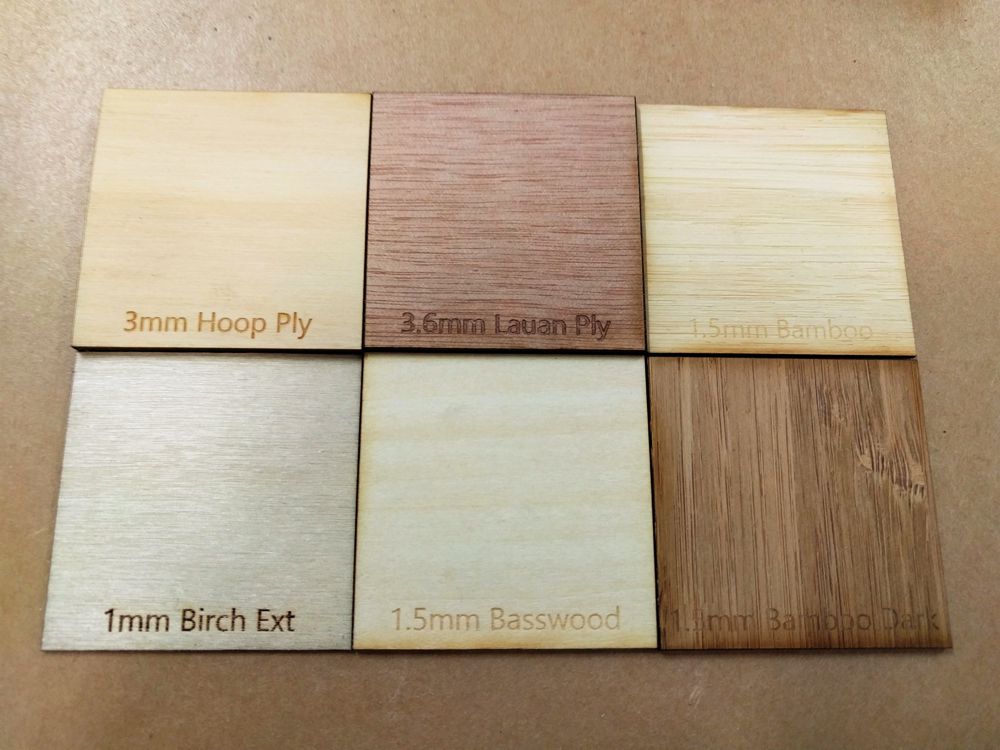
Final Recommendations: Choosing Your Wood Laser Power
Selecting the ideal laser engraver is about aligning power with your real-world production needs, not future aspirations. Each power tier solves distinct problems and carries its own trade-offs. Your decision should be firmly based on current order volume, materials, and budget, enabling you to invest in capability, not overcapacity.
The 20W Engraver: Creative Agility with Deliberate Limits
-
Core Proposition: The affordable gateway to laser precision, prioritizing creative freedom and low-risk experimentation over heavy-duty cutting.
-
Ideal For: Hobbyists, artists, and start-ups focusing on surface engraving and etching on thin materials like paper, cardstock, thin wood veneers (≤2-3 mm), leather, and acrylic.
-
The Trade-off: You gain low upfront cost, simplicity, and a gentle learning curve. You accept clear limits in cutting thickness, processing speed, and the ability to handle dense hardwoods or prolonged production runs.
-
Investment Logic: Perfect for testing ideas and handling occasional commissions where creativity is the primary driver, not throughput.
The 40W Engraver: The Versatile Production Partner
-
Core Proposition: The performance benchmark for serious hobbyists and small businesses, offering the optimal balance of capability, speed, and investment.
-
Ideal For: Micro-businesses and workshops with a steady order flow, requiring reliable cutting of 3-18 mm woods/acrylics and efficient batch engraving for products like custom signs, home décor, and文创 merchandise.
-
The Value: It dramatically increases throughput and material versatility compared to 20W models, transforming a creative pursuit into a viable side-income or core business tool.
-
Investment Logic: Choose this when you have consistent orders and need equipment that delivers dependable, daily productivity to meet customer deadlines and grow revenue.
The 100W+ Engraver: Industrial-Grade Productivity
-
Core Proposition: A capital investment for industrial-scale output, where high-speed, deep-cutting, and near-continuous operation are non-negotiable.
-
Ideal For: Small factories and professional shops engaged in high-volume contract manufacturing, requiring cutting of thick materials (20mm+) and operation over extended, multi-shift production cycles.
-
The Equation: It delivers the lowest cost-per-part and fastest ROI, but only when fed a high, consistent volume of profitable orders. It demands significant upfront investment, industrial-grade facilities, and higher maintenance.
-
Investment Logic: Justified only by pre-existing, high-volume B2B contracts or proven market demand that can utilize its capacity. The ROI is directly tied to order volume.
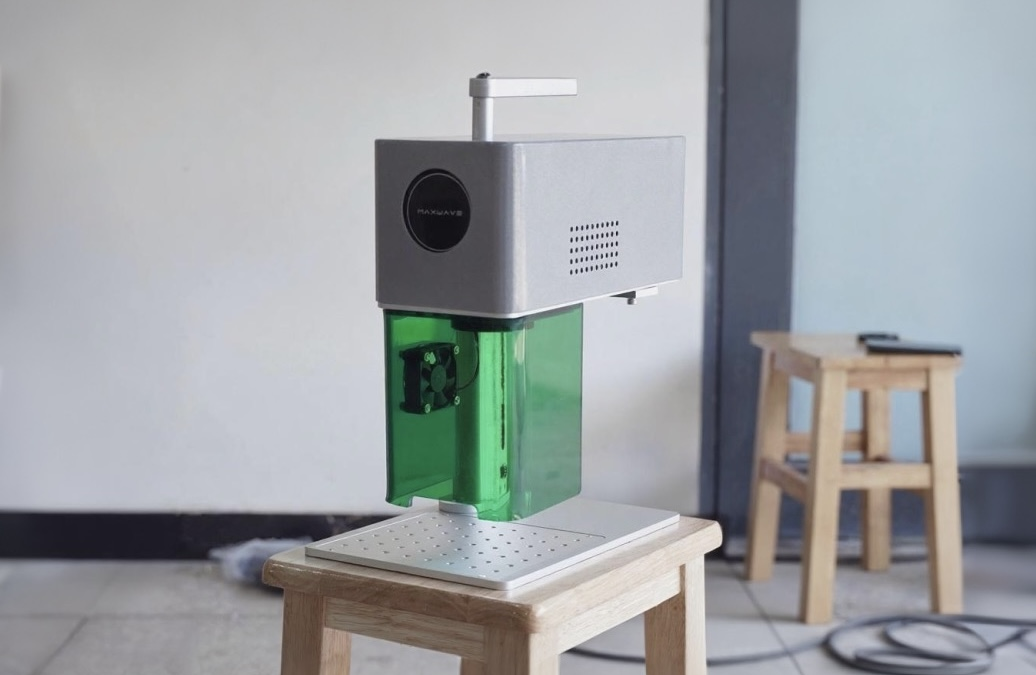
Summary
Choosing a laser engraver is about matching power to your real needs. 20W offers accessible creative freedom, 40W delivers reliable productivity, and 100W is engineered for industrial output. The right choice depends not on wattage alone, but on your projects and scale. Contact us now for a free sample test and a tailored solution, and let the right laser power drive your workshop’s growth.