How Does A Pulse Laser Cleaning Machine Work? Explained For New Users

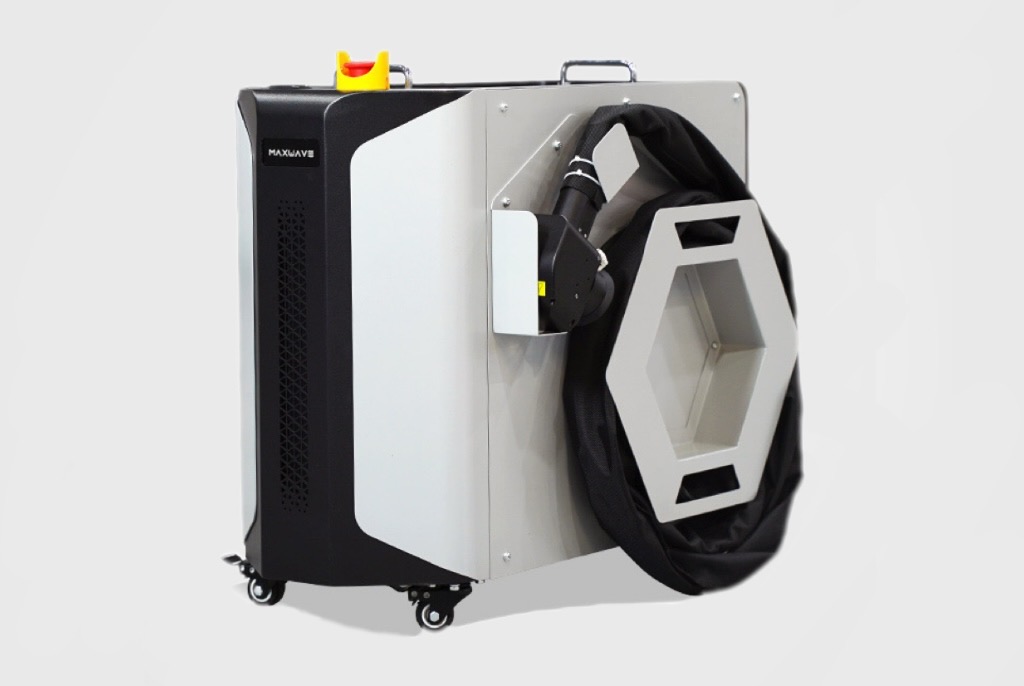
laser cleaning machine

If you’ve ever struggled with stubborn rust, paint, or coatings on delicate surfaces—worrying about chemical waste, slow progress, or damaging the material underneath—there’s a technology that changes the rules entirely. Pulse laser cleaning doesn’t just clean; it vaporizes contaminants with light, offering a contactless, precise, and eco-friendly solution that leaves the base material perfectly intact. This guide is designed for new users. We’ll cut through the complexity and clearly explain how this advanced machine works, from its core pulse technology to the simple steps for achieving a flawless clean. Discover how modern laser cleaning turns a challenging task into a controlled, efficient, and remarkably clean process.

What Is Pulse Laser Cleaning Technology

Pulse laser cleaning sends ultra-short bursts of focused light to vaporize surface dirt without damaging the base material. Each pulse lasts just nanoseconds—billionths of a second. Yet it carries enough peak power to break down rust, paint, oxides, oils, and industrial coatings through rapid heating.The system fires these pulses at the dirty surface thousands to tens of thousands of times per second. A pulse hits the dirt layer and the dirt absorbs the laser energy far more than the clean metal beneath. This selective absorption makes the unwanted material vaporize or flake away. The substrate stays cool and intact.

laser cleaning

Core Technology Behind Pulse Cleaning

Most industrial pulse cleaning systems use pulsed fiber lasers. They often use MOPA (Master Oscillator Power Amplifier) architecture for precise control. These systems work at near-infrared wavelengths around 1064-1070 nm. Metals absorb well at these wavelengths. Fiber laser technology has grown mature enough to deliver reliable, high-power performance.

The key operating parameters include:

  • Pulse duration: Ranges from 2 to 500 nanoseconds. Most industrial cleaners use 100-500 ns pulses depending on the job.

  • Average power output: Commercial units offer 100W, 200W, 300W, or up to 1000W for heavy-duty industrial work.

  • Single-pulse energy: Varies from 1.5 mJ in compact 100W units to 15 mJ in powerful 1000W systems.

  • Repetition rate: Adjustable from 1 kHz to 10,000 kHz. Lower frequencies deliver stronger cleaning per pulse. Higher frequencies enable faster surface coverage.

  • Cleaning width: Handheld scanning heads create cleaning stripes between 110-190 mm wide per pass.

The beam quality maintains an M² value of 1.5-2. This ensures tight focus and consistent energy density across the work surface. Short pulse duration, high peak power, and precise parameter control combine to give you the key advantage: minimal heat input to the substrate. This prevents warping, discoloration, or structural damage that plague thermal cleaning methods.

laser cleaning

Core Physical Principles of Pulse Laser Cleaning

The remarkable capability of pulse laser cleaning stems from the sophisticated interplay of three fundamental physical principles. Unlike traditional methods that rely on brute force or harsh chemicals, laser cleaning utilizes the precise energy of light to achieve a superior clean while safeguarding delicate substrates.

Thermal Ablation

This is the primary mechanism for tackling robust contaminants like heavy rust, thick paint, and industrial coatings. When a concentrated laser pulse strikes the surface, the contaminant layer acts like a sponge, rapidly absorbing the light energy and converting it into intense, localized heat. This causes the temperature to spike so quickly that the contaminant undergoes instantaneous expansion and vaporization, effectively blasting it away from the cooler, underlying material. The process is so fast that heat has no time to soak into the substrate, preventing thermal damage.

Photoablation

For delicate tasks—such as cleaning thin coatings, sensitive electronics, or historical artifacts—this mechanism is key. It operates on a different principle: the ultra-short, high-peak-power pulse delivers energy faster than the material can transfer heat. This directly breaks the molecular bonds within the contaminant, causing it to disintegrate into fine dust or gas in a controlled, “cold” process. The base material experiences negligible temperature rise, preserving its original structure, hardness, and finish with microscopic precision.

Shock Wave Effect

The rapid vaporization from thermal ablation creates a powerful secondary effect: a microscopic shock wave. Think of it as a tiny, controlled explosion at the point of laser impact. This shock wave propagates through the contaminant layer, generating shear forces that mechanically lift and detach any remaining or loosely bonded particles. This effect ensures a more thorough clean, leaving behind a smoother surface with minimal residual debris.

Together, these three synergistic phenomena explain why pulse laser cleaning is uniquely effective. It combines the power of heat, the precision of cold ablation, and the cleansing force of shock waves to remove virtually any unwanted layer without harming the valuable material beneath. This multi-mechanism approach is the core reason it outperforms and out-safeguards all conventional cleaning techniques.

100W JPT%E6%BF%80%E5%85%89%E5%99%A8%EF%BC%8811%EF%BC%89

An Intuitive Cleaning Walkthrough

Think of using a pulse laser cleaner as guiding a precise “light-speed sweep.” The machine handles the complex physics, while you simply direct the tool. Here’s how a typical job unfolds in four clear steps:

Step 1 – Preparation & Aiming

Start by identifying the base material (e.g., steel, aluminum) and contaminant (e.g., rust, paint). Based on this, select a suitable parameter preset from the machine’s interface. Then, aim the lightweight cleaning head at your target area.

Step 2 – Initiation & Scanning

Press the safety start button. The laser begins firing high-frequency pulses. Inside the head, high-speed scanners instantly move the beam across the surface at up to 35,000 mm/s, following a preset pattern (like lines or grids). You guide the head; the scanner handles the precise, rapid movements.

Step 3 – Cleaning Action

This is where the core science happens. The contaminant (like rust) absorbs the laser energy much more efficiently than the clean metal underneath. This selective absorption causes the unwanted layer to instantly vaporize or turn into fine dust. The underlying material remains cool and completely undamaged, as the process removes dirt with light, not force or extreme heat.

Step 4 – Inspection & Completion

Move the head to cover the area. Upon finishing, you are left with a visibly restored surface—free of residue, scratches, or damage, often revealing the original finish. The process is quiet, spark-free, and generates minimal non-toxic dust.

In short, the machine transforms your guidance into a hyper-fast, precise application of light that selectively strips away contaminants while protecting the valuable material beneath.

ff6c3420 679c 4477 b478 a7619855342b

Summary

Understanding the principle of pulse laser cleaning is just the beginning of appreciating its capability. It transforms light energy into precise cleaning force, fundamentally avoiding the environmental, health, and damage risks associated with traditional methods. From the lightweight ergonomic design and industry-leading scan speed to the intelligent cooling and control systems, an excellent laser cleaning machine is the key to translating these principles into reliable, high-efficiency productivity.Take the first step towards effortless precision—choose the laser cleaning machine designed for real-world success. Contact our team today for a free consultation.