A blank wall can be updated in many ways, but the best option depends on more than appearance.
Paint offers flexibility and a relatively low starting cost. Wallpaper introduces pattern and texture. Wall panels add architectural depth and can cover imperfect surfaces. Custom murals turn an ordinary wall into a unique focal point.
The right choice depends on the condition of the wall, the function of the room, the desired visual impact, the installation timeline, and how long you expect the finish to remain in place.
This guide compares the four most popular interior wall renovation ideas so you can choose a finish that works for the actual space—not only for an inspiration photo.
Paint vs Wallpaper vs Panels vs Custom Murals
|
Wall Finish |
Best For |
Relative Cost |
Installation |
Typical Strength |
Main Limitation |
|---|---|---|---|---|---|
|
Paint |
Budget-friendly updates, full rooms, changing color schemes |
Low |
Simple to moderate |
Easy to refresh and repair |
Limited texture and visual detail |
|
Wallpaper |
Patterns, decorative feature walls, residential interiors |
Low to medium |
Requires accurate alignment |
Wide range of colors and textures |
Seams, lifting edges, moisture sensitivity |
|
Wall panels |
Architectural depth, durability, acoustic or moisture-resistant walls |
Medium to high |
Usually requires cutting and fitting |
Can hide uneven walls and add physical texture |
Higher material and installation cost |
|
Custom murals |
Feature walls, branding, storytelling and highly personalized spaces |
Medium to high |
Depends on production method |
Maximum design freedom |
Requires careful artwork and wall preparation |
There is no single finish that is best for every room.
Paint is usually the most practical option. Wallpaper is strongest when pattern matters. Panels are best when depth and durability are priorities. Custom murals offer the greatest creative freedom.
What Should You Check Before Renovating a Wall?
Before selecting a finish, inspect the surface itself.
A decorative treatment cannot solve an active moisture problem, loose paint, unstable plaster, mold, or structural cracking. Covering these issues may temporarily improve the appearance, but the new finish may eventually peel, bubble, crack, or separate from the wall.
The wall should be clean, dry, and stable. Small holes and cosmetic cracks can usually be filled and sanded. Glossy coatings may need light abrasion, while dusty or porous surfaces may require primer.
The room’s function also matters.
A bedroom wall has different requirements from a restaurant entrance, office reception area, kitchen, bathroom, or busy retail space. Some walls need only visual improvement. Others must withstand frequent cleaning, physical contact, humidity, or changing commercial displays.
You should also decide whether the renovation is a short-term refresh or a long-term investment.
Removable wallpaper and simple paint changes make sense when the room may be redesigned again soon. Built-in panels, custom millwork, and permanent murals are more suitable when the design is expected to remain for several years.
Paint: The Most Flexible and Affordable Option
Paint remains the most common interior wall finish because it is affordable, widely available, and easy to update.
It works well across bedrooms, living rooms, offices, hallways, retail spaces, and most other dry interior environments. The range of colors is almost unlimited, and different finishes—such as matte, eggshell, satin, and semi-gloss—allow the same color to perform differently in each room.
Paint is especially useful when the goal is to brighten a room, unify several walls, or create a clean background for furniture, artwork, or architectural features.
It is also the easiest finish to repair. Small scratches and marks can often be touched up without replacing the entire surface treatment.
However, paint provides limited physical texture.
Color blocking, arches, geometric sections, stencils, and decorative painting can create more visual interest, but detailed patterns require additional labor and skill. Paint also highlights wall defects rather than hiding them, particularly when darker colors or glossy finishes are used.
When Paint Is the Best Choice
Paint is usually the right option when:
-
The renovation budget is limited;
-
The design may change again within a few years;
-
The wall is relatively smooth;
-
Easy maintenance and touch-ups are important;
-
Other features, such as furniture or artwork, should remain the main focus.
For many interiors, paint also works well as the base finish, while wallpaper, panels, or a mural are added to one selected wall.
Wallpaper: Best for Pattern and Decorative Texture
Wallpaper offers far more pattern and surface variety than ordinary paint.
It can introduce florals, geometric designs, linen textures, metallic effects, natural fibers, illustrations, or large-scale decorative imagery. This makes it particularly effective in bedrooms, dining rooms, living rooms, boutique hotels, and residential feature walls.
Wallpaper can create a finished, layered appearance without the labor required for hand-painted decorative patterns.
Peel-and-stick wallpaper provides a more flexible option for rented properties, temporary displays, children’s rooms, or spaces that are likely to change frequently. Traditional pasted wallpaper is generally more permanent and may provide better long-term adhesion when professionally installed.
The main challenge is installation quality.
Patterned wallpaper must be aligned accurately, and the seams between strips may remain visible under certain lighting conditions. Edges can also lift near windows, doors, or baseboards if the wall is dusty, damp, glossy, or poorly prepared.
Wallpaper is not always the best choice for humid rooms. Even when the decorative surface is washable, moisture may affect the adhesive or wall underneath it.
When Wallpaper Is the Best Choice
Wallpaper is most suitable when:
-
Pattern or decorative texture is a major design goal;
-
The wall is smooth and properly prepared;
-
The room has relatively stable humidity;
-
A feature wall needs more visual impact than paint can provide;
-
The design does not require a completely seamless finish.
Wallpaper works particularly well in residential interiors where the wall is viewed from close range and decorative detail matters.
Wall Panels: Depth, Durability and Architectural Character
Wall panels change more than the color of a wall. They add physical depth and architectural structure.
Common materials include wood, MDF, PVC, acoustic felt, laminate, metal composite, and decorative stone or concrete-effect panels. Designs may include fluted surfaces, vertical slats, large smooth sections, geometric relief, or traditional molding.
Panels are useful for hiding minor wall irregularities that would remain visible under paint or wallpaper. They can also conceal cables, create mounting surfaces, add acoustic control, or protect high-contact areas.
This makes them popular for TV walls, hotel rooms, offices, meeting spaces, corridors, retail interiors, and commercial reception areas.
Their main disadvantage is cost.
Panels require accurate measurement, cutting, alignment, edge finishing, and sometimes a supporting frame. Removing them later may also require more repair work than repainting or replacing wallpaper.
Some panel systems are moisture resistant, but the material and installation method must match the room. Standard MDF, for example, is not suitable for consistently damp conditions unless it has been properly treated.
When Wall Panels Are the Best Choice
Panels are a strong option when:
-
The wall needs physical depth rather than only color;
-
Durability is more important than low initial cost;
-
Minor surface defects need to be concealed;
-
Acoustic control or cable management is required;
-
The design is intended to remain in place for several years.
Panels work best when used selectively. Covering every wall with a strong texture may make a room feel heavy, while combining one paneled feature wall with painted surrounding walls usually creates better balance.
Custom Murals: Maximum Creative Freedom
A custom mural allows the wall to carry a specific image, message, atmosphere, or brand identity.
Unlike standard wallpaper or decorative panels, a mural can be designed around the exact wall dimensions, furniture layout, architecture, and intended audience.
Residential murals may feature landscapes, botanical illustrations, children’s themes, maps, abstract artwork, or personalized imagery. Commercial murals often include brand graphics, company timelines, local landmarks, product imagery, or photo-friendly feature walls.
The final result depends on the production method.
Hand-Painted Murals
Hand painting provides original brushwork, texture, and artistic interpretation.
It is a strong choice when the client values the artist’s style and wants a genuinely handmade result. However, the process can take several days or longer, depending on the wall size and level of detail.
Hand-painted murals are also more difficult to reproduce consistently across multiple locations.
Wallpaper Murals
A wallpaper mural is printed in sections and installed using adhesive.
It can reproduce photographs and illustrations with good detail, and the production process takes place away from the project site. However, the final image will normally include panel joints, and accurate installation is essential.
Vinyl Graphics
Vinyl is useful for logos, text, promotional graphics, and designs that may need to be removed or replaced.
It is commonly used in offices, retail stores, exhibitions, and temporary branded environments. Vinyl works best on smooth surfaces, but seams, edges, and adhesive performance must still be considered.
Direct Wall Printing
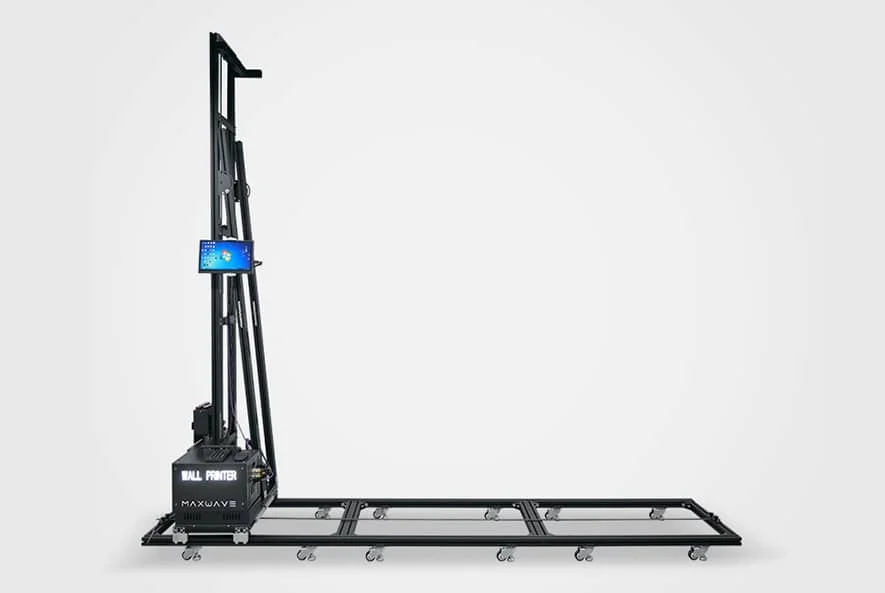
Direct wall printing uses a vertical wall printer to apply the image directly to the prepared surface.
The process does not require wallpaper panels, vinyl film, or large-scale hand tracing. This makes it possible to produce seamless photographs, illustrations, text, and brand graphics directly on the wall.
UV wall printers can work on a wider range of prepared materials, including painted walls, plaster, wood, glass, tile, brick, and concrete. White ink can be used beneath the image when printing on dark or colored surfaces.
Direct wall printing is especially useful when the design contains precise details, large photographs, gradients, logos, or artwork that would take much longer to reproduce by hand.
It can also improve consistency when the same design is required in several hotel rooms, retail locations, restaurants, or offices.
However, the wall must still be clean, dry, stable, and reasonably even. A wall printer cannot correct loose paint, severe cracks, moisture, or unstable plaster.
Direct wall printing removes wallpaper seams and adhesive, but professional artwork preparation and surface inspection remain essential.
Which Wall Finish Works Best in Each Room?
The best wall renovation idea depends on what the room needs to do.
Living Rooms
Living rooms usually benefit from one strong focal surface rather than several competing finishes.
Paint provides a calm base, while decorative panels or a mural can be used behind the television, sofa, or main seating area.
Wallpaper works well when the room needs softness, pattern, or traditional decorative detail. Large custom murals are more suitable when the wall should become the main feature of the space.
Bedrooms
Bedrooms often require a quieter visual atmosphere.
Soft paint colors, natural wallpaper, wood slats, or a restrained mural behind the bed can create interest without making the room feel overstimulating.
A mural can work particularly well in children’s bedrooms, where maps, animals, nature, space, and educational illustrations can be designed around the child’s age and interests.
Offices
Office walls can support branding, communication, and employee experience.
Paint provides a professional background, while acoustic panels improve both appearance and sound control. Reception murals, company timelines, values walls, and local city graphics can communicate identity more effectively than generic decoration.
Restaurants, Hotels and Retail Spaces
Commercial interiors often need a memorable visual anchor.
A custom mural can create a photo-friendly feature wall, support the venue’s theme, or make the brand more recognizable. Panels add durability and architectural depth, while washable paint is useful in areas that need frequent maintenance.
In these spaces, the selected finish should also fit the cleaning schedule, customer traffic, and expected renovation cycle.
Kitchens and Bathrooms
Moisture resistance and cleanability should come before decoration.
Washable paint, ceramic surfaces, moisture-resistant panels, and properly sealed materials are usually safer choices than standard wallpaper.
Murals may still be used in lower-moisture areas, but the wall, ink, adhesive, and protective coating must all be suitable for the environment.
How Should You Combine Different Wall Finishes?
Combining finishes can make a room feel more considered, but too many materials can quickly create visual clutter.
For most spaces, one dominant finish and one supporting finish are enough.
Useful combinations include:
-
Paint with one custom mural;
-
Paint with wood or acoustic panels;
-
Wallpaper with decorative molding;
-
Painted walls with a paneled television or reception wall;
-
A mural with plain surrounding walls.
Paint is usually the easiest base because it keeps the room visually calm and allows another material to become the focal point.
The finishes should share at least one color, texture, or design theme. A mural with warm earth tones, for example, will feel more integrated when the surrounding paint or panels repeat one of those colors.
Before committing, view material samples under both daylight and artificial lighting. Wallpaper texture, paint color, panel shadows, and mural contrast can all change significantly throughout the day.
The goal is not to use every available finish. It is to choose the smallest combination that creates the desired effect.

How Do You Choose the Right Wall Renovation Method?
Start with the wall condition and room function, then compare the visual result, budget, installation time, and maintenance requirements.
Choose paint when flexibility, affordability, and easy repair matter most.
Choose wallpaper when you want pattern and texture without adding physical construction.
Choose panels when the wall needs depth, durability, sound control, or partial concealment.
Choose a custom mural when the wall needs to communicate a specific story, image, atmosphere, or brand identity.
For a short-term update, removable materials may be more practical. For a long-term focal wall, a professionally installed panel system or custom mural may provide better value.
The right answer may also be a combination. A room can use paint across most surfaces, panels in one functional zone, and a mural on the main feature wall without feeling overdesigned.
Conclusion
Interior wall renovation is not only about covering an old surface. It is an opportunity to change how a room feels and how people experience it.
Paint offers the greatest flexibility at a relatively low cost. Wallpaper introduces pattern and texture. Panels provide physical depth and durability. Custom murals create the strongest sense of individuality and can turn a plain wall into the defining feature of a room.
The best choice depends on the wall condition, the room’s purpose, the desired lifespan, and the level of visual impact you want to achieve.
Considering a custom mural or direct wall printing project? Send MaxWave a photo of the wall, its material, dimensions, and your preferred artwork. The team can assess whether direct wall printing is suitable, recommend the right setup, and provide a sample or project quotation.