
Finding your favorite gold chain snapped is more than an inconvenience—it’s a panic-inducing moment. But before you rush to the nearest jeweler, you need to know this: how the chain is fixed determines if it keeps its original value or ends up looking like a cheap patch job. The choice usually boils down to two methods: the old-school torch welding and the modern laser welding. Most people only look at the upfront price tag, but the real cost involves labor, gold material charges, and the risk of damage. To save you money and heartache, we break down exactly what you’re paying for with each method.
Gold Chain Repair Comparison: Laser Welding and Traditional Repair
| Comparison Dimension | Laser Welding | Traditional Welding (Torch) |
| Repair Finish | Seamless, no finishing needed. | Visible seam, requires polishing. |
| Heat Impact | Minimal heat spread, safe for surroundings. | High heat spread, risk of damage. |
| Suitable Damage | Precise breaks & cracks. | Large gaps & deformation. |
| Material & Strength | No filler, near-original strength. | Requires solder, skill-dependent strength. |
| Repair Cost | $60-$150 | $160-$250+ |
| Best For | High-end, delicate, antique pieces. | Basic, thick chains, tight budgets. |
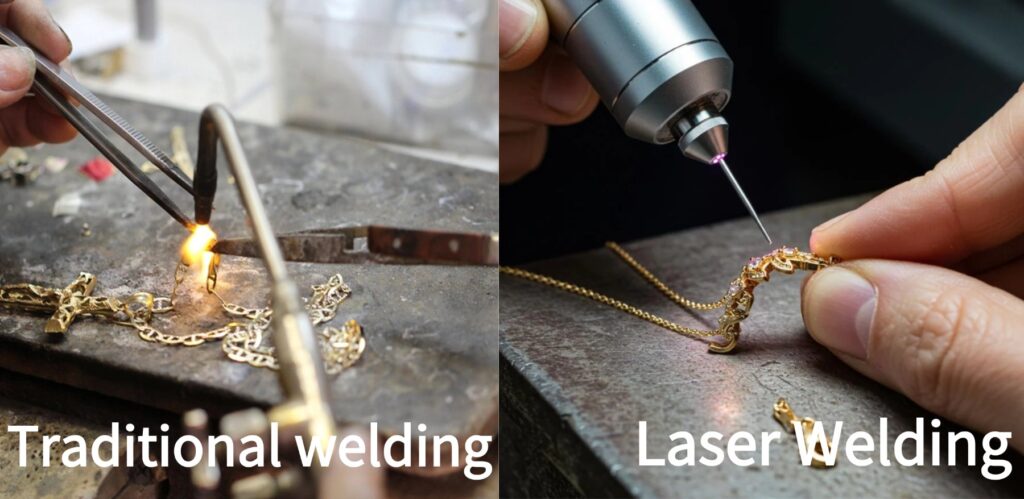
Gold Chain Repair Costs: Exploring Laser Welding and Traditional Repair Options
Understanding your repair quote starts with knowing what you’re paying for. The total cost isn’t a single magic number. For both traditional soldering and laser welding, the final bill is typically built from two parts: the base labor fee and the cost of gold materials. However, how these parts add up is completely different for each method.
Traditional Soldering:
The traditional soldering method uses a torch to join breaks, which requires adding new gold solder. Its cost structure combines a moderate labor fee with a significant material cost. Here’s how it works: while the jeweler’s labor charge is usually lower, the major expense comes from the weight of the gold solder needed to fill the gap. Given current 2025 market rates (approximately $85–$90 per gram), even a small amount of this filler gold adds a hefty premium to your final bill.
Real-World Examples:
-
A simple break on a standard chain: Labor ($30-$50) + a small amount of solder. Total: $160-$180.
-
Replacing a missing section (e.g., a damaged link): Labor ($50-$100) + cost of the new gold link itself (e.g., $80-$100+ depending on size and karat). Total: $180-$250+.
Laser Welding:
In contrast, laser welding is a high-tech method that employs a focused beam to fuse metal, typically without needing filler material. Its cost structure is characterized by a higher labor fee but negligible material cost. This is because you are paying a premium for the specialized skill and advanced equipment required. The key financial benefit lies in the process itself: the repair melts and rejoins the chain’s existing gold, so there is little to no expense for additional gold material.
Real-World Examples:
-
A simple break on a delicate chain: Precision labor ($60-$120). No gold cost. Total: ~$60-$120.
-
Fixing multiple thin breaks on a herringbone chain: Complex labor ($100-$200). Still no gold cost. Total: $100-$150.
All in all, while the precision labor for laser welding machine often carries a higher fee than traditional soldering, it eliminates the substantial cost of added gold. This method delivers a seamless, near-invisible repair, making it the superior choice for anyone who prioritizes aesthetics and preservation of the original piece. Importantly, when you consider the overall cost, the total price for a quality laser repair is frequently comparable to, and can even be less than, a traditional solder job that requires new gold material.

Traditional Welding vs. Laser Welding: An In-Depth Comparison
In the field of jewelry repair, traditional welding methods and laser welding technology each have their own characteristics, showing distinct differences in terms of repair effects and applicable scenarios.
Traditional Welding Methods
Advantages
-
Widely Adopted: Traditional welding technology has a long history of development and is extensively used in the jewelry industry. Most jewelry artisans are proficient in this technique, enabling them to quickly begin repair work.
-
Accessible Services: Due to its high prevalence, numerous jewelry stores and repair shops offer traditional welding repair services, making it convenient for consumers to find maintenance options.
-
Effective for Extensive Damage: For jewelry with significant gaps, severe deformation, or serious damage requiring substantial metal addition, traditional welding can effectively fill gaps and reshape the piece by adding solder, restoring its basic form.
Disadvantages
-
Large Heat-Affected Zone: During the heating process in traditional welding, heat distribution is relatively dispersed, resulting in a larger heat-affected zone. This can easily cause deformation in surrounding areas of the jewelry and may lead to loss of luster or even damage to nearby gemstones.
-
Visible Weld Seams: Welding often leaves noticeable weld seams that require subsequent grinding and polishing to blend as much as possible with the surrounding areas. Even so, it may still affect the jewelry’s aesthetics to some extent.
-
Alters Original Weight: Traditional welding typically requires cutting gold—using metal from other parts as solder—which changes the jewelry’s original weight. This is a significant drawback for collectible jewelry with strict weight requirements.

Laser Welding Technology
Advantages
-
Precise Localized Heating: Laser welder uses a high-energy laser beam as its source, focusing it to form a tiny heat-affected area for precise localized heating. The heat acts only on the welding spot without affecting surrounding areas, effectively preserving the jewelry’s original form and nearby gemstones.
-
Seamless/Minimal-Trace Repairs: Laser welding produces narrow, deep, and smooth weld seams with minimal spatter, enabling seamless or nearly trace-free repairs. This significantly reduces the need for subsequent grinding and polishing, resulting in more natural and aesthetically pleasing restored jewelry.
-
Mark Preservation: Due to its precise heating method, laser welding does not damage the jewelry’s original marks, such as brand logos or purity stamps. This is crucial for maintaining the jewelry’s value and authentication.
-
Wide Applicability: It is particularly suitable for repairing precious, delicate, or intricately patterned chains. Whether dealing with fine necklace chains or rings and bracelets with complex textures, laser welding handles them effortlessly, delivering excellent repair results.
High Cost-Effectiveness
In the past, the high cost of laser welding machines deterred many jewelry professionals. However, our company’s jewelry welding machine has now broken this barrier, priced at just $2,900. This competitive price makes it accessible for individuals who wish to purchase a machine for personal jewelry repairs, as well as for jewelry shops planning to start a business or upgrade their equipment. It allows them to easily leverage the advantages of laser welding technology, achieving quality repairs at a lower cost and enhancing their competitiveness and profitability.
In summary, while traditional welding methods have unique advantages in handling severely damaged jewelry, laser welding technology demonstrates stronger competitiveness and broader application prospects in modern jewelry repair, thanks to its precision, seamless results, mark preservation, and the high cost-effectiveness offered by our company’s products.
How to Choose the Right Gold Chain Repair Method?
When your gold chain breaks, most consumers focus on three critical questions: How much will it cost? Can it be fixed properly? And will there be a visible mark?In reality, the differences between repair methods can be massive.
Traditional welding usually relies on an open flame. While it may seem cheaper upfront, when used on delicate or fine chains, it often results in obvious solder marks, discoloration, or even damage to the link structure. These issues frequently only become apparent after wearing the chain for a while, creating hidden risks for both the appearance and durability of your jewelry.
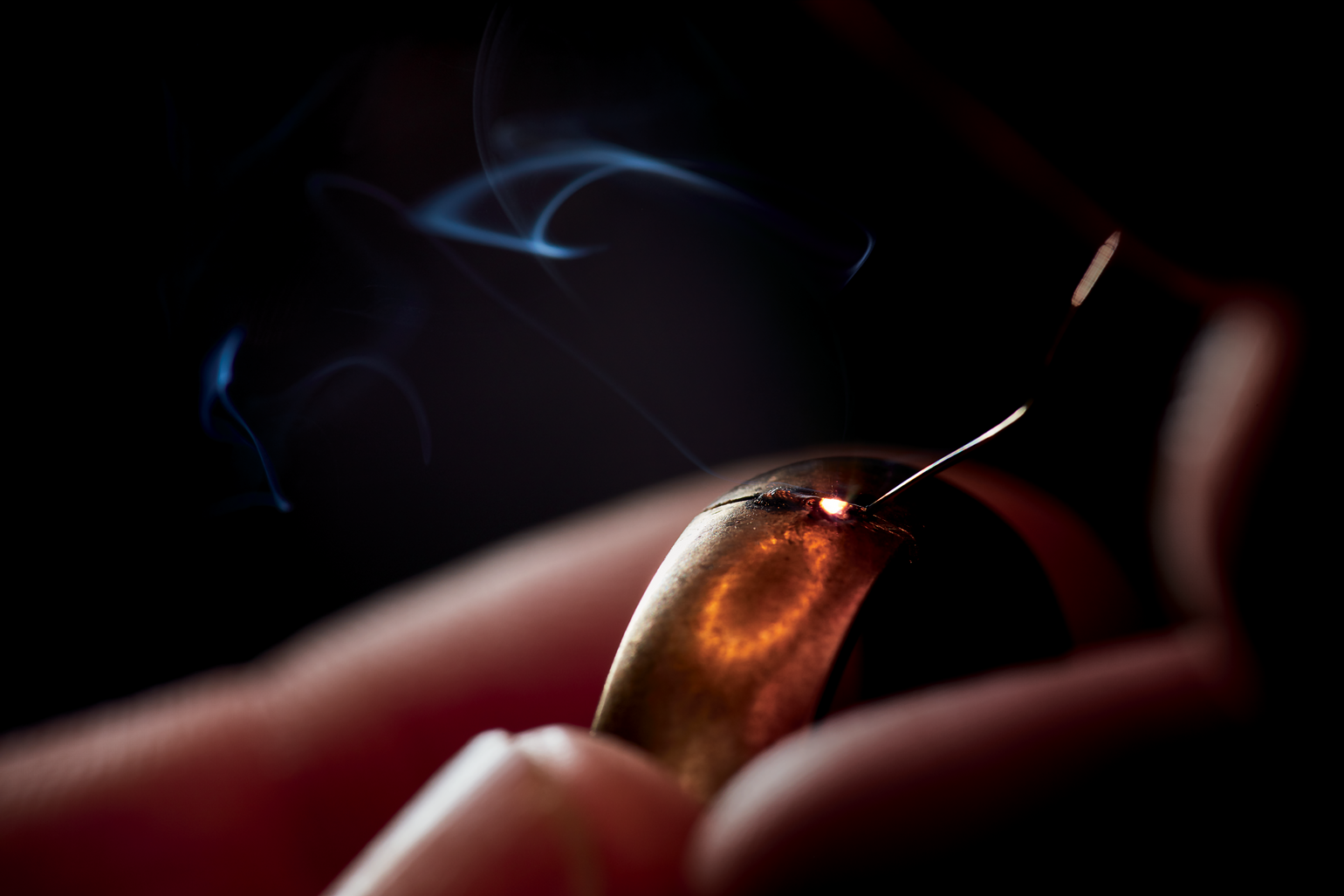
In contrast, Laser welding machine is a much more precise and safer repair solution. It works within an extremely small area, barely affecting the surrounding metal. As a result, it preserves the chain’s original luster and shape. The weld is nearly invisible, and the bond is strong and reliable—allowing you to wear your favorite piece with confidence, without worrying about it breaking again.

Conclusion
Stop paying high fees to jewelers for gold chain repairs. With a laser welding machine, you can fix breaks yourself—saving money on labor and avoiding the cost of buying extra gold solder. It’s the perfect solution for keeping your favorite pieces looking flawless. Plus, it’s a smart entry point for anyone looking to start a jewelry repair side hustle. The technology is now affordable and user-friendly enough for home use. Take control of your jewelry maintenance or kickstart a profitable new venture—buy your laser welding machine today and enjoy the benefits of invisible, DIY repairs.