
A common question in glass marking is whether laser technology is safe. The answer is clear: absolutely—when using proper equipment and following strict protocols. At our company, safety is not an add-on but the core of our laser design philosophy. Our modern, professionally engineered laser markers are built to reduce risk at the source, delivering a process that is not only safe but also clean and reliable.This guide outlines key safety principles, explains how smart design minimizes hazards, and offers practical steps to keep your glass marking both secure and efficient.
Understanding Laser Glass Marking and Glass Properties
Safety in laser glass marking is not a matter of chance, but a direct result of understanding the underlying physics and material science. This foundational knowledge empowers users to appreciate why specific safety measures are essential and how modern equipment is designed to address these inherent challenges.
How Laser Marking Works: Precision at the Micro Level
At its heart, laser marking is like using an incredibly precise pen of light. The laser beam focuses intense energy onto a tiny spot on the glass. What kind of mark appears—a frosted look, an engraved line, or an internal image—depends entirely on how the glass reacts to this energy.
-
The Heat-Based Method (CO₂ Lasers): The light from a CO₂ laser is easily absorbed by glass. This concentrated heat quickly melts or vaporizes a microscopic amount of material at the surface. It can also create tiny controlled cracks. This process leaves a visible, durable mark on the surface.
-
The Light-Chemical Method (UV Lasers): UV laser light carries more energy per photon. It works mainly by breaking the molecular bonds inside the glass itself, changing its structure very locally. Because it generates little heat, it’s often called a “cold process” and is great for delicate work.
The key to safe operation is control. All this powerful interaction must be precisely directed and confined strictly to the intended marking area.
The Material Challenge: Why Glass Demands Caution
Glass presents unique material properties that directly influence safe processing requirements. Its brittle nature and low thermal conductivity are the two most critical factors.
-
Thermal Stress Cracking: When heated rapidly by a laser, the glass surface expands. Due to poor heat conduction, the inner material remains cool and rigid, creating severe internal stress. If uncontrolled, this stress surpasses the material’s strength, causing cracks or fractures.
-
Surface Integrity: The goal of safe marking is to achieve the desired visual effect—whether a gentle frost or a deep engraving—while preserving the structural integrity of the entire piece, especially with thin-walled containers or tempered glass.
Understanding these properties explains why parameters like power, speed, and pulse duration must be carefully optimized, a process simplified by the preset parameters in our machine software.

Potential Safety Hazards & MAXWAVE’s Core Safety-Forward Design
While the application of laser marking machine in glass processing involves defined safety considerations, modern professional equipment can minimize these risks to very low levels through engineered solutions.
We will now analyze the three main hazard categories, with a focus on how MAXWAVE transforms each challenge into a reliable safeguard through its built-in safety architecture, enabling advanced manufacturing to achieve both superior performance and inherent safety.
Radiation Hazard
Potential Hazard: The invisible laser beam and its specular reflections from shiny surfaces can deliver intense energy to eye tissue or skin in milliseconds, causing permanent damage.
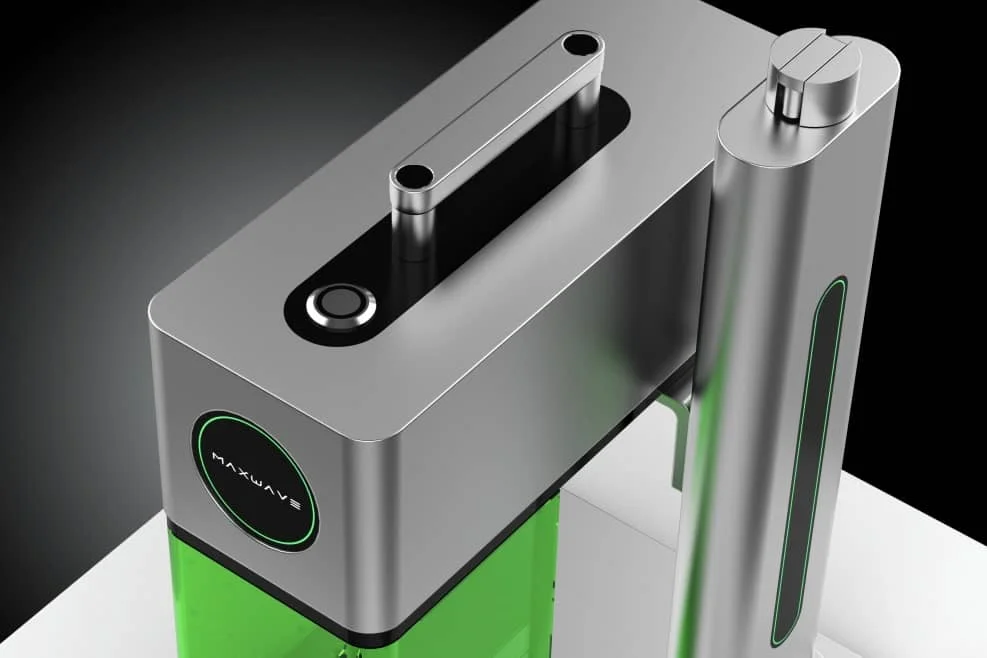
Maxwave Safety Design: Our primary and critical barrier is engineered containment. By utilizing fully sealed optical paths and access doors with fail-safe interlocks, we eliminate any risk of accidental beam exposure. Specialized viewing windows allow for safe process monitoring while completely blocking the specific laser wavelength.
Process Byproduct Hazard
Potential Hazard: The marking interaction can generate minute airborne particles, such as micro-fragments, sputtering molten material (especially in deep engraving modes), and fine plumes containing vaporized material and condensates.
Maxwave Safety Design: We control byproducts at the source through clean operation by design. High-efficiency processing and superior beam quality ensure maximum energy transfer to the mark itself, drastically reducing excess heat, smoke, or debris generation. Intelligent parameter control software with material-specific presets helps achieve perfect results without unsafe, excessive power settings.
General Operational Hazard
Potential Hazard: This includes electrical risks from high-voltage power supplies and capacitors, mechanical pinch-point risks from moving parts (e.g., gantries, galvo scanners, automated fixtures), and potential fire hazards from an unfocused or misdirected beam igniting nearby combustible materials.
Maxwave Safety Design: We provide built-in compliance and reliability assurance as your ultimate safety safeguard. All our machines are designed to meet or exceed stringent international safety standards and are verified through independent certification, ensuring operator protection is prioritized at every level of engineering and application.
Moving beyond add-on safeguards, MAXWAVE establishes a revolutionary safety architecture. It proactively transforms the three major hazards into three core safeguards: containment against radiation, optical excellence to minimize byproducts, and embedded compliance for operational safety. This allows us to deliver peak performance alongside inherent safety.
Laser Marking Safety Essentials: Protective Measures and Operational Protocols
Even the most advanced, inherently safe laser marker requires disciplined operation to complete the safety equation. Think of the machine’s built-in features as a secure fortress, and the user protocols as the essential protective moat surrounding it. This section details the critical operational practices and environmental controls that form this indispensable defense layer, ensuring safety is maintained every day.
The First Line of Defense: Personal Protective Equipment (PPE)
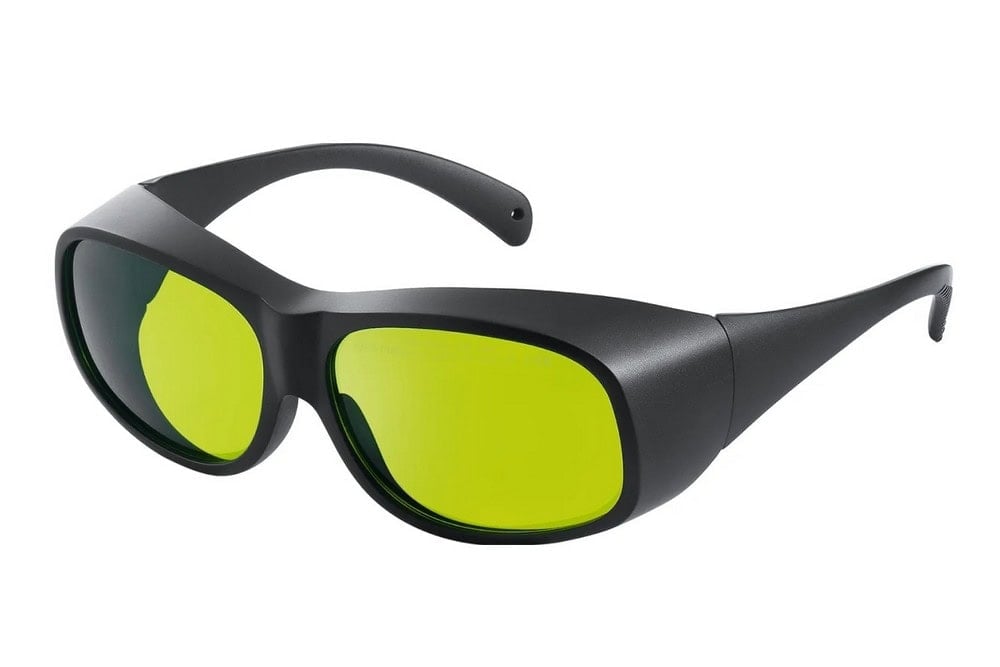
Proper PPE is the immediate, personal safety barrier for every operator, and its use is non-negotiable. The most critical item is laser safety eyewear, which must be wavelength-specific to effectively block your machine’s particular light—generic glasses are dangerously ineffective. Depending on the task, protective gloves and clothing may also be required to guard against incidental contact.
The Rulebook for Safety: Standard Operating Procedures (SOP)
Consistent, correct operation is key. A clear SOP eliminates guesswork and prevents errors.
Before starting, always:
-
Verify all safety interlocks are functional.
-
Ensure the work area is clean and clear of reflective materials, clutter, and flammable substances.
-
Confirm that extraction or ventilation systems are running (if applicable).
-
Inspect the laser focusing lens for cleanliness to ensure optimal, safe beam quality.
Secure Workholding: The workpiece must be firmly and reliably fixed in place. Unsecured glass can move during marking, causing unpredictable beam reflections or marking errors.
Active Supervision & Emergency Preparedness:
Never leave the machine unattended during operation; continuous monitoring is essential for immediate intervention. Equally critical is instinctively knowing the location and function of the Emergency Stop (E-Stop) button, making it your first response to any unexpected situation.
Creating a Safety-Conscious Environment
The physical workspace must be organized to minimize risk and reinforce safe behavior.
-
Designated & Demarcated Area: Clearly mark the laser operating zone with floor markings or barriers. Restrict access to authorized personnel only.
-
Clear Safety Signage: Post prominent warning signs indicating “Laser in Use,” “Danger – Invisible Laser Radiation,” and the specific laser wavelength/class at all entrances to the zone.
-
Adequate Ventilation: Even with low-fume processes, ensure the room has good general ventilation. For enclosed machines, use any integrated or recommended fume extraction systems to maintain air quality.
The Human Factor: Training and Authorization
Our laser markers are designed for safety, but safe operation relies on qualified personnel. Effective training and strict authorization are essential. All operators must complete formal training, supported by our manuals. Only trained and certified individuals may operate the equipment, ensuring accountability and a strong safety culture. Together, these measures build a comprehensive “Safety Moat” for a secure workplace.
Conclusion
Laser glass marking is profoundly safe when combining inherently safe equipment, informed risk awareness, and consistent safe practices. By choosing our laser markers, you secure the most critical part of this safety equation. We invite you to experience the confidence of professional-grade technology. Explore our safe, precise, and user-friendly solutions online, or consult our experts directly.Choose security and precision today—let us provide you with the ideal UV, CO₂, fiber, or hybrid laser system that meets your marking needs while ensuring safety for your team and workflow.