
Stainless steel welding faces persistent challenges like distortion, oxidation, and porosity that traditional MIG processes struggle to fully resolve, directly impacting product quality and production efficiency. This article analyzes common welding defects and demonstrates how laser welding machines provide a fundamental solution.
Laser vs. MIG: Stainless Steel Welding Comparison
| Issue | MIG Result | Laser Result | Improvement |
| Distortion | Warping common | Minimal warping | ↓ 90% |
| Surface | Requires cleaning | Ready-to-use | ↓ 75% cleanup |
| Porosity | 3+ pores/cm | <0.5 pores/cm | ↓ 80%+ |
| Strength | Fusion issues | Full penetration | 95% base strength |
| Thin Sheets | Burn-through risk | No burn-through | Rework ↓ 80% |
| Corrosion | Sensitization | Full resistance | Rate <0.02mm/yr |
| Speed | Manual rate | 3-5x faster | Throughput ↑ |
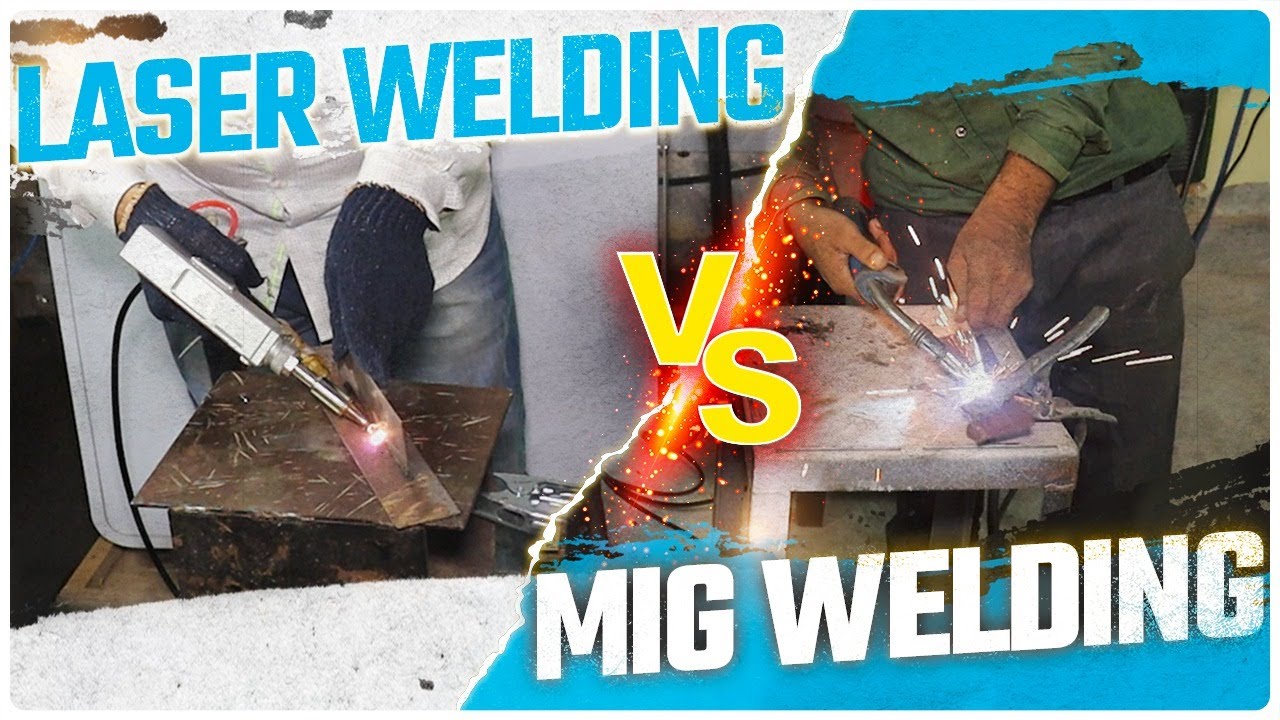
MIG Welding Stainless Steel: Common Problems
Stainless steel brings unique challenges that differ from carbon steel and aluminum in critical ways. Its material properties can lead to defects that compromise both structural integrity and corrosion resistance. While understanding these issues is key to achieving professional results with traditional methods, even an entry level handheld laser welder can effectively mitigate many of these inherent challenges through precise, low-heat processing.
Weld Distortion and Warping
Stainless steel’s low thermal conductivity creates a concentrated heat zone during MIG welding, unlike materials that dissipate heat quickly. This localized heating causes uneven expansion that results in distortion, warping, and misalignment – particularly in sheets under 3mm thick. Factors like excessive voltage and slow travel speed intensify the problem by increasing heat input and prolonging thermal exposure. The consequences include out-of-tolerance parts, lost dimensional accuracy, and costly rework for straightening components.
Heat Tint and Oxidation
The rainbow discoloration on stainless steel welds is more than cosmetic. It results from chromium reacting with oxygen at high temperatures, forming a spectrum from gold to dark blue. This heat tint creates a chromium-depleted zone beneath the surface, directly compromising the alloy’s corrosion resistance. In regulated industries like food processing and medical device manufacturing, such oxidation can lead to weld rejection and accelerated failure over time.
Porosity Problems
Porosity in stainless steel MIG welds—evident as gas pockets and pinholes—typically results from inadequate gas coverage or contaminated surfaces. These voids weaken the weld structurally and initiate corrosion. In thicker sections (>6 mm), root porosity can be exacerbated by reactive gas mixtures (e.g., argon-oxygen), where oxygen interacts with the molten pool and becomes trapped during solidification. Common contributing factors include insufficient gas flow, contaminated shielding gas, and surface impurities such as oil, mill scale, moisture, or rust on the base metal or electrode.

Lack of Fusion
Lack of fusion occurs when incomplete melting between the base metal and filler creates weak joints that may fail under stress. This defect often results from insufficient heat input, caused by settings like low voltage (which produces an unstable arc), low wire feed speed (reducing amperage), or excessive travel speed (preventing full penetration). While the surface may appear acceptable, incomplete bonding beneath the weld significantly compromises joint strength.
Burn-Through and Excessive Penetration
In stainless steel welding, burn-through occurs when excessive heat input melts through thin material, creating holes and severe distortion.This is commonly caused by high voltage settings, slow travel speeds, or excessive wire feed speeds—all of which increase amperage and concentrate thermal energy. Due to stainless steel’s poor thermal conductivity, heat accumulates rapidly in thin sections, often leading to melt-through before the welder can adjust parameters.
Intergranular Corrosion
Intergranular corrosion occurs when prolonged exposure to welding heat (800-1500°F) triggers chromium carbide formation along the grain boundaries. This process depletes chromium from surrounding areas, creating chromium-deficient zones that lose corrosion resistance and rust easily. The result is a structurally weakened material prone to accelerated failure, particularly in aggressive environments.
Hot Cracking
Hot cracking is a critical defect where thermal stress and impurities cause cracks in austenitic stainless steels as the weld cools. While surface cracks may be visible, internal defects often remain hidden until failure occurs. Contaminated surfaces and excessive heat input are primary contributors, making proper material preparation and parameter control essential to prevent this failure mode.
Wire Feed and Parameter Issues
Improper wire feed and welding parameters directly cause predictable defects. Insufficient settings—low wire feed speed or voltage—produce weak arcs, narrow beads with poor fusion, and increased spatter. Conversely, excessive parameters lead to wide beads, burn-through, and distortion from overheating. Travel speed also plays a critical role: too fast causes weak penetration, while too slow concentrates heat, promoting distortion and potential melt-through.
Shielding Gas Complications
Wrong gas flow rates or dirty shielding gas expose the molten weld pool to oxygen and nitrogen in the air. This causes weld oxidation, porosity, and worse rust protection.Flow rates too low let air enter the shield. Flow rates too high create turbulence. This pulls air into the weld zone.
Surface Contamination Effects
Surface contaminants like oil, moisture, and mill scale on stainless steel can vaporize or react during welding, generating gases that become trapped as porosity and preventing proper fusion. These defects lead to increased part rejection and costly rework. Minimizing them in standard MIG welding requires meticulous surface preparation and constant parameter adjustments, adding time and complexity to the process.

How Laser Welding Fixes These Problems
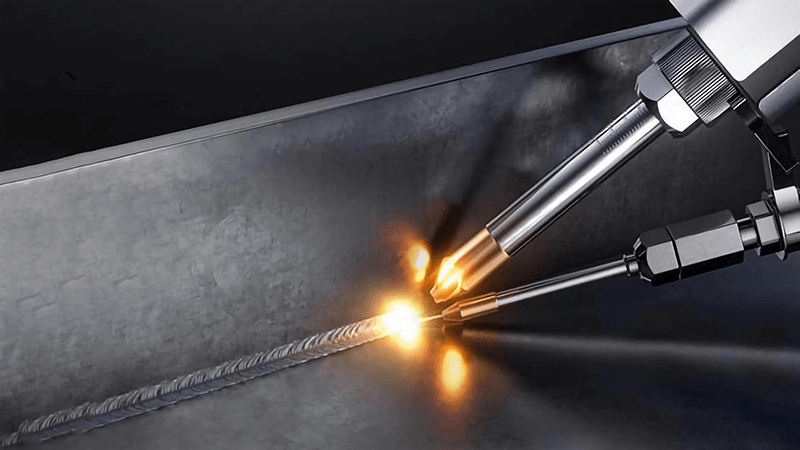
Laser welding delivers real improvements across every critical failure in stainless steel joining. The physics behind it—concentrated energy, minimal heat spread, and rapid solidification—address the root causes of MIG welding defects.
Big Heat Reduction Prevents Distortion
Laser welding reduces heat input by 40–80% compared to MIG/TIG, minimizing thermal stress and preventing distortion. The focused energy beam creates an extremely narrow heat-affected zone (0.2–0.7 mm vs. 1.5–4 mm for MIG), enabling near-zero angular distortion even in thin sheets. With speeds of 500–3,000 mm/min, heat exposure is brief, ensuring parts stay dimensionally stable without warping.
Bright, Oxide-Free Surfaces Replace Heat Tint
Laser welding produces bright, oxide-free surfaces by minimizing heat input and preventing chromium oxidation. This eliminates the need for extensive post-weld cleanup, with industry reports showing over 75% reduction in passivation work. Laser-welded parts in food, medical, and aerospace applications consistently meet strict standards without discoloration, maintaining corrosion resistance in critical components.
Near-Zero Porosity Through Rapid Solidification
Laser welding achieves near-zero porosity through rapid solidification that traps fewer than 0.5 pores per centimeter—over 80% lower than MIG defects. The process often requires no filler wire, eliminating contamination sources, while its minimal spatter maintains cleaner work areas and reduces surface defects.
Complete Fusion Through Precise Energy Control
Laser welding delivers precise energy control to achieve complete fusion, with focused beams (0.1–0.6 mm) melting material without overheating adjacent zones. This results in high-strength joints exceeding 95% of base metal tensile strength. Even with tight gap tolerances (<0.2 mm), laser welding eliminates incomplete bonding, overcoming the limitations of conventional low-voltage MIG processes.
Burn-Through Gone on Thin Materials
The handheld laser welder eliminates burn-through in thin stainless steel through precise energy control that delivers tailored power for each thickness. Medical manufacturers have slashed rework rates to under 2% —a fraction of the 8–12% typical with MIG/TIG. The minimal heat buildup prevents melt-through and distortion, producing clean, stable welds on thin sheets.
Preventing Intergranular Corrosion at the Source
Laser welding’s minimal heat-affected zone keeps stainless steel out of the sensitization range (800–1,500°F), preventing harmful chromium carbide formation. ASTM tests show corrosion rates under 0.02 mm/year—significantly lower than MIG welds. By reducing HAZ width 60–80%, the process preserves chromium integrity and full corrosion resistance.
Stable Process Removes Hot Cracking
Laser welding’s rapid solidification and automated process stability eliminate hot cracking. Consistent parameters ensure uniform results, while minimal shielding gas needs and a smaller fusion zone reduce argon consumption and lower operating costs compared to MIG welding.

Real Performance Improvements
Real-world data confirms the advantages:
-
Distortion: Reduced by 80-90% compared to MIG/TIG.
-
Weld Speed: 3-5 times faster for thin-gauge components.
-
Porosity: Defect rates lowered by over 80%.
-
HAZ Width: 60-80% narrower, minimizing metallurgical changes.
-
Post-weld Cleaning: Time reduced by 50-90%, with many parts requiring none.
You spend less time on rework. Parts meet specifications the first time. Production throughput increases while defect rates fall.
SUMMARY
The evidence is clear: laser welding transforms stainless steel fabrication from a skill-dependent, variable process into a consistent, high-throughput operation. It’s not just an alternative to MIG; it’s a strategic upgrade that directly addresses cost, quality, and throughput challenges.
Ready to eliminate welding defects and boost your productivity? Contact us today to discuss how a MAXWAVE laser welding machine can be tailored to your specific needs and start producing flawless welds tomorrow.