
Flower murals can make a room feel softer, brighter, more dramatic, or more memorable. A delicate watercolor garden may create a calming bedroom, while oversized tropical flowers can turn a restaurant wall into a recognizable photo spot.
The challenge is choosing a floral design that suits the scale, lighting, function, and existing style of the space.
This guide presents 30 flower mural ideas for homes and commercial interiors, including living rooms, bedrooms, nurseries, cafés, retail stores, salons, offices, and hotels. You will also learn how to choose the right style and whether hand painting, wallpaper, vinyl, or direct wall printing is the most practical production method.
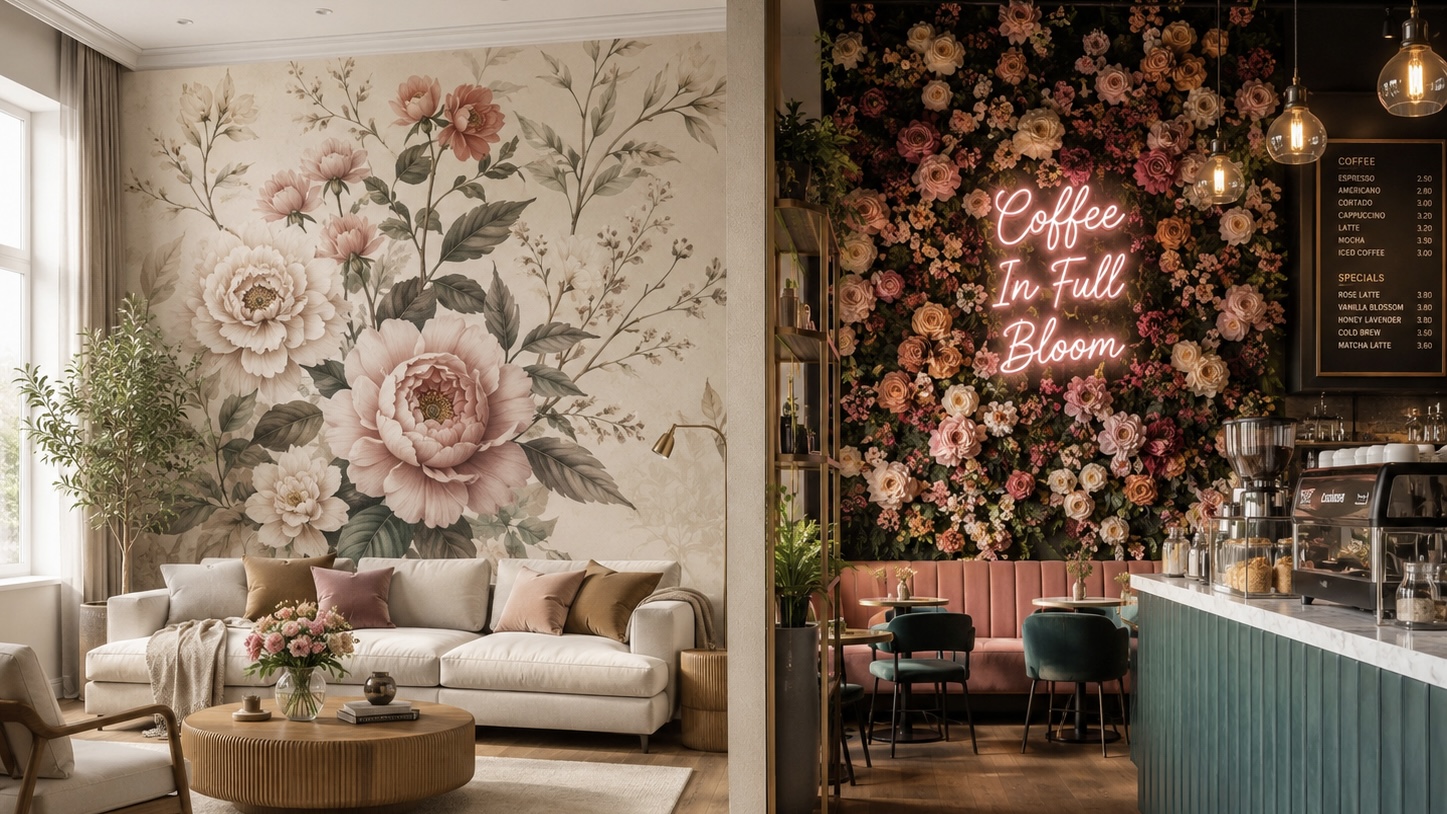
Flower Mural Styles at a Glance
|
Floral Mural Style |
Best Spaces |
Visual Effect |
Suitable Production Method |
|---|---|---|---|
|
Watercolor flowers |
Living rooms, bedrooms, spas |
Soft and calming |
Wallpaper or direct wall printing |
|
Dark botanical murals |
Restaurants, boutiques, hotel lobbies |
Dramatic and luxurious |
Direct wall printing or wallpaper |
|
Minimal floral line art |
Offices, modern homes, small rooms |
Clean and contemporary |
Vinyl or direct wall printing |
|
Oversized single flowers |
Feature walls, showrooms, reception areas |
Strong focal point |
Direct wall printing |
|
Tropical floral designs |
Bars, cafés, retail spaces |
Bold and energetic |
Vinyl, wallpaper, or wall printing |
|
Vintage botanical illustrations |
Studies, dining rooms, boutique hotels |
Classic and refined |
Wallpaper or direct wall printing |
|
Floral brand graphics |
Retail, restaurants, salons, offices |
Memorable and shareable |
Direct wall printing |
Living Room Flower Mural Ideas
Living room murals need enough visual impact to anchor the space without competing with furniture, lighting, and artwork.
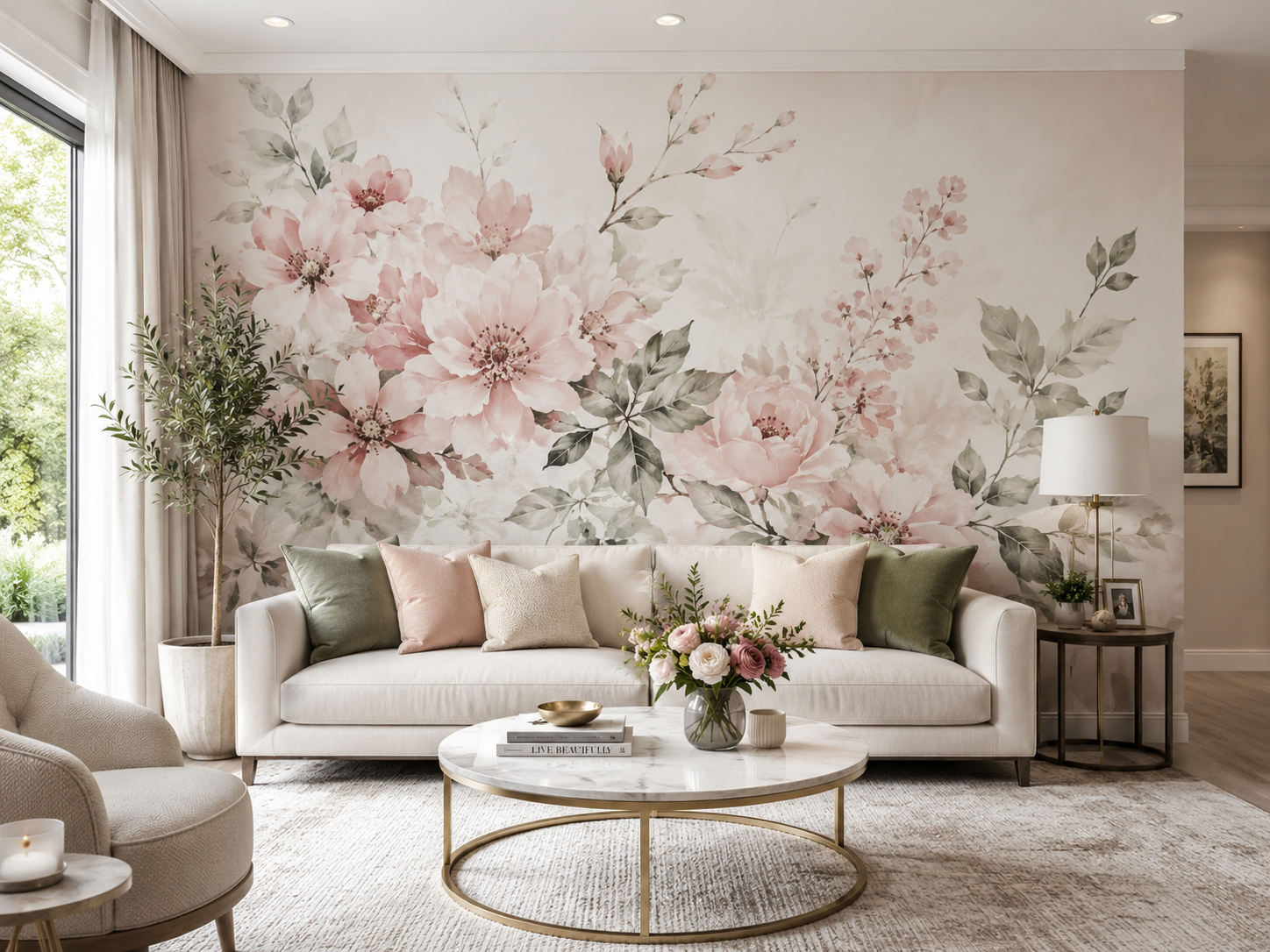
1. Watercolor Floral Mural Behind the Sofa
Soft watercolor flowers work well behind a sofa because they introduce color without making the room feel crowded.
Pale pink, sage green, ivory, dusty blue, and muted lavender suit Scandinavian, contemporary, and romantic interiors. Keep the most detailed flowers around the seating area and leave more negative space toward the ceiling.
This style is particularly effective in smaller living rooms because the soft edges and light background help the room remain open and bright.
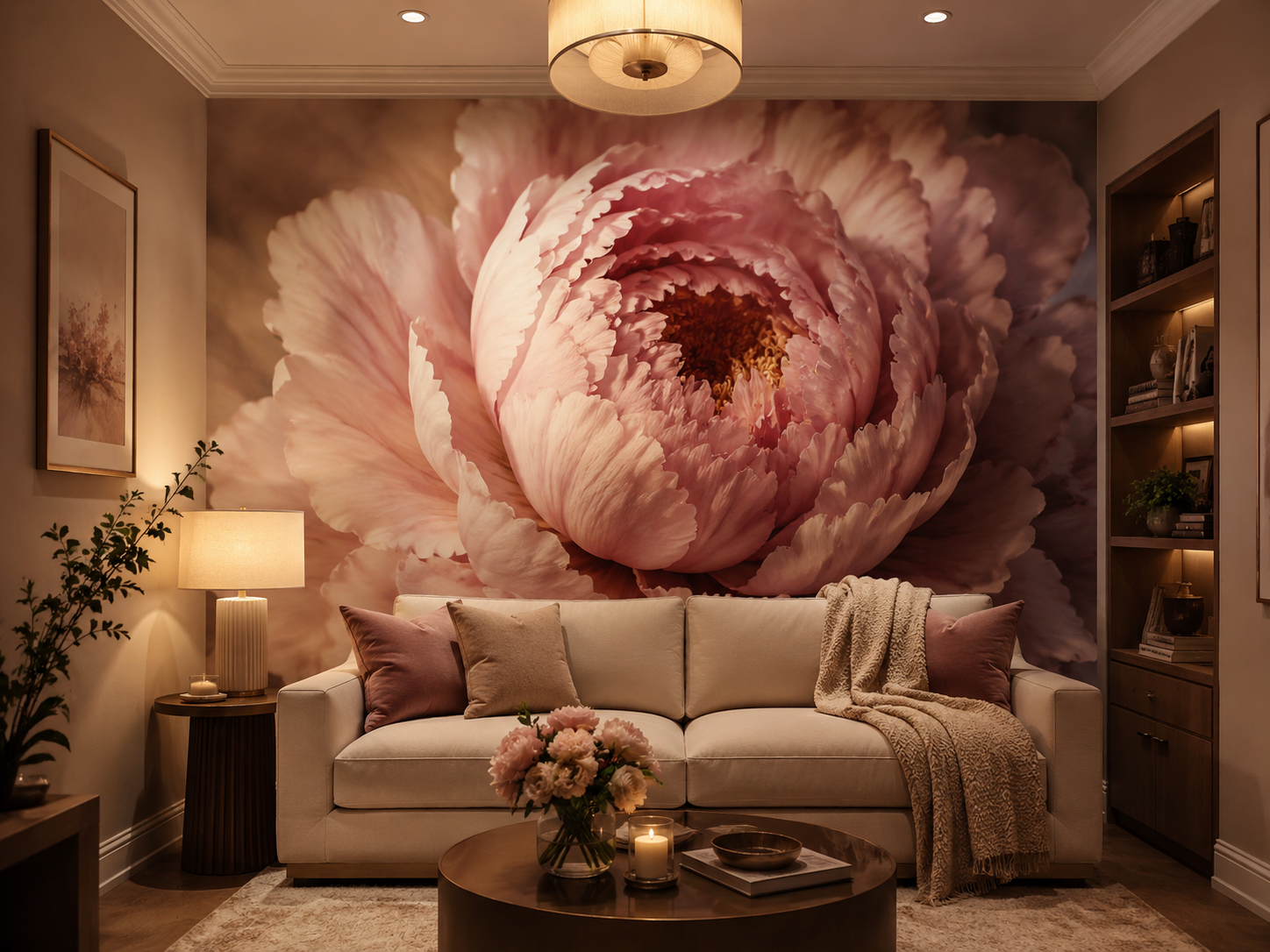
2. Oversized Single Flower Feature Wall
One oversized rose, peony, magnolia, or poppy can create more impact than a wall filled with many small flowers.
This idea works especially well in compact living rooms, where a busy repeating pattern may make the space feel smaller. Position the flower so that it interacts with the sofa, side table, or floor lamp rather than floating in the middle of the wall.
A neutral background keeps the mural elegant, while a dark background creates a more theatrical result.
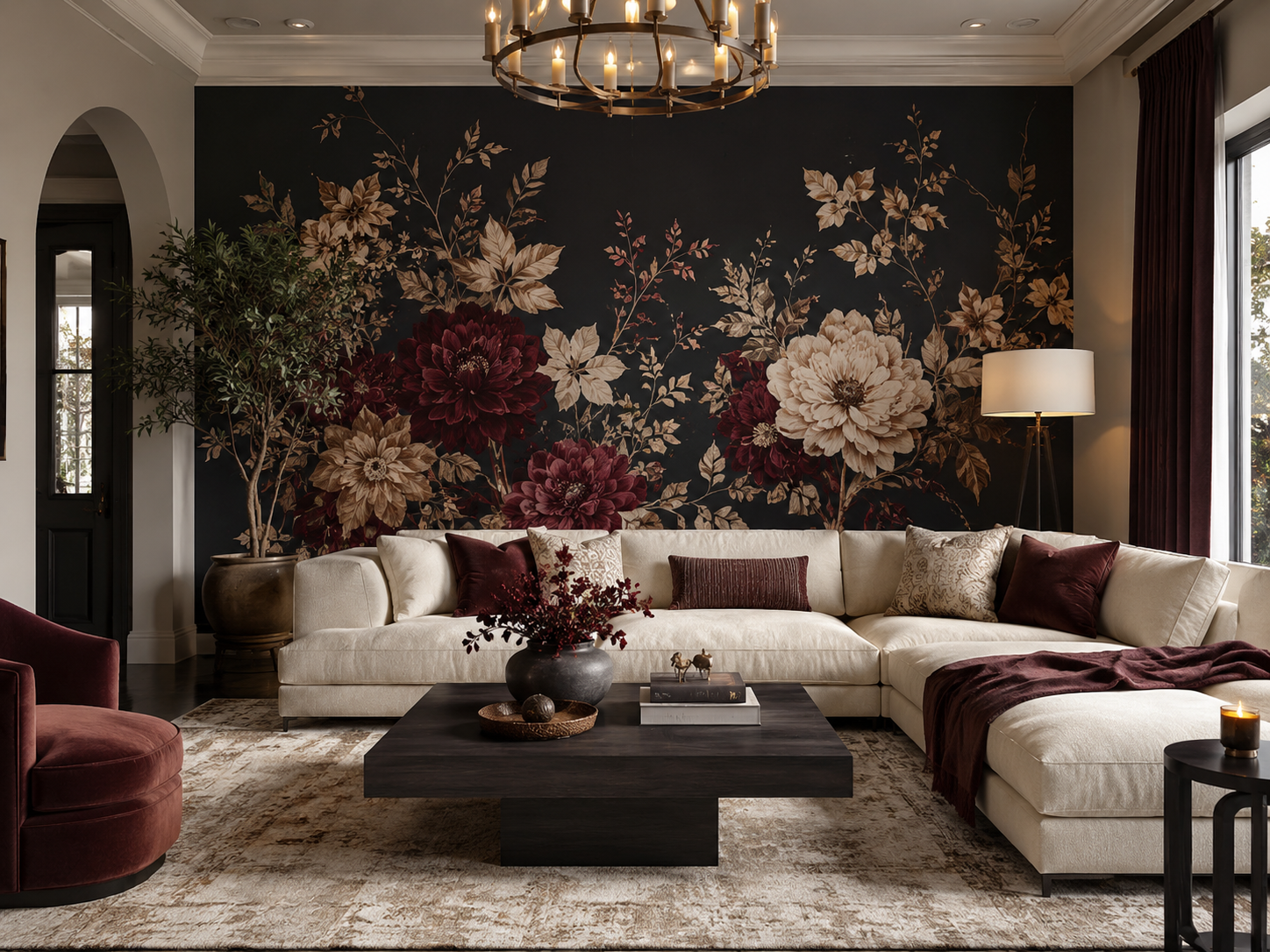
3. Dark Botanical Statement Mural
A dark floral mural can bring depth and luxury to a large living room.
Deep navy, charcoal, black, or forest green backgrounds work well with jewel-toned flowers, warm wood furniture, brass lighting, and velvet upholstery.
Because dark murals absorb light, they are most effective in rooms with generous windows or layered artificial lighting. Use the mural on one main wall and keep the remaining walls relatively simple.
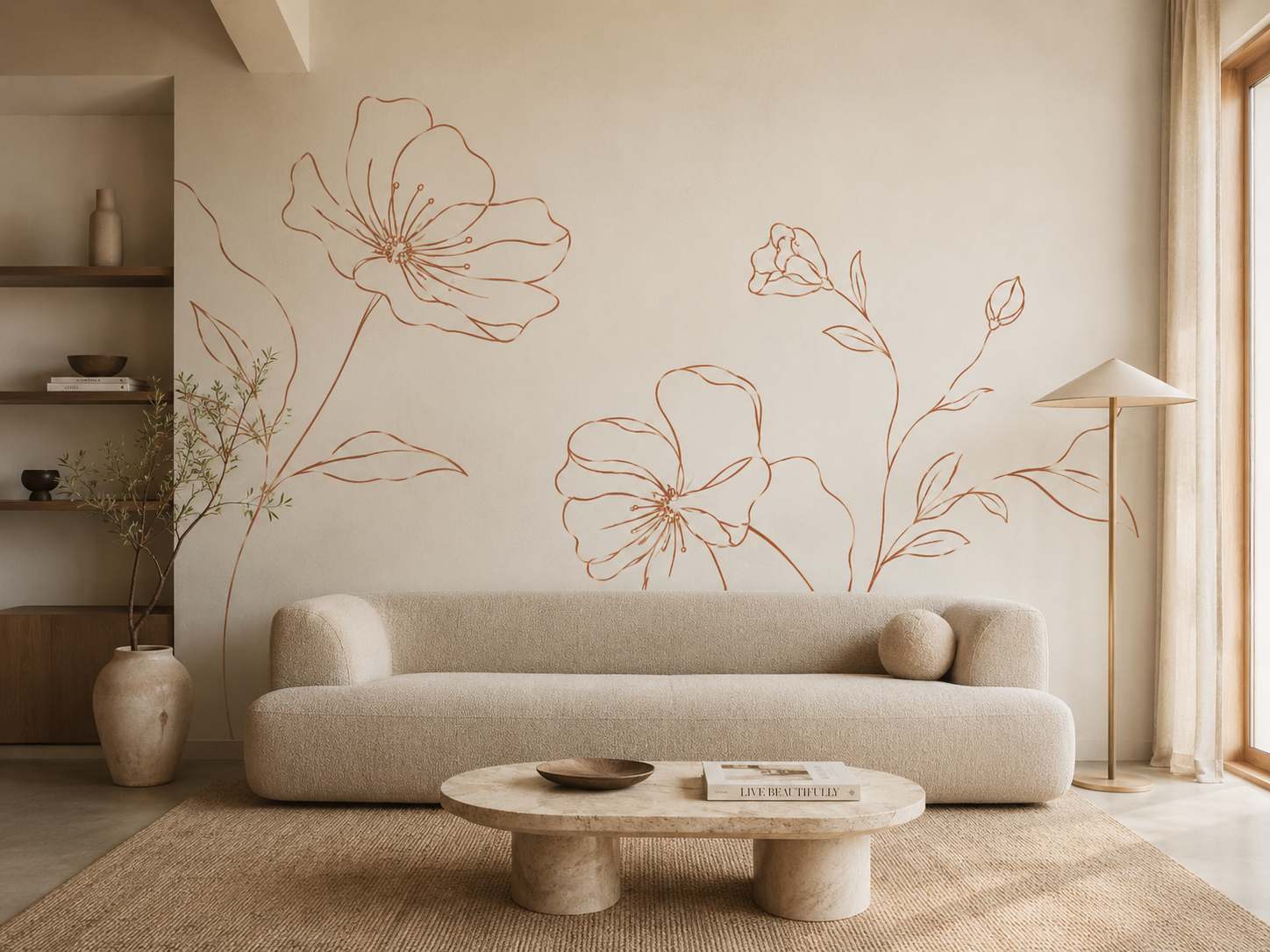
4. Minimal Floral Line-Art Mural
Simple stems, leaves, and flowers drawn with clean lines are ideal for modern and minimalist living rooms.
Black, beige, terracotta, olive, or muted gold linework can add personality without dominating the space. An asymmetric composition usually feels more natural than a perfectly centered pattern.
This style pairs well with neutral furniture, textured rugs, and simple lighting.
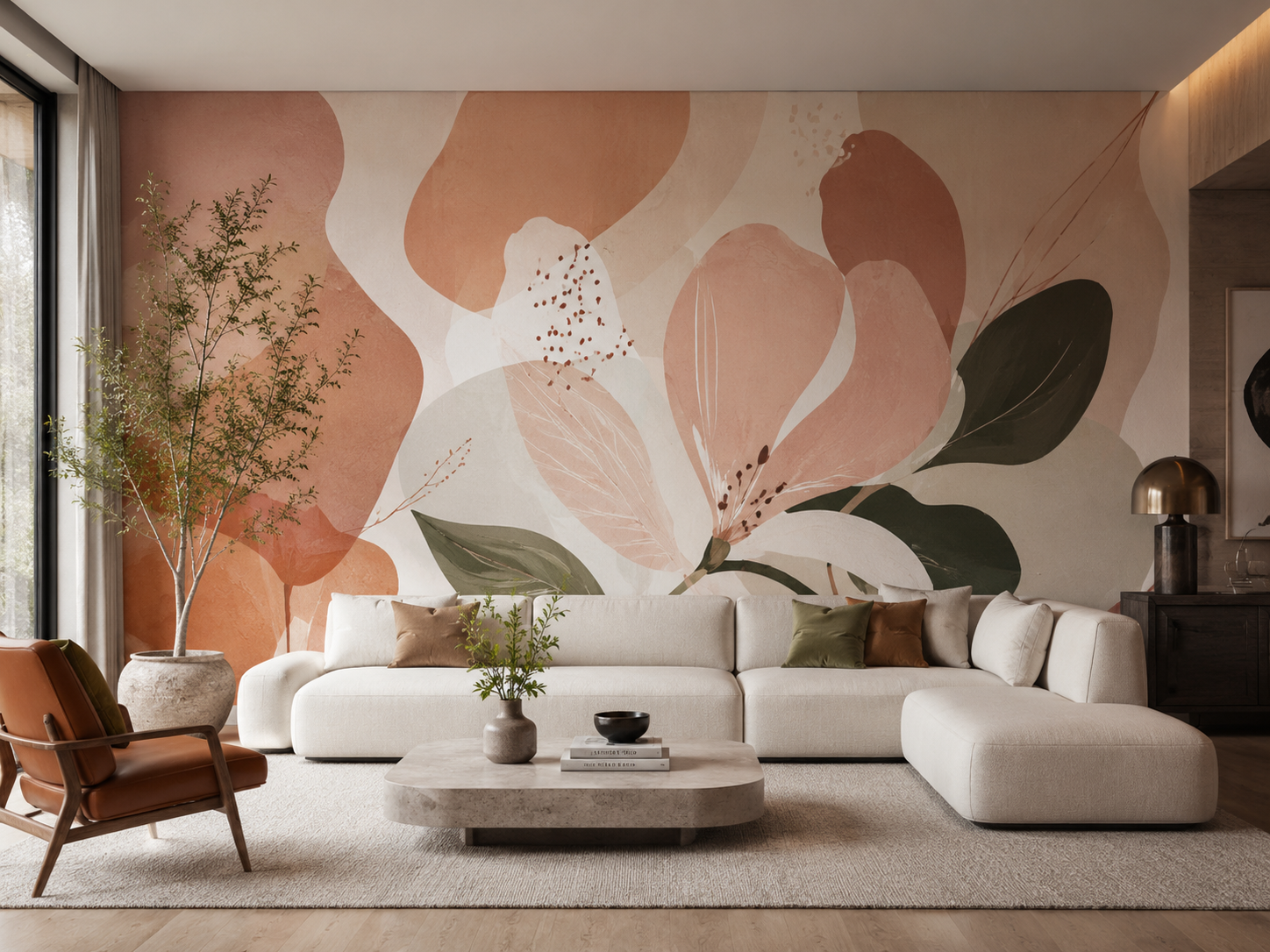
5. Abstract Floral Shapes
Abstract floral murals use simplified petals, blurred forms, and large areas of color rather than realistic flowers.
They work well in contemporary interiors where a traditional botanical illustration may feel too decorative. Choose three to five colors that already appear in the furniture, cushions, curtains, or artwork.
The result should feel connected to the room rather than added as an unrelated feature.
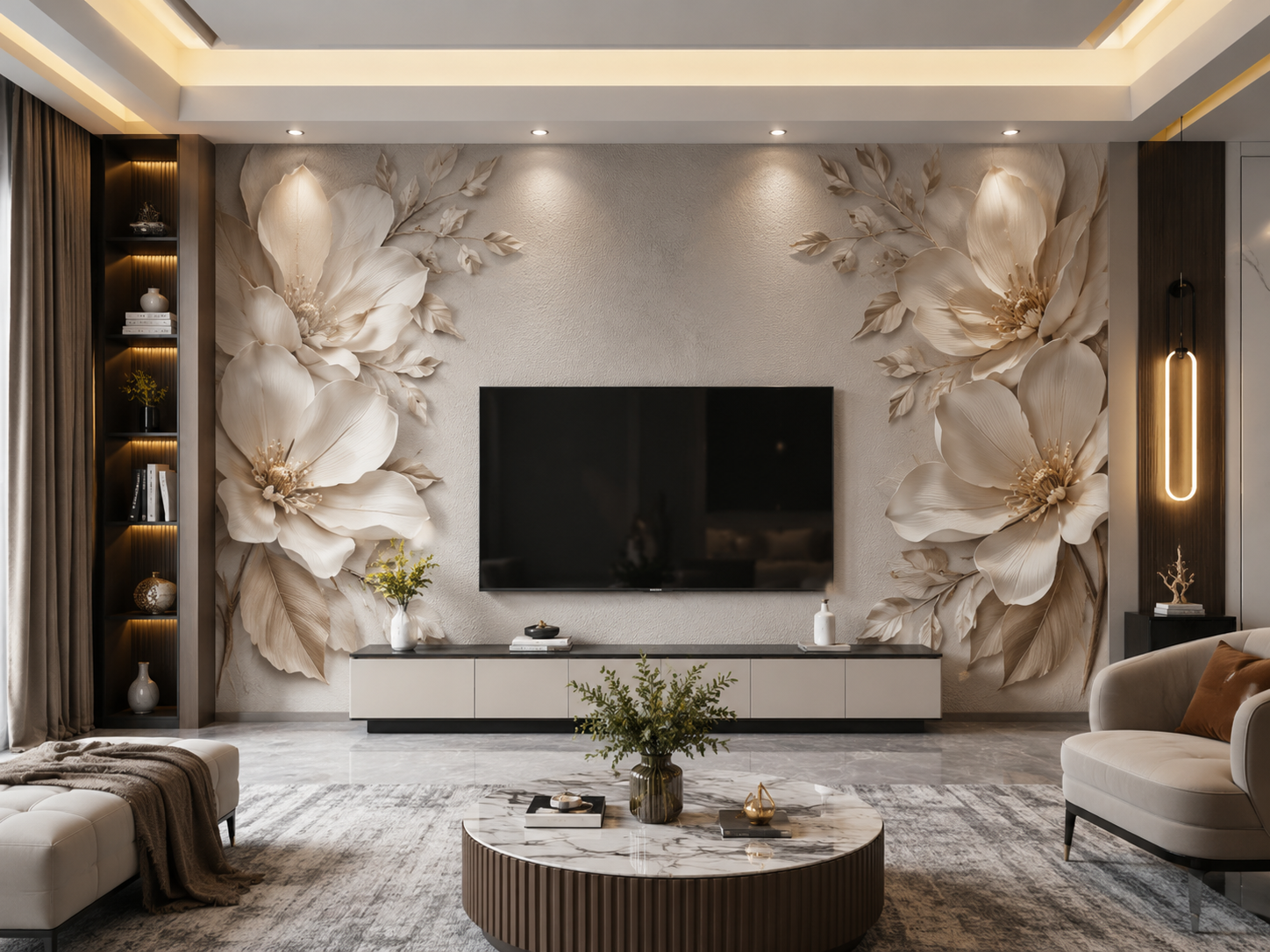
6. 3D-Effect Floral TV Wall
A digitally printed 3D-effect floral mural can create the appearance of layered petals and sculptural depth without attaching heavy decorative panels to the wall.
Keep the area directly behind the screen relatively calm so the flowers frame the television instead of interfering with it. Light-colored petals create a softer look, while metallic or dark flowers suit dramatic interiors.
This is a useful option when the client wants dimensional impact but still needs a smooth, easy-to-clean wall.
Bedroom Flower Mural Ideas
Bedroom murals should support rest and comfort. Softer colors, more negative space, and less visual contrast usually work better than highly energetic patterns.
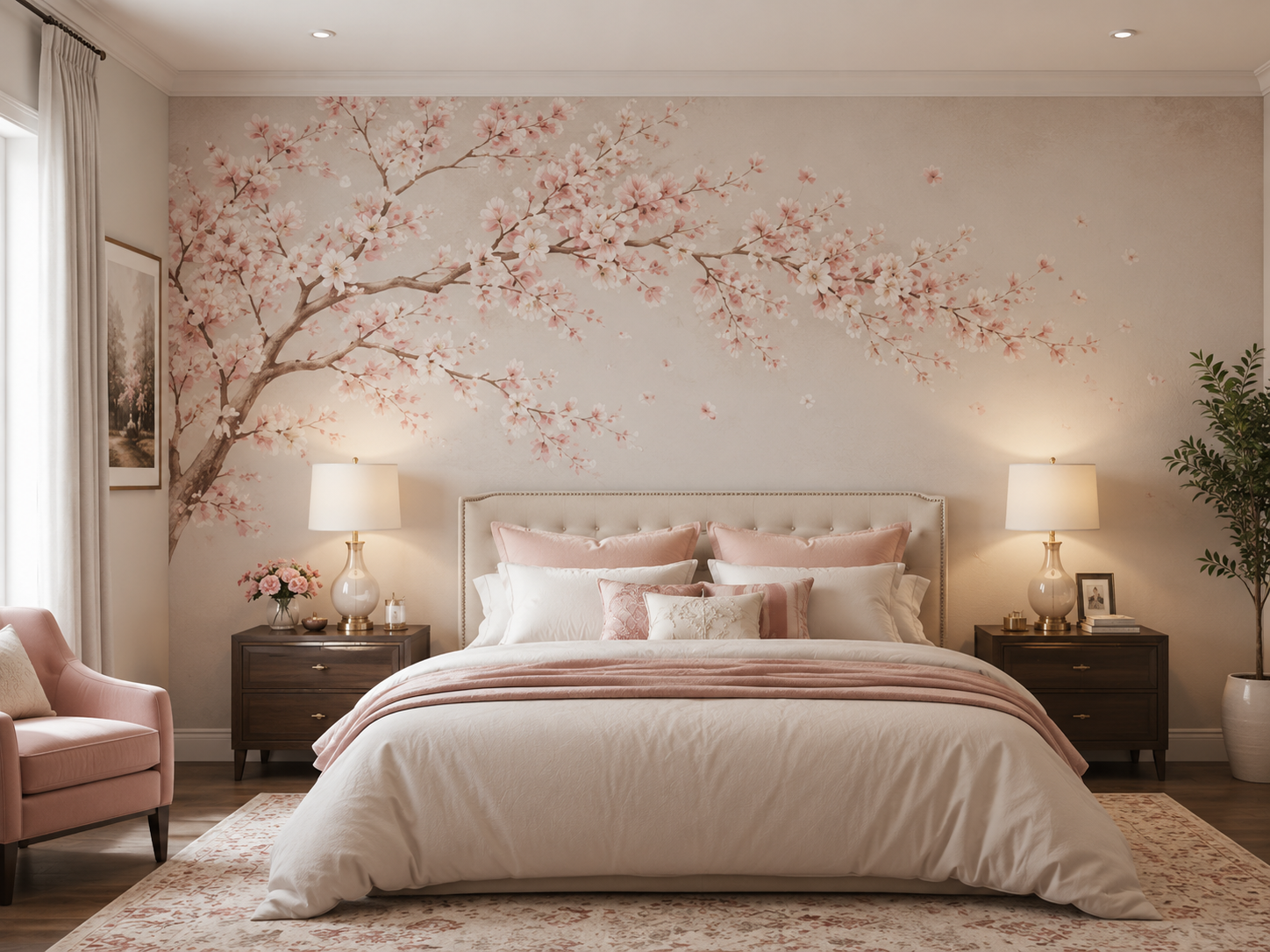
7. Cherry Blossom Headboard Mural
Cherry blossom branches naturally frame a headboard and create a calm, romantic atmosphere.
Blush pink, warm white, soft taupe, and pale grey work well in adult bedrooms, guest rooms, and Japanese-inspired interiors. Let the branches extend outward rather than covering the entire wall with evenly repeated blossoms.
The result feels more like an artwork designed for the room than a standard floral pattern.
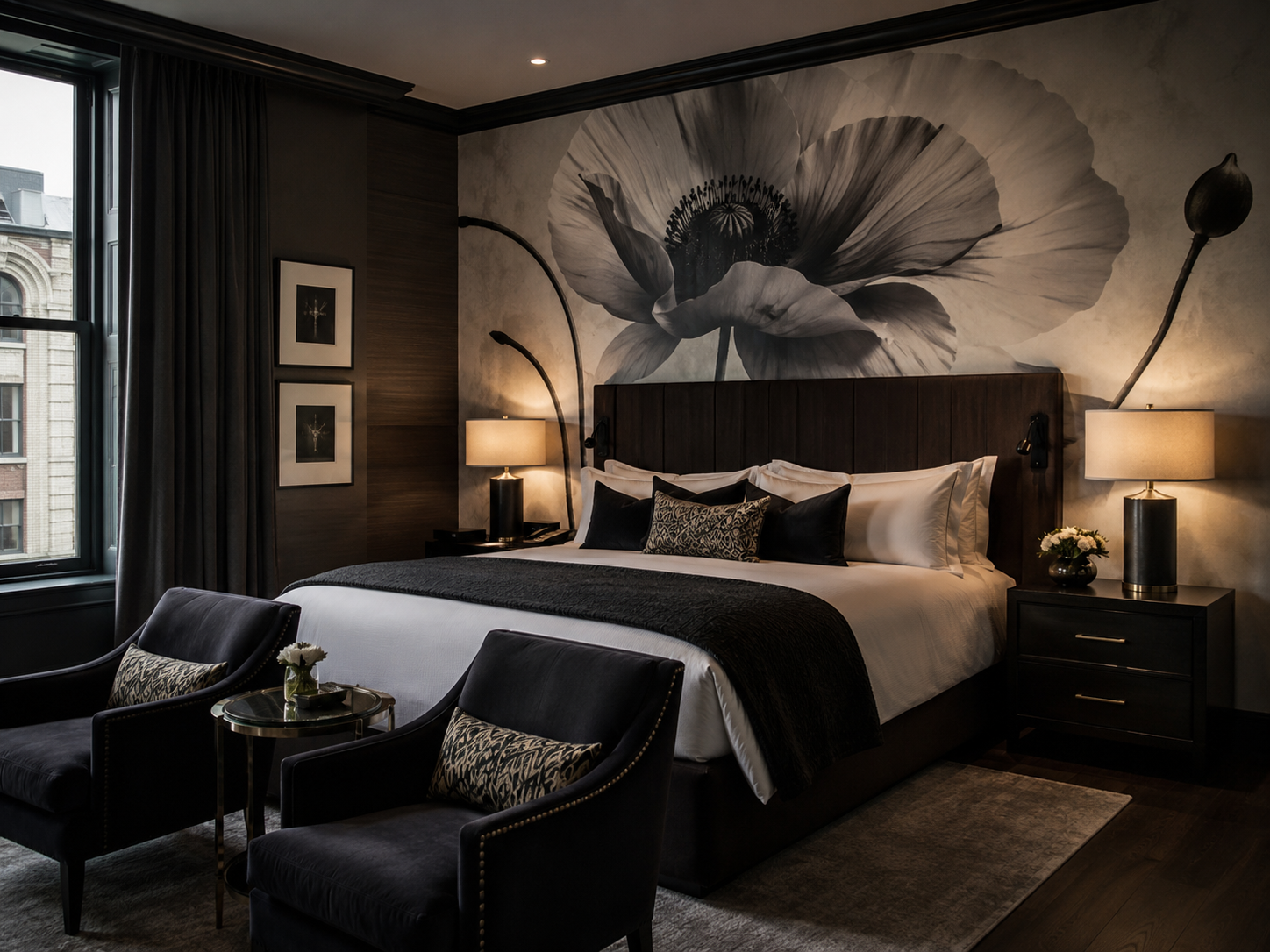
8. Monochrome Rose or Poppy Mural
A single-color floral mural can feel sophisticated without becoming overly romantic.
Black linework on an ivory wall creates a modern look, while burgundy, navy, or dusty rose can produce a more intimate atmosphere.
Use large flowers with generous open space. Repeating small flowers may reduce the strong focal effect that makes this style successful.
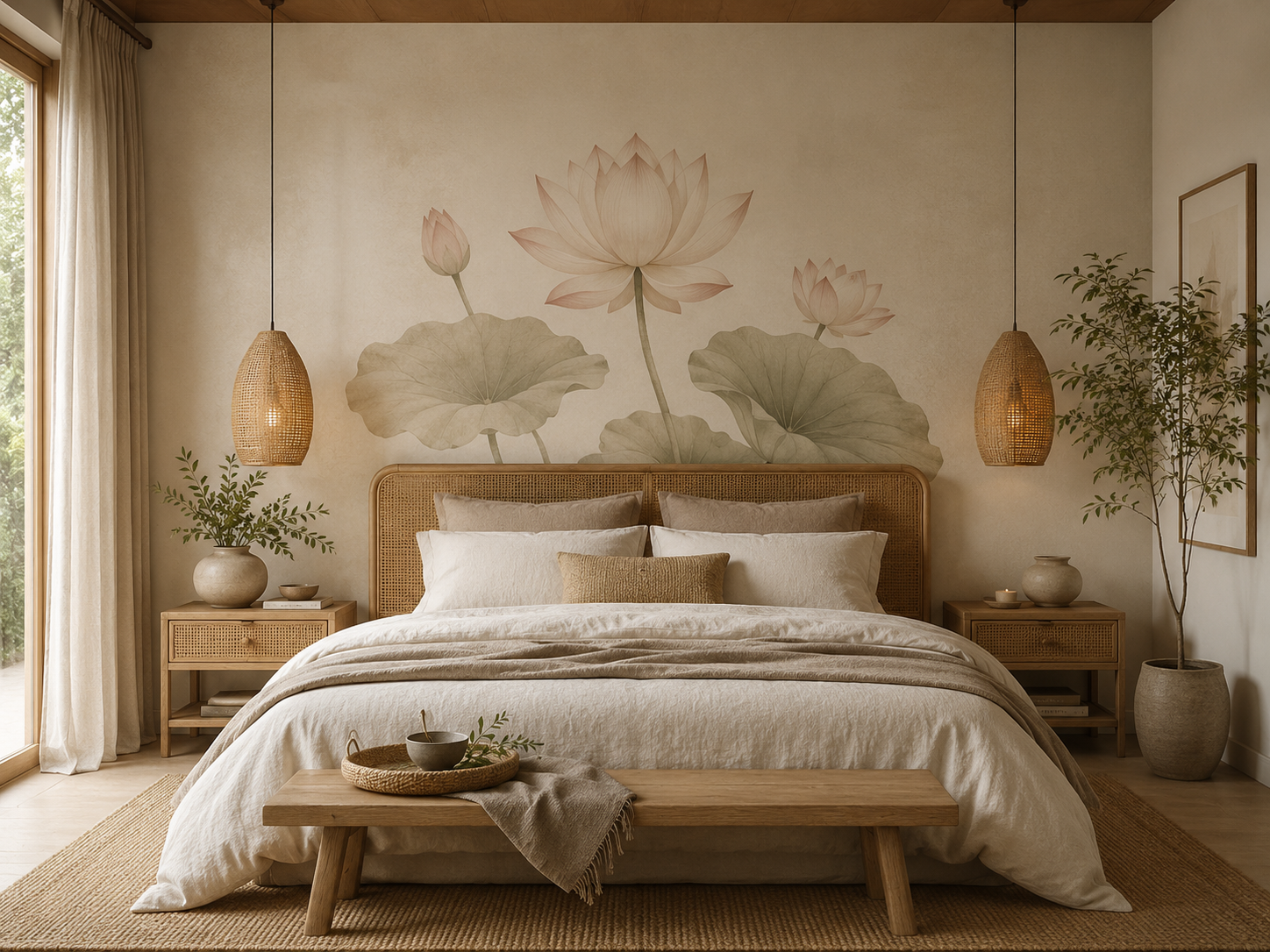
9. Minimal Lotus Mural
A centered lotus flower can create a quiet, spa-like mood in a bedroom.
Sage, ivory, warm grey, and muted beige pair naturally with linen bedding, light wood, rattan, and soft indirect lighting.
This design works best when the wall is not crowded with shelves, frames, or decorative objects. The mural itself should remain the main visual feature.
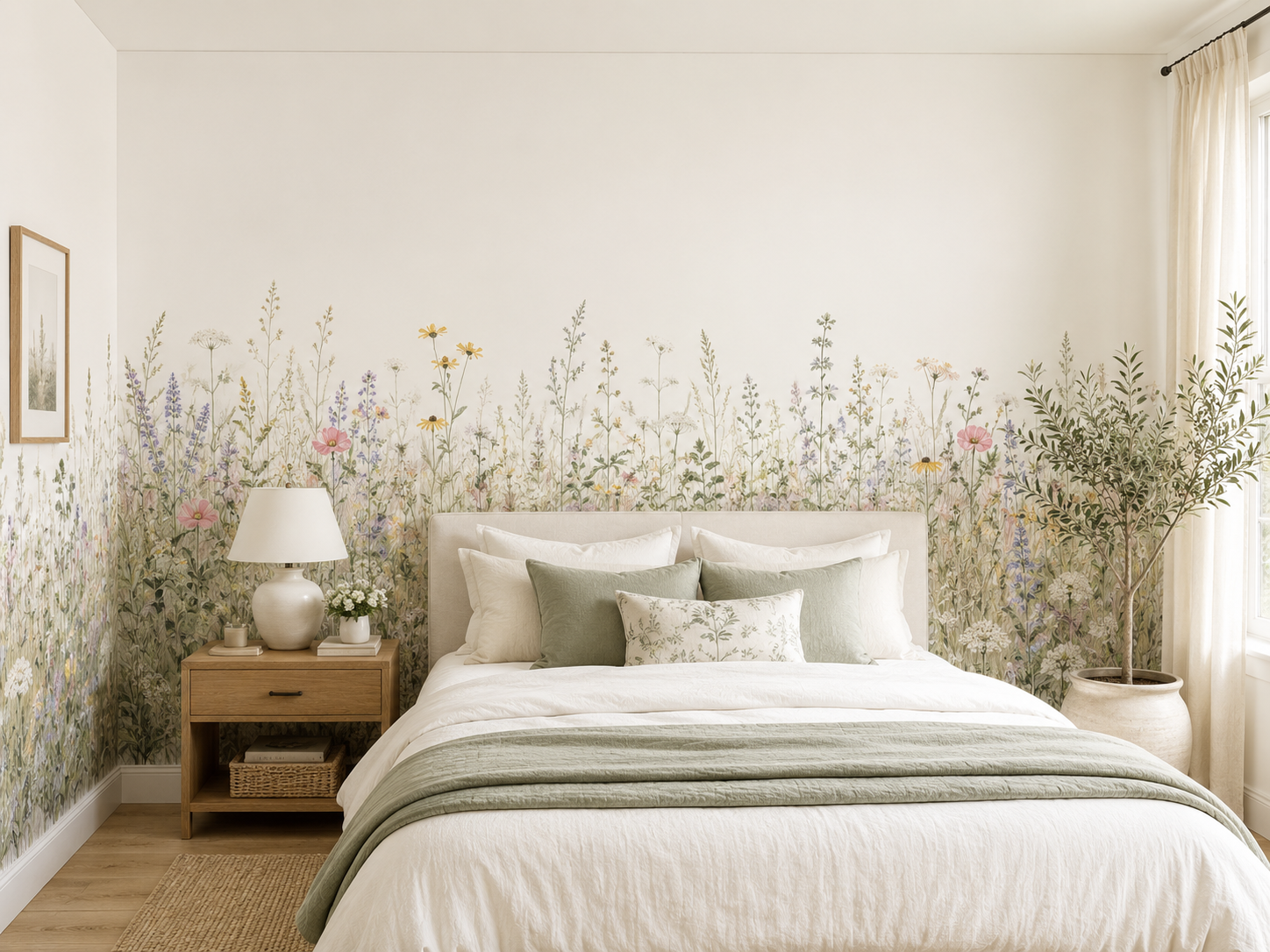
10. Pastel Wildflower Meadow
A low band of pastel wildflowers can make a bedroom feel connected to nature without filling the entire wall.
Dusty pink, pale yellow, lavender, and soft green work well in relaxed adult bedrooms and children’s spaces. Concentrating the flowers in the lower section keeps the upper wall open and prevents the design from feeling heavy.
This layout also works well behind low beds and furniture.
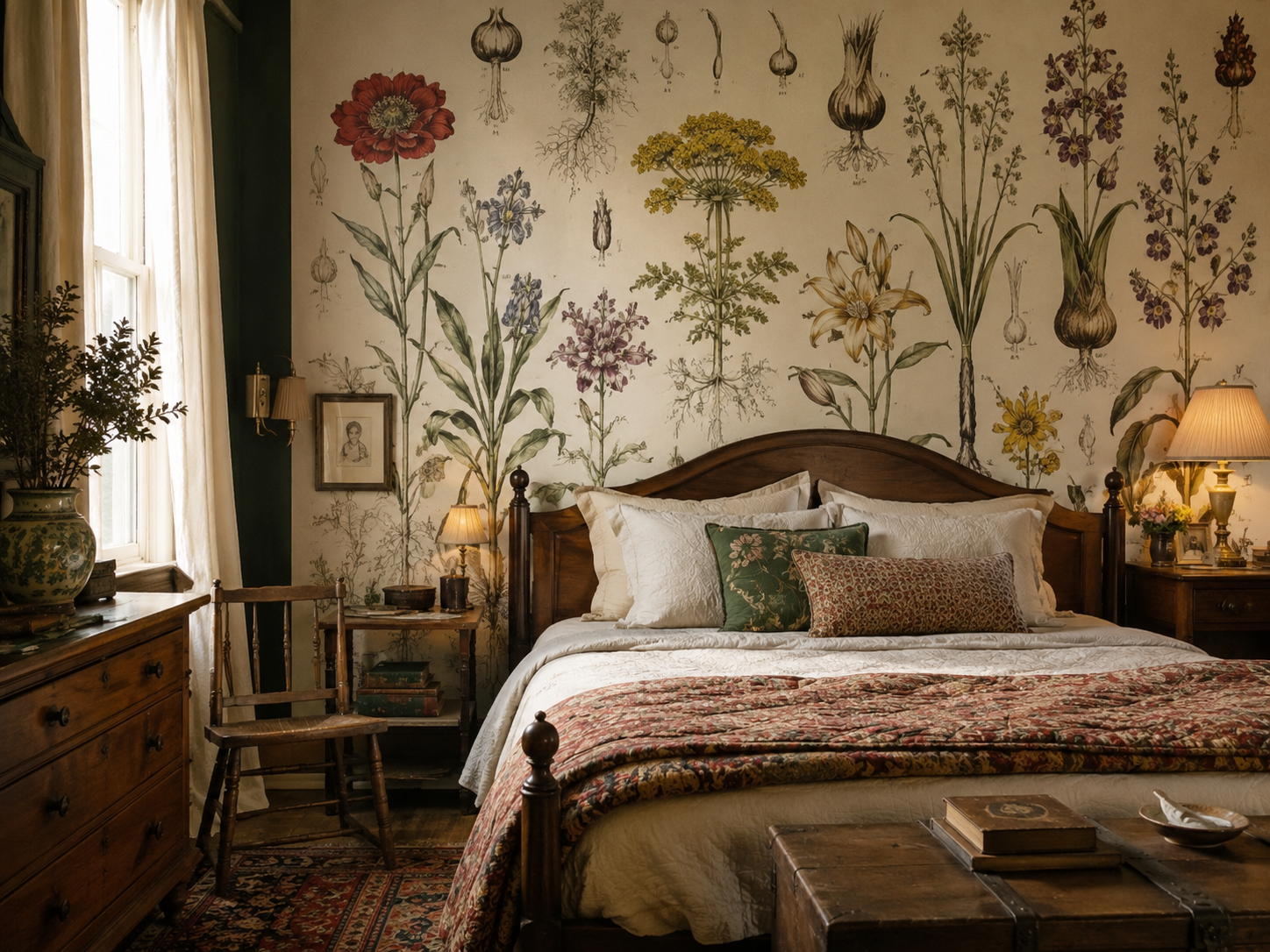
11. Vintage Botanical Illustration
Vintage botanical drawings bring a collected, timeless feeling to bedrooms, studies, and guest rooms.
The mural may resemble an old plant encyclopedia, with detailed flowers, leaves, and subtle handwritten labels. Warm cream, faded green, muted red, and soft brown help maintain the vintage character.
Pair the mural with antique wood, linen, ceramic lamps, or traditional molding.
Flower Murals for Kitchens, Dining Rooms and Bathrooms
These spaces require designs that can coexist with cabinets, dining furniture, moisture, cleaning, and strong artificial lighting.
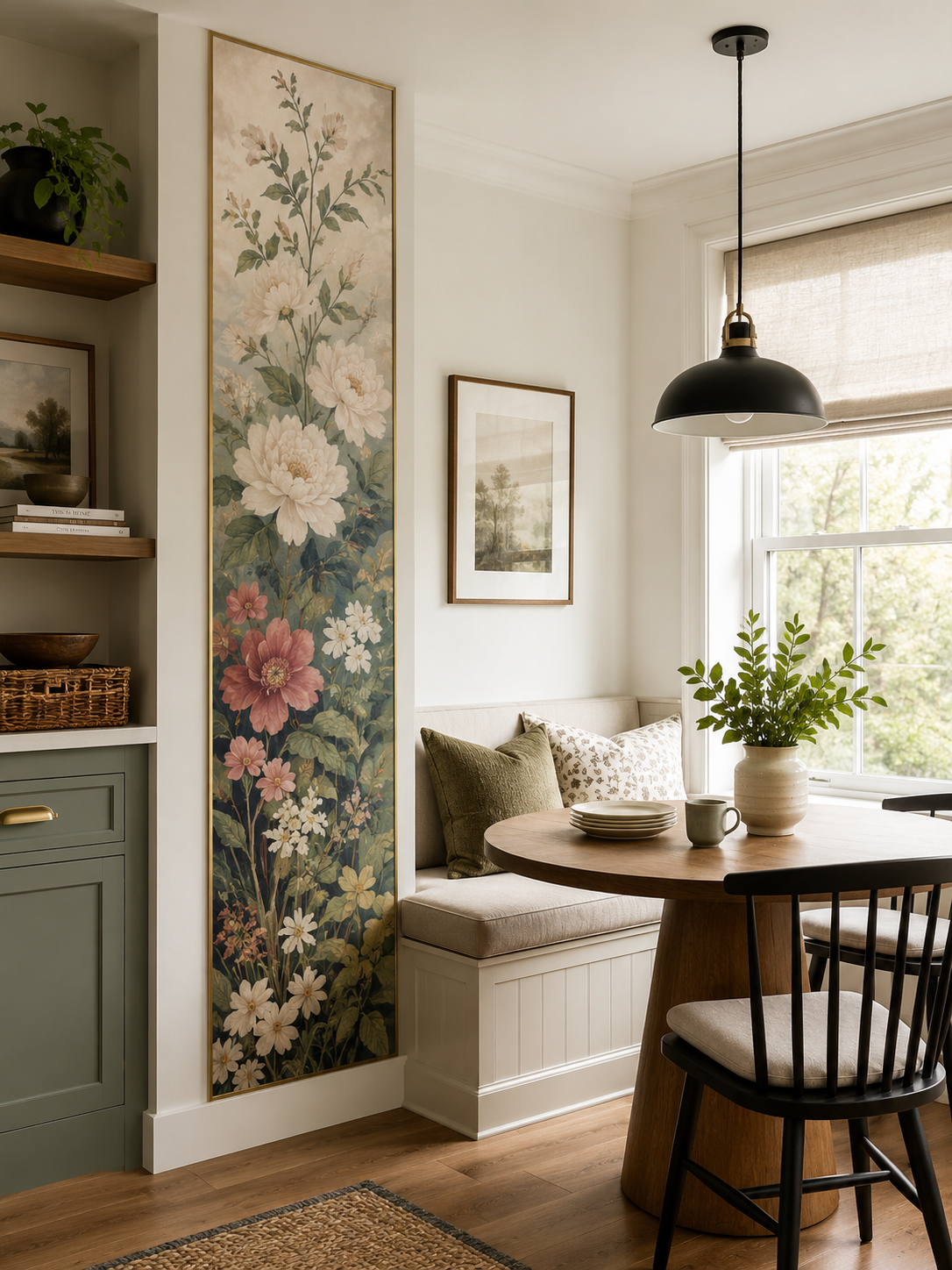
12. Vertical Botanical Panel for a Dining Nook
A narrow vertical floral composition can add interest beside a dining bench, breakfast bar, or cabinet wall without overwhelming the room.
Choose climbing stems, leaves, and small flowers arranged like an indoor garden column. Soft green and neutral floral tones keep the design calm and easy to coordinate with furniture.
This is a useful solution when there is not enough open wall space for a full mural.
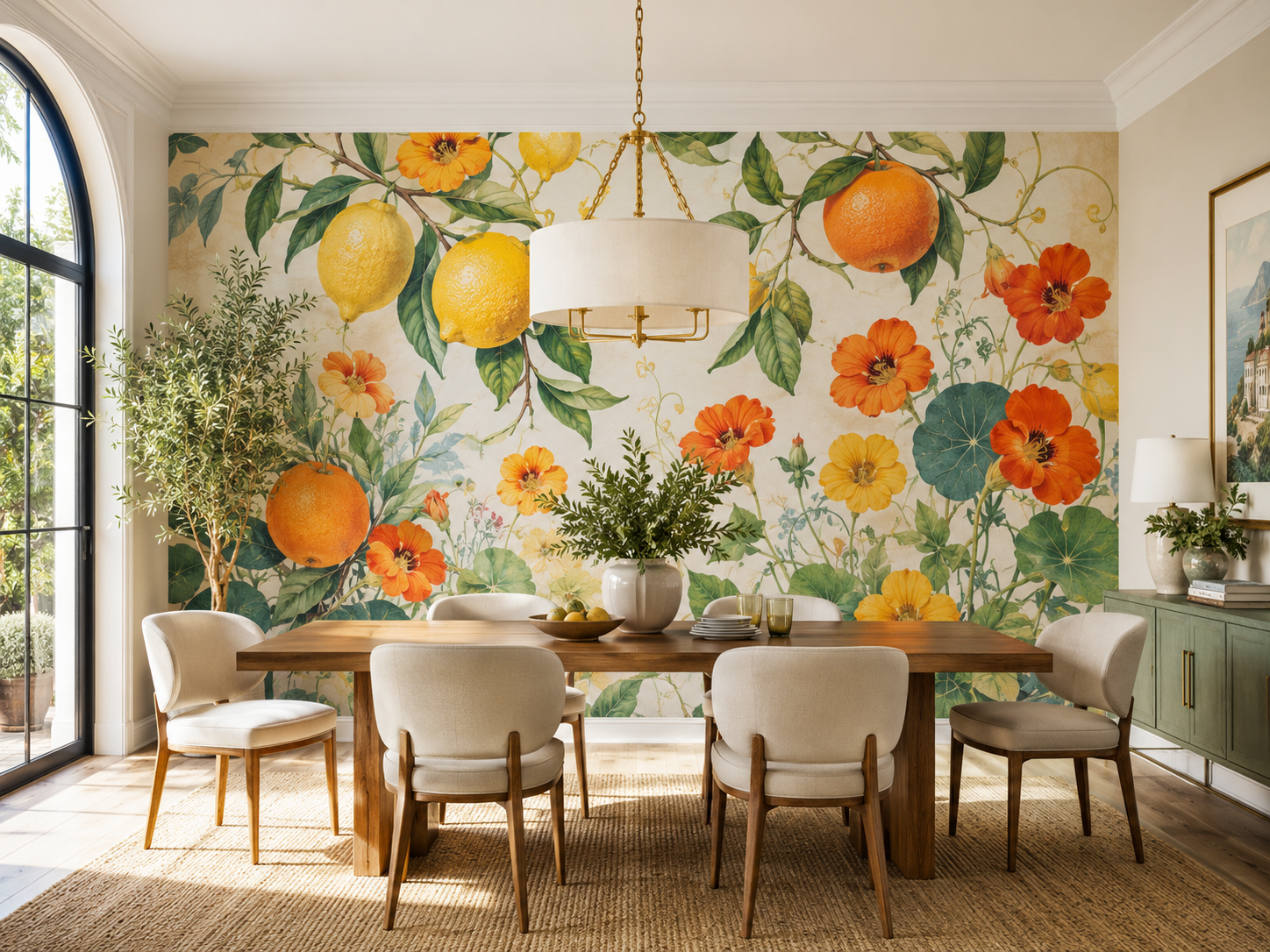
13. Citrus and Nasturtium Dining Mural
Citrus fruit, nasturtium flowers, and fresh green leaves bring energy to dining areas without feeling too formal.
Lemon yellow, orange, coral, and leaf green work particularly well with natural wood tables, white walls, and Mediterranean-inspired interiors.
Use larger motifs rather than tiny repeating patterns so the design remains clear behind dining furniture.
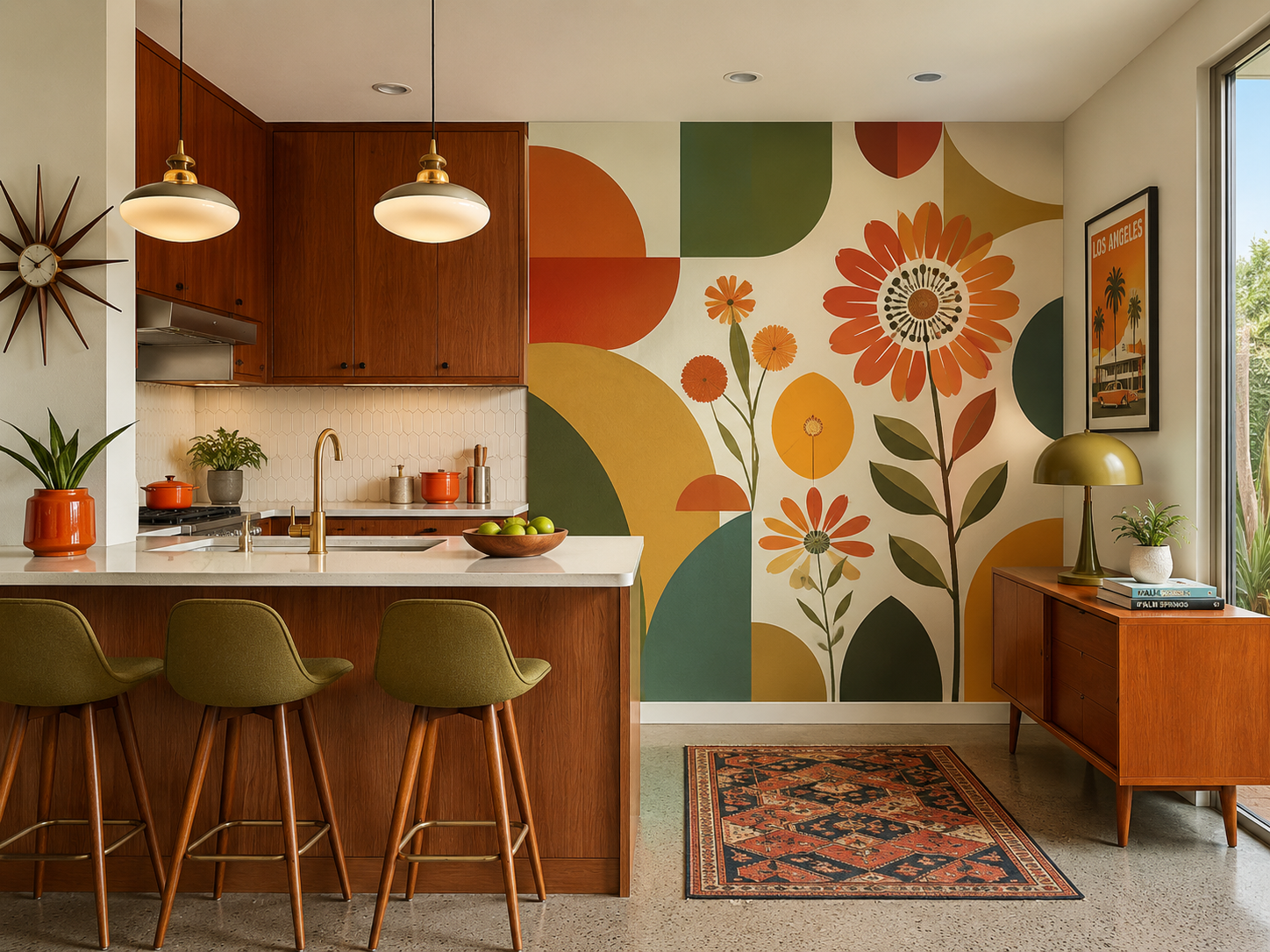
14. Retro Geometric Floral Kitchen Mural
Stylized flowers combined with circles, arches, and geometric blocks can add personality to a mid-century or retro kitchen.
Terracotta, mustard, cream, slate blue, and olive are strong palette options. Place the mural on a breakfast-nook wall or an area away from direct heat, grease, and heavy water exposure.
Keep the surrounding cabinets and accessories relatively simple.
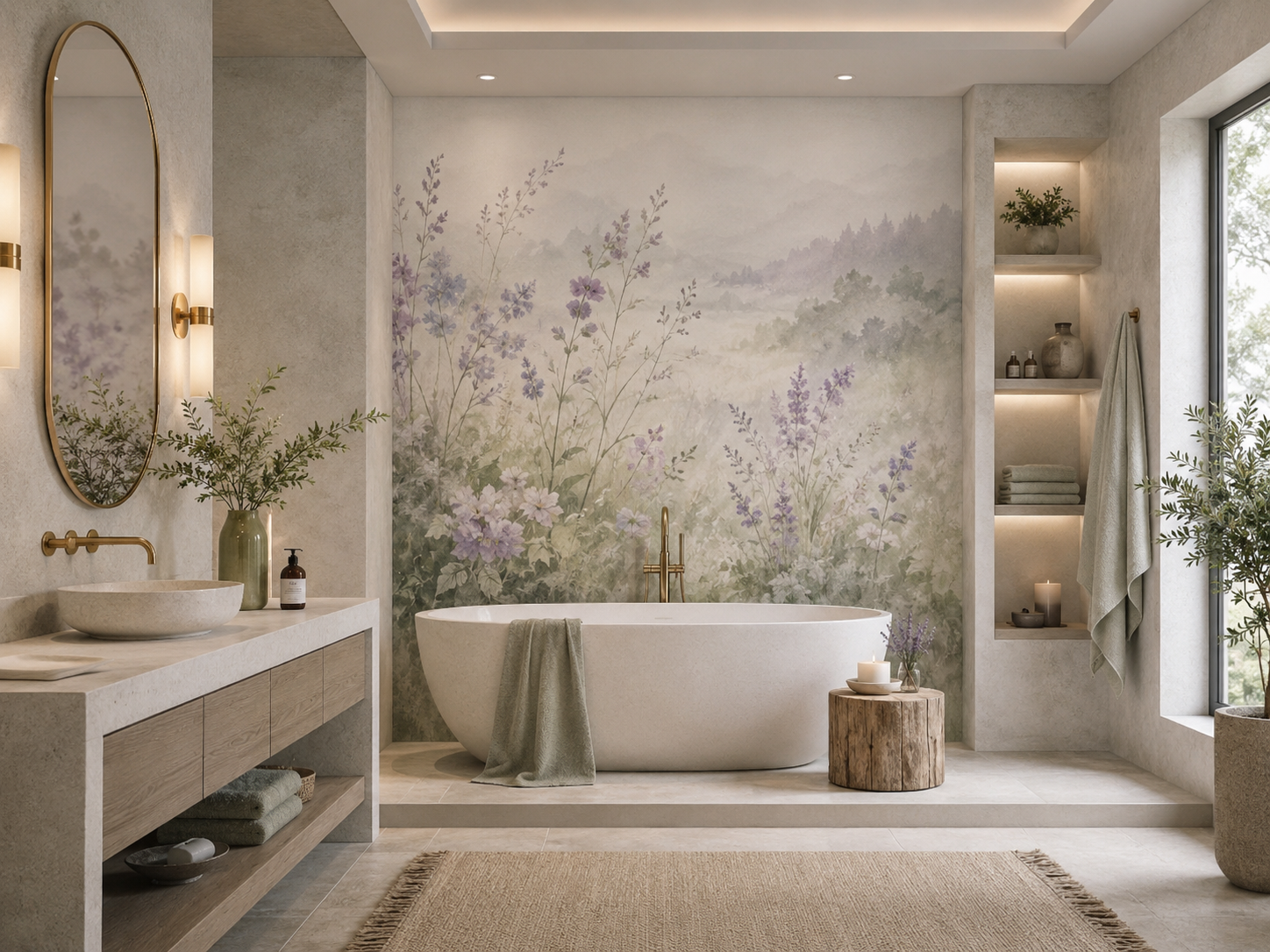
15. Misty Floral Bathroom Mural
Soft, blurred flowers can create a relaxing spa effect in a bathroom or powder room.
Sage green, pale lavender, warm grey, and ivory are more calming than highly saturated colors. Position the mural away from direct water exposure unless the surface and production method are specifically suitable for wet conditions.
A matte protective finish can help reduce glare and improve cleanability.
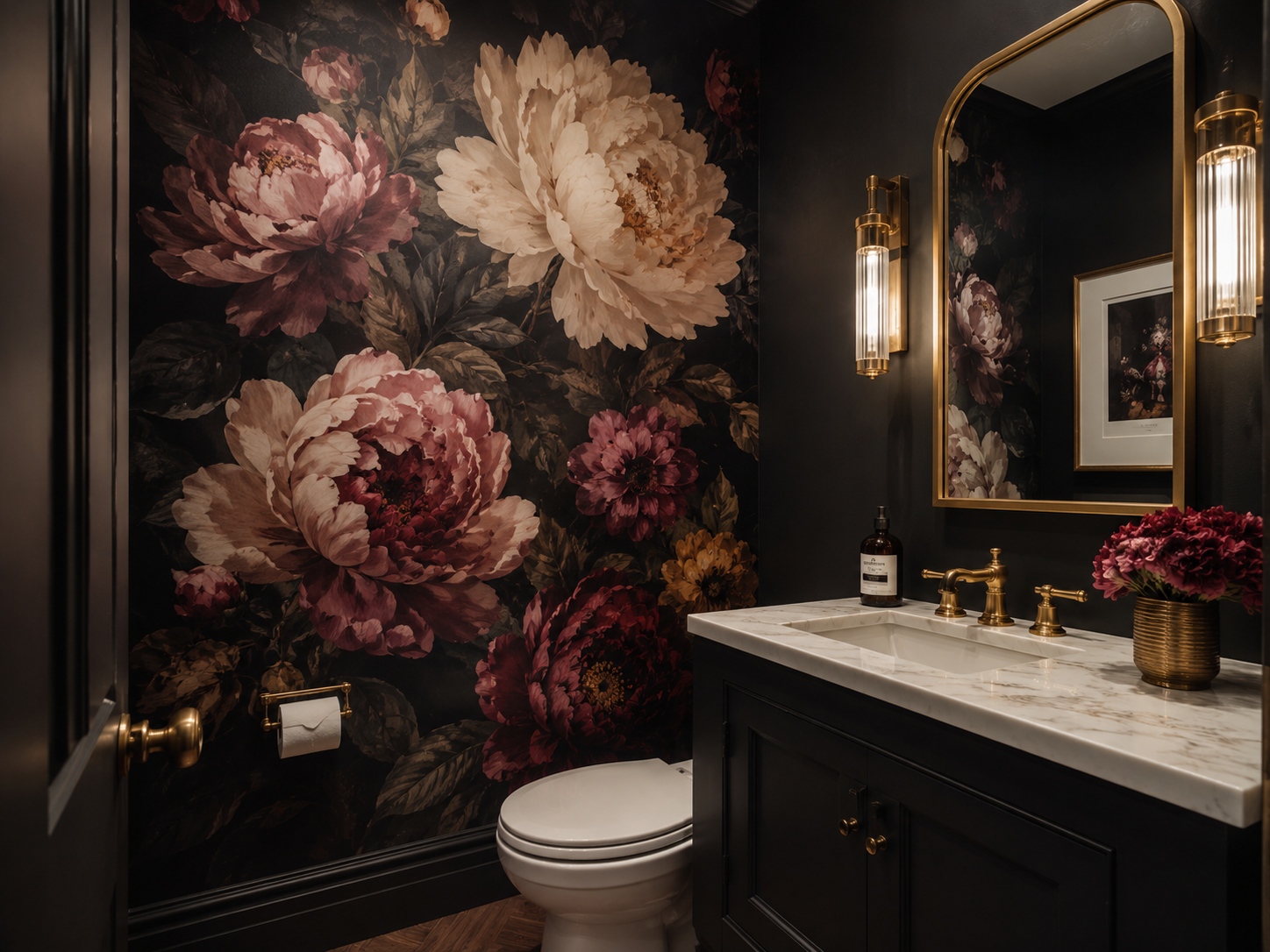
16. Dark Floral Powder-Room Wall
A small powder room can support a stronger, more dramatic floral design than a larger room.
Dark backgrounds with oversized roses, peonies, or tropical flowers create a jewel-box effect. Because the space is small, one fully designed wall is usually enough.
Use moisture-resistant materials or a suitable protective system, especially near the sink.
Flower Mural Ideas for Nurseries and Children’s Rooms
Children’s murals should feel imaginative, friendly, and easy to understand from a child’s eye level.
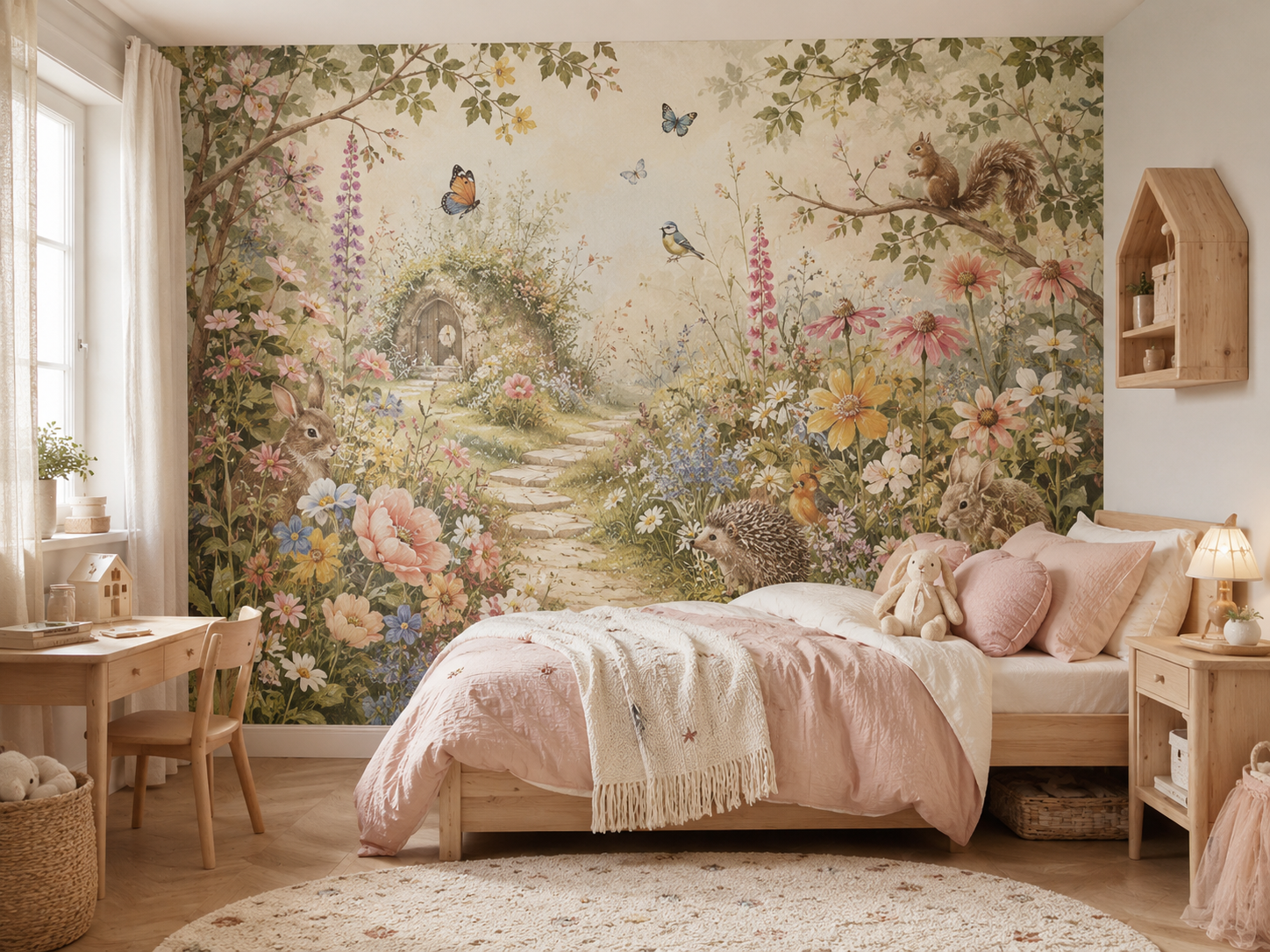
17. Enchanted Garden Storybook Mural
An enchanted garden mural can include wildflowers, mushrooms, butterflies, small animals, and hidden paths.
Keep the main storytelling details in the lower half of the wall, where children can see them easily. Trees, clouds, and lighter scenery can extend upward to create depth.
Use a limited palette so the room remains playful without becoming visually chaotic.
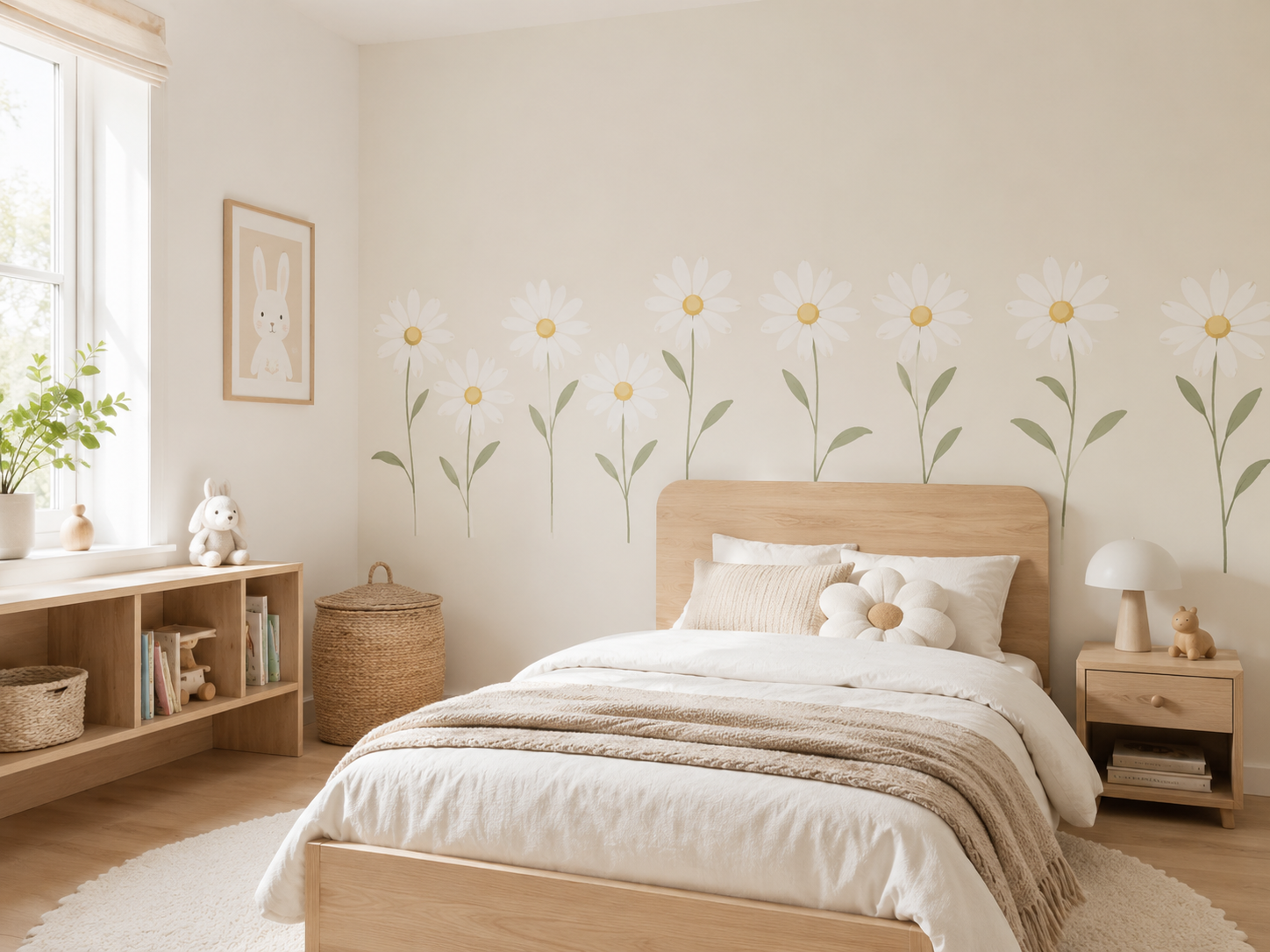
18. Minimal Daisy-Chain Mural
A simple row of daisies is a good choice for parents who want a cheerful design without covering the entire room.
The flowers can run behind the bed, changing table, or reading corner. White petals with soft yellow, pink, peach, or lavender centers suit Scandinavian and modern nurseries.
The design is easy to coordinate with furniture and can remain suitable as the child grows.
Flower Murals for Cafés, Restaurants and Retail Spaces
Commercial floral murals need to support branding, customer experience, photography, and the overall identity of the space.
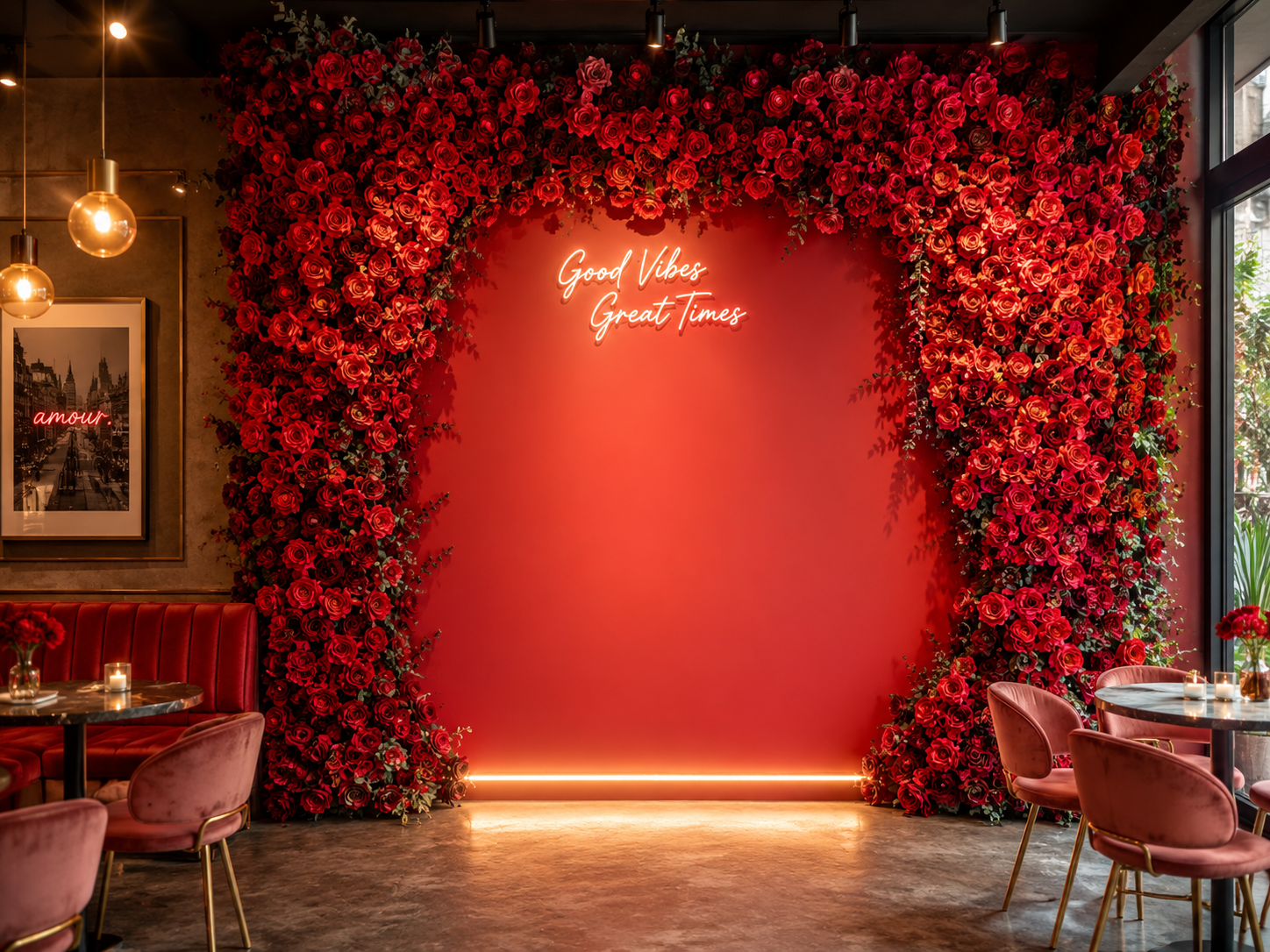
19. Oversized Red Rose Photo Wall
Large red roses can create an instantly recognizable photo backdrop in cafés, restaurants, beauty stores, and event spaces.
Arrange the flowers around a logo, bench, or designated standing area. Keep the composition bold enough to remain visible in customer photographs without covering the brand name.
A clean floor area in front of the mural makes the photo spot easier to use.
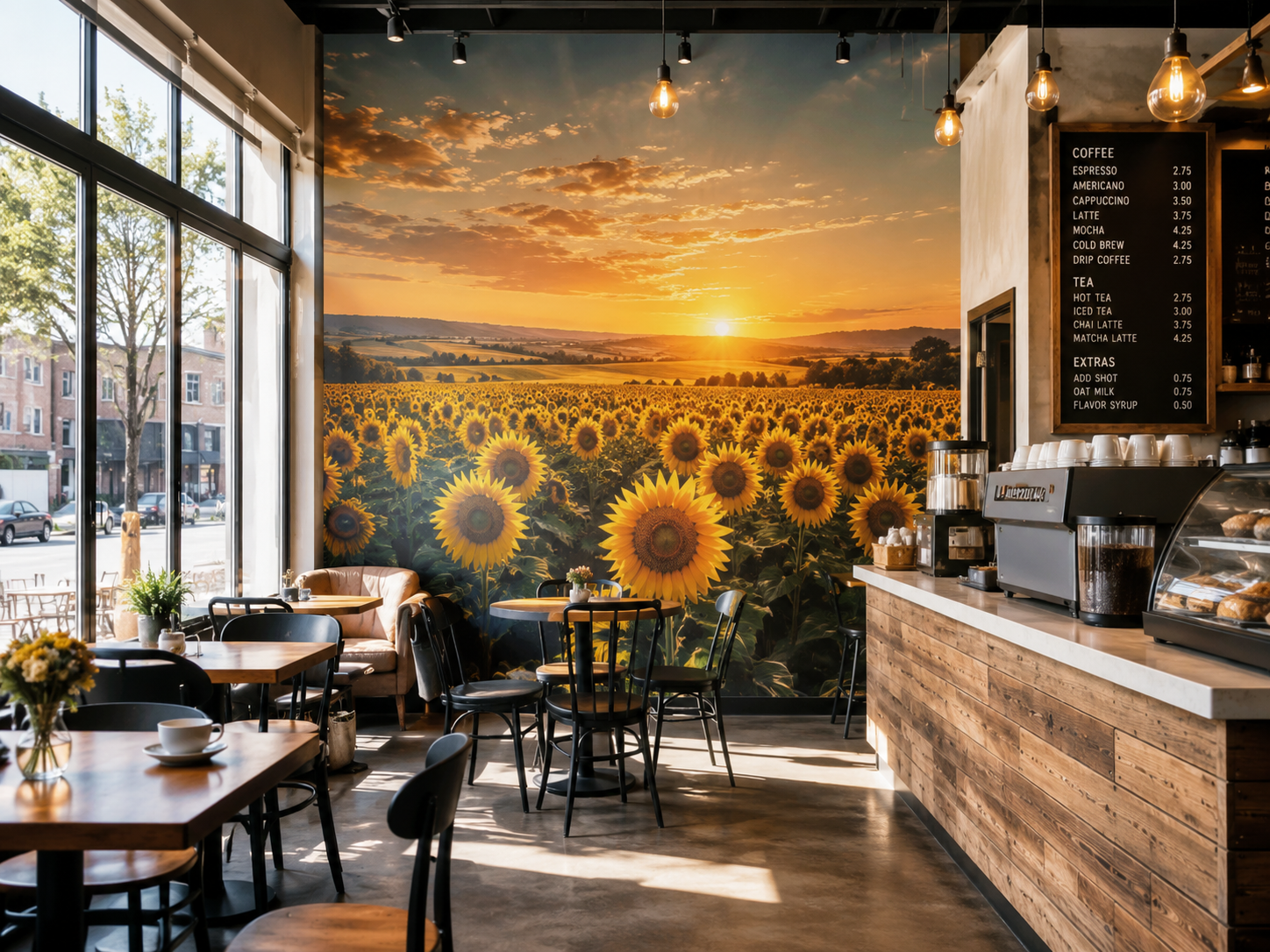
20. Sunflower Field Café Mural
A sunflower field with a soft sunset background creates a bright, welcoming atmosphere for bakeries, brunch cafés, and family restaurants.
A low horizon can make a narrow room feel more open. Position a feature table or seating area in front of the mural so customer photos naturally include both the food and the artwork.
Warm yellow and orange tones also work well with timber and natural materials.
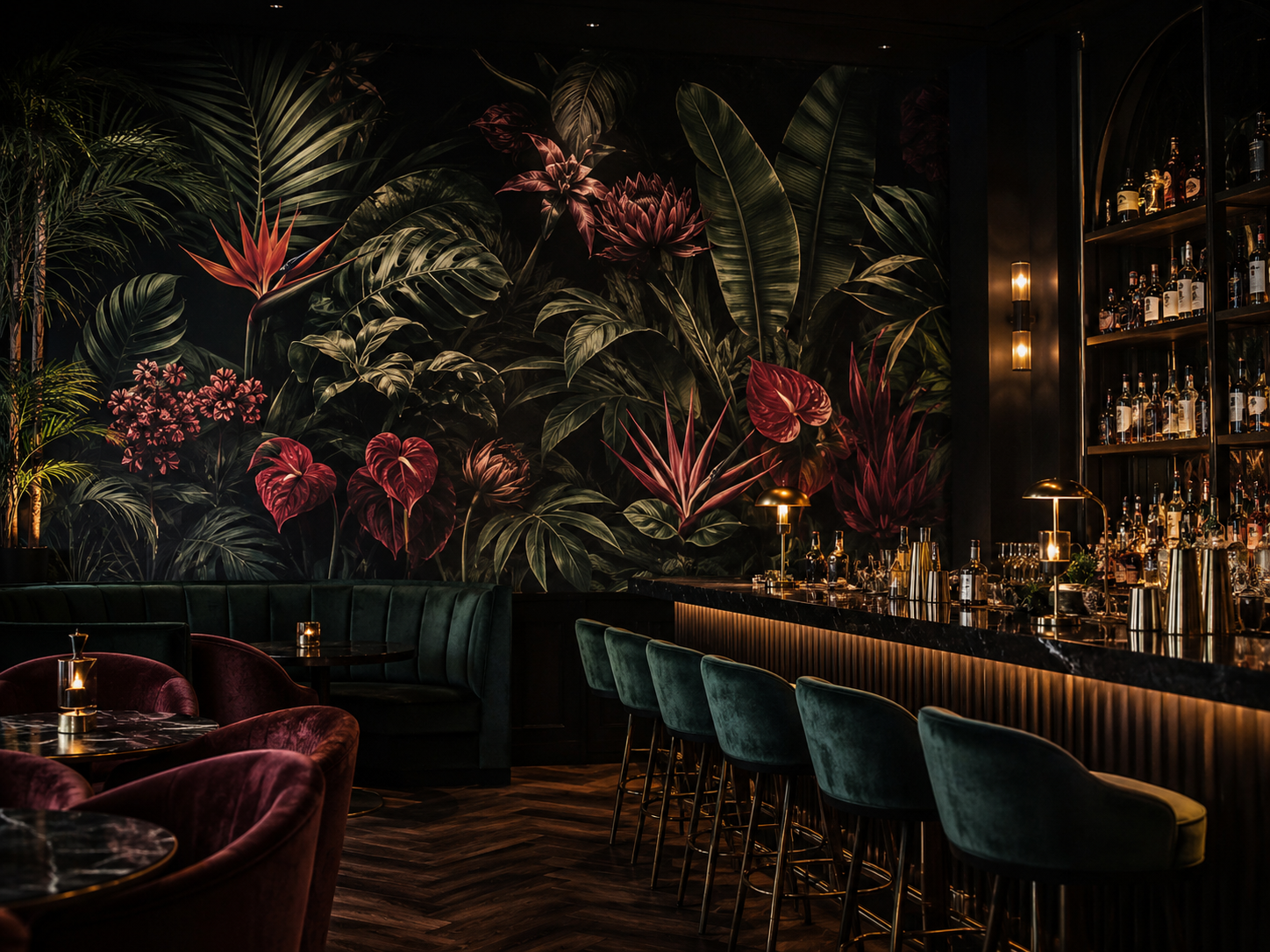
21. Tropical Floral Mural for Bars
Oversized tropical leaves, hibiscus, birds of paradise, and exotic flowers can give a bar or lounge a strong identity.
Dark green, black, and jewel-tone backgrounds suit night venues, while cream and brighter greens work better in daytime cafés and terraces.
Use fewer, larger motifs so the mural remains legible under lower lighting.
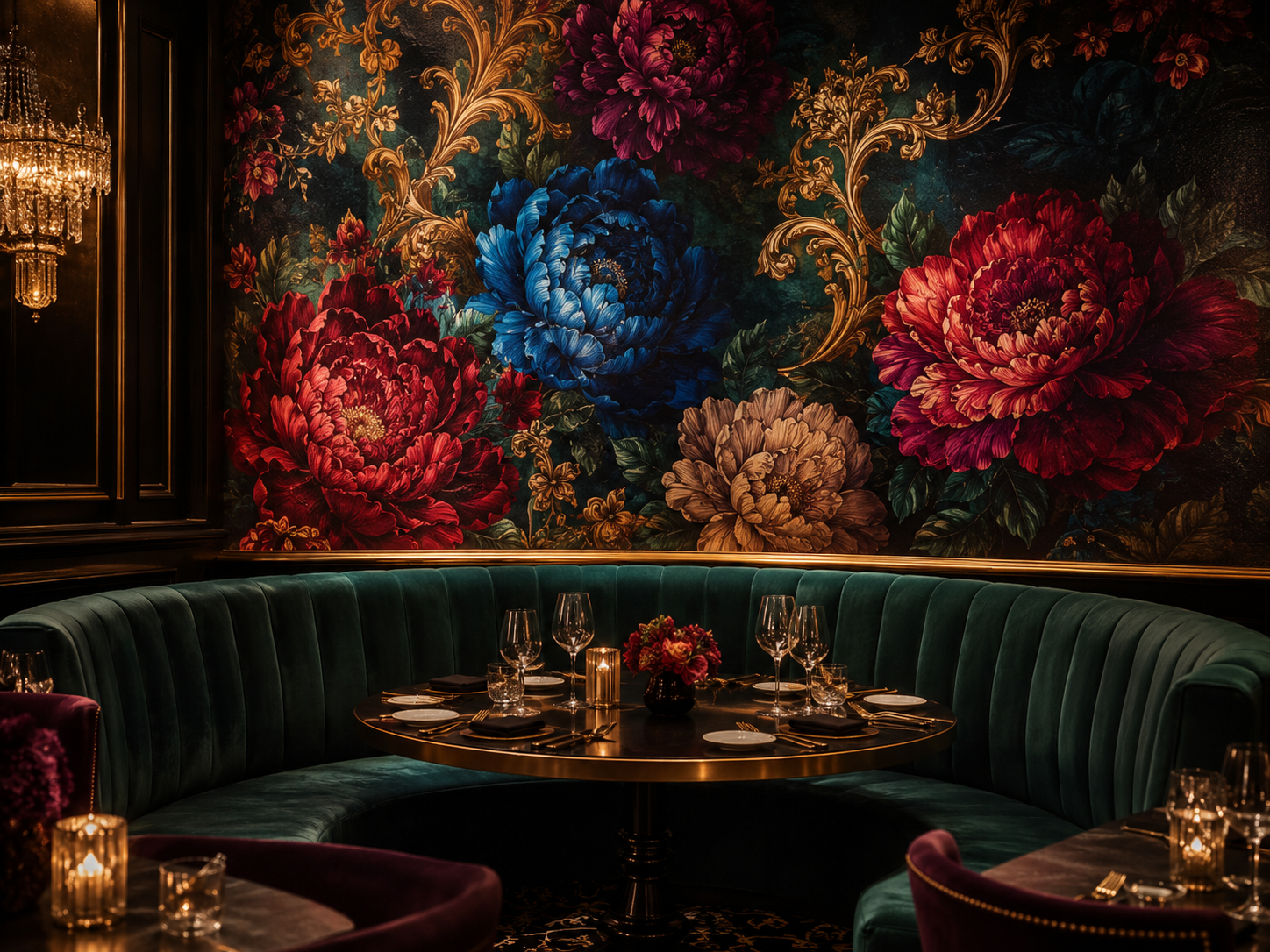
22. Baroque Peony Mural for Fine Dining
Baroque-style peonies and ornamental flowers can add richness to a fine-dining restaurant or luxury hotel restaurant.
Deep burgundy, emerald, navy, gold, and cream work well behind banquettes or reception desks. Keep the surrounding furniture and lighting controlled so the mural feels luxurious rather than crowded.
A symmetrical composition can reinforce a formal atmosphere.
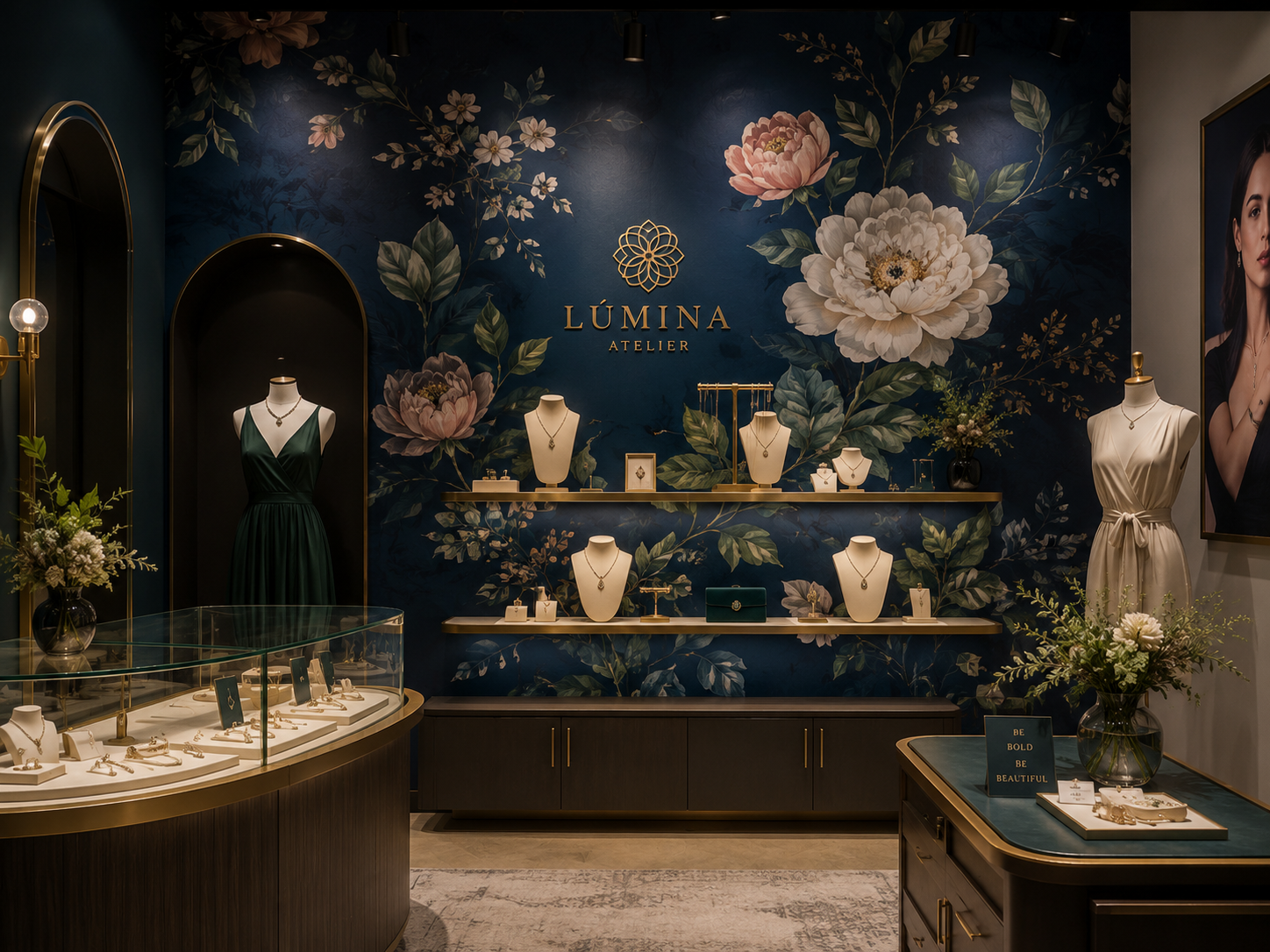
23. Dark Floral Product Backdrop
Dark floral backgrounds can create strong contrast behind light-colored merchandise, making them useful for fashion, jewelry, cosmetics, and gift stores.
Keep important flowers away from shelf edges and product silhouettes. The mural should frame the merchandise rather than compete with it.
This style also photographs well for social media and online product content.
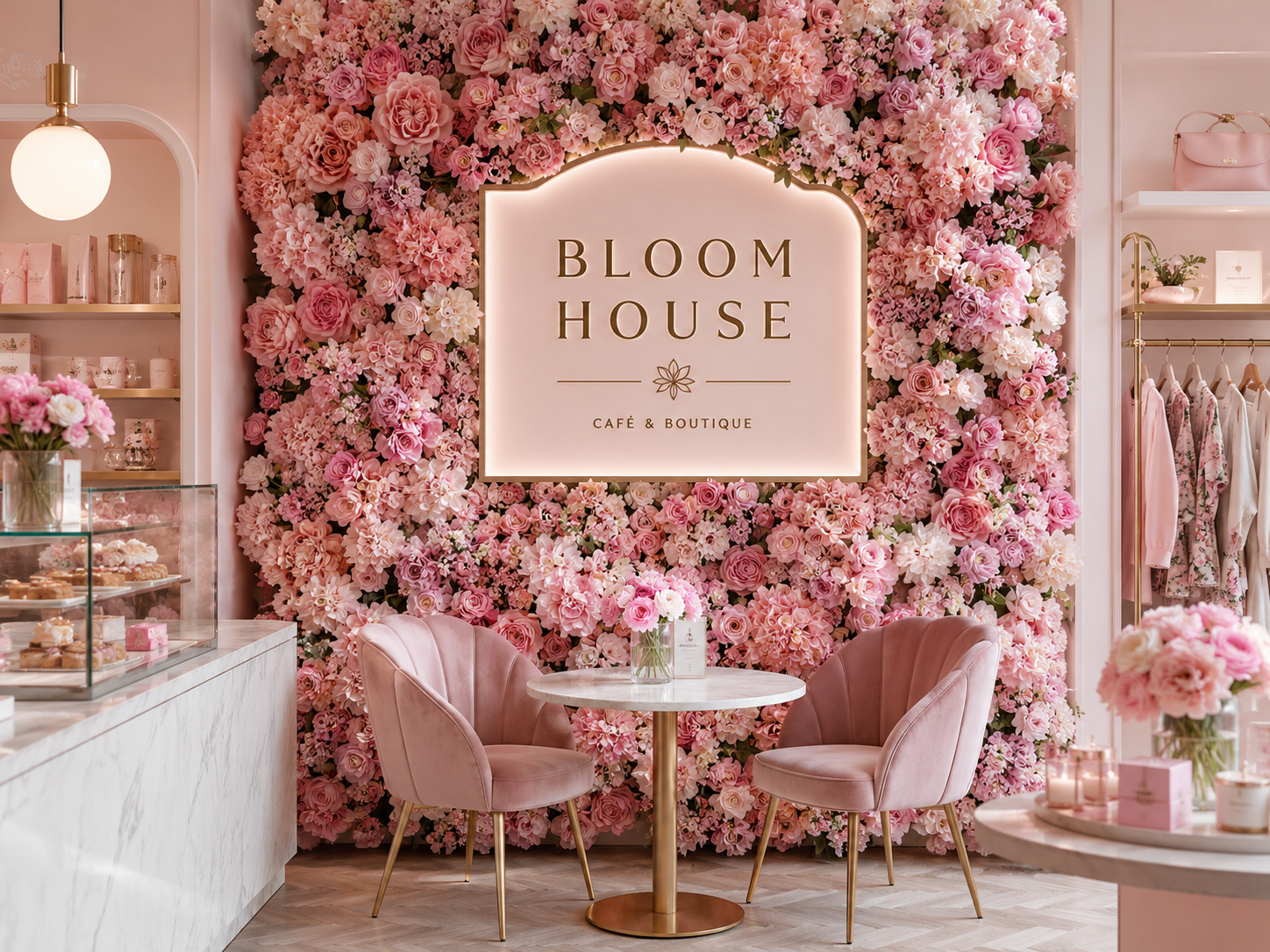
24. Pink Floral Photo Wall
A pink floral wall can become a dedicated social-media feature for boutiques, cafés, salons, and event venues.
A printed 3D-effect mural can reproduce layered flowers without the dust and maintenance associated with physical artificial-flower panels. Use several pink tones to create depth and leave enough open space for customers to stand comfortably.
Add the brand name subtly rather than placing it across the main flowers.
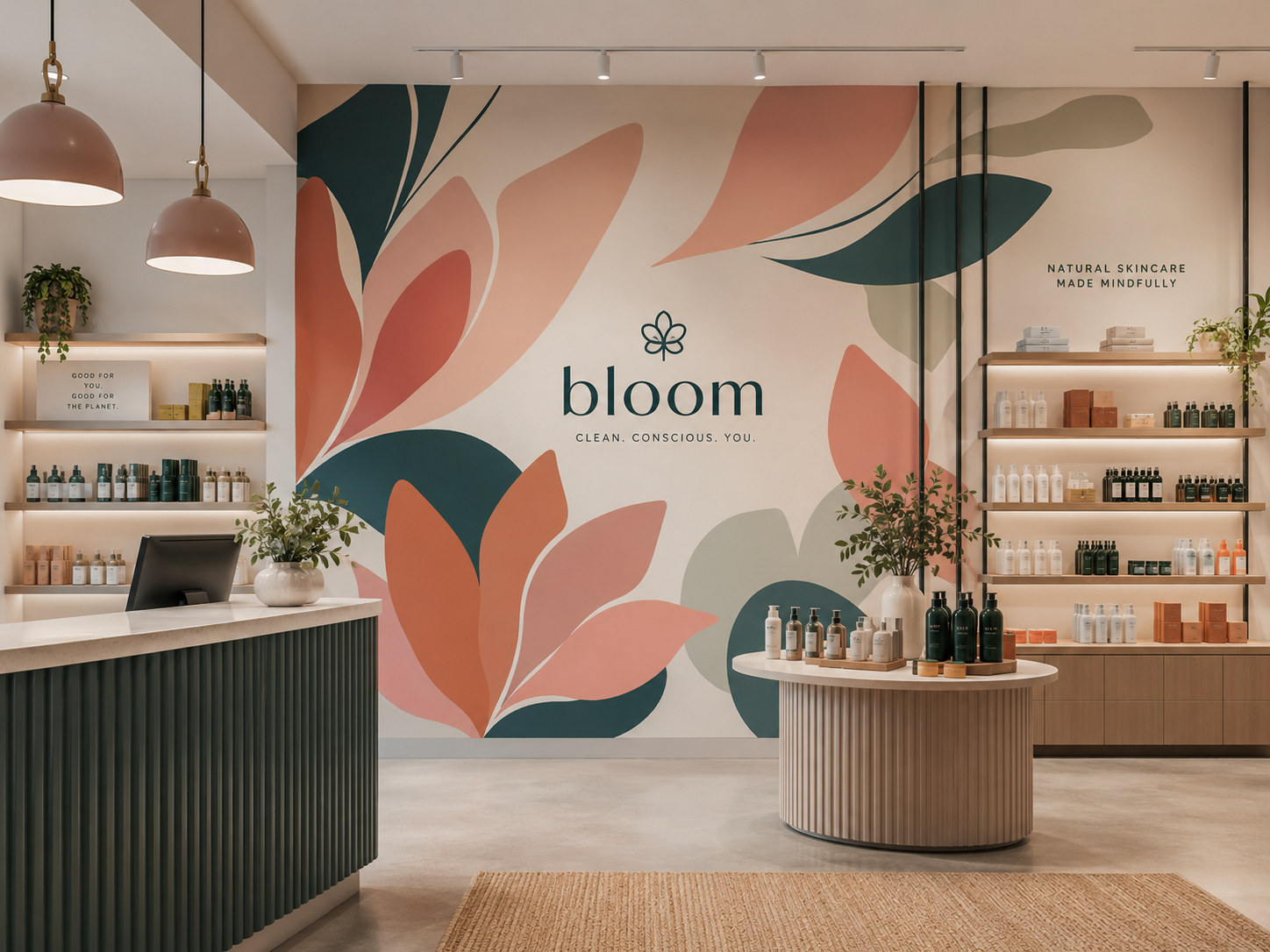
25. Abstract Floral Mural in Brand Colors
Simplified petals and organic shapes can be adapted to a company’s existing color palette.
This is a useful option for retailers that want a floral atmosphere without using realistic roses or botanical illustrations. Limit the design to a few consistent colors so it can be reproduced across several locations.
The mural can be placed behind a checkout counter, fitting-room entrance, or product display.
Floral Murals for Salons, Spas, Offices and Hotels
These spaces often need murals that feel calm, premium, and consistent with an established brand.
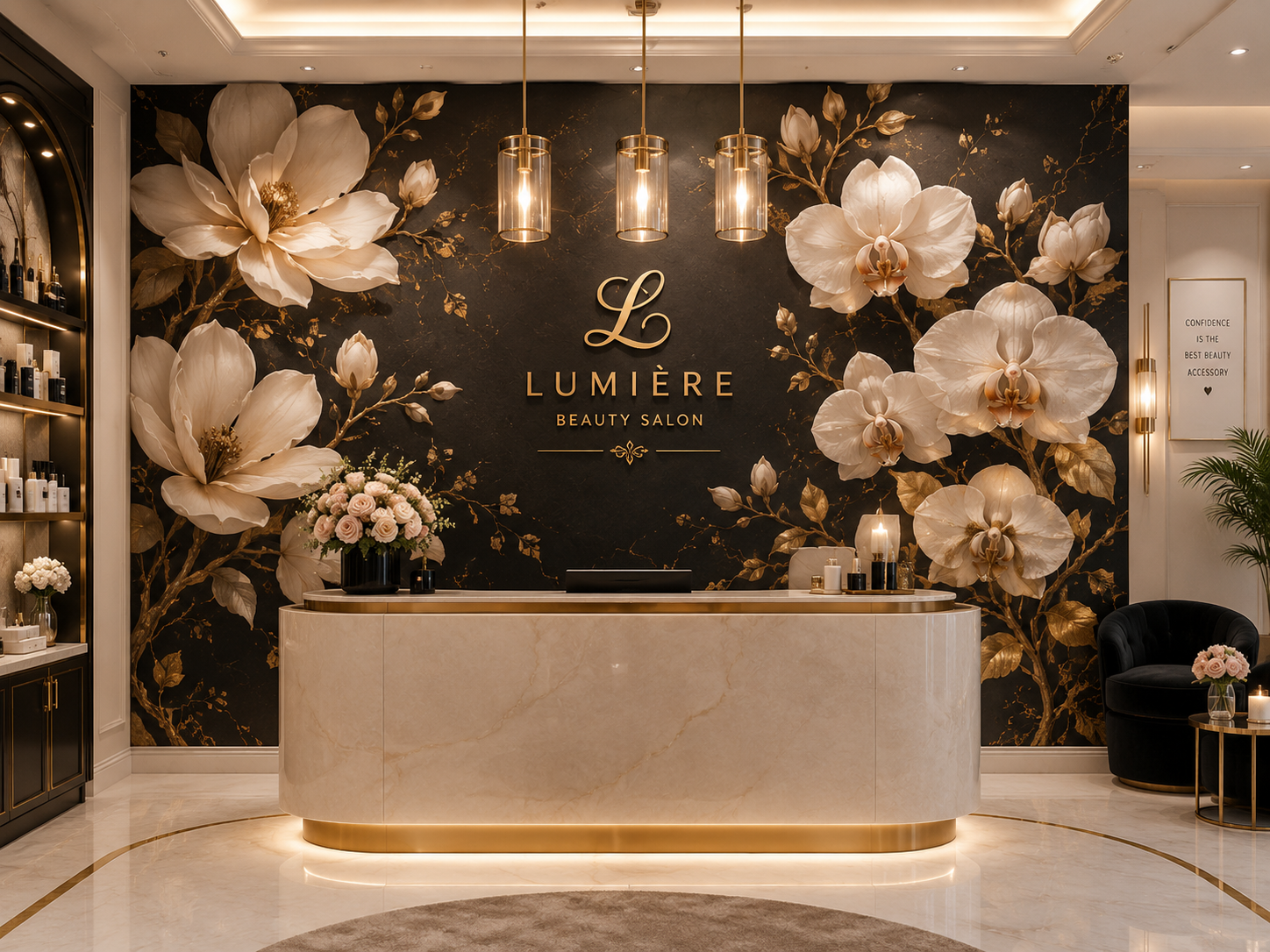
26. Orchid and Magnolia Salon Lobby Mural
Orchids and magnolias create a refined atmosphere for beauty salons, medical spas, and wellness reception areas.
For a dramatic look, use white flowers on charcoal with subtle gold accents. For a softer space, choose cream, blush, champagne, and pale green.
Large flowers work better than dense repeating patterns behind a reception desk.
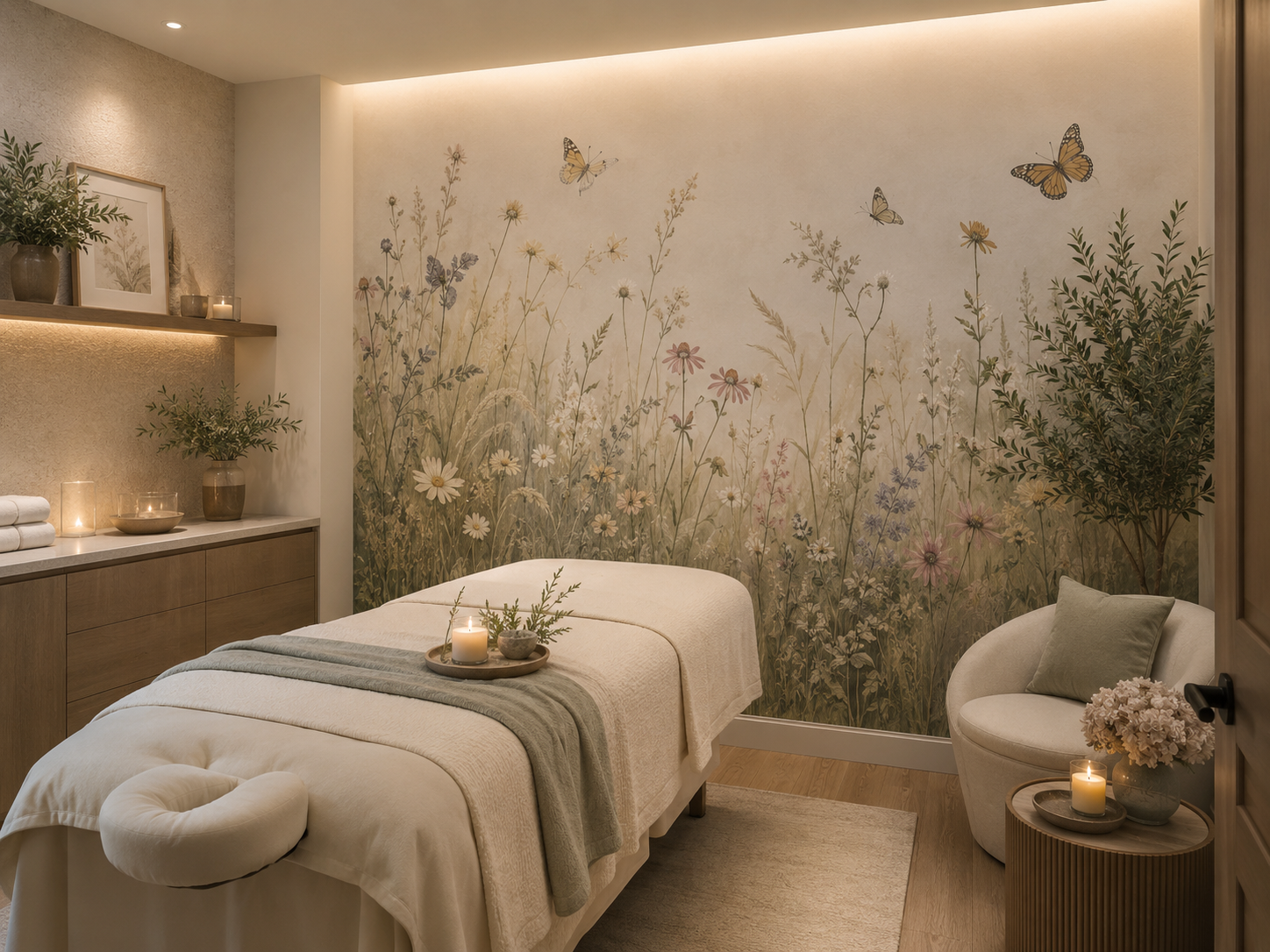
27. Meadow and Butterfly Spa Mural
A quiet meadow with soft flowers and a small number of butterflies can make a treatment room feel calmer.
Place the main details where a reclining client can see them naturally. Sage green, misty blue, ivory, and pale pink create a gentle atmosphere without drawing too much attention.
Avoid highly saturated colors or crowded compositions in relaxation areas.
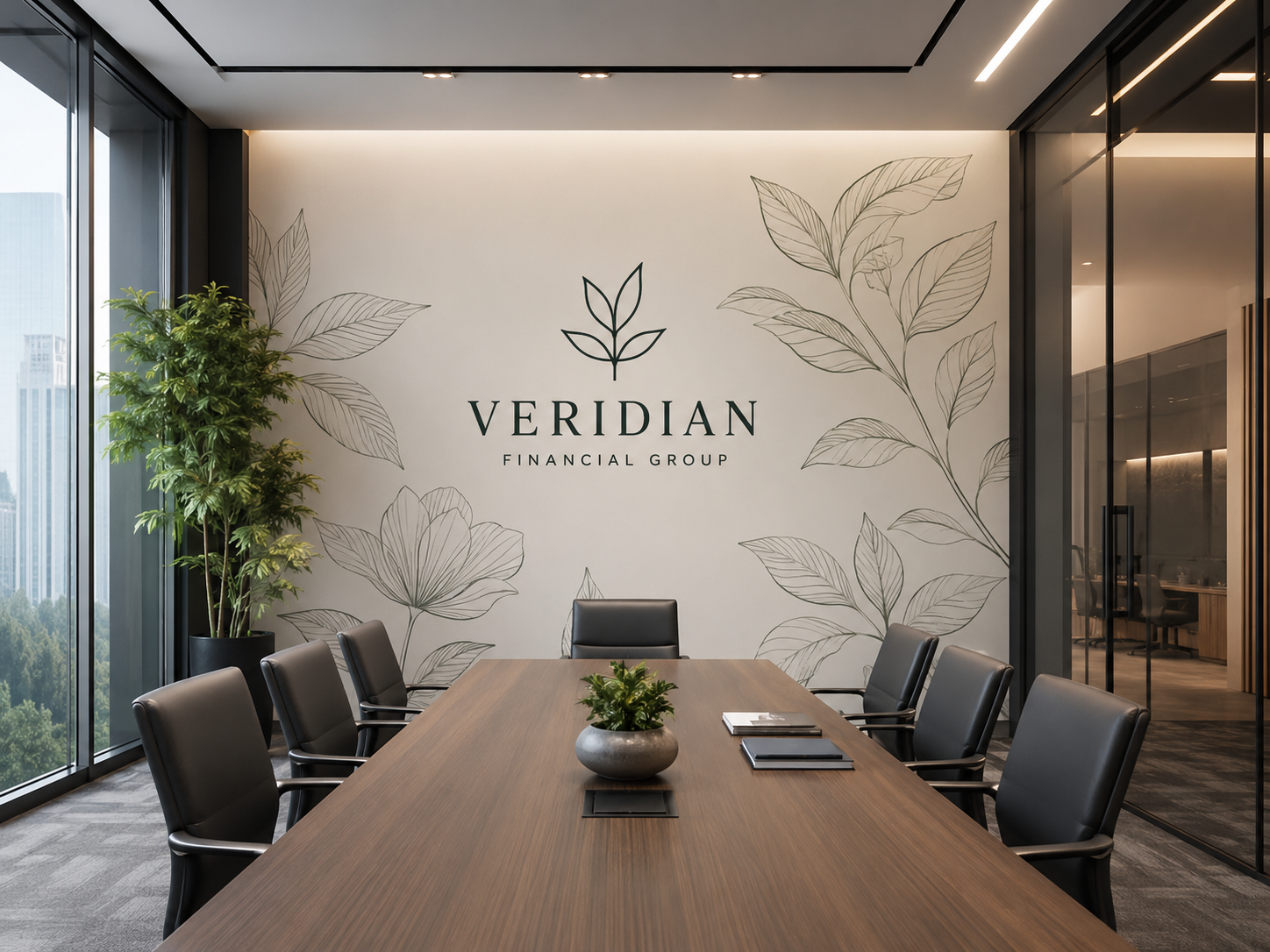
28. Corporate Botanical Line Mural
Botanical line art can bring nature into an office without feeling informal.
Use one or two brand colors for the leaves and stems, supported by a light neutral background. The mural can be combined with a small company logo, values statement, or reception sign.
This style works well in meeting rooms, lobbies, corridors, and collaborative spaces.
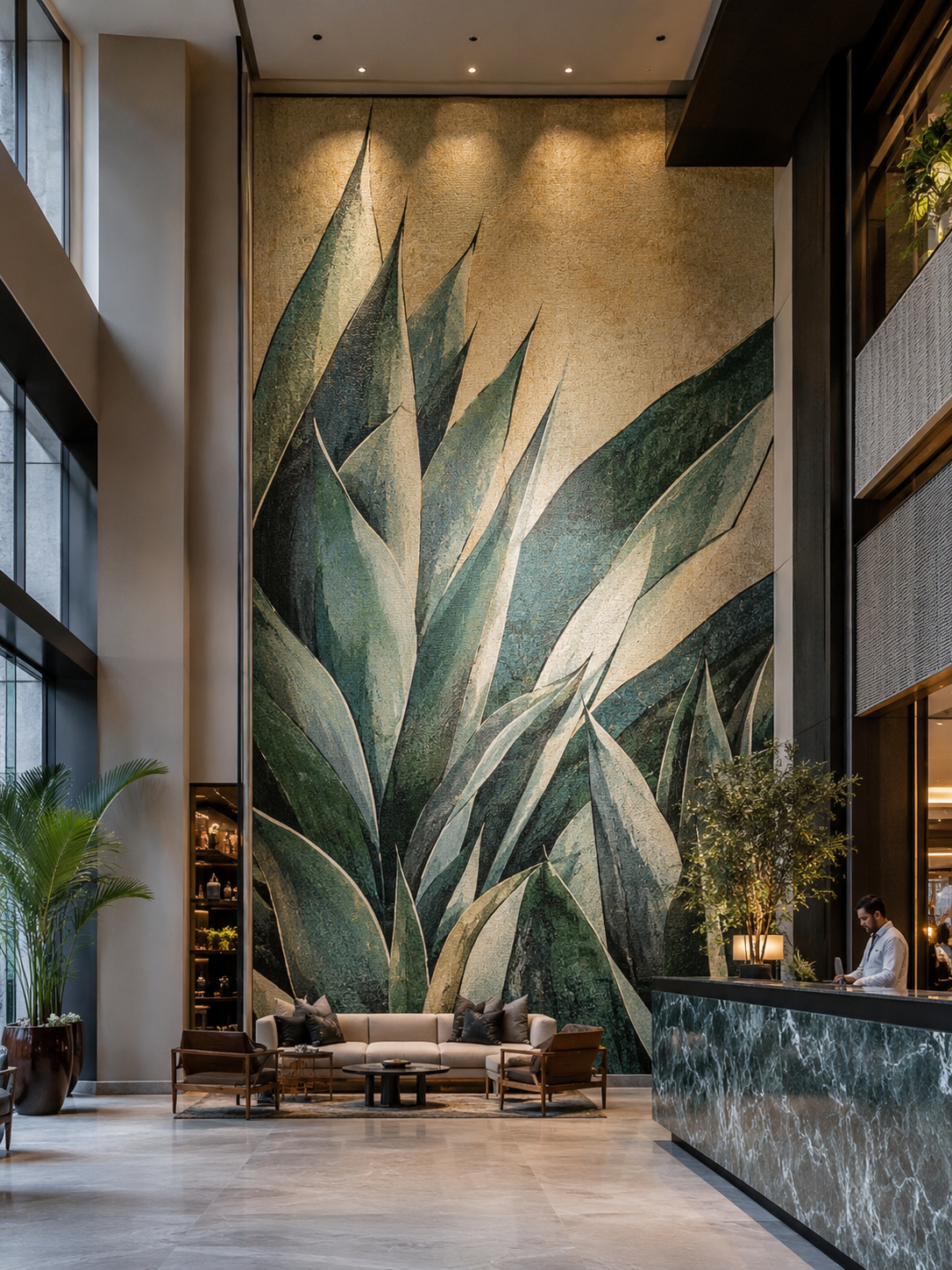
29. Geometric Agave Hotel-Lobby Mural
A large agave, leaf rosette, or stylized botanical shape can fill a tall hotel lobby without relying on a traditional flower pattern.
Desaturated green, terracotta, sand, and muted gold work well in contemporary hospitality interiors. The simple geometry remains clear from a distance and can be scaled to large walls.
This approach is especially useful in double-height spaces.
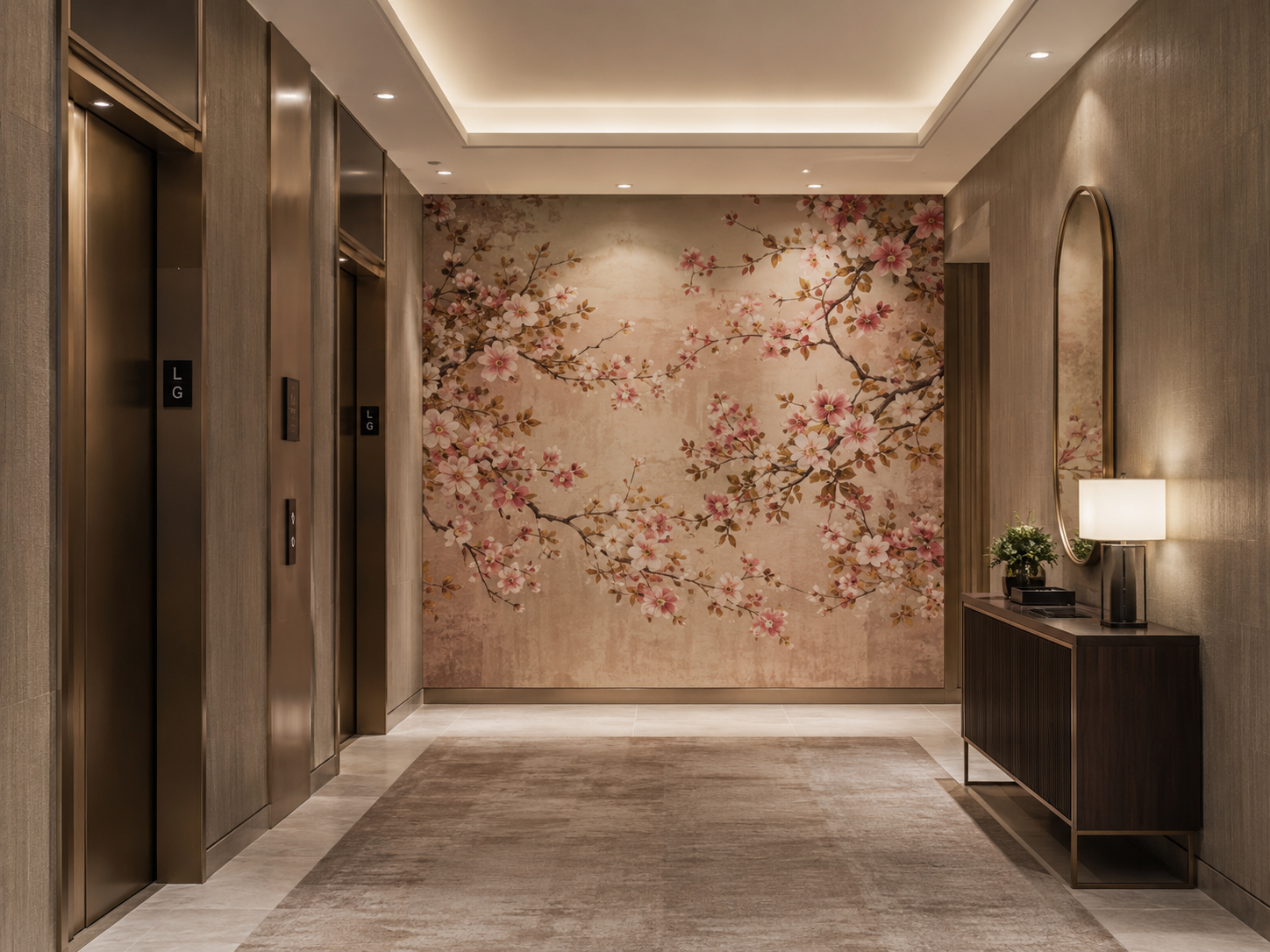
30. Seasonal Floral Hotel-Corridor Mural
Hotels can use floral murals near elevators, lounge areas, or key corridor sections to create a stronger sense of place.
A neutral botanical base can remain throughout the year, while seasonal flowers and colors influence the overall mood. Spring may use blossom branches and pale greens, while autumn may use dried flowers and warmer earth tones.
Avoid covering an entire long corridor with a dense pattern, which may feel repetitive.
How to Choose the Right Flower Mural
Match the Design to the Room’s Function
Bedrooms and spas usually benefit from softer colors and lower contrast. Living rooms and hotel lobbies can support larger compositions. Restaurants and retail stores can use stronger colors and recognizable focal points.
Consider the Wall Size
Small walls often look better with one oversized flower, minimal line art, or a low-density design. Large walls can support garden scenes, dark botanical murals, and full-width compositions.
Think About Viewing Distance
Murals viewed from close range can include smaller petals, delicate lines, and detailed illustration. Large commercial murals viewed from farther away need stronger outlines, larger flowers, and a clearer overall composition.
Coordinate With Existing Colors
A mural should repeat at least one color already present in the furniture, flooring, lighting, or brand identity. This helps the design feel integrated rather than added afterward.
Inspect the Wall Before Choosing a Method
Loose paint, moisture, serious cracks, and unstable plaster should be repaired before any mural is installed or printed. The wall material and texture may also determine whether wallpaper, vinyl, hand painting, or direct wall printing is most suitable.
How Can a Flower Mural Be Made?
|
Production Method |
Best For |
Main Advantage |
Main Limitation |
|---|---|---|---|
|
Hand painting |
Original artistic projects |
Handmade texture and artistic interpretation |
Longer production time and difficult replication |
|
Wallpaper mural |
Textured residential and hospitality interiors |
Wide range of material finishes |
Panel seams and adhesive installation |
|
Vinyl graphics |
Temporary promotions and removable branding |
Easy to replace |
Requires a relatively smooth wall |
|
Direct wall printing |
Large custom murals and commercial brand walls |
Seamless, produced on-site, highly customizable |
Requires equipment access and a stable wall |
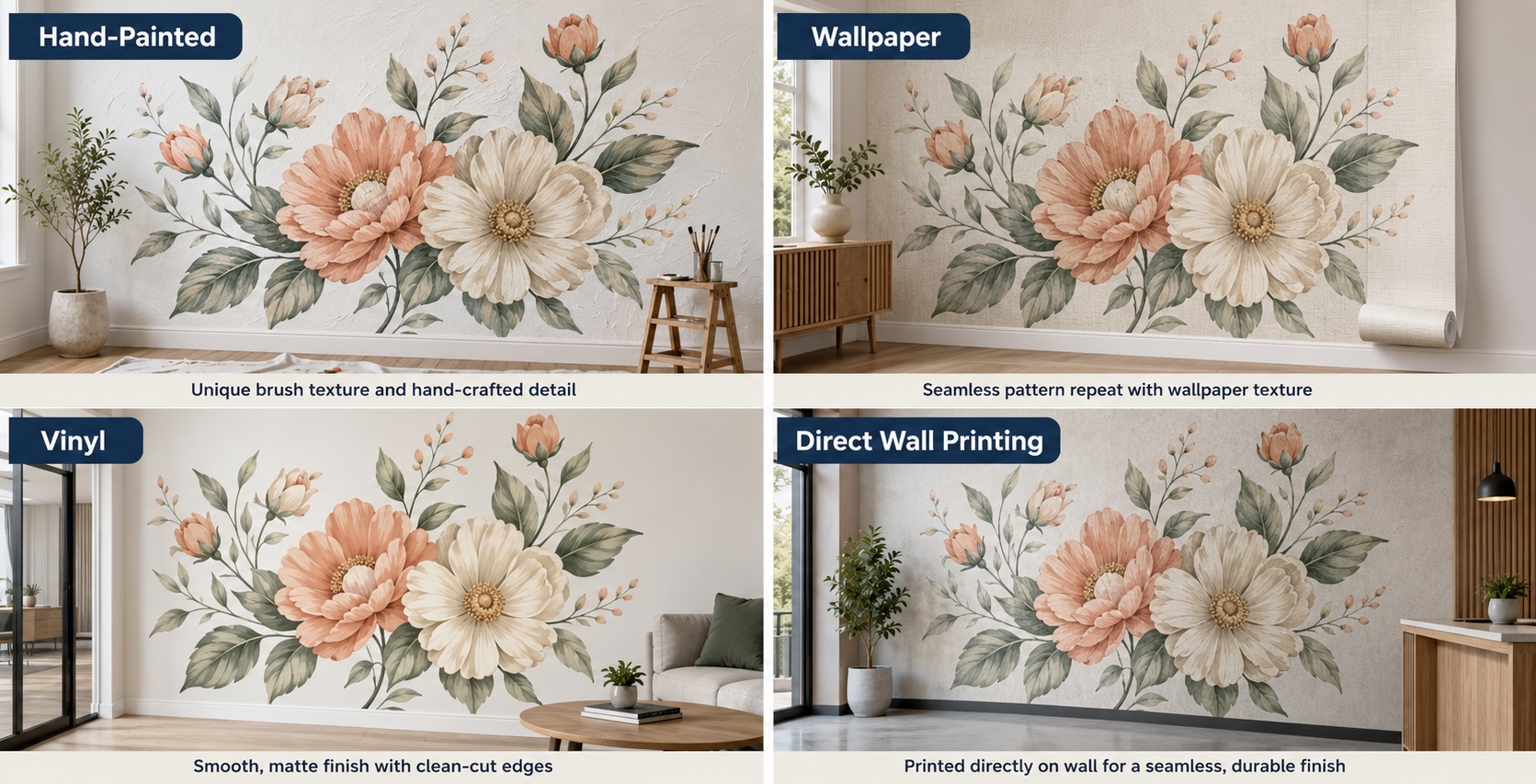
Hand-Painted Flower Murals
Hand painting is ideal when the client wants visible brushwork and an original piece created by a mural artist. It offers strong artistic character but requires more on-site time and is difficult to reproduce identically across several locations.
Wallpaper Flower Murals
Wallpaper offers fabric, paper, canvas, metallic, and natural-fiber textures. It is well suited to residential and hospitality projects where the material finish is as important as the floral image.
The main disadvantages are panel seams, adhesive, and limited flexibility when site dimensions change.
Vinyl Flower Graphics
Vinyl is best for temporary campaigns, exhibitions, rented spaces, and frequently updated commercial graphics.
It installs quickly and is relatively easy to replace, but it performs best on smooth surfaces and may not adhere well to rough brick, concrete, or heavily textured paint.
Direct Wall Printing
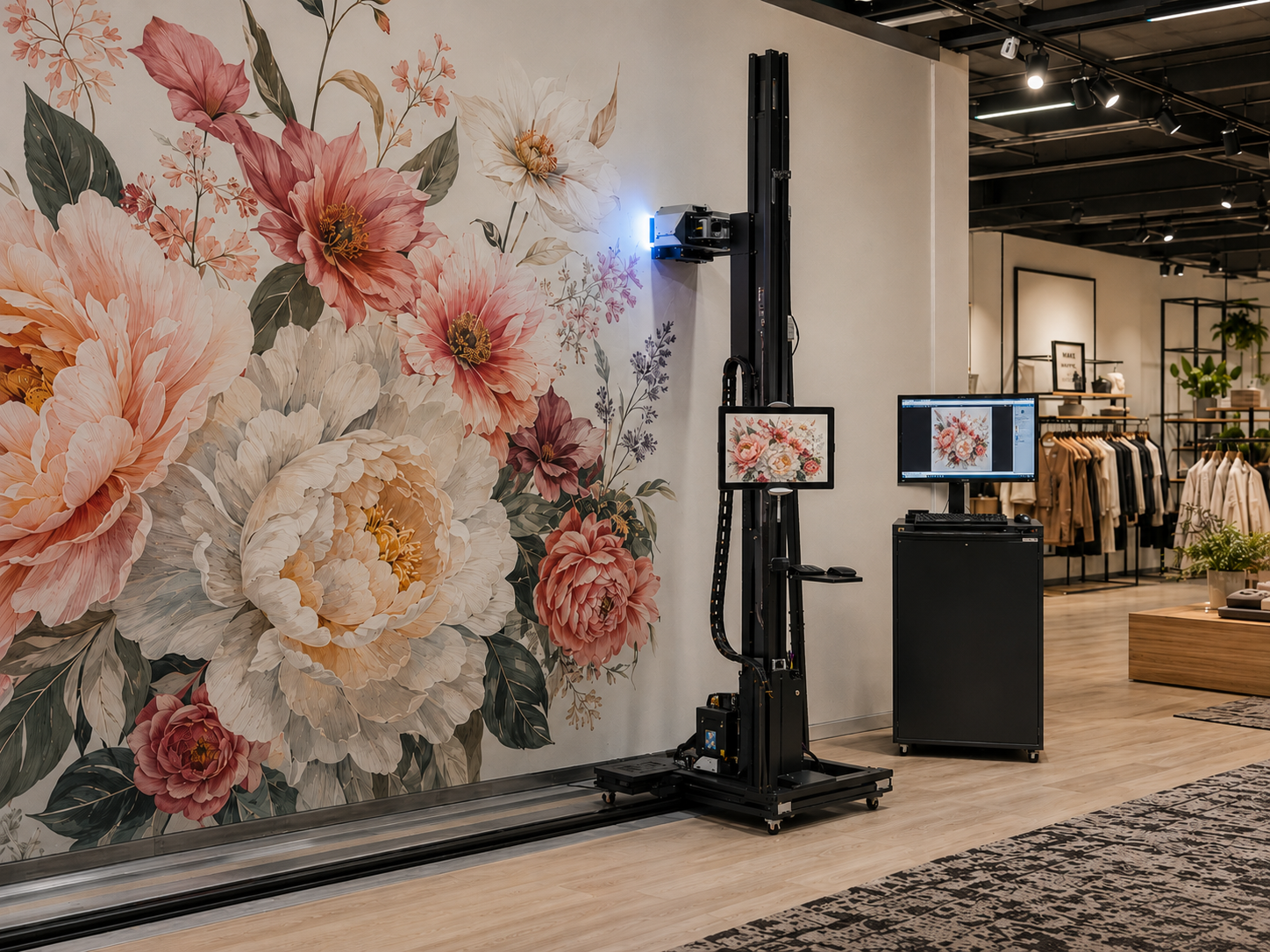
Direct wall printing uses a vertical wall printer to apply the floral artwork directly to the surface.
It is particularly suitable for flower murals because it can reproduce watercolor gradients, detailed petals, oversized floral photography, dark botanical backgrounds, and precise brand graphics without wallpaper seams.
UV wall printers can print on a range of prepared surfaces, including painted walls, plaster, brick, concrete, wood, glass, tile, and metal. White ink can support dark or colored backgrounds.
For decoration companies, sign businesses, and mural entrepreneurs, owning a wall printer can also bring previously outsourced projects in-house.
WallPrintBox combines the wall printer, operating training, setup guidance, essential accessories, and business support in one structured package, helping new operators move from equipment delivery to real mural projects more efficiently.
Conclusion
The best flower mural does more than fill an empty wall. It should match the scale, purpose, lighting, and atmosphere of the space.
Soft watercolor flowers and cherry blossoms work well in bedrooms and calm residential interiors. Dark botanical murals, tropical flowers, and oversized roses can create stronger visual impact in cafés, restaurants, boutiques, and hotels. Minimal line art and abstract floral designs offer a cleaner solution for contemporary homes and offices.
The production method matters as much as the design.
Hand painting provides artistic texture, wallpaper adds material depth, vinyl supports temporary campaigns, and direct wall printing produces seamless custom artwork directly on the surface.
Planning to add flower mural printing to your decoration or advertising business? Send WallPrintBox your target wall materials, typical mural sizes, expected monthly workload, and delivery country. The team can recommend a suitable printhead and ink configuration, arrange a floral sample print, and provide an itemized delivered quotation.