
A mural is a large-scale artwork created directly on—or permanently integrated into—a wall, ceiling, or other architectural surface.
Unlike a framed painting, a mural is usually designed for a specific location. The size of the wall, surrounding architecture, viewing distance, lighting, and the people using the space all influence the final design.
Murals can be found in homes, hotels, restaurants, offices, museums, schools, subway stations, and public buildings. They also appear on exterior façades, bridges, warehouses, and city streets.
Some murals are painted entirely by hand. Others are created with ceramic tiles, mosaics, carved materials, spray paint, or a modern wall printer.
Whatever method is used, the defining feature of a mural is that the artwork becomes part of the space rather than simply being displayed within it.
What Is a Mural?
The simplest definition is:
A mural is an artwork created directly on an architectural surface or designed specifically as part of a building or space.
Most murals share three main characteristics.
First, murals are generally large enough to influence the atmosphere of a room, building, or public area. A mural may cover a single feature wall, an entire building façade, or several connected surfaces.
Second, murals are closely connected to their location. A mural designed for a hotel lobby will usually use a different scale, color palette, and subject from one created for a school, restaurant, or outdoor community space.
Finally, murals are normally intended to remain in their original location. Even temporary murals are usually designed around the dimensions and purpose of a particular wall.
How Is a Mural Different From Other Wall Art?
|
Type |
Main Difference |
|---|---|
|
Mural |
Created directly on—or specifically for—an architectural surface |
|
Framed painting |
Portable artwork displayed on a wall |
|
Wallpaper |
Printed material installed in panels, often with repeating patterns |
|
Wall decal |
Adhesive graphic that can usually be removed |
|
Graffiti |
Often refers to unauthorized lettering or imagery, although commissioned graffiti-style work may also be considered a mural |
The boundaries between murals, street art, and graffiti are not always strict.
Many contemporary artists use spray paint, markers, and stencils associated with graffiti culture to create planned and officially commissioned murals.
The main differences usually involve scale, purpose, permission, and the relationship between the artwork and its location.
What Are the Main Types of Murals?
Murals can be classified according to the materials and techniques used to create them. The following are among the most common types found in historic buildings, contemporary interiors, commercial spaces, and public environments.
Hand-Painted Murals
Hand-painted murals are the most familiar form of modern mural art.
Artists apply acrylic, latex, mineral, or exterior-grade paint directly to prepared drywall, plaster, brick, concrete, wood, or other surfaces.
This method gives the artist complete control over brushwork, texture, color blending, and visual style. It can be used to create detailed portraits, landscapes, abstract artwork, decorative illustrations, or commercial brand walls.
Hand-painted wall arts are commonly found in homes, cafés, restaurants, hotels, schools, offices, and public buildings.
Their main advantage is the artist’s visible personal style and handmade texture, although the production process can be time-consuming.
Fresco Murals
Fresco is one of the oldest mural techniques.
In traditional buon fresco, pigments mixed with water are applied to fresh lime plaster. As the plaster dries, the pigments become chemically bonded to the wall.
This creates an exceptionally durable image, but the process requires careful planning because each section must be completed before the plaster sets.
The ceiling of the Sistine Chapel is one of the world’s best-known examples of fresco painting.
Today, fresco is mainly used in historic restoration, religious buildings, specialist art projects, and spaces where traditional craftsmanship is important.
Mosaic and Tile Murals
Mosaic murals are assembled from many small pieces of glass, stone, ceramic, or other materials. Tile murals usually use larger fired ceramic pieces that may be individually painted before installation.
These murals are highly durable and resistant to moisture, cleaning, and frequent physical contact.
Mosaic and tile murals are often installed in subway stations, swimming pools, public plazas, hotel lobbies, schools, transportation hubs, and building façades.
Compared with painted murals, they usually require more design, fabrication, installation, and structural preparation.
Their main advantage is exceptional longevity with relatively low maintenance.
Street Art Murals
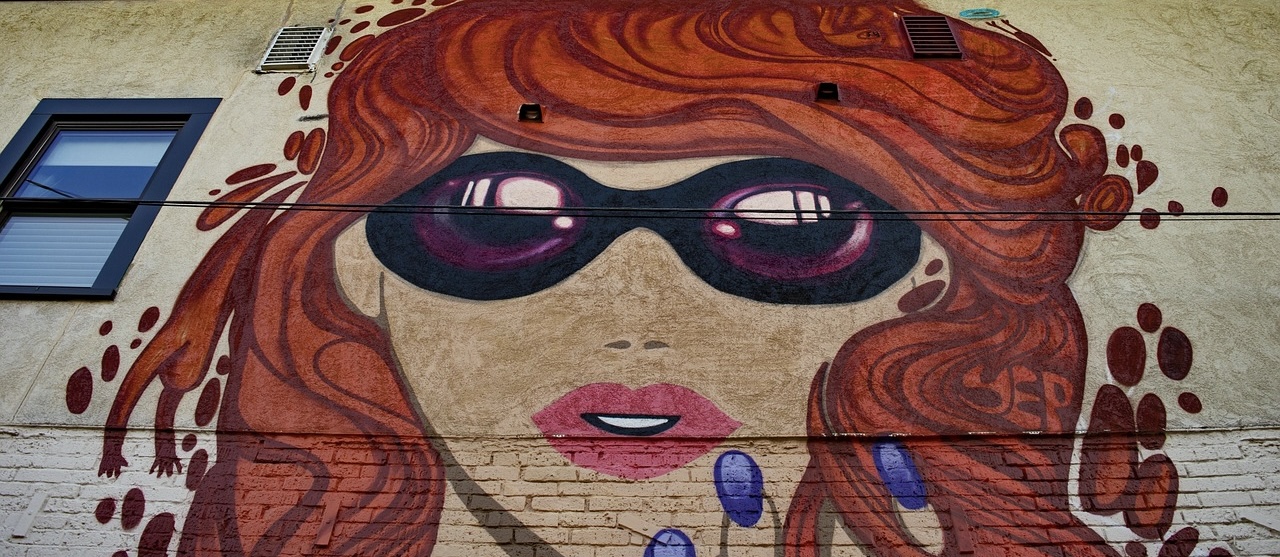
Street art murals are commonly created with spray paint, acrylic paint, rollers, markers, or stencils.
The style developed from urban graffiti culture but is now widely commissioned by local governments, property owners, brands, community organizations, and art festivals.
Street art murals often use bold colors, large lettering, portraits, social themes, or imagery connected to the surrounding neighborhood.
They are especially well suited to brick walls, concrete façades, warehouses, bridge supports, and other large outdoor surfaces.
Some street art murals are intended to remain for years, while others are deliberately temporary and may be replaced as neighborhoods, campaigns, or communities change.
Relief and Sculptural Murals
Relief murals extend outward from the wall rather than remaining completely flat.
They can be carved, cast, assembled, or molded from concrete, stone, metal, wood, plaster, or composite materials.
Light and shadow become part of the artwork, allowing its appearance to change throughout the day.
Relief murals are commonly used in civic buildings, memorials, museums, and large architectural façades where permanence and visual depth are important.
Digitally Printed Murals
Digital wall printing is one of the most significant developments in modern mural production.
The artist or designer first prepares the artwork digitally. A wall printer then uses inkjet technology to apply the image directly to a wall or another architectural surface.
Modern wall printers can reproduce photographs, illustrations, text, logos, gradients, and complex commercial graphics while maintaining accurate dimensions and proportions.
Depending on the machine and ink system, a wall printer may be able to print on painted walls, plaster, concrete, brick, wood, glass, metal, tile, and other prepared materials.
UV wall printers are particularly useful for commercial spaces and mixed-material projects because the ink cures during printing. Machines equipped with white ink can also produce brighter images on dark walls and transparent surfaces.
Digitally printed murals are commonly used in hotels, restaurants, retail stores, offices, exhibitions, branded environments, residential interiors, and large custom mural projects.
Digital wall printing does not replace mural artists. It gives artists, designers, and decoration companies a faster and more precise way to transfer complex artwork onto architectural surfaces.

Famous Examples of Murals
Throughout history, murals have been used to communicate religious beliefs, political ideas, cultural identity, and public memory.
The Sistine Chapel ceiling is one of the most famous fresco murals from the Renaissance. Its scale, complex composition, and integration with the chapel’s architecture demonstrate how a mural can transform an entire interior.
Diego Rivera’s public murals show how mural art can tell social and political stories. His Detroit Industry Murals placed workers, machinery, manufacturing, and public life at the center of a monumental architectural space.
The Berlin Wall also became one of the world’s most recognizable surfaces for political and public art. Mural painting on and around it transformed a symbol of division into a platform for commentary, memory, and cultural expression.
Cities continue this tradition through community mural programs, street art festivals, commercial installations, and large public commissions.
Although these works differ in technique and purpose, they reflect the same principle:
Murals use the scale and meaning of physical space to give art greater impact.
How Are Murals Made Today?
Modern murals may be painted, sprayed, tiled, carved, sculpted, assembled, or digitally printed.
Although the tools differ, most mural projects follow a similar production process.
1. Concept Design and Site Planning
The process begins by understanding the wall and its audience.
The artist or designer measures the available surface, studies the viewing distance and lighting, and identifies doors, windows, furniture, equipment, or architectural features that may affect the composition.
A mural viewed from across a street needs larger shapes and stronger contrast than artwork designed for a small interior room.
The idea is then developed through sketches, digital mockups, photographs, illustrations, or scaled layouts.
For commercial projects, this stage may also involve confirming brand colors, logos, text placement, and client approval.
Whether the mural will be painted by hand or produced with a wall printer, accurate measurements and a high-quality design file are essential.
2. Inspecting and Preparing the Surface
The durability of a mural depends heavily on the condition of the wall beneath it.
The surface must be clean, dry, stable, and free from loose paint, grease, dust, mold, severe cracking, or moisture problems.
Damaged areas are repaired, and the wall may need to be sanded, sealed, or primed depending on the material and production method.
Painted drywall and plaster usually require relatively simple preparation. Brick, raw concrete, glossy tile, glass, and metal may need additional cleaning, primer, or adhesion treatment.
Outdoor surfaces require particular care. Moisture inside the wall, unstable existing coatings, and structural movement can eventually cause peeling, bubbling, or cracking.
Whether the mural uses paint or digital ink, it will never be more stable than the wall underneath it.
3. Transferring the Design to the Wall
Hand-painted muralists commonly use grids, projectors, stencils, tracing systems, or freehand drawing to enlarge a smaller design onto the wall.
The grid method divides both the original artwork and the wall into matching sections. The artist then recreates the image one section at a time.
A projector allows complex outlines to be enlarged and traced more quickly, although it works best when the lighting can be controlled.
Street artists may use stencils, chalk outlines, spray grids, or freehand techniques.
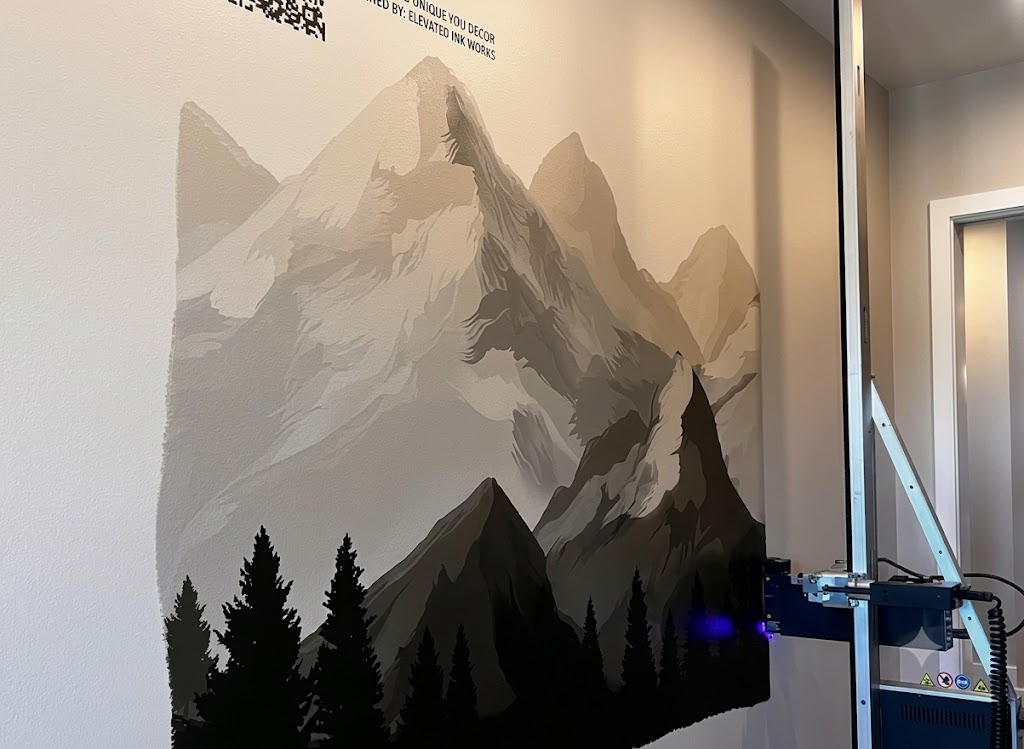
For digitally printed murals, the image is scaled in software to match the exact wall dimensions. The wall printer is then positioned and calibrated before printing directly onto the surface.
Large murals can be divided into several print sections while the software maintains alignment and image continuity.
4. Creating the Mural
Hand-painted murals are usually developed from the background toward the foreground.
Artists begin by filling large areas with rollers, broad brushes, or spray paint. They then add middle layers, shadows, highlights, color transitions, outlines, and fine details.
To control paint drips and protect completed areas, artists generally work from the top of the wall downward.
Digitally printed murals follow a more automated process. After the image, wall distance, ink mode, and print quality settings are confirmed, the wall printer applies the design line by line.
The operator still needs to monitor alignment, ink flow, automatic wall-distance sensing, and how the surface responds during printing.
A wall printer can eliminate many hours of repetitive painting, but professional file preparation, calibration, and surface treatment are still essential.
5. Protection and Maintenance
After the mural is completed, a protective coating may be applied depending on the environment.
Murals in low-contact interior spaces may not require heavy protection. Murals in corridors, restaurants, schools, stores, and other high-traffic locations may benefit from a washable or anti-graffiti coating.
Outdoor murals must withstand sunlight, rain, humidity, pollution, and temperature changes. They therefore require suitable paints or inks, careful wall preparation, and compatible protective coatings.
The protective product must be compatible with the mural’s paint or ink system. An unsuitable coating may alter the color, gloss, adhesion, or long-term appearance of the artwork.
Indoor vs Outdoor Murals
Indoor murals normally experience relatively stable temperatures and limited exposure to rain and direct sunlight.
Their main priorities are image detail, low odor, cleanability, and resistance to everyday contact.
A residential mural may focus on soft colors and close-view detail, while a restaurant or hotel mural may need to withstand regular cleaning and frequent public contact.
Outdoor murals face much more demanding conditions.
Sunlight can gradually fade pigments. Moisture may weaken adhesion. Temperature changes can cause the wall and coating layers to expand and contract. Brick and concrete may also retain internal moisture that later pushes paint or ink away from the surface.
Outdoor mural projects therefore usually require exterior-grade materials, more careful surface preparation, and a suitable protective system.
A wall printer machine using UV ink can improve production efficiency and expand the range of suitable outdoor materials. However, final durability still depends on the wall condition, ink quality, climate, sunlight exposure, and protection applied after printing.
No responsible artist, printing company, or equipment supplier should promise an exact lifespan without understanding the wall, climate, materials, sunlight, and maintenance conditions.
A properly prepared mural made with suitable materials can last for many years, but the condition of the wall and its environment matter just as much as the artwork itself.
Which Mural-Making Method Should You Choose?
The right production method depends on the desired appearance, installation location, budget, project schedule, and expected lifespan.
Hand painting is usually the best choice when the client wants visible brushwork, original texture, artistic interpretation, and the distinctive style of a mural artist.
Spray-painted street art is ideal for large outdoor walls, bold graphics, gradients, expressive lettering, and contemporary urban designs.
Mosaics and ceramic tiles work well in wet, public, and high-contact environments where durability is more important than fast installation.
Relief murals are suited to architectural and commemorative projects requiring physical depth, permanence, and a monumental appearance.
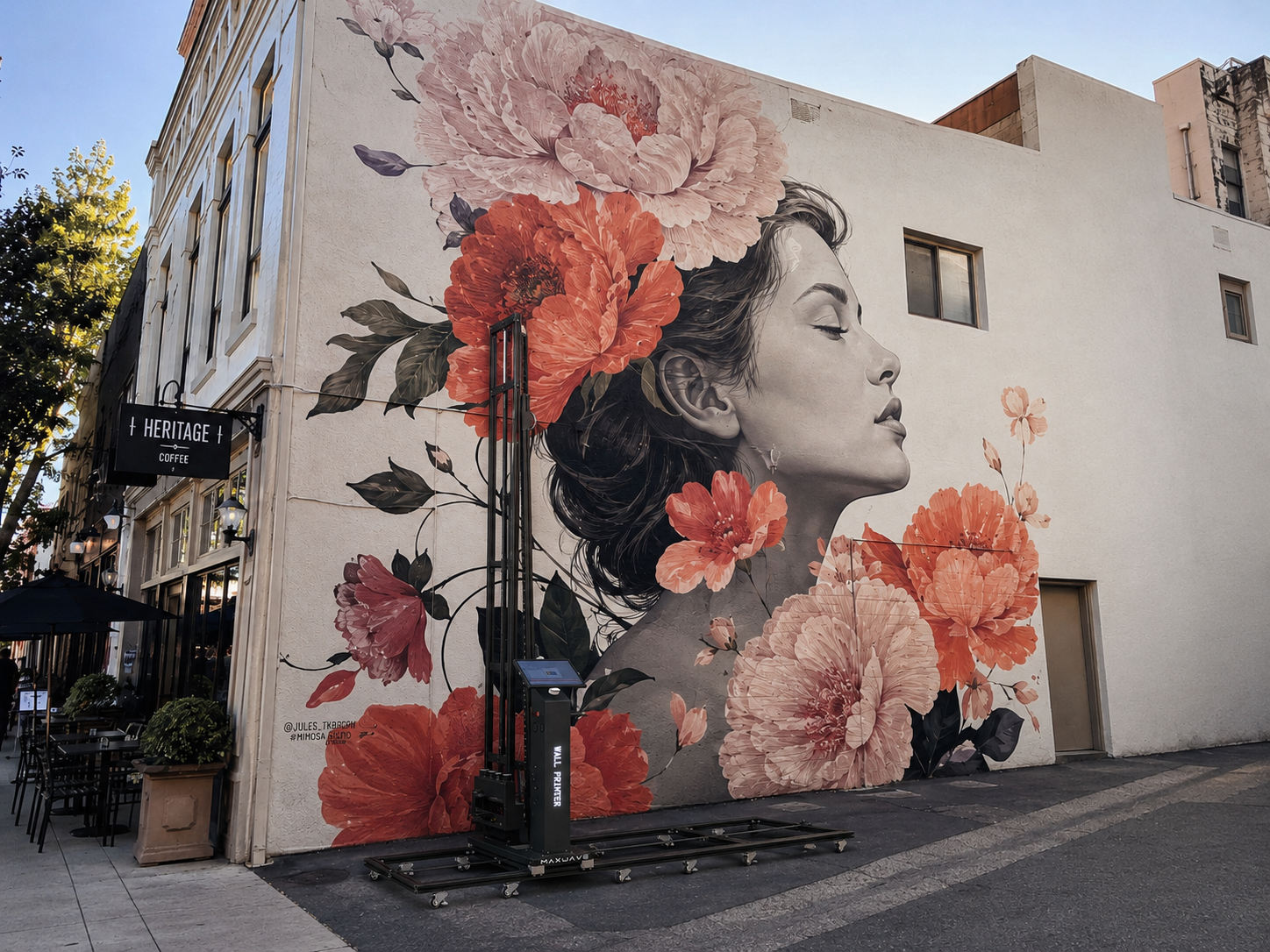
When the design includes photographs, precise logos, complex illustrations, repeated brand graphics, or artwork that would take a long time to reproduce by hand, digital mural production with a wall printing machine offers clear advantages.
It can shorten on-site production time while maintaining consistent dimensions, colors, and visual details.
For hotels, restaurants, offices, and retail chains that require the same branded image across multiple locations, wall printing can also improve consistency between installations.
The best method is not necessarily the oldest, newest, or most expensive. It is the one that delivers the right visual effect, durability, and production efficiency for the specific wall.
Conclusion
A mural is more than a large image placed on a wall. It is an artwork designed around a particular surface, space, and audience.
Murals can be painted, sprayed, tiled, carved, sculpted, assembled, or digitally printed. They can preserve history, express cultural identity, strengthen a brand, transform an interior, or turn an ordinary public wall into a landmark.
Traditional techniques such as fresco, mosaic, and hand painting remain important. At the same time, projectors, digital design software, and modern wall printers have made large-scale mural production faster, more precise, and easier to reproduce across different spaces.
The right production method depends on what the wall needs to communicate, who will see it, what material it is made from, and how quickly the project must be completed.
Planning a residential mural, commercial brand wall, or outdoor installation? Send us your artwork, wall material, dimensions, and project location. We can help you evaluate whether direct wall printing is suitable, recommend the right wall printer setup, and provide a sample print or project quotation.