
Aluminum breaks tools. It warps under heat. It humbles even experienced welders. Yet it remains the backbone of aerospace frames, EV battery enclosures, and architectural curtain walls.
The gap between simply “working with aluminum” and mastering precision aluminum fabrication comes down to decisions most shops get wrong before the first cut is made: wrong alloy, wrong process sequence, wrong finishing spec.
This guide gives you a full breakdown of:
-
Alloys and how to choose the right one
-
Cutting and forming methods
-
Welding realities
-
Surface finishing options
-
What fabrication costs in 2026 — and where the biggest ROI opportunities sit on your shop floor
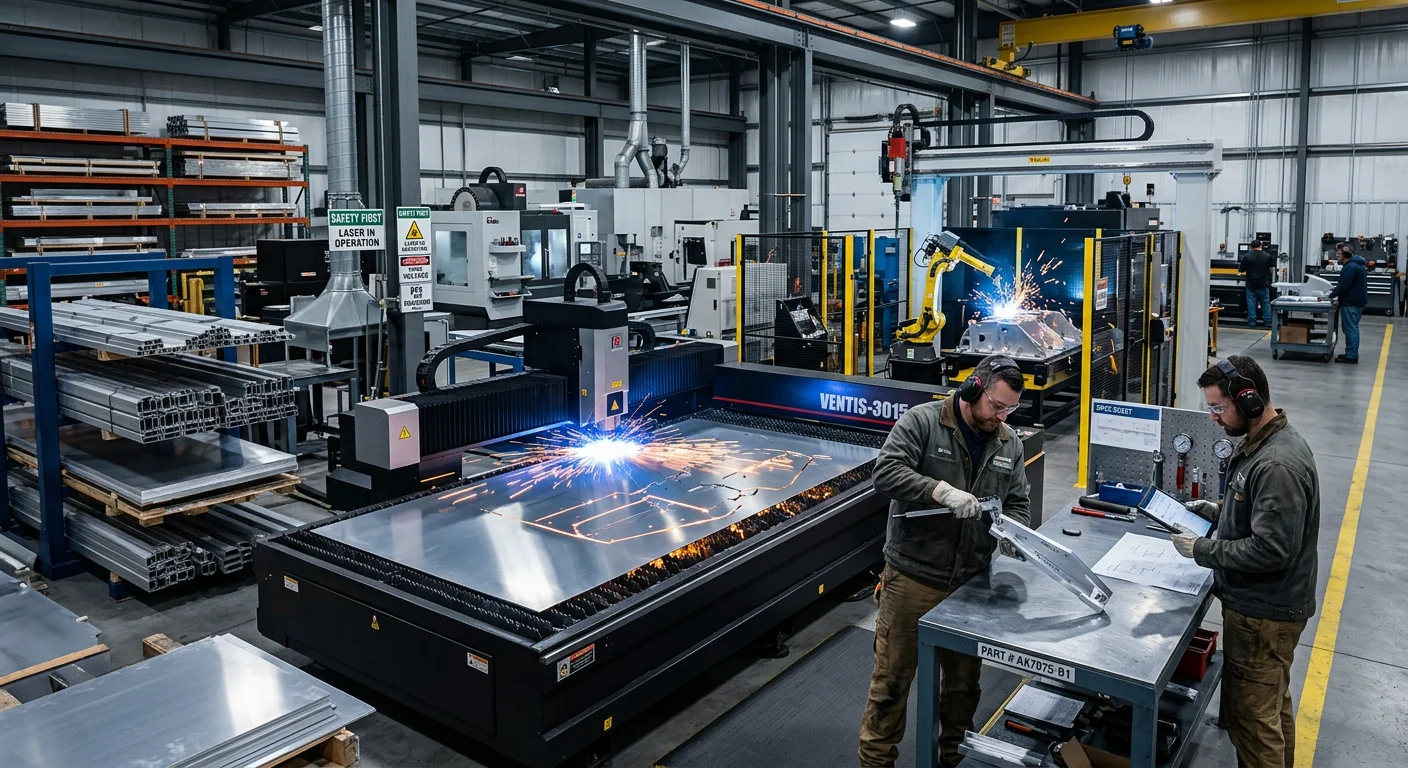
Precision Aluminum Fabrication in 2026
Aluminum fabrication turns raw aluminum — sheets, billets, extrusions — into finished structural components. The process follows a clear sequence: cutting, forming, welding, and finishing.
Every stage runs to tight tolerances. Laser cutting holds ±0.1mm. TIG/MIG welding builds high-strength joints in 2000 and 6000 series alloys. Anodizing and powder coating add corrosion resistance. Parts stay functional for decades.
The scale of this industry is hard to ignore:
-
Global aluminum extrusion market: $78.7B (2022) → projected $117.8B by 2030 at a 5.7% CAGR
-
North America fabricated metal products: on track for $65.5B by 2033
-
Asia-Pacific holds 42% of global share; North America 24%; Europe 22%
Three forces are pushing 2026 demand higher:
-
EVs — each electric vehicle needs 80–100kg of aluminum. That’s 4x what a conventional ICE vehicle uses
-
Aerospace lightweighting — 2000 series alloys make up 18% of the extrusion market. AS9100 suppliers are already reporting capacity constraints
-
Renewables — wind and solar infrastructure runs on lightweight aluminum structures. Demand is climbing fast
A U.S. smelter now outputs 750,000 tons/year. It’s cutting into an 85% import dependency that held for over four decades. That’s a structural shift — not a headline.
The challenge in 2026 isn’t getting aluminum. It’s delivering precision under pressure. EV battery enclosures need ±0.1mm tolerances. Energy and labor costs keep rising. Skilled welders are in short supply. So fabrication hubs are moving fast on automation to keep up.
The Aluminum Alloy Selection Guide
.jpg "Aluminum Fabrication: The Complete Guide To Processes, Alloys & Costs (2026) 2")
Pick the wrong alloy and everything downstream suffers. Your welds crack, your tolerances drift, and your finishing costs spike. Here’s what each series does — and where it falls short.
The Five Series That Matter
1xxx Series — Pure Aluminum
Strength is low. Everything else holds up well. AA1050A-H14 runs 105 MPa proof strength with 10% elongation. It bends, conducts electricity, and resists corrosion without issue. You’ll find it in foil, conductor cables, and heat-dissipating components. These are places where formability beats strength every time.
3xxx Series — Manganese-Added
AA3103-H14 gives you 140 MPa proof and 155 MPa tensile. Solid for general fabrication and beverage cans. No exotic chemistry. No budget surprises.
5xxx Series — The Marine Workhorse
This is where weldability gets serious. The Al-Mg solid solution keeps cracking risk low. 5052-H32 delivers 228 MPa tensile and 12% elongation. AA5083-O pushes 300 MPa tensile with a strong 23% elongation. That’s why it dominates marine hulls, pressure vessels, and structural vehicle panels. Saltwater doesn’t touch it.
6061 — The Fabricator’s Default
6061-T651 hits 276 MPa tensile and 17% elongation. It machines well. It welds with no fuss. It extrudes cleanly too. The balanced Mg-Si chemistry forms stable Mg₂Si, which keeps hot cracking risk low. Post-weld heat treatment brings back 80–90% of original strength. For most structural applications — buildings, automotive frames, marine components — 6061 aluminum is where you land after ruling everything else out.
7075 — High Strength, Real Consequences
At 572 MPa tensile, 7075-T651 is the strongest aluminum you’ll face in standard use. Aerospace and high-stress structures rely on it. But weldability is a real problem. The high zinc content (5–8%), combined with copper and magnesium, creates brittle intermetallics — MgZn₂ in particular — that trigger solidification cracking. In thick sections, fusion weld failure risk exceeds 50%. Your design calls for 7075 and welded joints? Rethink the design.
Quick Comparison: 3003 vs 5052 vs 6061 vs 7075
|
Alloy |
Machinability |
Corrosion Resistance |
Cost |
Bottom Line |
|---|---|---|---|---|
|
3003 |
Good |
Good |
Low |
Formable, affordable, moderate strength |
|
5052 |
Fair |
Excellent (marine) |
Low–Med |
High fatigue strength, weldable |
|
6061 |
Excellent |
Superior |
Medium |
Best all-around for fabrication |
|
7075 |
Good |
Poor (needs coating) |
High |
Maximum strength, minimum weldability |
The cost premium on 7075 is real — and so is the fabrication complexity. Coat it, fasten it with mechanical fasteners, or machine it. Don’t weld it unless you’re ready for tight process controls and a high rejection rate.
CNC Machining, Cutting & Forming

The machine doesn’t care what alloy you chose. It cuts what you feed it — and how well it cuts determines everything that follows.
Cutting: Where Precision Gets Priced In
Laser cutting leads aluminum fabrication today. The numbers show why. Modern fiber systems hold ±0.025mm tolerance — tighter than most downstream assembly specs need. Throughput runs 1,000–5,000 inches per minute. Nesting software, automatic material feeding, and fiber technology have pushed per-part costs down over time. Equipment prices stay steep though. A complete CO₂ laser system can cost $2 million. That investment only makes sense at high volume.
Laser cutting holds the highest MPI2 performance score (25) among cutting technologies. It’s also growing at 10% year-over-year. Waterjet and plasma both fall behind on throughput and precision. The cutting segment as a whole is expanding at a 6.8% CAGR through 2033 across North America. Aerospace and automotive adoption are driving that growth.
Waste reduction matters here too. Advanced nesting software alone cuts material waste by up to 15%. That number adds up fast when you’re running 5083 or 7075 sheet stock.
Forming: Stamping, Bending, and the Automation Push
Stamping holds 32.33% of the metal forming tools market. It’s the backbone of automotive and appliance lines running non-stop production. Bending is growing fast at a 6.70% CAGR. Collaborative robots and offline programming make rapid changeovers possible. Cincinnati Incorporated’s EZ Bend cobotic cell is a real-world example. It delivers shorter setup times and workable economics for low-volume, high-mix runs.
Together, cutting and forming make up 55% of standard fabrication workflows.
The automation shift is pushing hardest into forming. Semi-automatic CNC systems still hold 48.76% market share. But automatic systems are growing at 8.90% CAGR — the fastest segment right now. EV giga-factories building battery trays and motor housings are pushing that growth. They face labor shortages and tight tolerances that human operators can’t hit at scale.
Cut and forming lines that run with full automation show clear results: 20% cycle time reduction and 15% scrap rate reduction in EV supply chains. AI-enabled systems tune cutting parameters in real time. Digital twins run full production simulations before a single part gets cut. Predictive maintenance flags wear before it turns into downtime.
The process keeps getting smarter. Shops not moving toward that kind of integration are already losing ground on unit economics.
The Aluminum Welding Bottleneck
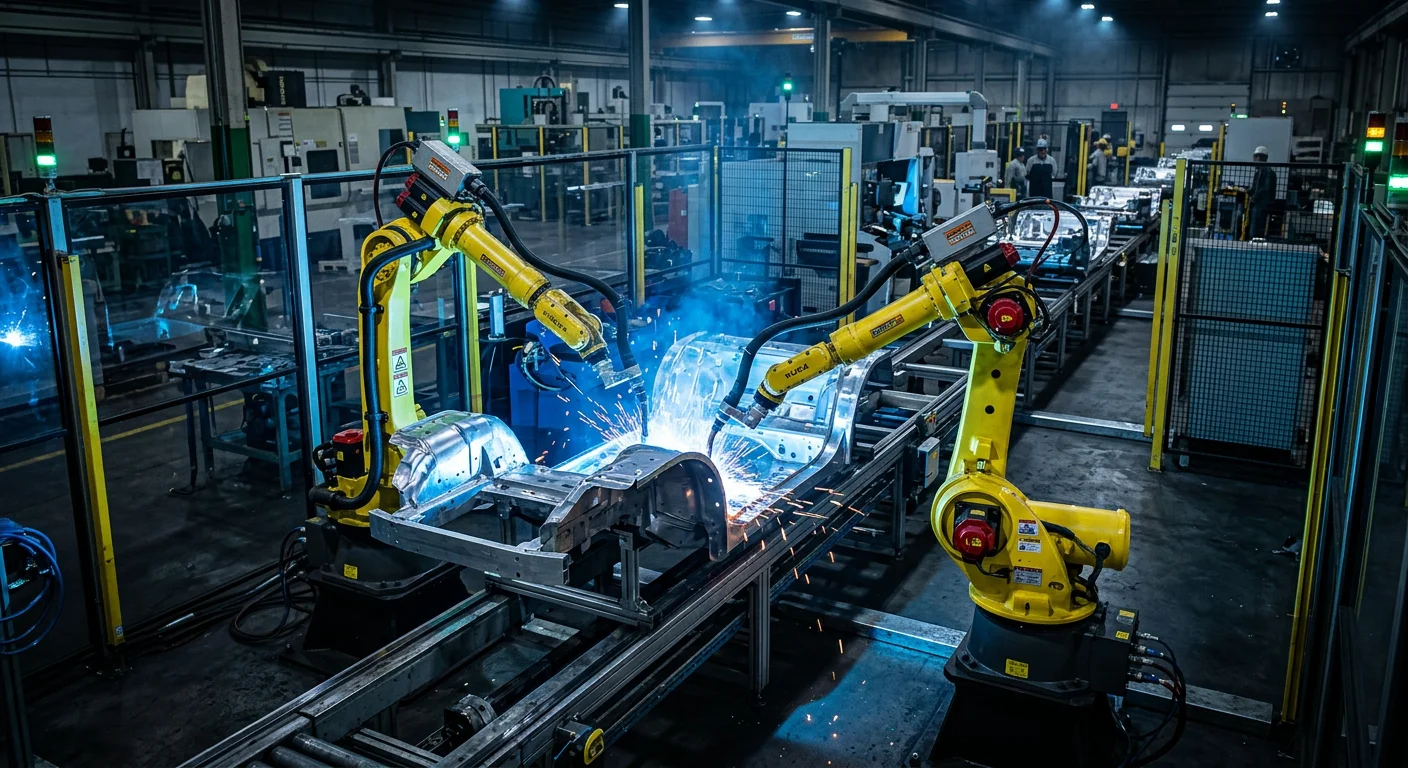
Aluminum welding is a $4.2 billion problem — and most shops are still solving it with yesterday’s tools.
The global aluminum welding market is on track from $4.2B (2023) to $6.2B by 2030 at a 5.8% CAGR. Some projections push that figure to $8.9B by 2026. The demand is there. The capability isn’t keeping up.
Here’s the core constraint: aluminum needs very specific welding materials. Those materials are scarce — far more so than what’s available for steel. That scarcity hits the entire production chain hard. You get longer timelines, higher costs, slower innovation, and fewer options for process improvement.
Why the Material Gap Keeps Costing You
Welding wire breaks into three categories:
-
Pure aluminum wire — simple, limited strength applications
-
Al-Mg alloy wire — the workhorse for structural and marine work
-
Al-Si alloy wire — better crack resistance for 6xxx series base metals
Techniques cover a wide range: MIG, TIG, laser beam, electron beam, friction welding, and resistance welding. Each has its lane in modern aluminum fabrication. The problem isn’t method selection. R&D investment in expanding compatible material options has fallen far behind demand growth. That gap is where the real cost lives.
Where Demand Is Forcing the Issue
Three sectors are pushing hardest:
-
Automotive — 6082 alloy components are standard in new vehicle builds. BEVs made up 70% of electric car stock in 2023. They need consistent, high-integrity welds for structural battery enclosures.
-
Marine — hull and superstructure welding in a market projected to hit $189B by 2028
-
Emerging economies — Asia-Pacific infrastructure spending is driving adoption fast. India’s real estate sector alone is moving from $200B to a projected $1 trillion by 2030.
Robotic welding cells are taking on some of that pressure. Automation adoption in welding has grown about 15% in recent years. Laser beam and friction welding are delivering precision gains that manual TIG can’t match at volume. But the material shortage is still unresolved. Until R&D catches up, that shortage is the ceiling every aluminum fabricator keeps hitting.
Aluminum Finishing: Anodizing vs. Powder Coating
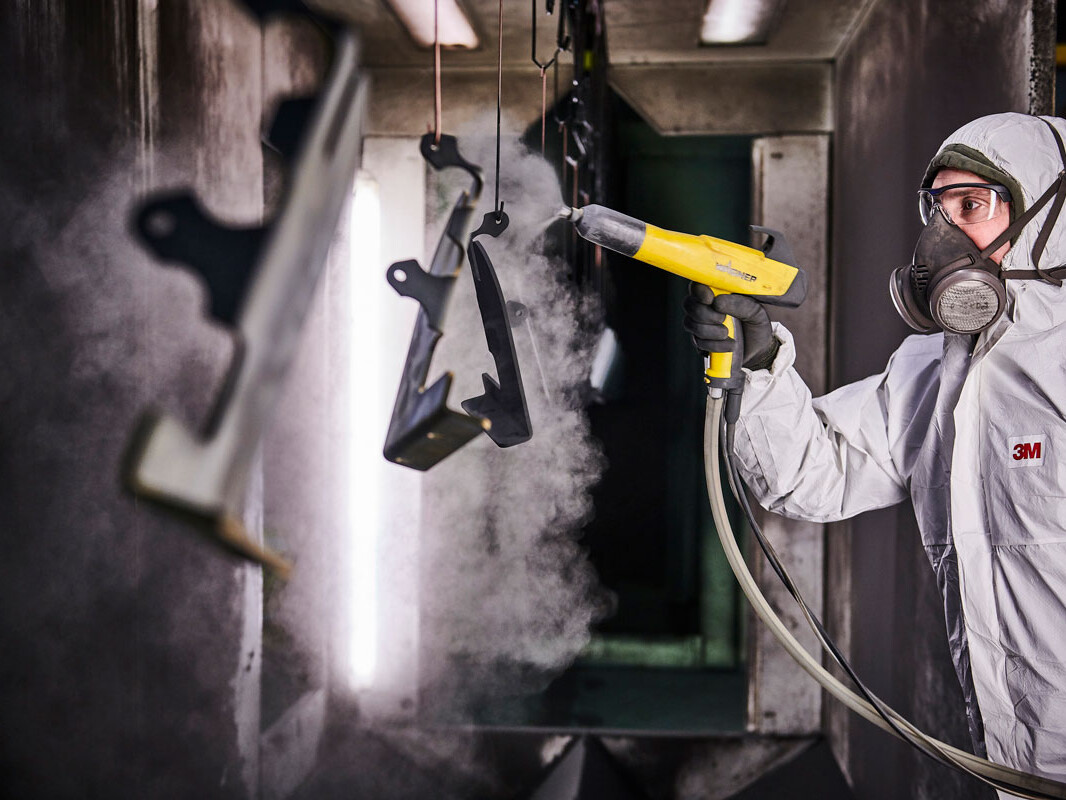
The finish isn’t cosmetic. It’s structural protection — and the wrong choice costs you far more than a re-spray.
Two finishing methods dominate aluminum fabrication: anodizing and powder coating. They’re not the same. You can’t swap one for the other.
Anodizing: Three Types, Three Different Outcomes
Anodizing converts the aluminum surface into aluminum oxide. It bonds at the molecular level. It doesn’t peel. It doesn’t chip at the edges. Scratch it, and the protection stays intact — because it is the metal, not a layer sitting on top.
Three types, each with a specific job:
-
Type I (Chromic Acid) — Thin layer, flexible, conductivity preserved. Use it where tight tolerances can’t handle dimensional buildup.
-
Type II (Sulphuric Acid) — The standard. 5–25 µm thick, solid corrosion resistance, wide color range. Most fabricated aluminum parts you’ve handled were finished this way.
-
Type III (Hard Anodizing) — Harder than some steels. Top-level abrasion and corrosion resistance. Type II not cutting it? This is your next step.
UV stability is built in — no additives needed. Heat tolerance reaches ceramic-level performance. The tradeoff: color options stay limited to metallic hues, and cost runs $20–$50/sq ft — higher than powder coating.
Powder Coating: Color Range, Real Vulnerability
Powder coating gives you 50–150 µm of film — thicker than any anodized layer. RAL color matches, textures, gloss, matte, satin. The color range is wide and flexible.
But the physics matter: powder coating sits on top of the metal. Chip it, and bare aluminum is exposed. In harsh environments, that edge weakness spreads fast.
Cost runs $5–$30/sq ft — noticeably lower than anodizing. For interior use or color-critical work, the numbers make sense. For marine or abrasive environments, that chip risk becomes a real problem.
Side-by-Side: What Matters Most
|
Factor |
Anodizing |
Powder Coating |
|---|---|---|
|
Thickness |
5–25 µm |
50–150 µm |
|
Scratch protection |
Integrated — stays protected |
Chips expose bare metal |
|
Abrasion resistance |
Superior |
Softer, scratch-prone |
|
Color options |
Limited metallics |
Full RAL range + textures |
|
UV stability |
Stable, no fading |
Fades/chalks outdoors over time |
|
Heat tolerance |
High |
Breaks down above 200°C |
|
Cost |
$20–$50/sq ft |
$5–$30/sq ft |
The Weld Seam Problem Nobody Talks About
Your finishing choice ties directly back to earlier process decisions. If your shop is TIG welding aluminum, expect those welds to discolor after anodizing. The heat-affected zone shows up differently under an anodized finish. On visible surfaces, that discoloration is a clear defect.
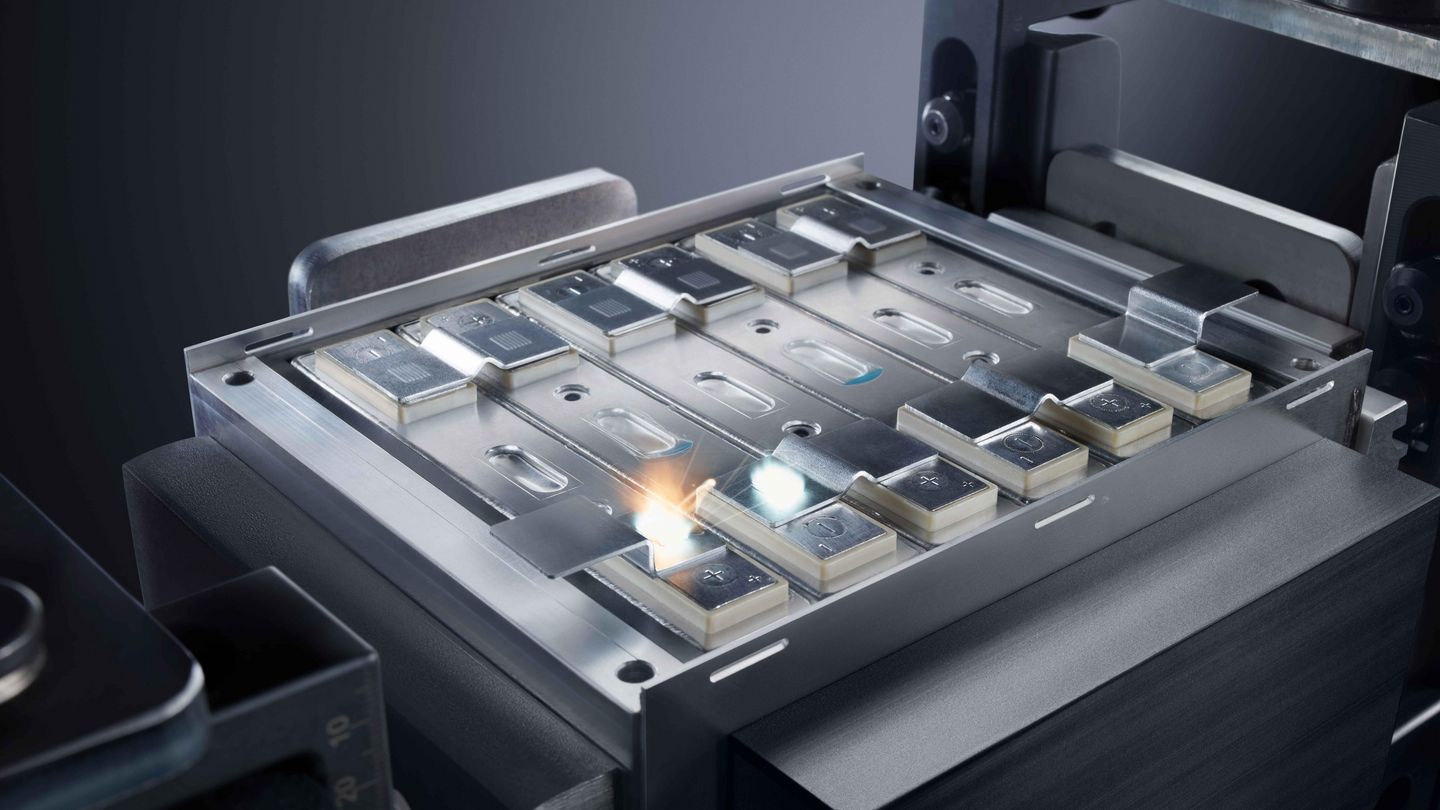
Laser welder don’t carry this problem. The narrow heat zone leaves a clean appearance after anodizing or powder coating — no visible seam, no color shift.
Alloy selection plays into this too. 6061 and 6063 give you the most consistent color results under Type II anodizing. Mixed-alloy assemblies or mismatched weld fillers create discoloration. No finishing process fixes that after the fact.
Get the weld right. Then spec the finish.
Aluminum Fabrication Costs & ROI
Labor is eating your margin. Direct labor alone accounts for 30–40% of total fabrication job costs. Cutting operations consume another 25% of operating costs. Electricity adds 10% overhead in heavy shops. That’s not a cost structure — that’s a slow bleed.
The labor side is getting worse. Skilled fabricator salaries rose 6% in 2023 and haven’t stopped climbing. Skilled trades are tracking 5–7% annual wage increases into 2026. The median CNC operator or structural erector now earns $70,000–$90,000+. Replacing a welder costs $15,000 in onboarding alone. You’ll also wait 63 days to fill the open seat. Scan any recent CNC machining news, and the headline is always the same: 80% of shops say they can’t find qualified operators. Turnover runs at 20% per year, with entry-level roles turning over at 30% higher rates.
Where Automation Pays Back
The math on automation has shifted — and the numbers favor action. Automated material handling delivers 20% higher throughput. Fiber lasers run 3x more energy-efficient than CO₂ systems. High-definition plasma cutting removes 40% of secondary grinding time. Lean manufacturing cuts lead times by up to 50%.
Shops on traditional processes carry 15% higher scrap rates than laser-equipped competitors. That gap hits hard in material costs — especially with 5083 or 7075 sheet stock on the floor.
Preventative maintenance programs cut equipment downtime by 35%. Industry 4.0 adoption trims maintenance costs by another 10–20%. The robotic arc welding market is on track to hit $10.1B by 2030. That level of investment shows exactly where the industry is capturing labor savings.
The shops winning on unit economics in 2026 aren’t working harder. They automated the expensive parts first.
Choosing an Aluminum Fabrication Partner
The wrong partner costs you more than money. You lose time you can’t get back — and tolerances you can’t justify to a customer.
Picking an equipment or aluminum fabrication partner isn’t just a vendor decision. It’s a process decision. Every handoff between suppliers adds lead time and risk. The best shops handle cutting, forming, machining, and finishing under one roof. That’s how they close the gap.
What to Verify Before You Commit
Three things separate a capable partner from an expensive mistake:
-
Proven equipment: Look for CNC controls, laser cutters, press brakes, and MIG/TIG/resistance welders. Check how old the machines are and what they can handle. Then check certifications: ISO, ASME, AWS.
-
DFM support: A real partner jumps in before CAD is finalized. Manufacturability reviews at that stage save far more than any discount you might get after problems show up.
-
Scalability: Confirm they can run your prototype and your full production volume. No facility switching. No subcontracting the overflow.
Test Before You Sign Anything
Request free sample testing. Send your material and see what comes back. Check weld penetration, surface consistency, and dimensional accuracy through First Article Inspection Reports (FAIRs). Tour the facility in person. Ask for a cost breakdown that lists materials, labor, setup, and secondary processing as separate line items.
Vague proposals protect the supplier. Clear, itemized ones protect your margin.
Conclusion
Aluminum fabrication in 2026 is more than a manufacturing decision — it’s a competitive one.
The right alloy stops welding problems before they start. The right process sequence cuts labor costs faster than any renegotiated supplier contract. The right finishing choice separates a part that survives the field from one that dominates it.
You now have the full blueprint:
-
Alloy selection logic
-
Process tradeoffs
-
Real cost drivers
-
Quality control frameworks that prevent porosity and distortion — not just catch them after the damage is done
So what’s the move? Audit your current fabrication line against the cost and process benchmarks in this guide. Find your single biggest bottleneck. Then act on it.
A complete guide means nothing without execution. That’s true in aluminum fabrication more than anywhere else.
The shops winning in 2026 aren’t the ones that know more — they’re the ones that waste less.
Stop guessing and start testing. Send a sample of your toughest aluminum joint to the MaxWave application lab. We’ll run it through our advanced laser welding systems and send you the hard data on cycle times, penetration, and finish quality.