
Stainless steel laser welding is tricky—one wrong setting and you’ll end up with burnt workpieces, ugly oxidation, or porous weld beads that are impossible to fix. But perfect stainless steel welds aren’t just for pros. A handheld laser welder makes it achievable, as long as you nail the key variables: power, travel speed, shielding gas, wire feed, defocus distance, and basic technique. Whether you’re new to fiber laser welding machines or troubleshooting inconsistent production welds, this straightforward guide will walk you through exactly how to get clean, repeatable results with your handheld laser welding machine.
The 5 Core Variables for Stainless Steel Laser Welding
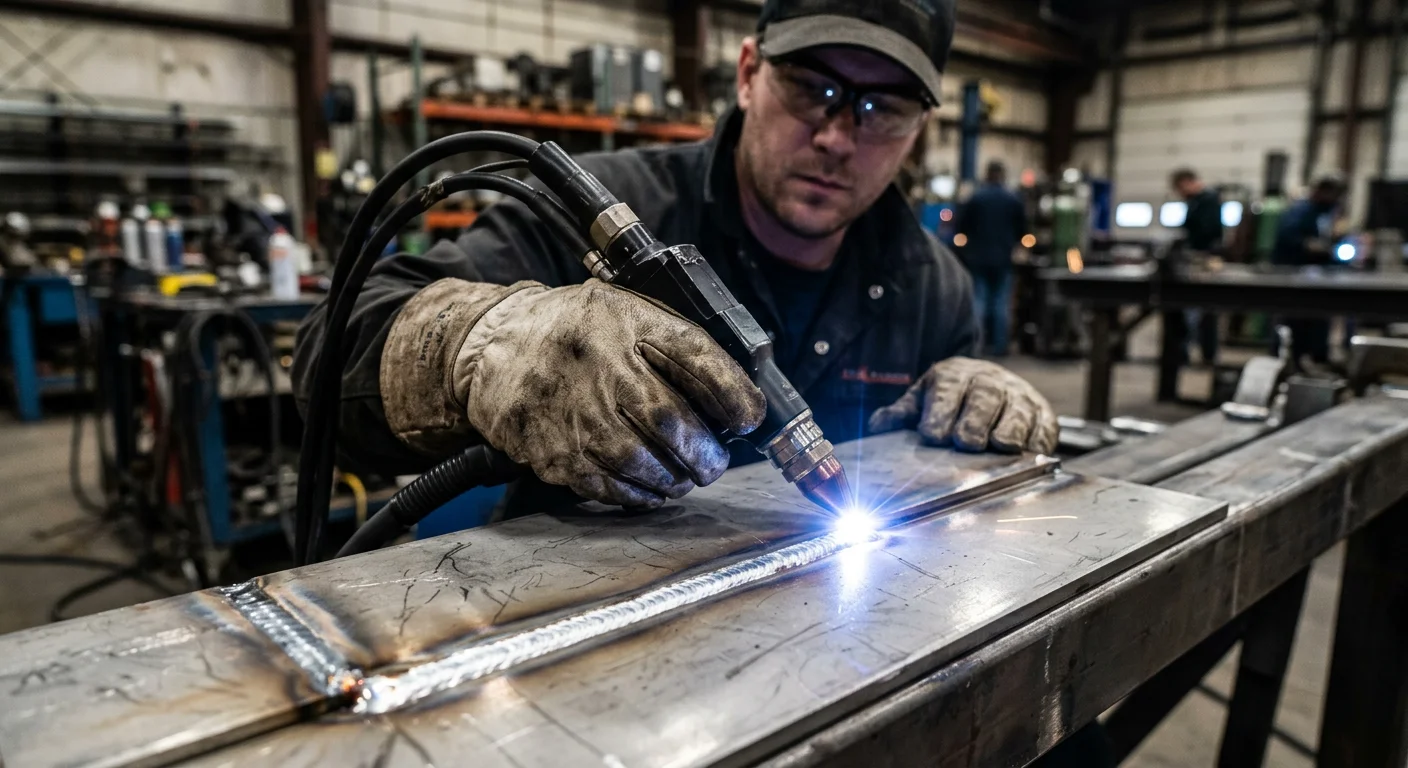
These five factors make or break your weld—match them to your stainless steel thickness, and clean seams become a given, not a lucky accident.
- Laser Power & Travel Speed: Thinner steel needs lower power and faster speed; thicker steel demands higher power and slower travel for full fusion.
- Wire Feed: Filler wire size and feed rate must align with your power range to avoid weak joints.
- Shielding Gas: Pure argon is non-negotiable for stainless steel—no substitutes, or oxidation and porosity will follow.
- Defocus Distance: Positive defocus for thin sheets, negative for thick plates, to control beam spread and penetration.
We’ve simplified the critical parameter guide for quick reference—stick to these, and you’ll avoid 90% of common mistakes:
| Material Thickness | Recommended Power | Travel Speed | Defocus Distance | Single-Pass Max |
| ≤3 mm | 900W–1000W | 120–180 cm/min | +2 mm | 3.0 mm |
| 3–6 mm | 1200W–2000W | 80–120 cm/min | -1.5~-4 mm | 4.0–6.0 mm |
| 6–8 mm | 2000W–3000W | Slow for fusion | -4 mm+ | 8.0 mm |
For 3mm stainless steel (the most common thickness), 1000W power, 150 cm/min speed, and +2 mm defocus is a sweet spot—it gives spatter-free, bright seams and cuts post-weld polishing time by 60%.
Wire Feed & Shielding Gas: Non-Negotiable Rules
Filler Wire: Pick ER308L/ER316L—0.8–1.2mm diameter for 900W–1200W (feed 40–80 cm/min), 1.2–1.6mm for 1500W–3000W (feed 60–100 cm/min). Mismatch wire and power, and your weld will be weak or porous.
Shielding Gas: Only use 99.99% pure argon, at 15–25 L/min. Uneven argon coverage is the cause of oxidation and discoloration on stainless steel welds. Too little flow, and air seeps in; too much, and turbulence breaks the gas shield—15–20 L/min is the perfect baseline.
Why Stainless Steel Needs a Special Welding Approach
Stainless steel isn’t mild steel—treating it the same is a fast way to ruin your welds. Here’s why:
-
Poor Thermal Conductivity: Heat piles up in a small zone, causing stress, distortion, and hidden cracks.
-
High Expansion: Austenitic stainless steel expands 50% more than mild steel when heated, leading to warpage and rejected parts.
-
Cracking Risk: Prone to solidification cracking from impurities, nitrogen pickup, or unbalanced ferrite-austenite ratios.
-
Health Hazard: Welding produces hexavalent chromium (Cr⁶⁺), a toxic byproduct not found in mild steel welding—always use proper ventilation.
Respect these differences, and your laser welding machine settings will work every time.
Step 1: Surface Prep—The Key to a Clean Weld
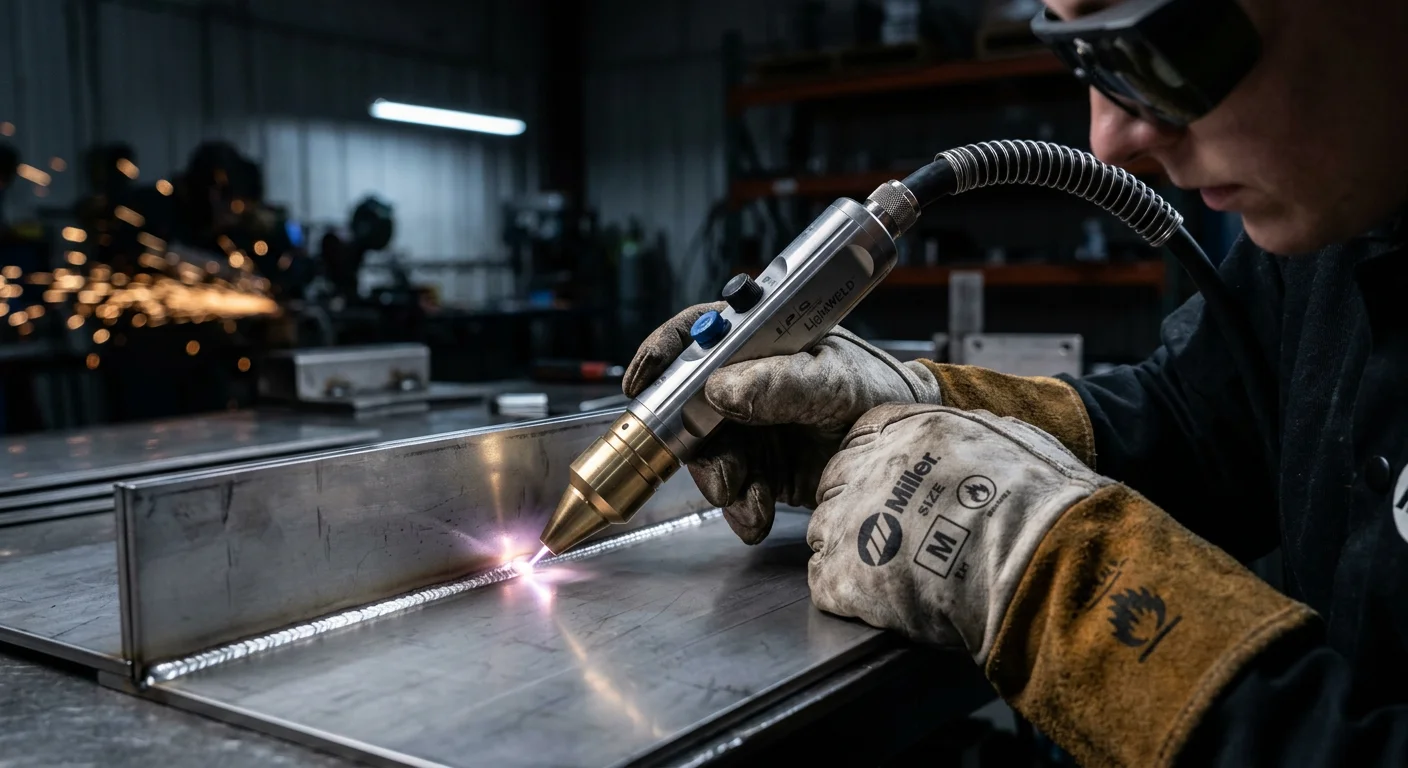
Most weld failures start before you fire the laser. Contamination (oil, oxidation, dust) causes porosity, inclusions, and high defect rates—follow this 3-step clean process, and you’ll eliminate 80% of these issues:
- Degrease: Use a stainless steel-specific degreaser, let it soak 5–10 minutes. Even 0.01 g/m² of oil pushes porosity up to 40%.
- Remove Oxidation: Scrub with 20 grit sandpaper or a stainless steel-only wire brush (80–100 strokes/10 cm²). A carbon steel brush leaves iron contamination, which seeds inclusions.
- Final Acetone Wipe: Use a lint-free cloth, and weld within 30 minutes. Clean surfaces pick up airborne contaminants fast!
Clean 12.7 mm (½ inch) on each side of the joint, and make sure the surface is bone dry—0.1% moisture brings back porosity risk, no matter how good your settings are.
Pro Fixturing Tip: Clamp workpieces every 6 inches (for ≤3mm steel) to hold distortion under 0.5mm. For long seams, add 2–3mm tack welds at the ends and midpoints—this cuts distortion by 30–50% vs. continuous welding on an unsecured joint.
Step 2: Dial In Your Laser Welder Settings

Parameter setup is the difference between a weld you’re proud of and one you grind away. Focus on these three critical variables, and adjust one at a time (changing two at once makes it impossible to fix mistakes):
-
Focal Position: Positive (+1~+3mm) for thin sheets (<1.5mm) to spread the beam and avoid burn-through; Negative for thick plates to push energy deep and boost penetration.
-
Power/Speed: Follow the thickness chart—if you see spatter, drop power by 5–10% first (don’t touch speed!). Spatter almost always means too much energy for your travel rate.
-
Test Beads: Always run a test on scrap stainless steel first. This lets you fine-tune settings without wasting your actual workpiece.
Step 3: Shielding Gas Setup—Get Silver, Oxide-Free Welds Every Time
The color of your weld bead tells you everything: silver = perfect, gold = oxygen seeped in, blue/black = lost chromium (and a weak joint). Each shade means a thicker oxide layer—keep oxygen below 1% with proper argon setup, and your weld stays strong (≥500 MPa tensile strength) and shiny.
Perfect Argon Setup for Handheld Laser Welding
- Set flow to 15 L/min (baseline)—10 L/min is too low, 25 L/min causes turbulence.
- Nozzle position: 15° from vertical, 15mm standoff—tilt too far, and the gas shield collapses.
- Pre-purge 30 seconds (clear residual air) and post-weld gas for 10 seconds (the bead is still reactive as it cools!).
Quick Troubleshooting for Shielding Failures:
-
Straw/gold bead: Low gas flow—bump to 15–20 L/min and check regulator.
-
Blue/black bead: Clogged nozzle—clean/replace it.
-
Irregular oxidation: Workshop drafts—add a windscreen and increase flow by 20%.
Step 4: Handheld Laser Welding Technique—Steady = Successful

A handheld laser welder doesn’t forgive shaky hands—every small drift shows up in the bead. Master these basic techniques, and your welds will be consistent every time:
-
Gun Angle/Standoff: Hold the head at 45–70° to the joint, nozzle 1–2mm above the steel. Drift the standoff, and your focal position shifts—ruining your carefully set parameters.
-
Travel Speed: Keep it steady! Too fast = weak, incomplete fusion; too slow = burn-through and wide HAZ (heat-affected zone); inconsistent = stress points in the joint. Watch the melt pool—narrow bead = slow down, spreading bead = speed up.
-
Motion: Stick to straight-line travel for flat/horizontal joints—weaving adds unnecessary variables. Only use a small weave for vertical welding to control the melt pool.
Step 5: Control Heat Input—Stop Warping & Distortion
Warping starts the second the laser fires—stainless steel’s high expansion means extra heat = bent workpieces. Use these simple tricks to keep heat in check:
- Intermittent Welding: Split long seams (>150mm) into segments—let each cool before moving on.
- Alternate Weld Direction: Switch directions between segments to spread thermal load and avoid one-sided warping.
- Heat Sinks: Add a copper backing bar for thin steel (<3mm)—it pulls heat away from the HAZ and keeps displacement under 0.5mm.
- Backstep Welding: Weld short steps in the opposite direction of your overall travel—moves heat away from already welded metal.
Fix the 5 Most Common Stainless Steel Laser Weld Defects
Even with great prep and settings, defects happen—here’s how to fix them fast with your handheld laser welding machine:
- Porosity: Always reclean the surface first, then check argon purity/nozzle alignment. If it persists, adjust focal position or slow travel speed slightly.
- Oxidation Discoloration: Boost argon flow, correct nozzle standoff, and add post-weld gas coverage. If excess heat is the issue, drop power a little.
- Burn-Through (thin steel <1mm): Reduce peak power, increase travel speed, and widen beam oscillation to spread heat. Keep fit-up gaps under 0.1mm!
- Undercut/Uneven Bead: Clean the laser optics first (contamination causes uneven energy!), then reduce power and increase speed. Add beam oscillation to stabilize the melt pool.
- Shallow Penetration: Check the protective lens—spatter/oil residue cuts power transmission. Inspect/clean the lens every 1–2 hours; replace it if scratched/cloudy.
Post-Weld Finishing & Inspection
A flawless weld isn’t done until it’s inspected and finished. Here’s the quick process:
- Visual Inspection: Look for uniform width, smooth surface, zero spatter, and a silver-white sheen. Straw/gold/blue color means oxidation—treat it before sending to the customer.
- Oxidation Removal: Use pickling paste for light heat tint, then rinse thoroughly (residual acid causes corrosion). Follow with passivation to rebuild the stainless steel’s protective chromium oxide layer.
- Mechanical Finishing: Match the method to the job—Scotch-Brite for satin finish, glass bead blast for uniform cosmetcs, abrasive grinding for mirror finish (No.8). Never use a carbon steel brush on stainless!
- Production QC: Add dye penetrant testing (PT) to catch hidden cracks/porosity, and bend tests for structural welds. Document everything—paper trails matter for quality control.
Handheld Laser Welder vs TIG Welder for Stainless Steel—Laser Wins

TIG welding stainless steel is a hard-learned skill, but a handheld laser welder is a scalable system—and the results speak for themselves: a part that takes 90 minutes with TIG takes just 10 minutes with laser, cutting production costs by 80%.
Laser Welding Machine Advantages:
-
Thin steel (≤3mm): Tiny HAZ, nearly zero distortion (TIG struggles here!).
-
Appearance-critical parts: Narrow, silver seams with no grinding—perfect for kitchenware, elevator panels, and architectural stainless.
-
Irregular geometry: Point-and-weld corners/laps/fillets—no complex fixturing needed.
-
Ease of use: A novice with 2 days of training can match a seasoned TIG operator.
-
Strength: Fast cooling creates a finer grain structure—UTS equals or beats TIG welds.
TIG still wins for steel over 10mm thick or joints with gaps over 2mm—but for most stainless steel welding jobs, a handheld laser welder is the better tool.
Conclusion
Flawless stainless steel welds don’t happen by accident. They come from clean surfaces, dialed-in laser welding parameters for stainless steel, and a steady hand built on real technique.
You now have everything you need. The parameter logic. The shielding gas setup. The motion fundamentals. A clear map for spotting defects before they ruin a workpiece. That’s not theory — that’s a repeatable system you can put to work tomorrow morning.
The gap between a weld that holds and a weld that impresses comes down to how much attention you give each step in this process.