
Buying a handheld fiber laser welding machine is a major investment. Amada’s reputation makes it a top pick for many, but the “obvious choice” isn’t always the “right choice for your workshop.”
Amada’s industrial equipment is undeniably impressive. However, its sky-high price tag, long lead times, and ongoing maintenance costs leave countless buyers wondering: are they paying for genuine performance, or just a brand name?
This guide breaks down Amada’s handheld laser welders straight from the spec sheet. You’ll see exactly where it excels, where it falls short—and discover cost-effective alternatives that deliver comparable performance at a fraction of the cost.
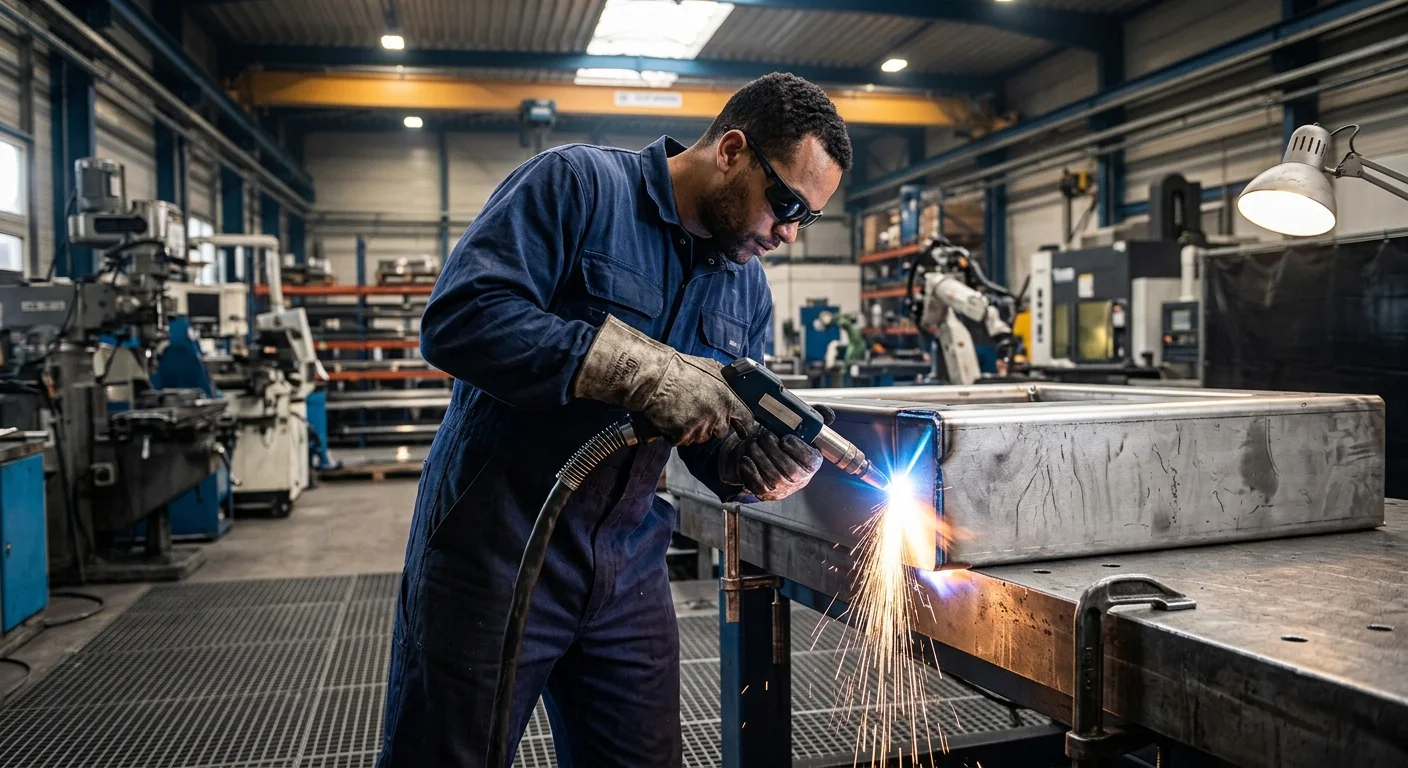
What Is the Amada Handheld Laser Welding Machine?
Amada’s handheld lineup covers three distinct models:
-
FLW-600MT – 600W, ultra-light torch for precision micro-welding.
-
FLW-1500MT – The workhorse, 1500W (burst up to 2500W) with air-cooling, wobble beam, and a contact-safety trigger.
-
FLW-3000Le – A robotic welding cell with a 6-axis YASKAWA arm for high-volume production.
A standout feature is the wobbling system, which bridges gaps, handles wire-feed, and reduces heat distortion.
Amada Pros: Where It Excels
Weld Quality & Precision
On SUS304 stainless steel, Amada delivers smooth beads with minimal distortion. The wobbling system enables:
-
Gap bridging at speed
-
Wire-feed integration for larger gaps
-
Mode flexibility between surface finish and deep penetration
It also handles reflective metals like A6063 aluminum, a traditional weak point for laser welding.
Built for Real Shops
The contact-safety trigger cuts emission when the torch leaves the workpiece, making it safer for less experienced operators. The FLW-1500MT’s air-cooling eliminates the need for an external chiller, saving floor space and energy.
Amada Cons: The Real Limitations

Locked-In Ecosystem
Amada recommends proprietary lenses and nozzles. Step outside these, and weld consistency drops. Power stability also requires tight environmental control—a challenge for most job shops.
Thick Material Limits
On copper and reflective metals, the 1μm wavelength hits a physics wall. Beyond 4mm steel, handheld performance drops significantly—Amada has published no benchmarks beyond that threshold.
Hidden Costs
The required monitoring infrastructure (MM-L300A) adds hardware and setup costs. Ongoing maintenance runs 2x higher than many alternatives.
Handheld Laser Welding Machine Cost: How Much Does Amada Cost?
Amada doesn’t list prices. You fill out a form and wait for a quote. Market data shows typical price ranges by power:
|
Power |
Max Thickness |
Price Range |
|---|---|---|
|
1.5 kW |
≤4 mm |
$2,285–$2,735 |
|
2 kW |
≤6 mm |
$2,715–$3,720 |
|
3 kW |
≤8 mm |
$4,145–$6,200 |
Amada sits at the top of each bracket—or above. But operating cost is the real story. A fiber laser runs at $2.00/hour vs. TIG at $3.40/hour. On a per-meter basis, you save up to $3 per meter over TIG. On a 2 kW system, payback can hit in under 9 months at 2,000 annual hours.
Top Cost-Effective Alternatives to Amada
The market has matured. Brands like MaxWave, Han’s Laser, Raycus, and Herolaser now deliver 85–95% of Amada’s performance at 40–60% of the price.
|
Model |
Power |
Cooling |
Max Thickness |
Price (USD) |
Warranty |
|---|---|---|---|---|---|
|
MaxWave MW-HW |
800–2000W |
Air |
8mm steel |
$5k–$10k |
2 years |
|
Han’s Laser HW |
1500W |
Water |
6–8mm |
$4.8k–$8.5k |
2 years |
|
Raycus RFL-C1500H |
1500W |
Air |
5–6mm SS/Al |
$6k |
2 years |
|
Herolaser T1 3-in-1 |
1500W |
Air/Water |
4–6mm SS/Al |
$4k–$6k |
2 years |
|
Baison Handheld |
1000–2000W |
Water |
4–8mm |
$5k–$8k |
1–2 years |
What 60% of the Price Buys You
-
On thin stainless steel (1–3mm), Herolaser T1 runs at 95% of Amada’s speed and penetration.
-
On aluminum alloy (2–5mm), MaxWave’s wobbling function cuts porosity by 70% and reaches 5mm depth.
-
On carbon steel (3–8mm), Raycus delivers 85% of Amada’s output.
The remaining 10–15% gap matters for aerospace or medical precision. For structural fabrication and general industrial work, it doesn’t matter at all.
After-Sales Support
Alternatives offer solid support:
-
MaxWave: Covers Asia and EU with a 7-day parts cycle and English technical support.
-
Han’s Laser: US/EU network with 3–7 day parts delivery.
-
Raycus: Annual maintenance at 10% of machine price.
For small-to-mid-size shops, Amada’s support premium rarely pays for itself.
Amada vs. Alternatives: Head-to-Head Comparison
|
Dimension |
Amada LF Series |
MaxWave |
Generic (<$10K) |
|---|---|---|---|
|
Spot Size |
10 microns |
~20–50 microns |
50+ microns |
|
Penetration Depth |
1.5mm (steel) |
1–1.2mm |
~1mm max |
|
Weld Speed (500W, mild steel) |
1 cm/s |
0.5–0.8 cm/s |
0.5–0.7 cm/s |
|
Yield Rate |
>95% |
85–90% |
~80% |
|
Price |
$20K+ |
$10K–$15K |
<$10K |
On a 500W steel weld, Amada runs at 1 cm/s with >95% yield—a 20–30% efficiency advantage. The yield gap is critical for micro-welding (e.g., medical stents) but irrelevant for most fabrication.
Who Should Buy Amada—and Who Should Choose an Alternative?
Buy Amada if:
-
You run high-volume aerospace, automotive Tier 1, or medical applications.
-
Tolerances are tight and downtime costs exceed the service premium.
-
Material includes challenging reflective metals at scale.
Choose an alternative if:
-
You work with stainless steel, aluminum, or carbon steel under 8mm.
-
Annual welding hours are under 2,000.
-
Budget is under $50K and ROI matters in months, not years.
Run the numbers: Annual welding hours × material thickness × quality strictness. Score below 500? Alternatives win. Score above 2,000? Amada earns its place.

Conclusion
Amada builds excellent machines—precise, reliable, and backed by industrial credibility. If you run a high-volume operation with no budget ceiling, it earns every dollar.
But for most small-to-mid-sized manufacturers, the math doesn’t work. You pay a premium that doesn’t give you better welds on everyday stainless steel or aluminum fabrication.
The right handheld fiber laser welder isn’t the most capable one—it’s the one that matches the work you run day to day. MaxWave’s lineup delivers comparable core performance (wobble beam, air-cooling, multi-material capability) at a fraction of the purchase and maintenance cost. Real specs. Real support. Real ROI.
Your next weld shouldn’t cost you more than it has to.