
Investing in a Bystronic handheld laser welding system for your workshop is a significant commitment, and the true cost extends far beyond the purchase price. Once the machine is on your shop floor, practical questions arise: How much maintenance does it really need? What happens if a critical component fails at 2 AM before a major deadline? Are spare parts readily available, or do you face a three-week wait for an overseas shipment?
This review aims to provide a clear answer based on real-world maintenance data, user feedback, and a comprehensive breakdown of Bystronic’s after-sales support. You’ll gain a transparent picture of the long-term ownership costs—in time, money, and operational risk.
Core Strengths: Precision DNA and Flexibility
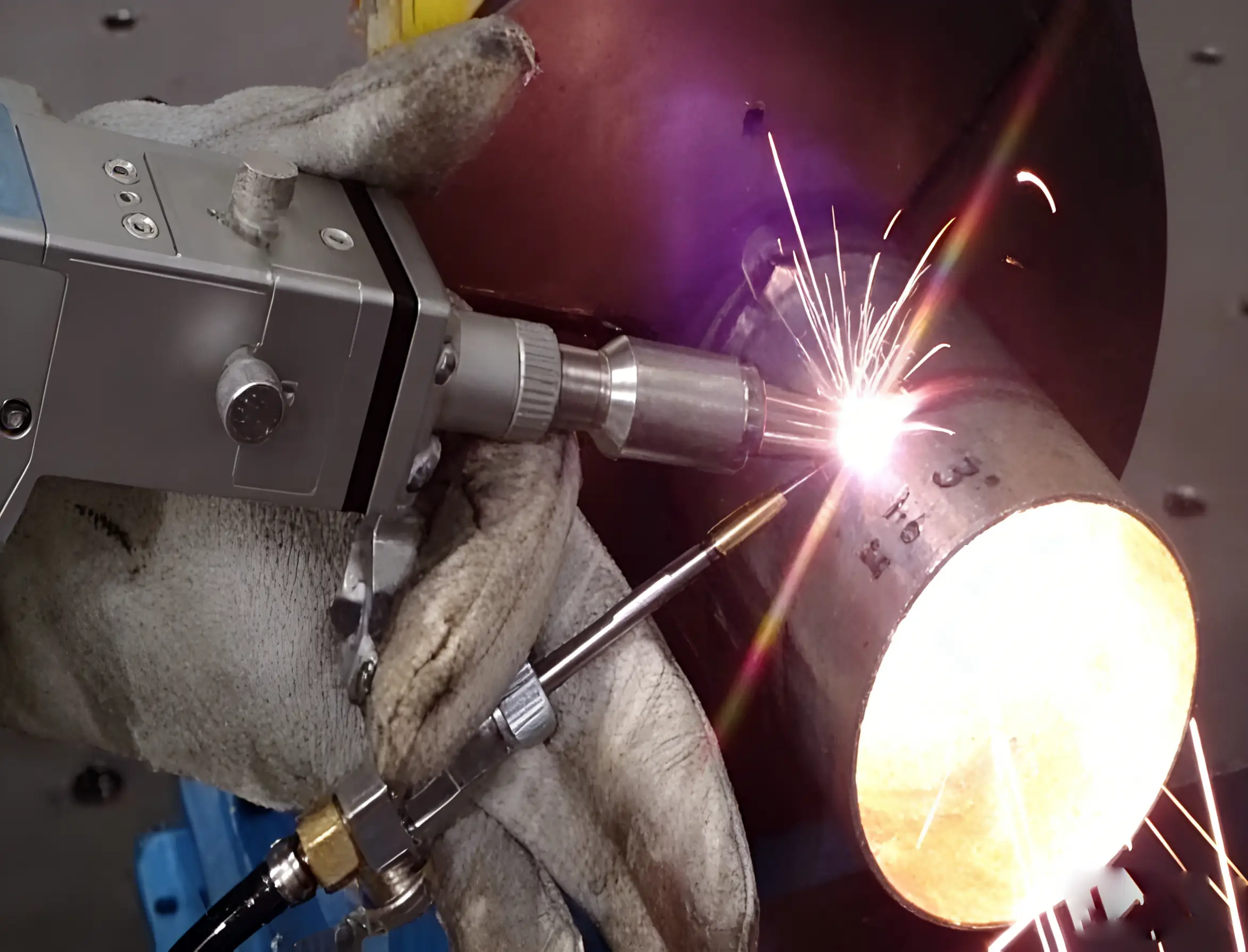
The Bystronic handheld laser welding system carries the brand’s DNA from precision manufacturing into a portable, operator-driven format. It’s designed for industrial fabrication environments where flexibility is key. Unlike fixed gantry welding cells, this system places the laser head in the operator’s hands, enabling work on complex geometries, large assemblies, and on-site repairs—tasks simply not possible with automated fixtures.
Key Hardware Overview:
-
Laser Source: Continuous wave fiber laser, with output power options from 1,000W to 3,000W.
-
Welding Head: Ergonomic gun-style torch with a wobble function for wider bead control and gap bridging.
-
Cooling System: Built-in water chiller unit, essential for sustained duty cycles.
-
Compatible Materials: Carbon steel, stainless steel, aluminum, and galvanized sheet.
An Important Note: Laser cutting remains Bystronic’s core business, making the handheld welding product line relatively newer. This translates to potential differences in parts availability and technical support depth compared to their established cutting division.
Deconstructing Long-Term Cost of Ownership: Maintenance, Spare Parts, and After-Sales Reality
The purchase price is just the tip of the iceberg. The ongoing operational costs are where the real expense lies.
1. Daily & Scheduled Maintenance: The Key to Avoiding Unplanned Downtime
Most unplanned downtime stems from overlooked daily checks. A 5-minute pre-shift inspection can prevent a $2,000 protective lens replacement or a canceled production run.
-
Daily: Inspect and clean the protective lens/nozzle, check the fiber cable for sharp bends, confirm coolant level and temperature (~25°C), and test shielding gas pressure and connections.
-
Weekly: Perform beam alignment verification, clean all optical connectors, and inspect the cooling circuit for early seepage.
-
Monthly: Evaluate coolant condition, audit spare parts inventory, check electrical connection torque, and review for any software/firmware updates.
Adhering to a structured preventive maintenance (PM) schedule can reduce downtime by up to 35% and boost productivity by nearly 25%.
2. Spare Parts & Consumables Cost Analysis
This is the real, recurring cost of operation. Protective lenses ($30–$80 each), nozzles ($15–$50 each), and coolant are regular consumables. Fiber cable replacement is a higher cost ($500–$2,000), occurring less frequently but representing a significant unplanned expense.
Effective management involves: tracking consumption data, recording the Mean Time Between Failures (MTBF) for high-wear components, and establishing a lean inventory of critical spares based on actual failure history. This avoids both production halts from stockouts and capital tied up in excess inventory.
3. Bystronic After-Sales Service (ByCare) In Practice
Bystronic’s tiered service program (ByCare) generally outperforms industry averages, though with regional variations.
-
Service Packages: Options include a “Base Package” (48-hour response) and a “Full Coverage Package” (24-hour response). The latter includes predictive maintenance (ByCare eProactive), enabling real-time remote diagnostics to flag issues early and schedule service proactively, preventing failures. Data shows customers using preventive and predictive maintenance services experience a 30–40% reduction in service call volume.
-
Coverage: Their global service network is standardized, but Service Level Agreement (SLA) response times can vary by region. Outside major manufacturing hubs, it’s crucial to get your regional response commitment in writing before signing.
-
Training Support: Bystronic’s structured training program (up to 24 hours included in advanced packages) is effective in reducing damage caused by operator error and subsequent service calls.
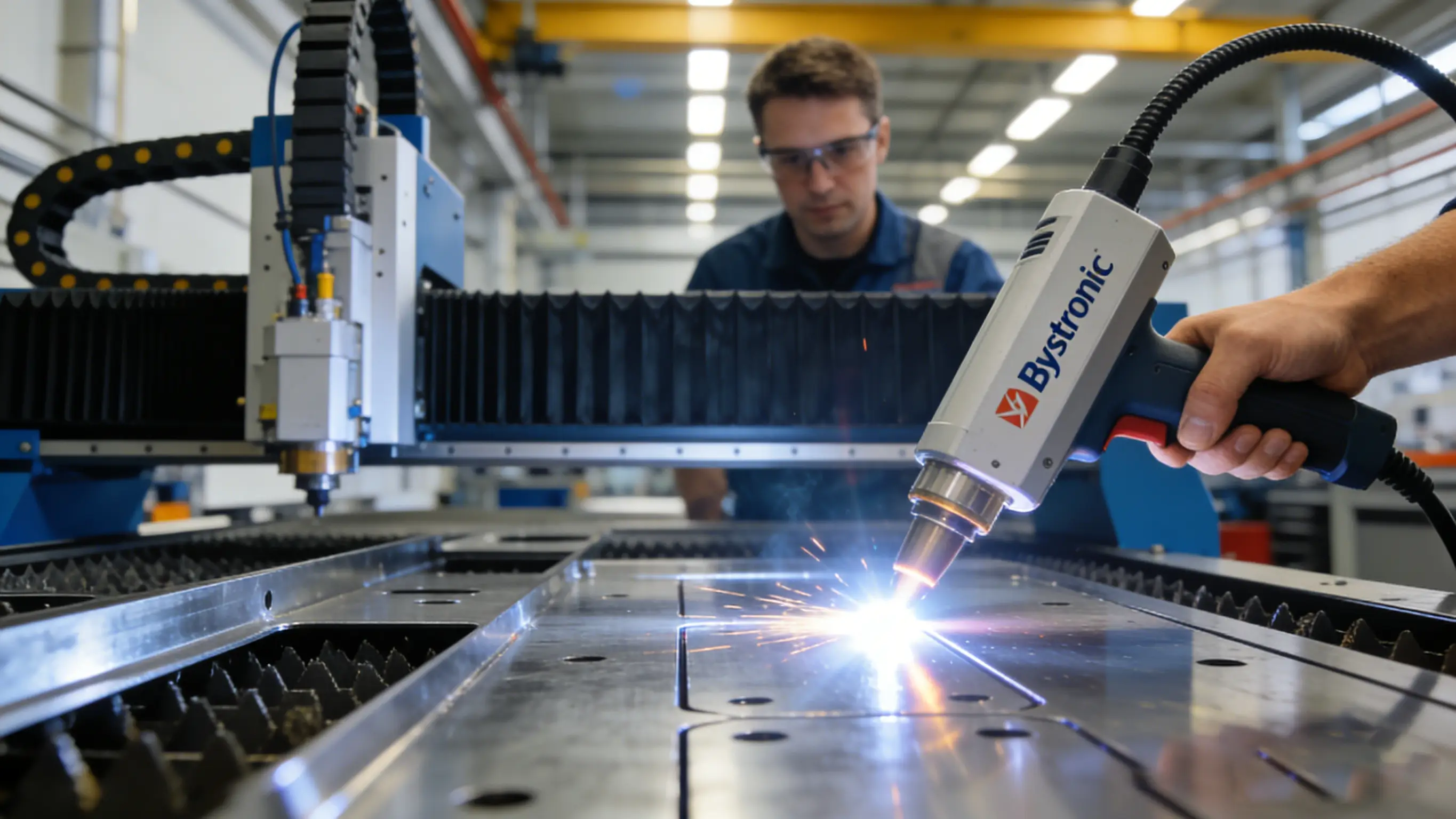
Bystronic vs. Competitors: A Deep Dive on Maintenance Ease
On paper, the daily cleaning routines for Bystronic, an IPG YLS, or a generic handheld fiber laser welder look similar. The real difference lies in the maintenance ecosystem.
Bystronic’s advantage lies in the structured service layer built on top of standard routines: predictive diagnostics, real-time health tracking, and scheduled annual professional recalibration. Its up to 5-year fiber laser warranty and structured service packages significantly shift long-term operational risk.
The challenge with generic/white-label equipment is that it places the full maintenance burden on the operator with no systemic early warnings. Spare parts availability is also less predictable, posing a higher risk for SMEs, who make up 22% of portable welder buyers. Alternatives like MaxWave handheld laser welding solutions often rely on user-led maintenance without defined part replacement cycles or deep warranty coverage.
Conclusion: Who Should Buy? A Practical Decision Guide
The Bystronic handheld laser welding system is a fit for specific users, not everyone.
You should consider buying if you fit this profile:
-
Already a Bystronic User: If your sheet metal shop already runs Bystronic cutting lines, choosing the same brand welder allows you to share technical support, service contracts, and parts logistics, saving real cost and time.
-
Handle Complex Geometry Work: If you are an HVAC manufacturer or precision parts producer dealing with mixed-geometry work that doesn’t fit into automated cells, the handheld flexibility is critical.
-
Can Afford the Full Service Contract: The predictive diagnostics and 24-hour response service are what differentiate this investment. Skipping the service layer means the hardware premium may not deliver its full value.
You should think twice if:
You are a smaller shop with no existing Bystronic relationship, a tight spare parts budget, or no dedicated maintenance staff. The welding product line is newer, and technical support depth is currently not on par with their cutting division—a reality to consider.
Conclusion
For mid-to-large manufacturers already within the Bystronic ecosystem, this is a low-risk, high-capability addition. For other users seeking a highly flexible, cost-effective starting point, it is essential to thoroughly compare alternatives like MaxWave handheld laser welding solutions before deciding. Calculate the Total Cost of Ownership, not just the purchase price. The machine that costs less to own over five years almost always beats the machine that simply costs less to buy.