
Bringing a six-figure Amada laser welder into a small workshop is a bit like showing up to a neighborhood barbecue in a catering truck—powerful, impressive, and seemingly excessive. But the answer isn’t as clear-cut as the price tag suggests.
More small fabrication shops are now seriously considering industrial-grade fiber laser welding systems. The motivation isn’t ambition—it’s cold hard math: faster cycle times, cleaner stainless steel welds, and operators who don’t need a decade of TIG experience. Before you dismiss it as overkill—or drop six figures on impulse—ask yourself three questions: What does your shop actually need? What does Amada deliver? And for a business your size, what does the real ROI look like?
The Amada Laser Welder: Why Small Shops Are Paying Attention
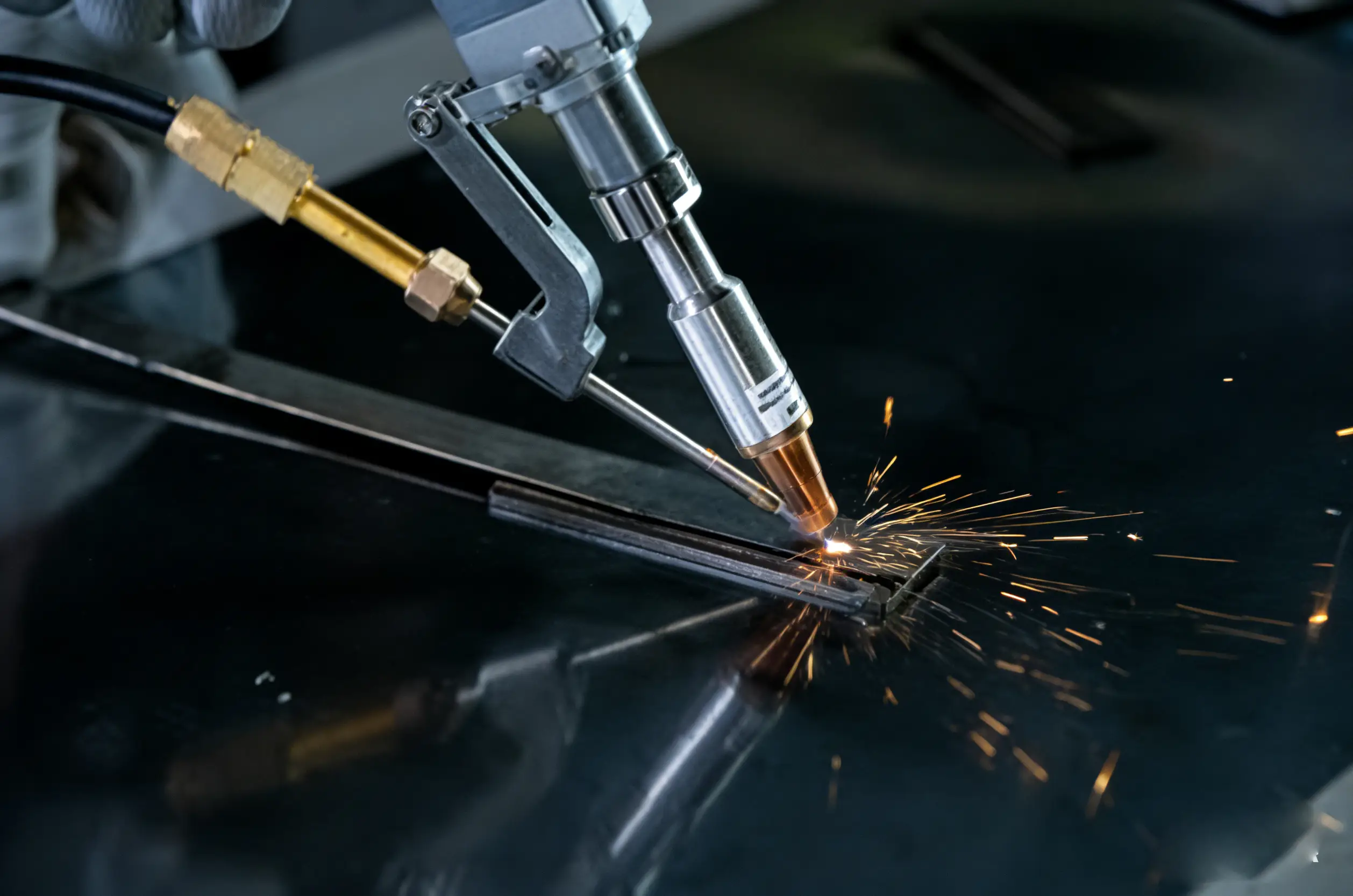
Since 1946, Amada has built precision manufacturing equipment. These aren’t hobbyist tools—they’re built for serious production environments. Their lineup ranges from compact entry-level units to robotic automation platforms. The LF Series tops out at 1000W, with spot sizes as small as 10 microns and penetration beyond 4mm; the FLW-Le pushes to 3000W paired with a six-axis YASKAWA GP25 robot.
What actually draws small shops in:
-
Compact footprint: The FLW-Le fits without disrupting existing production flow
-
Process Range Expansion: Fiber laser wavelengths run about one-tenth of CO2 lasers, enabling precise welding of dissimilar and reflective metals
-
Safety certifications: CDRH Class I / CE certified—no expensive facility upgrades required
Amada’s documented real-world applications aren’t aerospace megaprojects. Think medical tubing, disk drive armatures, RF packages, electronic mounting plates—exactly the kind of high-precision, lower-volume work most small specialty shops handle.
Core Specs: What Your Money Actually Buys
400W average power. 80 joules per pulse. 8kW peak power. These numbers exist to solve one specific problem: welding thin stainless steel without burning through it. The 80J/10ms pulse delivers clean penetration on 2mm stainless; 8kW peak with 500pps repetition rate supports rapid tacking, prototyping, and low-volume mixed production; 400W average power enables continuous 1–500Hz operation matching small-shop rhythms of 100–500 welds/hour.
The handheld torch deserves attention. At 0.4kg, it’s half the weight of standard water-cooled units. The L-shape keeps your wrist neutral during overhead and awkward-angle welds. Air cooling eliminates hose tangles. Auto laser shutoff triggers the moment the torch leaves the workpiece. Total footprint is 0.71 square meters, under 1.5m tall, around 400kg—friendly for standard workshop floors.
The waveform monitoring system is where this machine earns its price for new operators. With real-time feedback, trial pulses drop from 15–20 attempts down to 2–5. Setup time cuts by 50%. The learning curve shrinks from weeks to 1–2 days. What six figures buys here is precision with an exceptionally low operator penalty.
The “Overkill” Test: 5 Scenarios Where It Works, 3 Where It Doesn’t
Three numbers cut through the noise faster than any brochure: your daily weld count, material thickness, and defect tolerance.
Where Amada Earns Its Floor Space
-
Thin stainless prototyping/production (0.5–1.5mm): 100+ welds/day, 30% cycle time reduction vs. TIG, ±0.05mm tolerance.
-
Titanium alloy precision welding: High-mix, low-volume, first-pass yield hits 95%, avoiding expensive titanium rework.
-
High-mix custom fabrication: 75+ unique jobs/month, changeovers under 5 minutes, throughput up 40%.
-
Medical device assembly: 200 welds/day on material as thin as 0.3mm, defect rates under 0.5%.
-
Aerospace prototype runs: 50+ welds/week, ±0.02mm tolerance, rework costs down 25%.
Where Amada Sits Idle and Expensive
-
Basic repair welding: Under 20 welds/day on thick carbon steel (>3mm), equipment sits idle 90%+ of the time.
-
Sub-$50k capital budgets: Under 100 welds/week, ROI stretches past 5 years—a $10k MIG setup solves the same problem.
-
Heavy structural steel work (>4mm): Amada’s precision advantage can’t be leveraged, running at 30% of design capacity.
The decision threshold is clear: 50+ welds/week, material under 2mm, defect costs exceeding $5,000/month—Amada makes financial sense.
Laser vs. TIG/MIG: Speed, Quality, and Hidden Costs
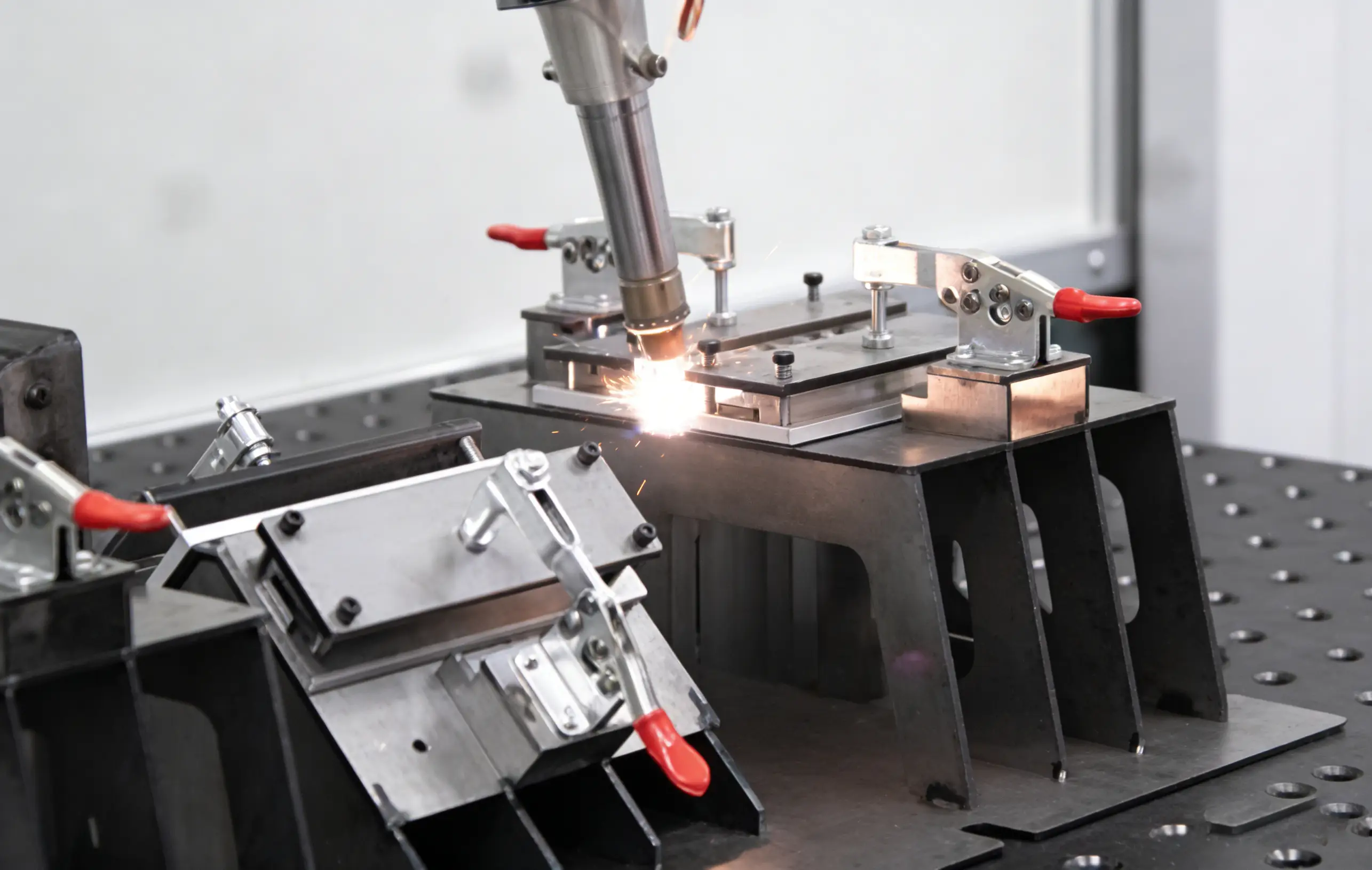
For many small shops, profit leaks aren’t in the weld itself—they’re in everything that follows: grinding, straightening, polishing. Laser welding cuts this chain.
-
Speed: On 1mm stainless, laser runs 4–10x faster than TIG, 2x faster than MIG. On thin-gauge batches (0.8–3mm), cycle times drop 30–50%.
-
Quality: Laser’s heat-affected zone is narrow. On 1.5mm stainless, virtually no distortion, smooth seam, no grinding needed before next step—supports premium pricing.
-
Hidden Costs:
-
Post-processing: Laser virtually eliminates grinding, while TIG/MIG consumes 30–50% of cycle time on post-weld work
-
Consumables: Shielding gas down 30–40%, wire consumption down 10–15%
-
Skill requirement: Laser’s learning curve is far shorter than TIG
-
The smart setup is hybrid: laser handles thin-gauge, precision, appearance-critical jobs; TIG/MIG handles heavy and rough work.
Amada vs. Affordable Handheld Laser Welders: Honest Comparison
The price gap isn’t a rounding error—it’s a different business decision. Amada’s FLW-1500MT starts above $20,000. A MaxWave 800–2000W handheld runs $5,000–$10,000.
|
Feature |
Amada LF Series |
MaxWave (800-2000W) |
|---|---|---|
|
Minimum spot size |
10 microns |
20-50 microns |
|
Penetration (steel) |
1.5mm |
1-1.2mm |
|
Weld speed (500W steel) |
1 cm/s |
0.5-0.8 cm/s |
|
First-pass yield |
>95% |
85-90% |
|
Max thickness (handheld) |
~4mm |
8mm |
|
Price |
$20,000+ |
$5,000–$10,000 |
|
Portability & power |
Demanding, 3-phase required |
Standard 220V, plug-and-play |
Amada’s precision advantage is undeniable for micro-welding applications. But on 1-3mm stainless, MaxWave achieves 95% of its speed and penetration; on 2-5mm aluminum, its wobble mode cuts porosity by 70%; on 3-8mm carbon steel, it delivers 85% of performance. For most small shops, that 10-15% performance gap rarely justifies double the price.
ROI Analysis: How Fast Does It Pay Back?
A 1.5kW Amada running at capacity saves over $2,800/month in labor alone. At that rate, a $50,000 investment pays back in 5–9 months. The key phrase: “if the machine stays busy.”
Key figures:
-
Operating cost: $2.50–$4.00/hour
-
Consumables: 40% lower than MIG
-
Rework rate drops to 2%
-
Post-weld grinding down 80%
-
Scrap rate from 12% to 1.5%
At 20,000 parts/year with a $10/part premium, monthly savings hit $14,000–$40,000, payback in 5–12 months.
When ROI breaks: Below 200 welding hours/month, payback stretches past 18 months. Single-operator or repair shops (<50 hours/month) should prioritize entry-level machines in the $10k–$15k range.
Installation Reality Check: Power, Floor, and Maintenance
Before signing, verify three basics to avoid expensive surprises:
-
Power: Amada requires 220–400V, 3-phase. Most older shops need a subpanel ($1,000–$3,000). Upgrading from single-phase to 3-phase runs $2,000–$10,000.
-
Floor: The machine weighs 400kg. Requires 4–6 inch, 3,000 psi concrete, point load under 150 psf. Smaller shops may need retrofit footings ($500–$2,000).
-
Cooling maintenance: Air-cooled system needs daily 5–10 minute filter cleaning. Skip it, and efficiency drops 20–30%, with 1–4 hours of unplanned downtime/month.
Decision Framework: Who Should Buy?
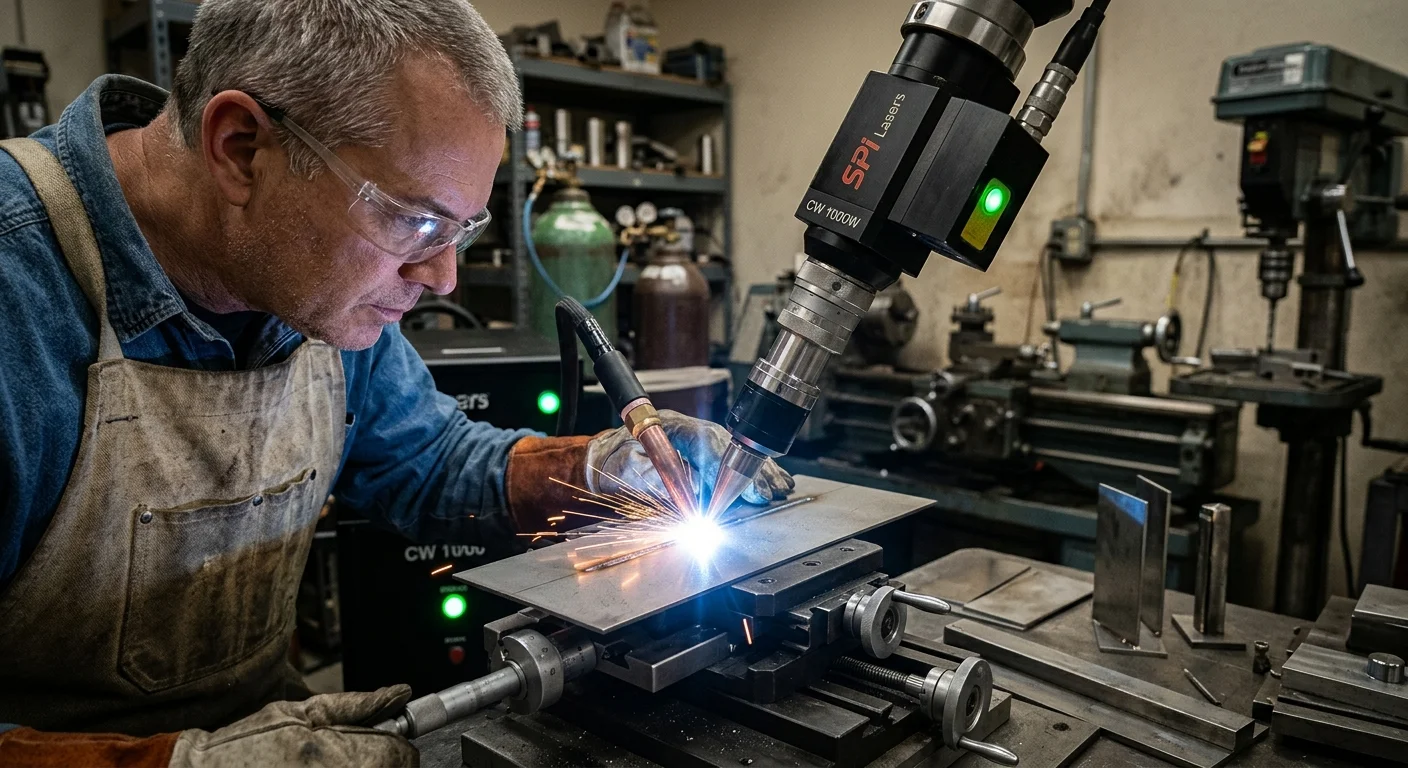
Three questions cut through: What are you welding? How often? What does a failed weld cost?
Buy it if you focus on thin-gauge precision work (<3mm), run >200 welding hours/month, require tolerances ≤±0.05mm, and rework costs already exceed 20% of production cost.
Hold off if your work is primarily galvanized (laser optics degrade quickly) or heavy copper/brass (yield drops to 60-70%).
Consider alternatives if order volume is inconsistent. Use contract laser welding services until your monthly volume justifies the investment.
Final step: Bring your actual parts to the demo. Request a live weld test on 1mm steel—a 300W machine should penetrate within 8 seconds. Demand tensile strength ≥80% of base material. That’s the real pass/fail line.
Conclusion
Amada isn’t overkill—it’s simply not the right tool for every shop. If you have consistent, high-precision, high-value thin-gauge work, it can prove its value in under a year. Otherwise, a $5,000–$10,000 handheld laser welder (like MaxWave) covers most general fabrication in the 1–8mm range, letting you validate the process before scaling up.