
Cast aluminum appears everywhere in modern manufacturing—automotive housings, EV battery trays, aerospace structural components. Yet it’s one of the hardest materials to weld at scale. High silicon content, aggressive thermal conductivity, and high reflectivity all work against you, pushing underpowered systems toward porosity, cracking, and distortion that eat into production yields fast.
Han’s Laser high-power fiber laser welder was built for exactly this problem. Its continuous wave fiber laser architecture goes straight at the physics of aluminum alloy welding. This article provides a full technical breakdown—core specs, real application data, and a direct comparison against TIG and MIG alternatives—to help you decide if this system belongs on your production floor.
Key Specifications at a Glance
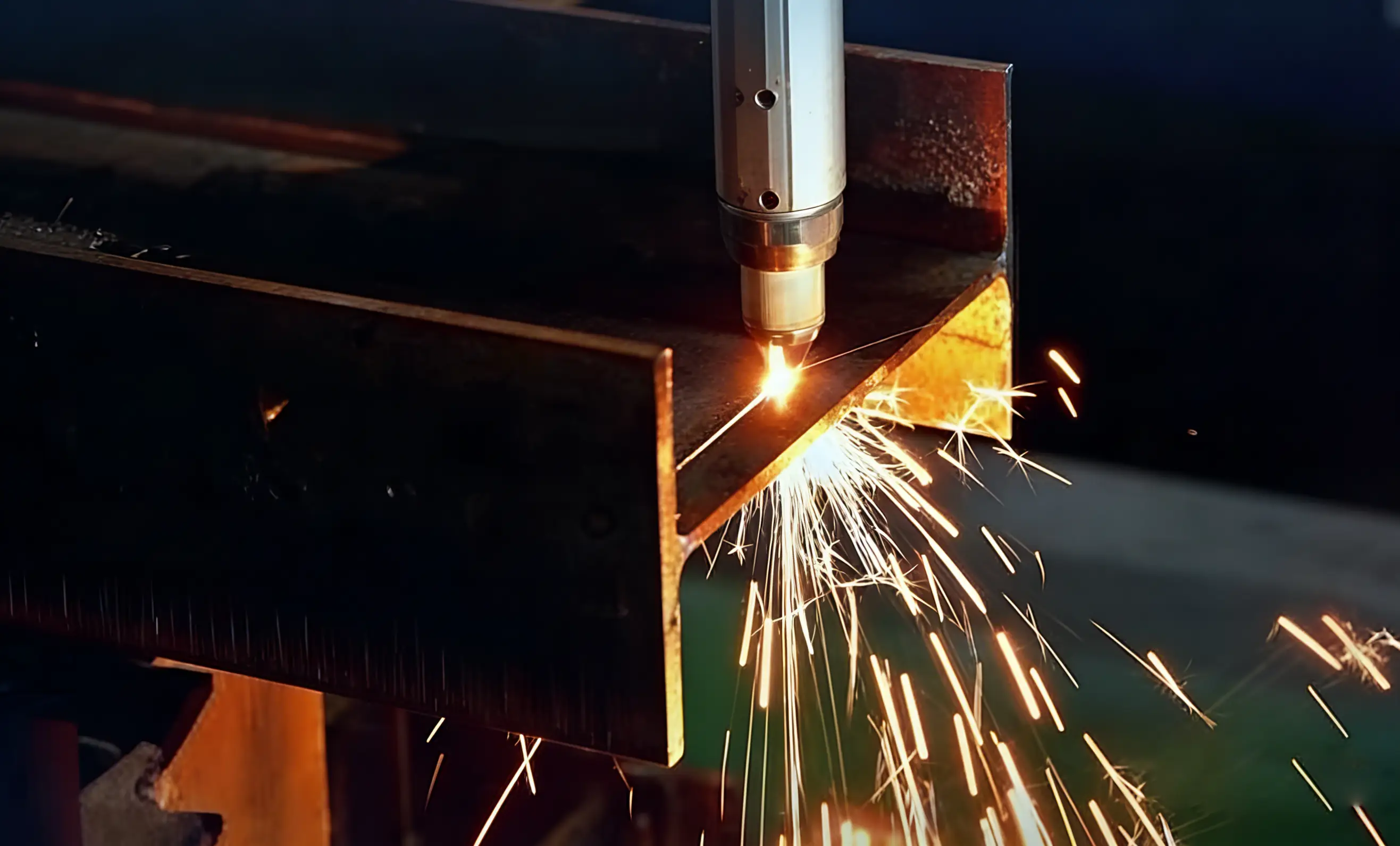
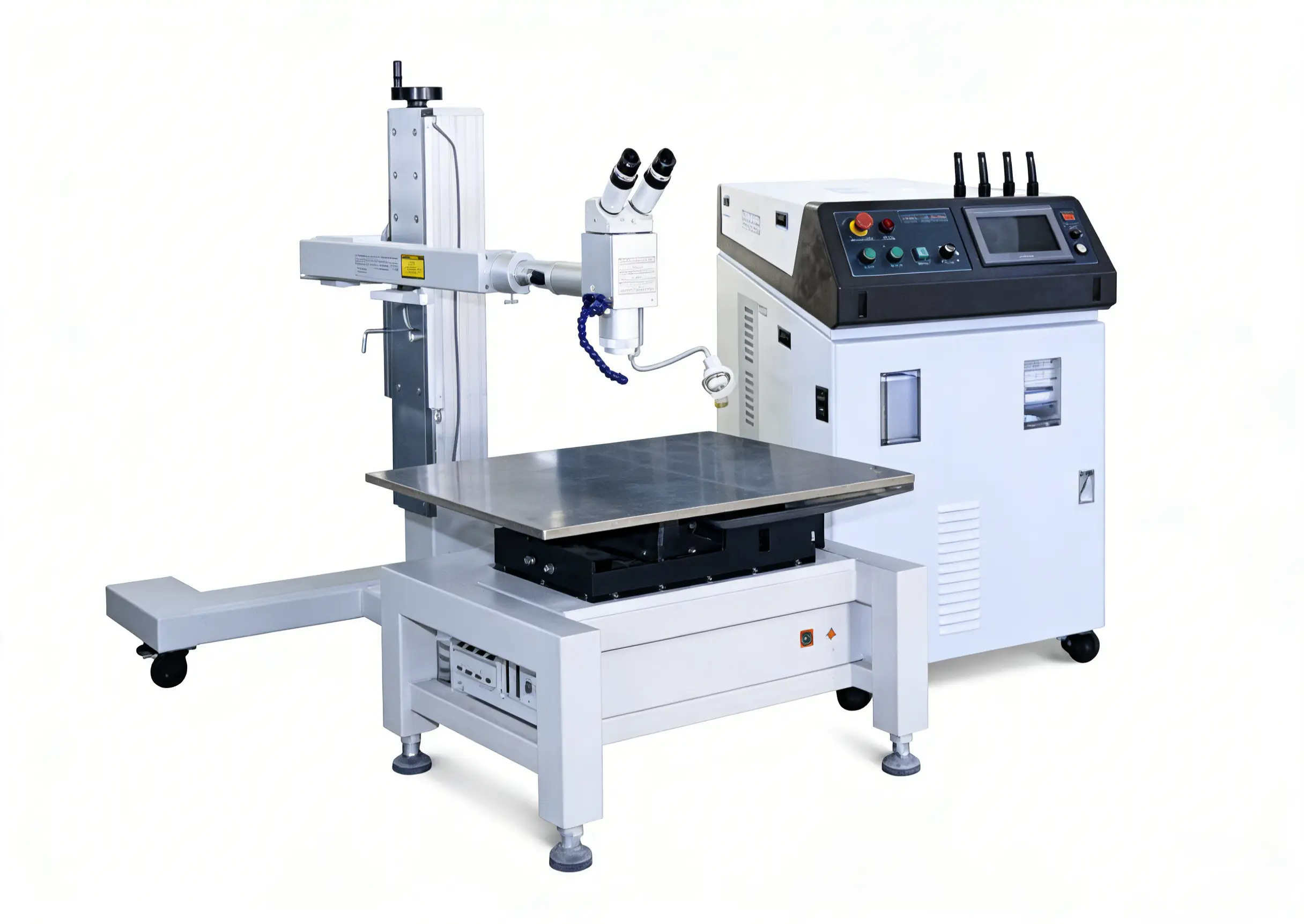
Han’s Laser builds its high-power fiber laser welder lineup around a 1070 nm wavelength, covering models from the FP150 (150W pulse / 250W continuous) to handheld systems at 1000W, 1500W, and 2000W. Peak power reaches 3000W on 300W-average variants, providing ample headroom for reflective aluminum alloys.
Key specs:
-
Fiber core diameter: 50 μm or 200 μm
-
Pulse width control: 0.2–50 ms, 50 waveform groups × 16 segments
-
Welding speed: up to 120 mm/s
-
Aluminum penetration: 3.5 mm at 1000W; 4.0 mm at 2000W
-
HAZ: minimal, zero measurable distortion
XYRZ 4-axis linkage handles complex 3D paths with precision. CCD vision takes care of position alignment automatically. One laser source can be time-shared across multiple stations, boosting throughput on parallel production lines.
Why Cast Aluminum Is One of the Hardest Materials to Weld
Cast aluminum’s material properties create multiple compounding challenges:
-
High thermal conductivity: 4× that of steel—heat spreads fast, leaving internal stress large enough to crack rigid structures
-
Oxide layer: Surface oxide film melts at 2050°C (over 3× aluminum’s 600°C melting point), doesn’t fuse, and floats into the weld pool as a weakening inclusion
-
Porosity: Casting voids and hydrogen absorption cause bubble formation that gets trapped during rapid solidification
-
Alloy element burn-off: Magnesium, zinc, and manganese burn off under sustained heat, changing weld metal composition
-
HAZ softening: No solid-state phase change means coarse grains in the HAZ can’t be refined—joint strength drops
-
No visual melt indicator: Aluminum shows no color change from solid to liquid, removing a key feedback signal for manual welders
Together, these factors make cast aluminum welding a specialist skill—and underpowered or mismatched equipment a direct liability on your production line.
Han’s Laser Model Breakdown and Technology
Han’s Laser offers both continuous wave (CW) and pulsed wave (PW) modes, each solving different applications.
Continuous Wave Models
HW1500F-IPG and HW2000 are the workhorses for production-line aluminum welding. Both use water-cooled systems (chiller capacity up to 10.2 kW) to maintain power stability across long runs. The wobble function (swing width 0–5 mm, frequency up to 300 Hz) is critical for cast aluminum—porosity control depends on how the beam stirs the melt pool, not just how much power you apply.
-
HW1500F-IPG: 1500W CW, water-cooled, wobble 0–5 mm / 0–300 Hz, weld speed 0–50 mm/s, Al thickness 0.4–4 mm
-
HW2000: 2000W CW, same wobble and cooling setup, more power for thicker sections
Pulsed Wave Models
FP300 and SFP300 deliver 300W average / 3 kW peak, with pulse energy up to 30 J and adjustable pulse width (0.2–50 ms). The 10:1 peak-to-average ratio is what makes pulsed mode valuable: short, intense bursts drive deep keyhole penetration without loading heat into the part, producing high-aspect-ratio welds with minimal HAZ on thin-wall cast aluminum.
Fiber Core Diameter: The Spec Most Buyers Overlook
|
Fiber Core |
Beam Focus |
Weld Profile |
Best For |
|---|---|---|---|
|
50 μm |
Narrow, high intensity |
Deep, tight keyhole |
Structural joints, high-strength seams |
|
200 μm |
Wider spot |
Broader seam, shallower depth |
Gap bridging, cosmetic welds, thin Al |
For cast aluminum repair welding with inconsistent fit-up gaps, 200 μm gives you more room to work with. For precision structural welds on EV battery trays or automotive housings, 50 μm delivers the depth-to-width ratio you need.
Cooling and Production Fit
Smaller models (WFF500, FP150, FP300) are air-cooled, drawing under 1.8 kW—ideal for smaller shops without chiller infrastructure. The handheld HW series (1 kW, 1.5 kW, 2 kW) is water-cooled, ships with 10 m fiber runs, and runs on single-phase 220V (models above 2kW require three-phase 380V), making integration into existing production cells straightforward.
How Han’s Laser Solves Cast Aluminum Welding’s Three Biggest Challenges
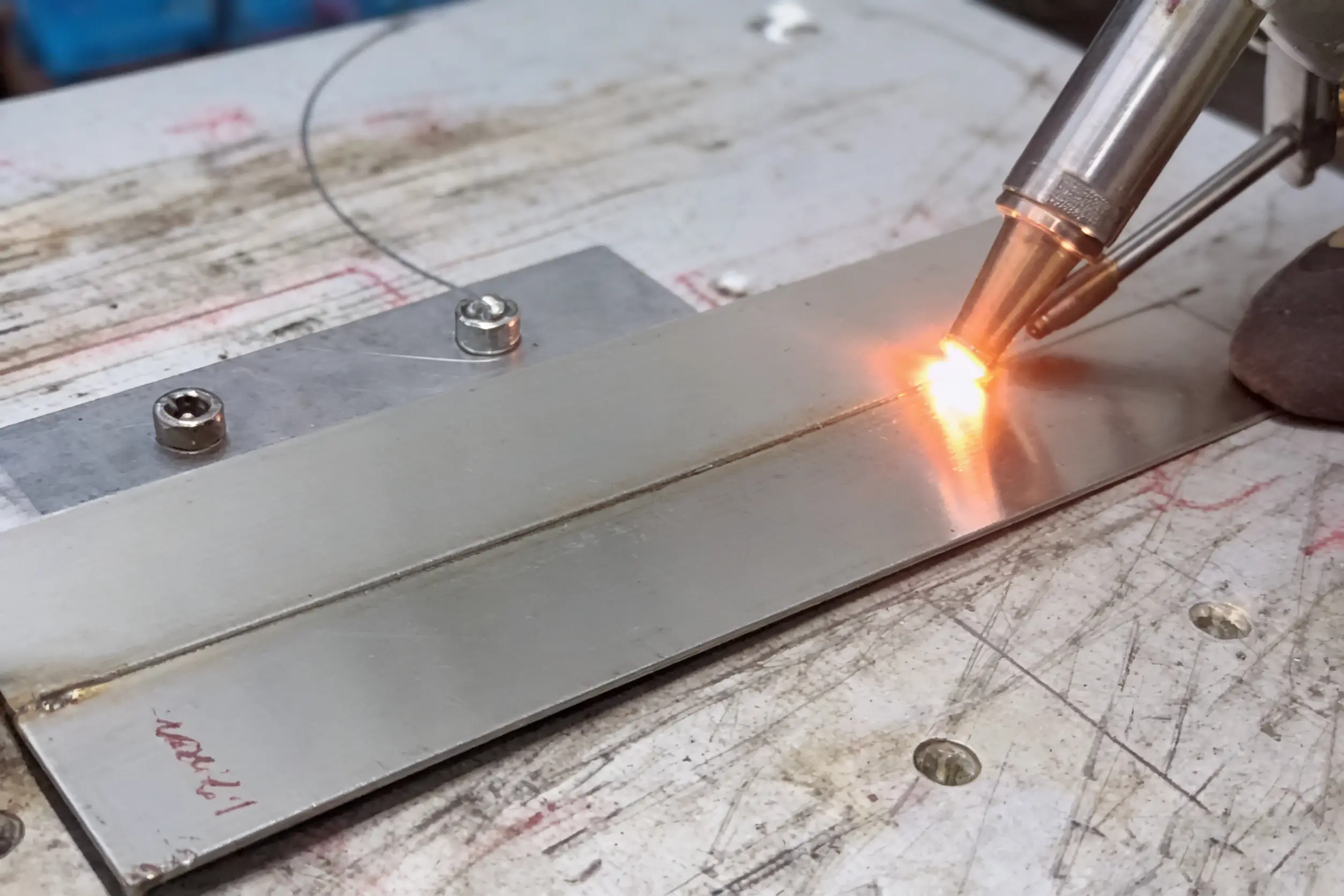
1. High Reflectivity Draining Energy
Aluminum reflects over 90% of infrared energy at low power densities. The fix isn’t brute force—it’s crossing the threshold fast. Han’s Laser CW systems hit the power density needed to flip aluminum from reflective to absorptive in milliseconds. The 1070 nm wavelength paired with a 50 μm fiber core concentrates energy into a tight enough spot that keyhole mode kicks in before reflection losses build up. Absorption jumps, and the laser starts doing real work.
2. Porosity Forming in the Melt Pool
Casting voids and dissolved hydrogen don’t vanish when aluminum melts—they move. Bubbles form and get trapped if solidification outruns their escape. Han’s Laser CW models tackle this with a wobble function: the beam oscillates at up to 300 Hz across a 0–5 mm swing width, stirring the melt pool in a repeatable pattern. The pool stays liquid long enough for gas bubbles to escape before solidification locks them in, producing a denser, more uniform weld cross-section.
3. Thermal Cracking Under Residual Stress
Fast, uncontrolled heat input creates steep temperature gaps across the part, building internal stress. Cast aluminum has no solid-state phase change to spread that stress around, so the joint cracks. Pulsed wave models handle this with tight control: the FP300 and SFP300 deliver 3 kW peak power in bursts as brief as 0.2 ms, driving deep penetration without sustained heat input. The HAZ stays narrow, residual stress stays low, and the joint reaches full fusion without cracking.
Real-World Applications
Automotive: EV Battery Trays and Drivetrain Housings
ADC12 and A356 alloys dominate the EV battery tray market, with wall thickness ranging 3–8 mm. Han’s Laser systems weld these at 6 m/min using 9 kW power, achieving post-weld airtightness below 10⁻⁶ mbar·L/s.
-
Transmission housings: Deep keyhole mode (>10⁶ W/cm²), depth-to-width ratio >5:1, tensile strength retention >95%
-
Motor housings (2–5 mm wall): Heat conduction mode, porosity <1%, hot cracking sharply reduced
Aerospace: Structural Repair
A356 cast structural parts (wall thickness 4–10 mm) undergo repair welding with distortion under 0.1 mm per 100 mm and X-ray inspection pass rates of 98%. Turbine cladding runs without preheating, achieving single-pass width of 20–30 mm and 50% wear resistance gain per pass.
Industrial Equipment: Pump Bodies and Gearbox Housings
ADC12 pump and valve bodies weld at speeds above 5 m/min, delivering a 3× capacity increase over traditional methods. A356 gearbox housings achieve helium leak rates below 5×10⁻⁹ mbar·L/s, with productivity climbing 40% after automation integration.
Han’s Laser vs. TIG/MIG: Data-Driven Comparison
|
Metric |
Han’s Laser Fiber |
TIG/MIG (Cast Al) |
|---|---|---|
|
Welding speed (3mm Al) |
Up to 7.2 m/min |
0.5–2 m/min |
|
HAZ width |
Minimal |
2–5 mm |
|
Porosity rate |
Near zero |
5–15% |
|
Post-weld deformation |
Zero |
5–10% dimensional shift |
Total cost of ownership: Han’s Laser air-cooled models draw under 1.8 kW with 25% electro-optical efficiency. No consumable electrodes, no filler wire for most cast aluminum joints, and CCD vision alignment cuts manual labor by over 50%. TIG and MIG pile up ongoing costs—consumables, rework labor, part rejection.
Limitations: Han’s Laser fiber welding is ideal for 0.5–5 mm cast aluminum—battery trays, pump bodies, motor housings, thin-wall structural parts. Single-pass penetration reaches 4.0 mm at 1 kW. Beyond 5 mm or complex bevel geometries, MIG’s deep-groove capability still holds an edge.
Selection Guide: Matching Model to Your Operation
Wall thickness is your first decision point:
-
Under 1.5 mm: MOPA pulsed models at 20–50W. Tight pulse control limits heat input where distortion risk runs highest.
-
1.5–4 mm: 50–100W fiber models with wobble mode. This is the sweet spot for most automotive cast aluminum—battery enclosures, pump bodies, motor housings.
-
Over 4 mm: 100W+ continuous wave models. Han’s Laser tops out at 10 mm for aluminum.
Batch size shapes the rest:
-
Repair/small-to-medium runs: Handheld MOPA. Air-cooled, under 500W, ~45 kg. Movable between stations.
-
High-volume lines: G3015HF robot-integrated system. 200 m/min speed, 2.8G acceleration, 3000×1500 mm envelope. Positioning accuracy ±0.03 mm/m, repeat positioning ±0.02 mm.
Brand Authority
In 2025, 47% of global laser welding revenue comes from fiber systems. Han’s Laser stands alongside IPG Photonics, Trumpf, and Coherent as a top force in the laser welding machine market. Han’s builds diodes, fibers, and beam optics in-house in Shenzhen, compressing lead times to 4 weeks—far shorter than most international competitors.
Regional data supports this position:
-
Asia-Pacific holds 49.35% of 2025 laser welding revenue, growing at 7.62% CAGR through 2031
-
China grows at 7.0% CAGR—34.6% above the global benchmark of 5.2%
-
Han’s Laser shipped over 3,000 multi-kW fiber cells from Chinese manufacturing hubs in 2025 alone
-
Automotive and EV buyers make up 35.9% of total market share
Pre-Purchase Checklist
1. Process Validation
Ask if the supplier will run a cast aluminum welding trial on your actual alloy. Acceptance criteria: porosity below 2%, hot crack length under 0.5 mm, tensile strength above 80% of base material, HAZ hardness drop under 15%. Get test parameters in writing (6 kW power, 2 m/min speed, 20 L/min assist gas, heat input under 180 kJ/m). Hesitation is your answer.
2. Facility Requirements
-
Cooling water flow: >20 L/min, <25°C, 0.2–0.5 MPa
-
Fume extraction: >1000 m³/h, >99% filter efficiency
-
Laser safety: Class 4 enclosure, door interlock, 1070 nm eyewear
3. ROI Calculation
A 3–6 kW system runs RMB 500K–1.5M in equipment cost. Laser welding drops cost per part to RMB 2–5, compared to RMB 10–20 for manual welding. At 100K–500K parts per year, payback hits 1–2.5 years. Productivity gain over manual: 300%.
4. Supplier Verification
-
Request 3–5 cast aluminum reference cases. Look for post-weld strength above 400 MPa and failure rates below 1%
-
Confirm spare parts lead time: laser source and weld head replacement within 48 hours
-
Test technical response: simulate a high-reflectivity coupling failure. Anything over 24 hours is too slow
Conclusion
Cast aluminum leaves no room for weak process choices—and neither does a competitive manufacturing floor.
This guide has shown one thing clearly: Han’s Laser high-power fiber laser welding technology isn’t a minor upgrade over TIG or MIG. It’s a different approach at the core. High reflectivity, porosity risk, and heat distortion aren’t dealbreakers anymore. They become manageable variables you can control.
The data-driven comparison makes the case on its own. Real application results across automotive, EV, and aerospace confirm this works in production environments—not just in testing. Now the decision is yours: does your current aluminum alloy laser welding process deliver the weld quality, cycle time, and cost profile your operation needs?
No confident yes? That’s your starting point.