
For small metal fabrication shops, auto repair garages, and custom metalwork businesses, choosing the right portable fiber laser welder is a high-stakes investment. IPG Photonics, a global leader in fiber laser technology, offers the LightWELD series—one of the most trusted handheld laser welding solutions on the market. This guide breaks down everything small workshop owners need to know before buying, including model comparisons, material capabilities, electrical requirements, cost of ownership, and real-world performance.
Why Small Workshops Choose Portable Fiber Laser Welding
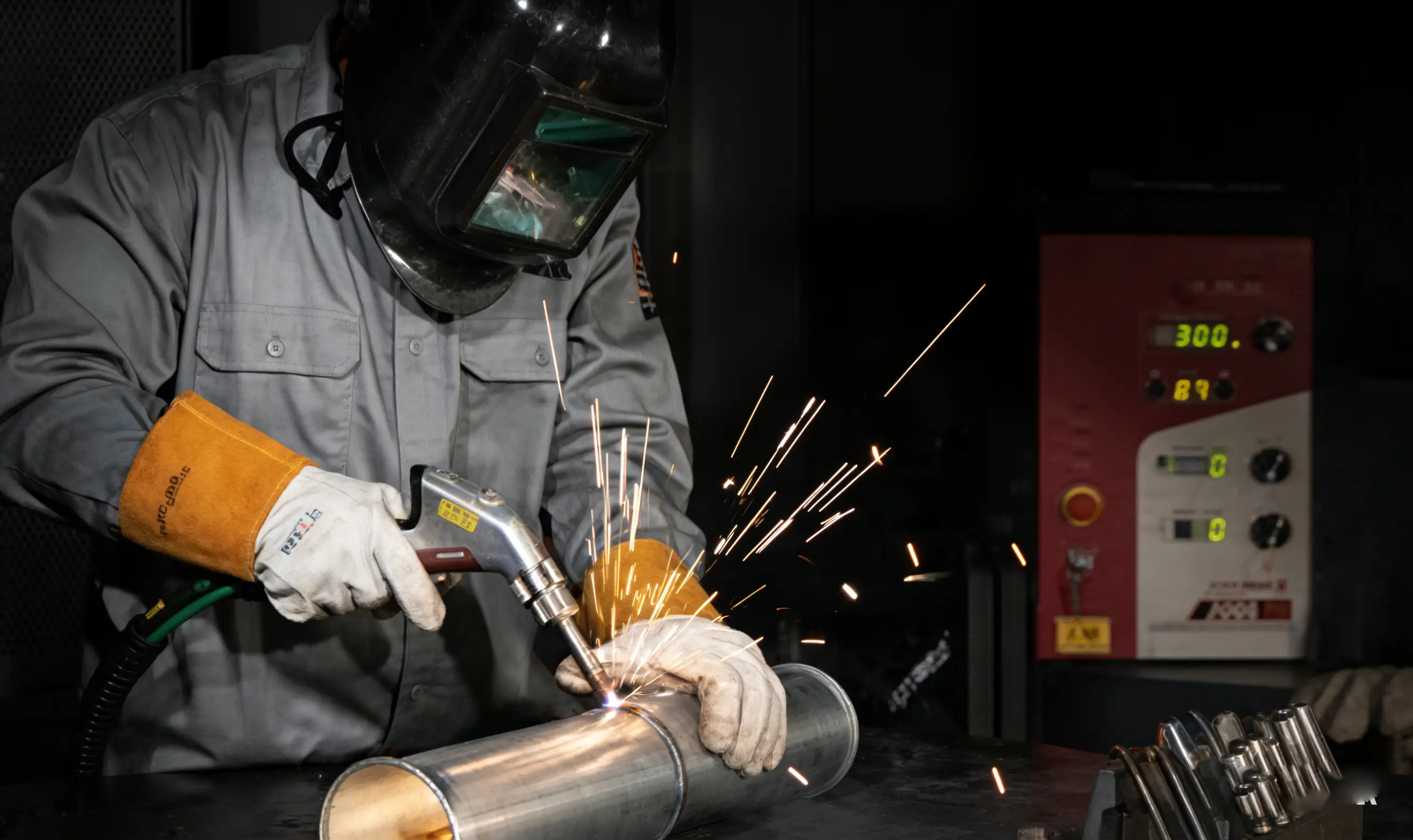
The handheld fiber laser welding market is booming, valued at $1.44 billion in 2025 and growing 8.4% annually. Small shops are ditching traditional TIG welding for laser tools for clear reasons:
-
Speed: Laser welding is 4x faster than TIG, slashing production time and labor costs.
-
Low distortion: Narrow heat-affected zone (HAZ) reduces warping on thin stainless steel, aluminum, and galvanized parts.
-
Minimal spatter: Clean welds mean less post-processing and higher first-pass yield.
-
Low operating cost: No filler wire or frequent gas consumption, cutting long-term expenses.
-
Compact & flexible: Portable design fits small spaces without fixed fixtures or safety curtains.
Compared to expensive robotic welding cells ($150,000–$500,000) and high-cost TIG setups ($5,000–$20,000), IPG LightWELD portable welders offer strong ROI for small businesses.
IPG Photonics Brand Overview
Founded in 1990, IPG Photonics invented modern fiber laser technology and remains the world’s largest manufacturer of fiber laser sources. Unlike brands that source components from third parties, IPG controls full production—from laser diodes to finished welders. This vertical integration ensures consistent beam quality, stability, and durability that generic laser welders struggle to match. The LightWELD series is IPG’s flagship handheld line, built for industrial performance in a portable package.
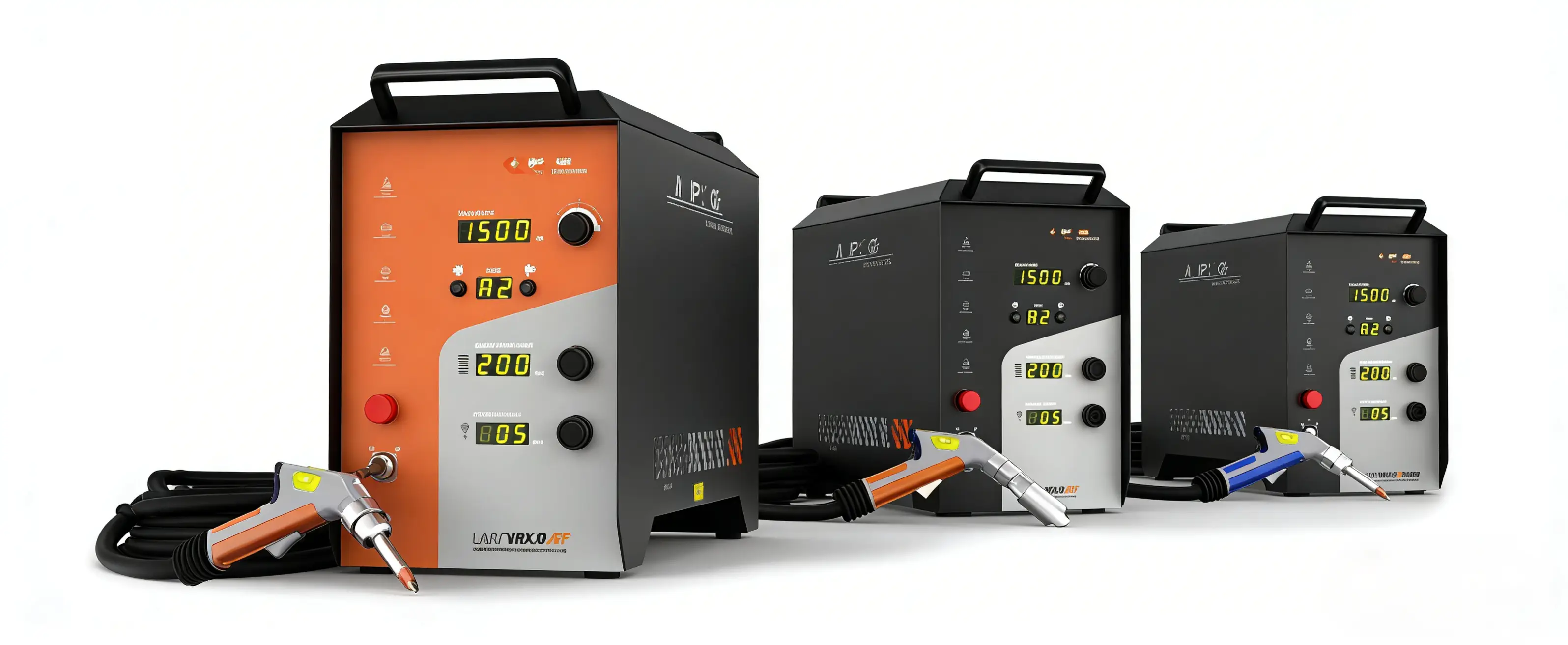
IPG LightWELD Model Comparison: 1000W vs. 1500W XR vs. 2000W XR
IPG offers three core LightWELD models, each tailored to different workshop needs. The right choice depends on your typical material thickness, production volume, and budget.
Key Specifications
|
Model |
Power |
Peak Burst |
Adjustment |
Cooling |
Presets |
|---|---|---|---|---|---|
|
LightWELD 1000 |
1000W |
— |
10–100% |
Air-cooled |
None |
|
LightWELD 1500 XR |
1500W |
2500W |
10–100% |
Air-cooled |
100 |
|
LightWELD 2000 XR |
2000W |
3000W |
10–100% |
Air-cooled |
100 |
Material Thickness Capacity
-
LightWELD 1000: Handles mild steel, stainless steel, and aluminum up to 3mm. Best for thin-sheet jobs.
-
LightWELD 1500 XR: Welds steel up to 4mm (6.35mm with wire feed), aluminum up to 8mm, and copper up to 1mm. Ideal for daily small-shop fabrication.
-
LightWELD 2000 XR: Penetrates steel up to 8mm, aluminum up to 8mm, titanium up to 7mm, and copper up to 3mm. For heavy-duty, high-volume work.
XR Beam Advantage
The XR series uses a 50μm fiber core and 150μm spot size, delivering 6x higher energy density than standard models. This tighter beam improves penetration, precision, and gap tolerance—critical for imperfect fit-up in small workshops. The 1500 XR supports wobble width up to 15mm, bridging gaps without re-clamping.
Electrical Requirements for Small Workshops
Proper power setup is non-negotiable for safe, stable operation:
-
LightWELD 1500 XR uses 17A at 220V, requiring a dedicated 20A circuit (per NEC 80% continuous load rule).
-
Use 12AWG wire, GFCI protection, and no shared loads on the circuit.
-
Most small shops need at least two dedicated 20A circuits to avoid tripping breakers.
-
Operating cost is low: roughly $1.20 per hour for electricity, with no shielding gas expense for most jobs.
IPG LightWELD vs. Budget Laser Welders
IPG LightWELD costs more than generic options (Raycus/MaxPhotonics), but the premium delivers real value:
-
Beam quality: Tighter spot for deeper penetration and cleaner welds.
-
Stability: Air-cooled design with zero thermal drift during long runs.
-
Presets: 100 stored modes vs. ~55 on budget units, cutting setup time.
-
Durability: IPG laser sources last 100,000 hours, reducing repair costs.
-
Learning curve: New operators master welding in 2–4 hours, vs. 8–12 hours for budget machines.
For high-volume repeat jobs, IPG’s efficiency and reliability offset the higher price within 6–12 months.
5 Buying Criteria for Small Workshops
-
Material thickness: Match power to your regular max thickness—not occasional jobs.
-
Usage intensity: 1000W for light use; 2000W for full-shift, 5-day workweeks.
-
Material variety: XR models required for copper, titanium, and high-reflectivity metals.
-
Total cost: Include electrical upgrades, ventilation, and maintenance—not just upfront price.
-
Operator skill: Preset systems help new users produce quality welds fast.
Safety & Ventilation
Laser welding produces harmful metal fumes and ultrafine particles. Small shops must install:
-
Local exhaust ventilation (LEV) at the weld zone.
-
HEPA filtration (99.97% efficiency at 0.3 microns) to meet OSHA 1910.252 standards.
Proper ventilation protects workers and avoids regulatory fines.
ROI for Small Shops
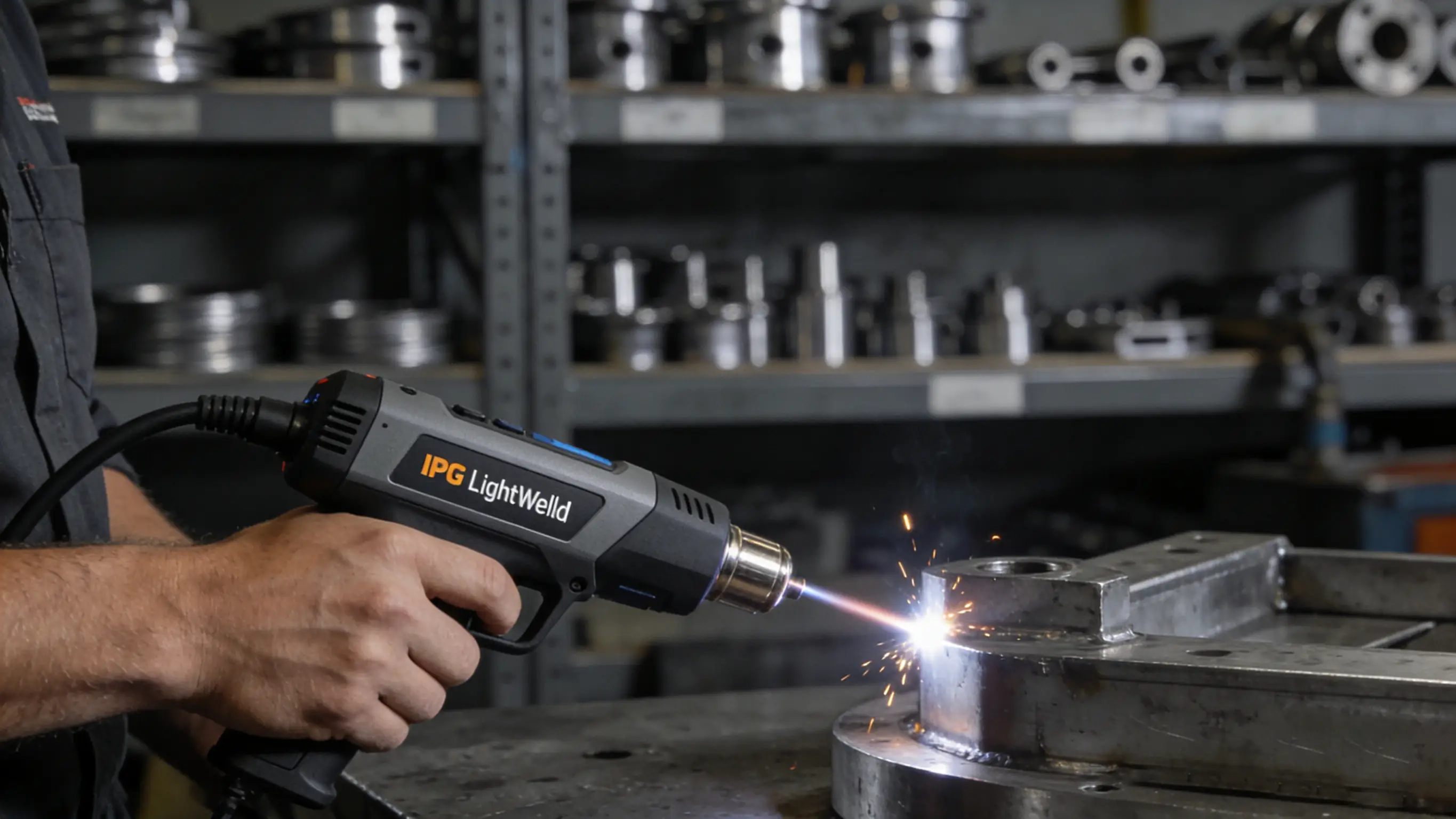
IPG LightWELD delivers fast payback:
-
Labor savings: 4x faster than TIG frees up 20+ hours monthly.
-
Consumable savings: No filler wire or frequent gas costs.
-
Rework reduction: Low distortion means fewer failed parts.
Shops using the machine 20+ hours weekly see payback in 9–16 months; heavy use breaks even in 6–7 months.
FAQ
-
Can a 220V garage circuit run LightWELD? Yes—with a dedicated 20A circuit.
-
Is higher wattage always better? No—overbuying wastes energy and money.
-
Does it weld aluminum? Yes—1500W+ recommended for clean, consistent results.
-
Can it replace TIG? For most small-shop fabrication, yes.
Conclusion
IPG Photonics LightWELD portable laser welders are built for small workshops that need speed, precision, and reliability. The 1000W model works for thin-sheet work, the 1500 XR is the all-around workhorse, and the 2000 XR handles heavy-duty tasks. With strong ROI, low operating costs, and industrial-grade quality, LightWELD is a top choice for shops upgrading from TIG or budget laser welders.