
The factory floor is changing faster than most manufacturers want to admit. If you keep up with cnc machining news today, you know the industry spent the last decade perfecting multi-axis CNC automation. But a quieter revolution was building at the same time — one that doesn’t replace your existing machining setup. It changes what that setup can do.
By 2026, hybrid laser-CNC integration moved from experimental novelty to a real competitive edge. Shops that caught onto this shift are already pulling ahead.
What follows breaks down the technology clearly. You’ll see the real-world applications where laser cutting CNC combinations are delivering measurable gains. Plus, you’ll get the key questions every machine shop owner needs to ask — before the first-mover advantage window closes.
CNC Machining News 2026 — Hybrid Laser-CNC Integration
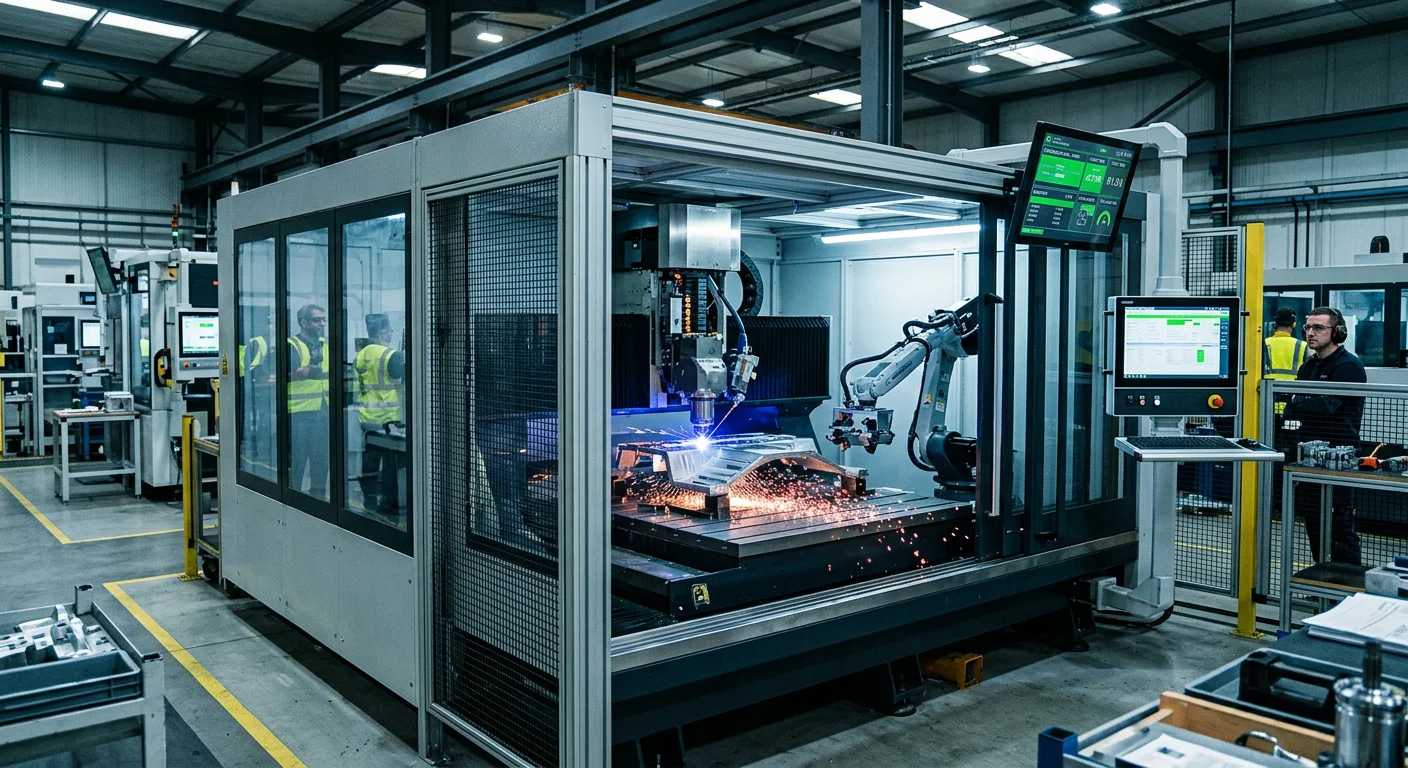
The numbers tell a clear story.
The hybrid additive manufacturing machines market hit USD 2.8 billion in 2026. That’s up from USD 2.37 billion just twelve months earlier. That’s an 18.4% growth rate in a single year. By 2030, analysts project that figure reaches USD 5.45 billion.
This isn’t guesswork. It’s real capital moving fast.
What’s Driving the Numbers
Three forces are pushing hybrid laser-CNC integration from pilot programs into full production scale:
- Laser automation hit USD 3.72 billion in 2026. 65% of manufacturers now put IoT and AI-integrated laser systems first — for real-time monitoring and tighter process control.
- Fiber laser systems lead adoption. They run more efficiently, take up less space, and fit into existing CNC workflows with far less friction.
- 5-axis simultaneous machining matches the output of two standard 3-axis setups. It handles super-hard materials like cubic boron nitride on quenched steel — where conventional machines fall short.
Top investment segments include hybrid laser metal deposition machines, powder bed fusion paired with CNC milling, and directed energy deposition combined with machining centers.
The Strategic Logic
Print the rough geometry. Finish with CNC. That sequence — additive-subtractive hybrid manufacturing — cuts out redundant setups and reduces tooling costs. You also get precision on materials that traditional machining can’t handle well: hardened steels, advanced ceramics, near-net-shape additive parts.
The laser cutting machines market alone stands at USD 7.4 billion in 2026. It’s projected to reach USD 16.9 billion by 2035. Semi-automatic systems hold 72.3% market share. They’re integrating with fiber-laser automation at a 9.6% CAGR.
The first-mover window is open. It won’t stay that way.
What Is Hybrid Laser-CNC Integration — And Why Does It Matter in 2026?
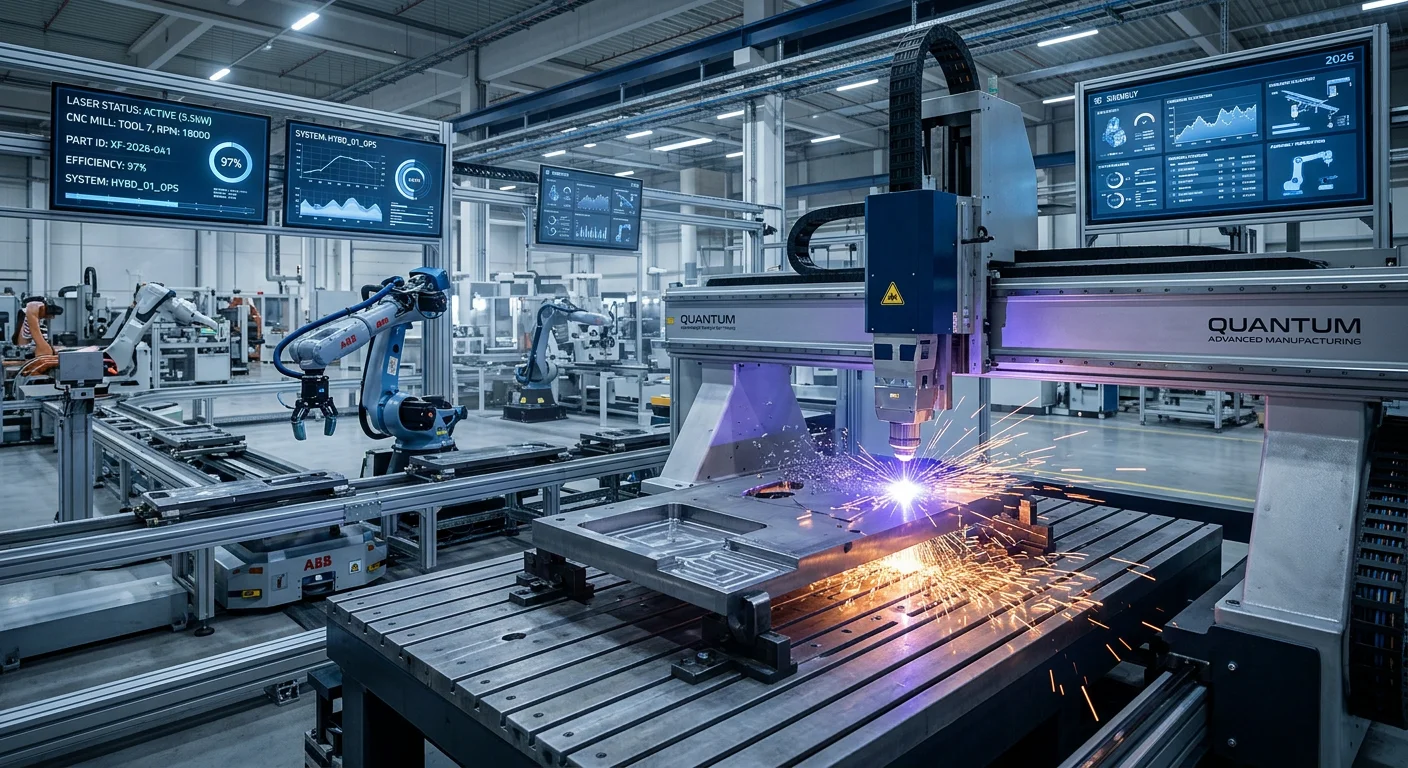
Two machines. One workflow. Zero transfers.
That’s the core idea behind hybrid laser-CNC integration. If you follow cnc machining news, you know it sounds simple — but it’s changing how precision manufacturing works at a fundamental level.
Here’s what’s happening on the floor: a high-speed CNC spindle runs up to 60,000 RPM and handles all the heavy cutting. Then a fiber laser steps in — same setup, same part — for cleaning, welding, or surface finishing. No repositioning. No waiting at a separate station. No tolerance drift from moving the part by hand.
The result? Cycle times drop 30–50%. Not because the machines got faster. Because the dead time between them disappeared.
Why the Architecture Works
The system runs on real-time IoT sensors and closed-loop feedback. It tracks spindle load, laser output, and tool wear all at once — and adjusts on the fly. Predictive maintenance alerts alone push a 10–20% throughput boost and cut maintenance costs by 20–30%.
Modular laser heads open up more options. Shops with 5-axis setups can process alloys and composites without stopping the line. The right head configuration improves material deposition efficiency by 15–25%.
Why 2026 Is the Turning Point
This isn’t a small upgrade. It’s a structural shift — driven by real pressure from multiple directions:
- EV and lightweight manufacturing demand pushed CNC usage up 33–38%, forcing shops toward flexible, single-setup solutions
- Digital twin adoption climbed 25% since 2021, making real-time hybrid process control practical to run at scale
- Multi-axis machining grew at 10.8%, bringing the complex configurations hybrid systems need into everyday use
The numbers on the ground back this up. Aerospace shops are finishing turbine repairs in one setup. Medical manufacturers cut orthotic lead times by 60%. Automotive lines added 30% robotic integration without tearing out their existing CNC infrastructure.
This isn’t pilot data. It’s what’s happening in production right now.
The Technology Breakdown: How Laser Systems Complement CNC Machining Workflows
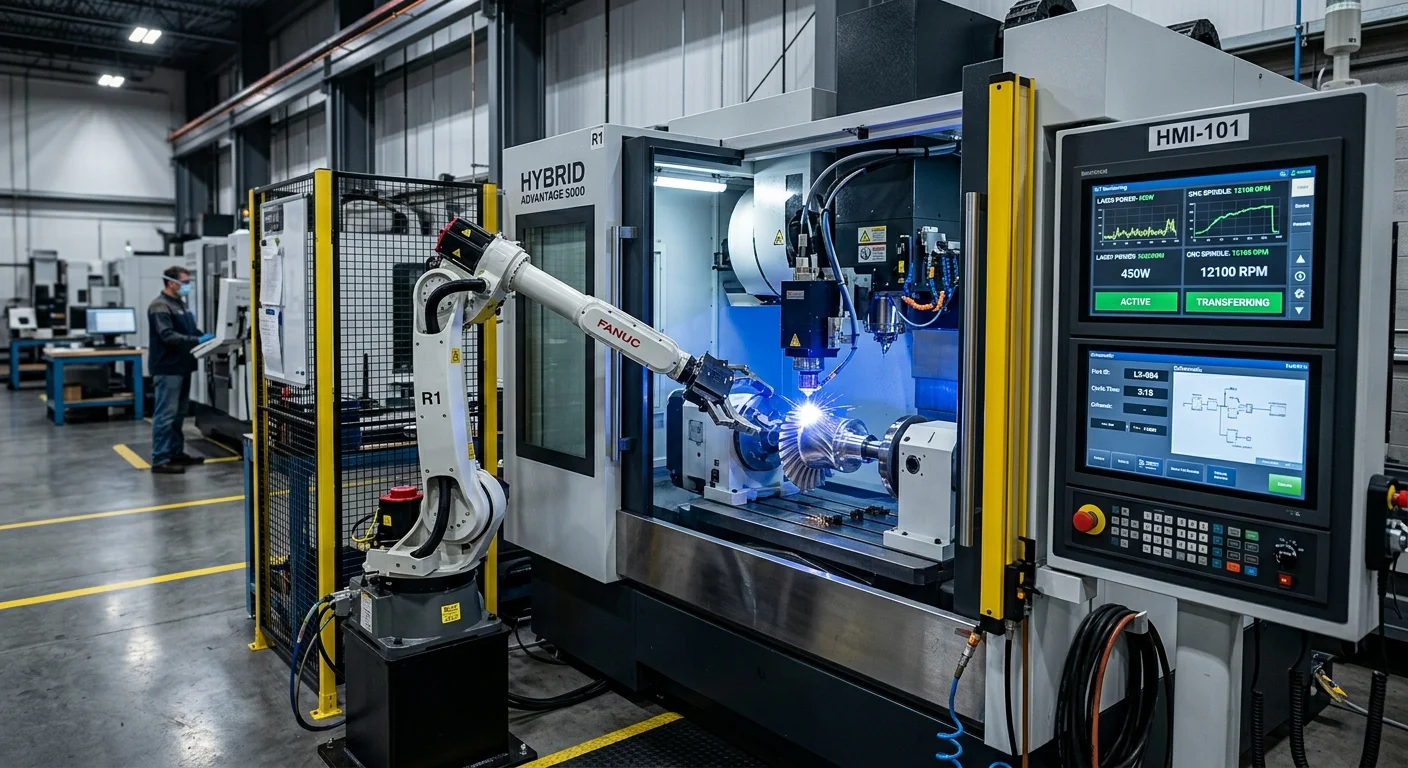
Laser and CNC don’t just coexist in a hybrid system. They hand off work to each other — like two specialists who’ve shared the same floor for years.
The sequence is straightforward. CNC multi-axis milling forms the complex geometry first. Five-axis configurations are growing at 10.8% CAGR for good reason. They handle what flat-plane setups cannot. But that milling process leaves behind cutting fluid residue, oxidation layers, and surface contamination. Every single time.
That’s where a laser machine for cleaning steps in.
Step 1 → Step 2 → Step 3: The Workflow That Changes the Math
Laser cleaning doesn’t just wipe the surface. It pulls contaminants out at micron-level accuracy. Waste drops by 30% compared to chemical or abrasive alternatives. No secondary handling. No chemical disposal costs. The part stays in the same controlled environment the whole time.
Then comes laser welding. CNC milling produces irregular and complex geometries by design. Fiber lasers deliver the beam quality needed to join reflective materials — like aluminum — fast and without warping. In EV drivetrain manufacturing, that precision matters a lot. Aluminum weld quality has a direct impact on structural integrity.
The efficiency gain at the welding stage alone runs 20–30%. Full workflow OEE climbs 10–20% with IoT monitoring tying all three stages together in real time.
Where Fiber Lasers Are Doing the Heavy Lifting
Fiber laser systems aren’t just a component choice. They’re the reason laser-CNC workflow optimization at this level works as a real business case right now. The market is moving from USD 2.46 billion in 2023 to USD 4.60 billion by 2032 at a 7.20% CAGR. That trajectory shows real adoption pressure — not speculation.
The operational numbers are concrete:
- 20–30% efficiency gains
- 30% energy savings over CO2 alternatives
- Lower maintenance overhead
- Faster cut speeds
For EV and aerospace lines holding tolerances under 10 microns, those figures aren’t small gains. They’re structural advantages.
AI-driven tool path optimization cuts CAM programming time by 40%. Adaptive feed control keeps weld consistency tight right after CNC finishing. Each stage feeds into the next and makes it better. That’s what a true precision hybrid machining workflow looks like — not just coexistence, but compounding performance.
3 Core Ways Fiber Lasers Are Adding Value to CNC Machine Shops in 2026
Fiber lasers aren’t waiting for the industry to catch up. They’re already embedded in production lines. They solve real bottlenecks that multi-axis CNC alone never could.
Here are the three places where that value shows up most in 2026.
1. Precision Welding That Solves the Post-CNC Assembly Problem
Complex CNC structures create a downstream headache most shops accept as unavoidable. You need to join thin-sheet components, dissimilar metals, and micro-assemblies — without warping the work you just finished.
Fiber lasers change that equation.
Traditional TIG welding leaves a heat-affected zone of 2–5mm. Fiber laser welding brings that down to under 0.5mm. That’s jewelry-grade precision at production-scale output. For parts under 0.1mm thick, that’s not a small improvement. It’s a different category of capability.
The output numbers back this up:
- 40% efficiency gain in post-CNC assembly for automotive micro-components
- 25–50% faster complex structure fabrication reported by OEMs — cutting multi-step CNC milling cycles short
- 30% throughput increase in aerospace lines where high-power ytterbium fiber lasers join dissimilar metals in turbine blade production
The welding bottleneck that used to sit at the end of every CNC run now gets absorbed into the workflow itself.
2. Laser Cleaning That Ends the Chemical Processing Line
Secondary cleaning after CNC machining is slow, expensive, and bad for the environment. Acid washing and ultrasonic tanks have been the default for years — not because they’re good, but because nothing better fit the line.
Fiber laser cleaning fits the line. And the performance gap is hard to ignore:
- 5x faster throughput: 10–20 m²/hour versus ultrasonics’ 2–4 m²/hour
- 95% waste reduction: no consumables, no chemical disposal, no secondary handling
- 30–50% lower operational cost per part
- Stainless steel and aluminum CNC parts cleaned in under 60 seconds
- Energy efficiency running 3x higher than CO2 alternatives
For shops targeting lights-out operations, integrated laser cleaning delivers a 35% cycle time improvement. It also removes the manual step that was slowing the line down between machining and final inspection.
3. Direct CNC Line Integration That Makes Automation Real
The third value driver isn’t a feature. It’s a system design decision. And it’s what separates shops running true hybrid workflows from shops just running two machines side by side.
Automated fiber laser stations connect straight to CNC outputs. Cutting, welding, and cleaning happen in sequence — no manual handoffs. The part doesn’t move between departments. The operator doesn’t become the bottleneck.
The market numbers show how much manufacturers are betting on this:
- Automatic fiber laser systems are growing at 6.73% CAGR toward USD 8.33 billion by 2032
- Fully automated setups hit 99% uptime in high-volume production environments
- 50–70% labor reduction in shops that committed to direct CNC-to-laser handover configurations
- Cut speeds running 2–3x faster than CO2 systems — 100 m/min on mild steel — with 40% lower energy consumption
Automotive CNC shops integrating AI-nested laser lines are reporting 25% throughput gains. Total cost of ownership drops 20–30% per part. That’s the number driving 2026 reshoring decisions across North America, where the fiber laser automation market sits at USD 781.68 million and climbing at 3.7% CAGR.
Shops treating fiber laser integration as a standalone tool upgrade are missing the point. The real gain is in the handover — CNC output feeds straight into laser processing, with no gap in between.
Traditional Post-Processing vs. Laser-Assisted CNC: A Head-to-Head Comparison
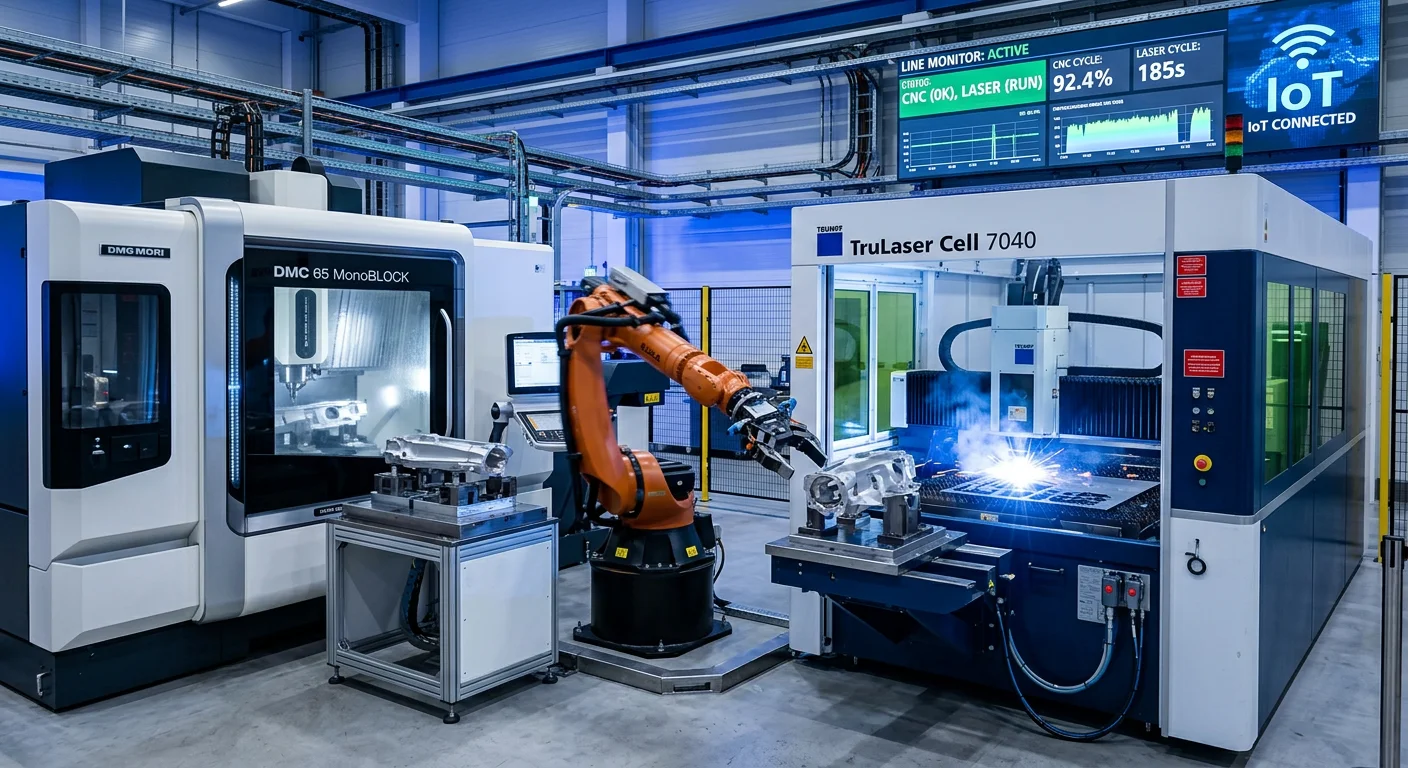
If you read recent cnc machining news, you’ll see endless debates about which technology is superior. But this isn’t a philosophical debate. It comes down to numbers — and the numbers don’t always favor the newer technology.
Here’s how both systems stack up, side by side.
Speed: Laser Wins on 2D. Traditional Holds on Thick Stock.
On flat profiling and complex contour work, laser-assisted CNC pulls ahead fast. Processing speeds reach up to 20 m/min — compared to 1–5 m/min for conventional tooling. Dense hole patterns, clean 2D cutouts, continuous beam paths with no tool raises or lowers. The throughput gap is real.
Go past 20mm material thickness, though, and that advantage falls apart. Laser energy use spikes. Speed drops. In some cases, cut quality breaks down. Traditional CNC doesn’t care how thick the block is. Material removal stays stable and predictable at depth, no matter what.
Precision: Closer Than You Think — But Different
Both systems can hold ±0.02mm. Fiber lasers push tolerances down to ±0.05mm on the tight end. Sharp internal corners — not possible with a rotating tool — become doable with a laser beam.
The tradeoff is heat. Laser processing creates a heat-affected zone (HAZ). Micro-melting, edge discoloration, and surface stress are real problems on sensitive materials. Traditional CNC runs cold. No heat, no HAZ, no thermal distortion.
Cost Per Part: The Math Changes by Job Type
This is where buying decisions get made.
Simple 2D cutouts:
– Laser-assisted CNC: ~$8/piece
– Traditional CNC: ~$15/piece
– On a 500-unit batch, that’s $3,500 saved — a 46% cost reduction
Complex 3D features:
– Laser + CNC secondary operations: ~$22/piece (two processes, two clampings)
– Pure CNC machining: ~$18/piece (single clamping, fully integrated)
– Traditional CNC wins by $4 per part on 3D geometry jobs
ROI timelines reflect this split. Fiber laser systems pay back in 12–24 months for medium-volume shops. Waterjet and plasma alternatives take 3–4 years.
Material Fit: Where Each System Breaks Down
Engineering plastics — POM, PEEK, Nylon — hit laser’s hard limit fast. Heat causes melting, burned edges, toxic off-gassing, and low yields. Post-processing costs pile up. Traditional CNC cuts clean, cold edges with zero thermal damage. No comparison.
Heat-sensitive alloys follow the same pattern. Laser creates slag, thermal warping, and possible material damage. CNC does not.
Laser-assisted CNC is the right call for thin sheet metal, flat patterns, and fast production of complex shapes. Traditional CNC takes over for thick blocks, heat-sensitive materials, back grooves, chamfers, and any job that needs a single-clamping workflow.
The Hybrid Trap
Running laser and CNC as back-to-back steps — instead of true integration — adds cost. Two processes. Two clampings. ~$22/piece on complex parts versus $18 for pure CNC. That extra cost only makes sense when laser speed on 2D cutting is strong enough to offset what you spend on the second operation.
This isn’t a verdict on which system is better. It’s a decision framework. Match the process to the part — and the cost savings follow.
Industry Applications: Where Laser-CNC Synergy Is Already Delivering Results
Three industries drive most of the real-world proof right now. Each one tells a different part of the same story.
Automotive: Battery Lines and Drivetrain Production
EV manufacturing gave laser-CNC synergy its first serious home. Automotive already claims 33–38% of global CNC end-use. Shops need to cut lighter, weld faster, and hold tighter tolerances on aluminum battery trays. That pressure pushed them toward hybrid setups faster than any other sector.
Fiber lasers cut and weld metal sheets and tubes for lightweight battery components. They hit precision levels that conventional tooling simply can’t match at speed. New energy battery welding — joining dissimilar metals in tight geometries — is now a primary application. Lead times drop. Scrap drops too. AI nesting cuts material waste by 10–20%, which makes a real difference on high-volume lines.
Aerospace and Defense: Killing the Tooling Bill
Aerospace shops use CNC fiber lasers to machine complex parts. At the same time, laser additive manufacturing wipes out up to USD 2 million in traditional tooling costs. Stationary gantry configurations hold 59% market share for thick-material processing — they handle the heavy structural work. Laser cleaning then strips solvent and sandblasting waste that would otherwise slow the line.
Defense investment is pushing this further. North America and Europe are rolling out localization mandates. Those mandates force reshoring decisions, and hybrid CNC-laser setups sit at the center of those production plans.
Medical: Sub-Micron Tolerances at Scale
Medical CNC is growing at 9.9% CAGR. Implant manufacturing needs sub-micron precision. Fiber lasers deliver exactly that — they hold 76% market share in precision cutting applications for good reason. The medical laser systems market runs from USD 4.83 billion in 2024 to USD 7.28 billion by 2032.
IoT-linked hybrid systems cut unplanned downtime by 30–50% across all three sectors. That reliability gap — not raw speed — is what closes the business case fastest.
How to Evaluate and Choose the Right Laser Equipment for Your CNC Operation
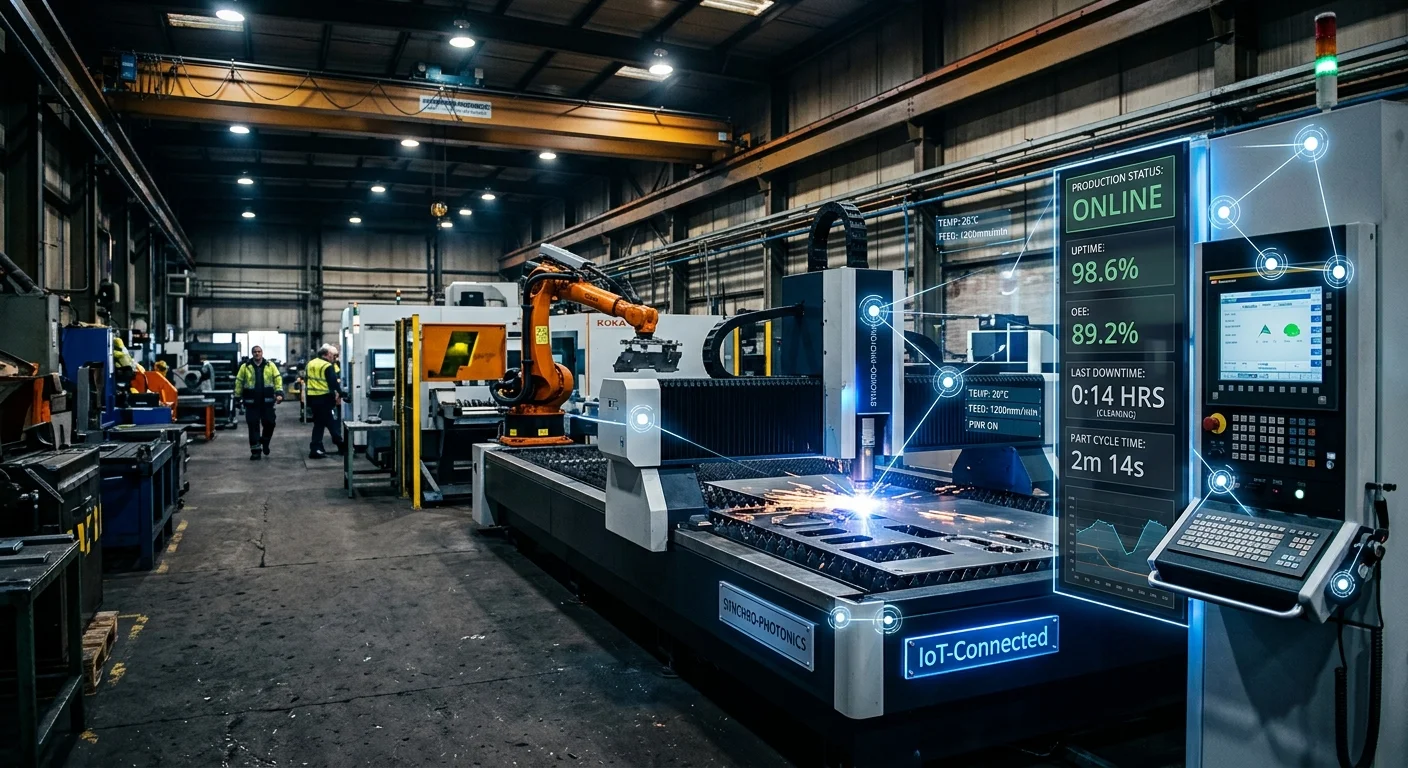
Wrong power selection kills ROI before the machine ships. Here’s how to get it right.
Match Power to Material and Volume First
Power is the number that matters most — and it ties straight to what you’re cutting and how much of it.
- 1–1.5kW: Thin metals under 3mm, light engraving, small-batch custom work
- 3kW: Mild steel up to 20mm at 30–45 m/min — your baseline for most job shop operations
- 4kW: Pushes mild steel to 25mm at 40–50 m/min, adds about 33% speed over 3kW
- 6kW: Handles 30mm material at 45–55 m/min — but operating costs climb from 18.2 RMB/kWh (3kW) to 24.6 RMB/kWh (6kW)
- 12kW+: High-volume structural steel at 20mm+. Built for automated line setups, not general shop use
| Laser Power | Mild Steel Max | Stainless Max | Cut Speed (m/min) |
| 3kW | 20mm | 5mm | 30–45 |
| 6kW | 30mm | 8mm | 45–55 |
| 12kW+ | 20mm+ | 15mm+ | High-volume |
Validate Integration Before You Buy
The laser doesn’t work in isolation. Check three things before you commit. First, confirm your CNC controller is compatible. Second, verify positioning accuracy at ±0.1mm. Third, target a kerf width of 0.1mm — fiber lasers hit that mark consistently. Plasma cannot.
Joining dissimilar metals — like copper-aluminum joints in EV drivetrain work frequently covered in cnc machining news — takes more than raw power. 6kW+ fiber systems manage beam focus and power density well enough to stop cracking at the joint. Get demonstration data on your actual materials before you sign anything.
Five Evaluation Steps That Protect the Investment
1.Match power to thickness and batch volume — don’t overbuy on wattage for jobs that never exceed 10mm
2.Run heterogeneous weld tests on demo units — beam spread decides whether dissimilar metals bond or crack. Test it. Don’t assume.
3.Check workflow integration speed — target 600 mm/s engraving throughput. Confirm the automation handoff from CNC output works end to end.
4.Push the supplier on after-sales depth — parameter tuning for O2 assist gas costs, thickness trials up to 30mm, and real debug support matter more than spec sheets
5.Compare kerf precision — 0.1mm is the benchmark for parts coming off CNC finishing
Fiber laser systems in the 3–6kW range pay back in 12–24 months for medium-volume shops. Above 6kW, the speed gains are real — but so is the cost structure. Know your volume before you size the machine.
Conclusion
The manufacturing floor of 2026 doesn’t wait.
Hybrid laser-CNC integration isn’t a distant concept on a trade show slide deck. It’s already reshaping cycle times, surface quality, and competitive positioning for shops that moved first. This deep-dive into CNC automation makes one thing clear: the shops winning new contracts aren’t the ones with the biggest machines. They’re the ones running the smartest workflows.
Laser-assisted CNC milling and post-processing creates a real capability gap. Right now, it separates forward-thinking shops from the ones still quoting three-day lead times.
The window is open, but it won’t stay that way. Don’t guess how laser technology fits your floor—let the numbers prove it. > Here is your next step:
- Audit Your Bottleneck: Tell us where your CNC workflow slows down (welding, cleaning, or assembly).
- Get a Custom Evaluation: Send MaxWave a sample part or drawing. Our engineers will match it with the exact laser setup you need—whether it’s a flexible handheld unit for complex geometries or an automated laser station for high-volume new energy components.
- See the ROI: We’ll provide a clear cycle-time estimate and ROI calculation before you spend a dime.