
You splurged on a gorgeous stainless steel necklace, wore it for months — and now you’re side-eyeing it in the mirror. Seeing that subtle dullness, you’re probably wondering: does stainless steel jewelry tarnish over time?
The short answer: not really — but there’s more to this than a flat yes or no.
This guide covers it all:
-
Why your clasp turns black before the chain does
-
Three cleaning methods that work without damaging the finish
-
Straight, science-backed answers you can use right away
About to buy your first piece? Already own one and want to keep it looking new? Either way, you’ll find what you need here.
Does Stainless Steel Jewelry Tarnish? Here’s What the Science Says
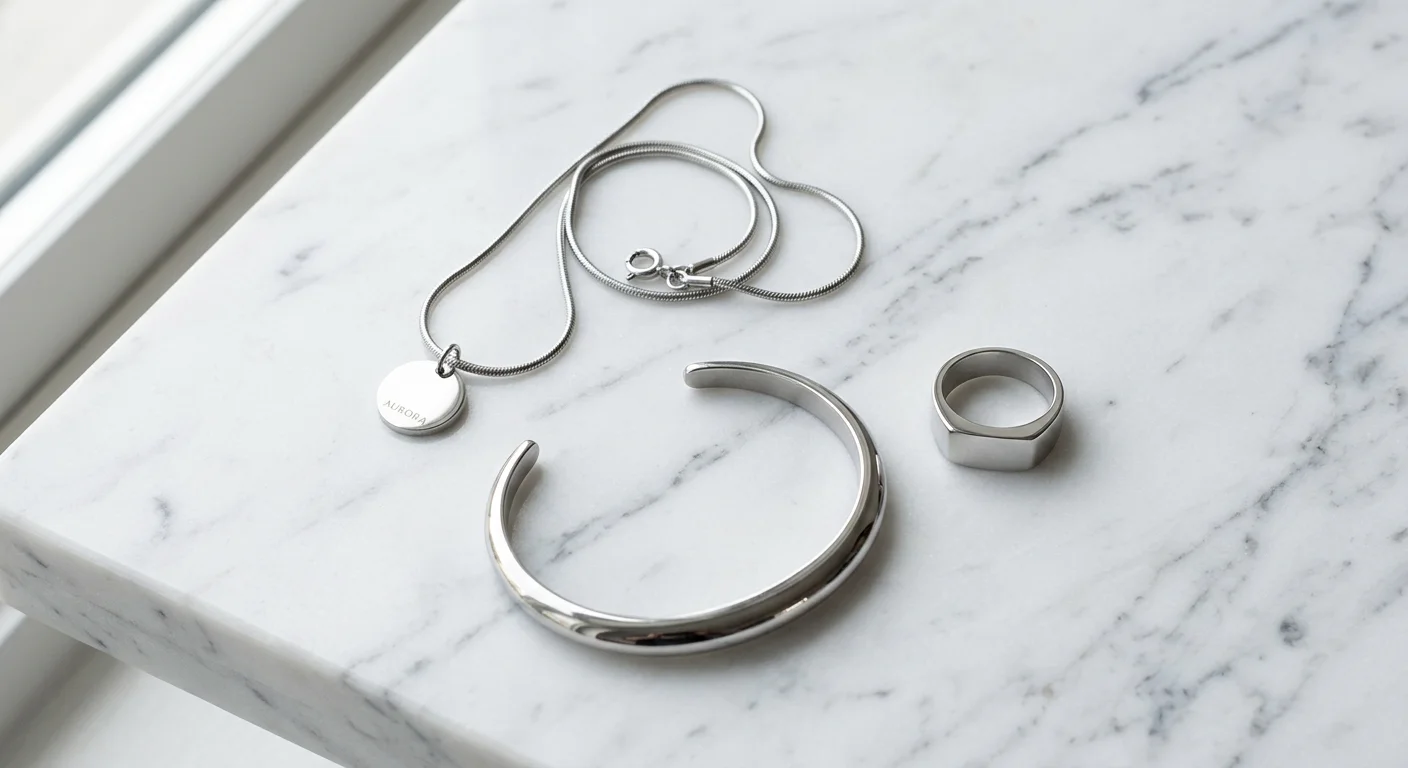
Stainless steel jewelry doesn’t tarnish — and that’s not marketing language. It’s chemistry. Every piece of true stainless steel contains at least 10.5% chromium. That chromium reacts with oxygen. It forms a microscopic protective layer on the surface — invisible and self-repairing. Moisture, sweat, everyday air? It handles all of it without breaking down. But here’s a distinction worth making: dulling is not tarnishing. Your piece can lose its shine over time. The culprit is one of these:
-
Thin or low-quality plating that wears through
-
Chemicals — perfume, sunscreen, lotion — eating away at the finish
-
Salt water, chlorine, or pool exposure
-
Simple buildup from regular wear that never gets wiped off
Not all stainless steel is equal, either. PVD-coated gold stainless steel holds up far better than electroplated alternatives. The coating bonds at a molecular level. That means it lasts years of regular wear — not just months.
For context, here’s how stainless steel stacks up:
|
Material |
Tarnish Risk |
Durability |
|---|---|---|
|
Gold Stainless Steel |
Very Low |
High |
|
Sterling Silver |
High |
Medium |
|
Brass/Copper |
Very High |
Low |
The bottom line? With proper care, stainless steel jewelry lasts years to decades. It outlasts silver and copper by a wide margin for everyday wear.
Does Stainless Steel Jewelry Tarnish? (The Direct Answer)
Here’s the honest answer: no — not if it’s made right.
High-quality stainless steel, 316L grade, does not tarnish under normal conditions. Full stop. This is the same alloy used in surgical instruments and architectural structures. It sits on your wrist and does one job — resist corrosion. No drama, no fuss.
The reason comes down to one element: chromium. At 10.5% concentration or higher, chromium bonds with oxygen in the air. This forms a protective oxide layer across the steel’s surface. You can’t see it. It repairs itself. And it doesn’t react to sulfur like silver does, or oxidize like brass and copper do.
But What About That Dull Look?
This is where people get confused — and it’s easy to see why.
Dullness is not tarnish. True tarnish is a chemical reaction that changes a metal’s color for good. What you’re seeing on your stainless steel jewelry is almost always surface buildup. Body oils, sweat, or product residue sit on top of the finish and dull the shine. Wipe it down with soap and warm water for sixty seconds. It’s gone.
A few things can cause surface changes that look like tarnish — but aren’t:
-
Chlorine and saltwater can produce slight yellowing or surface dulling over time
-
Low-grade steel with chromium content below 10.5% will dull faster — that’s a manufacturing quality issue, not a material flaw
-
Weld points and clasps may show localized blackening from poor welding during production — check these areas before you buy
The quick reference comparison:
|
Material |
Tarnish Behavior |
What It Needs |
|---|---|---|
|
316L Stainless Steel |
None — lifetime resistance |
Monthly wipe-down |
|
Sterling Silver |
Weeks — sulfur reaction |
Regular polishing |
|
Brass / Copper |
Days — rapid oxidation |
Frequent replacement |
|
Gold-Plated |
Months — wear-through |
High maintenance |
The bottom line: 316L stainless steel is waterproof, workout-proof, and shower-proof. It won’t rust. It won’t turn your skin green. And it won’t have you chasing tarnish with a polishing cloth at midnight.
Why Stainless Steel Jewelry Resists Tarnish: The Science Behind It
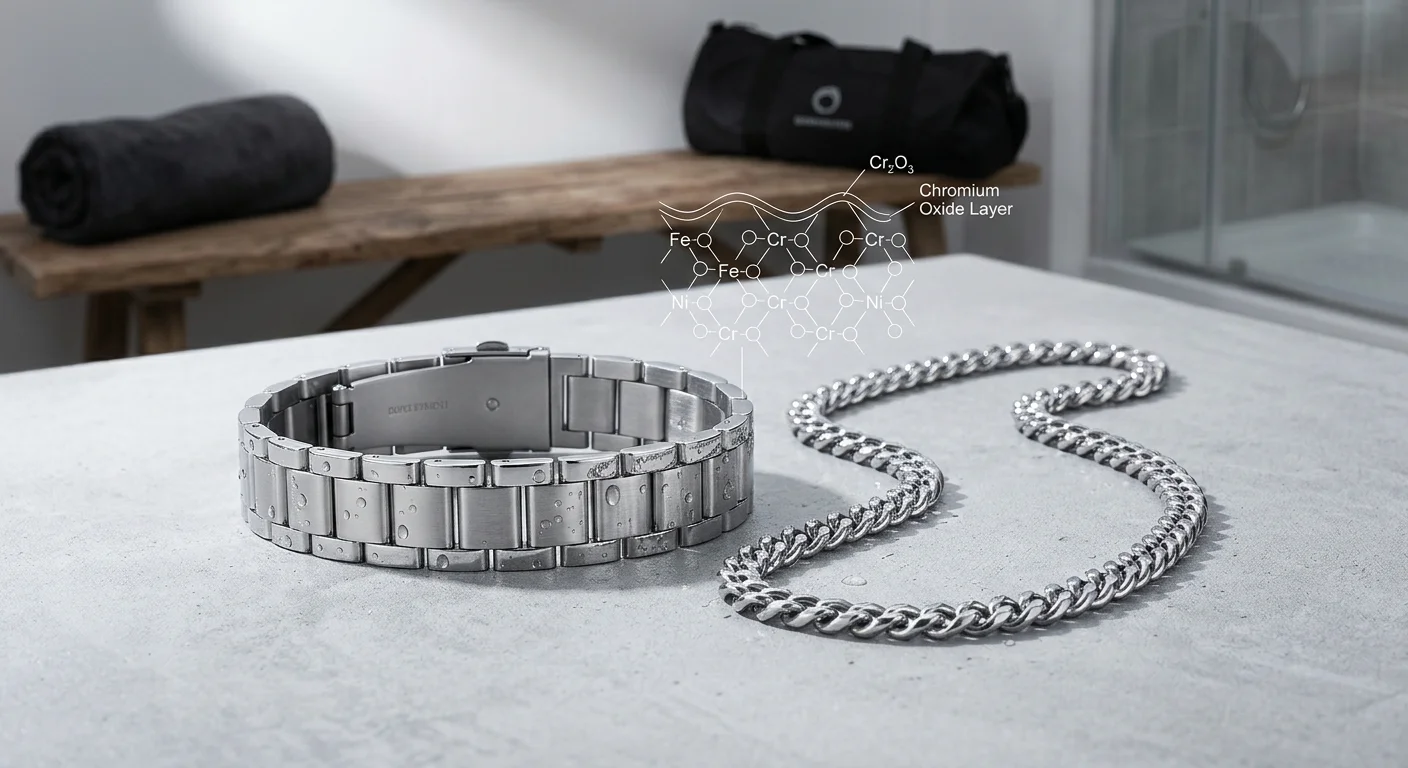
Chromium is the reason. That single element — present at 10.5% or higher in true stainless steel — separates a piece that lasts decades from one that darkens on your dresser in a month.
Here’s what happens at a molecular level. Chromium contacts oxygen in the air. It then forms a chromium oxide layer across the entire metal surface. This layer is invisible. It’s thousands of times thinner than a human hair. Scratch it or disrupt it — it rebuilds itself on its own. No polishing needed. No special storage. It just repairs.
316L vs. 304: The Grade Difference Matters
Not all stainless steel performs the same. That gap matters more than most buyers expect.
316L grade is the standard for quality jewelry. It’s the same alloy used in surgical implants and marine equipment. Here’s why it outperforms:
|
Grade |
Chromium |
Nickel |
Molybdenum |
Performance |
|---|---|---|---|---|
|
316L |
16–18% |
10–14% |
2–3% |
Superior — handles salt, chlorine, acids |
|
304 |
18% |
8% |
None |
Excellent for daily wear, weaker in harsh conditions |
That 2–3% molybdenum in 316L is the key differentiator. It strengthens the chromium oxide barrier. You get far better resistance to saltwater, chlorine, and acidic environments. Plus, 316L is hypoallergenic — a real advantage for sensitive skin.
How to Verify What You’re Buying
Two quick checks reveal grade quality before you buy:
-
Look for a “316L” stamp on the piece or product description
-
Test with a magnet — weak or zero attraction points to high-quality, low-iron stainless steel
One clarification worth knowing: when a piece of gold-plated stainless steel jewelry fades over time — that’s PVD plating wear. It’s a 2–3 micron coating that erodes from friction or chemical exposure. The 316L base underneath? Still untarnished. Still intact. The metal hasn’t failed — its surface color treatment has.
That difference matters for longevity. The base material
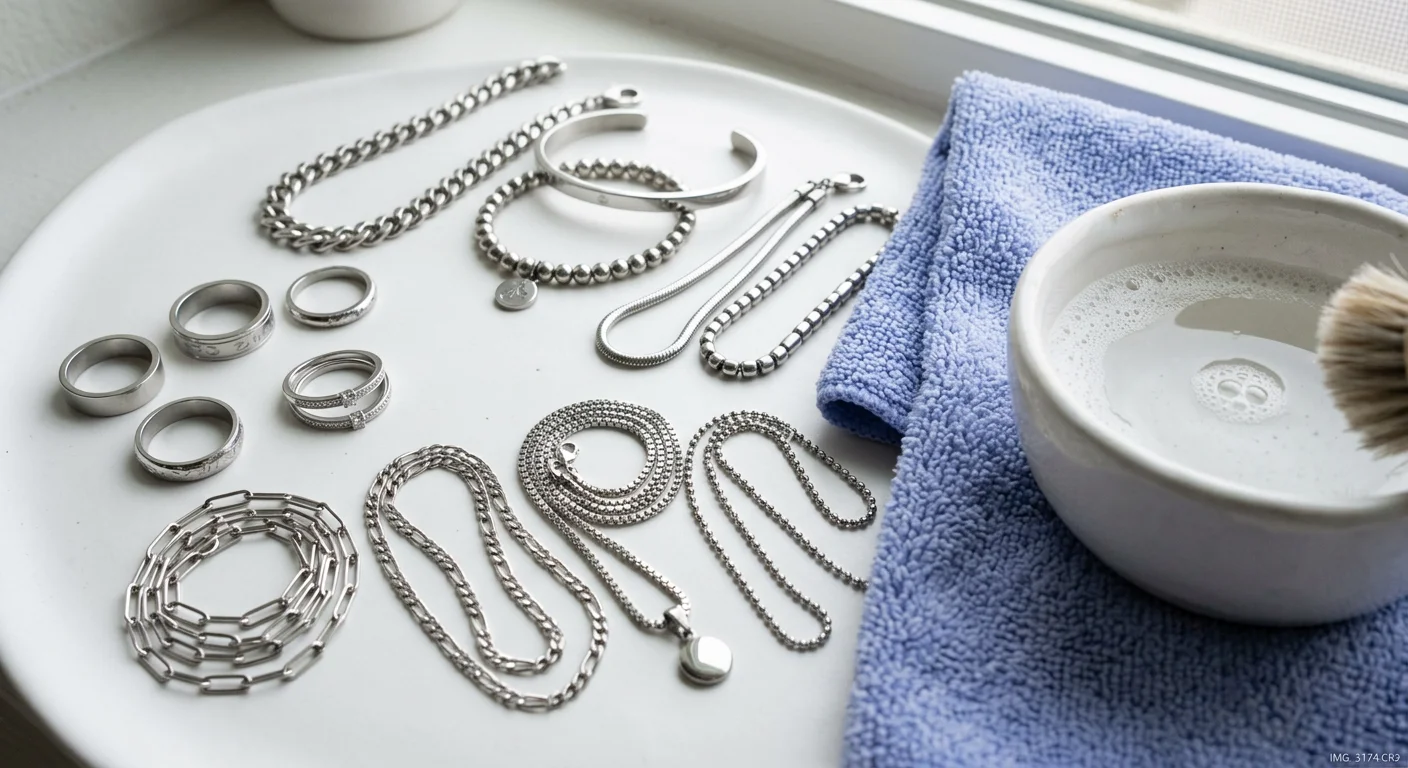
How to Clean Stainless Steel Jewelry at Home (3 Simple Methods)
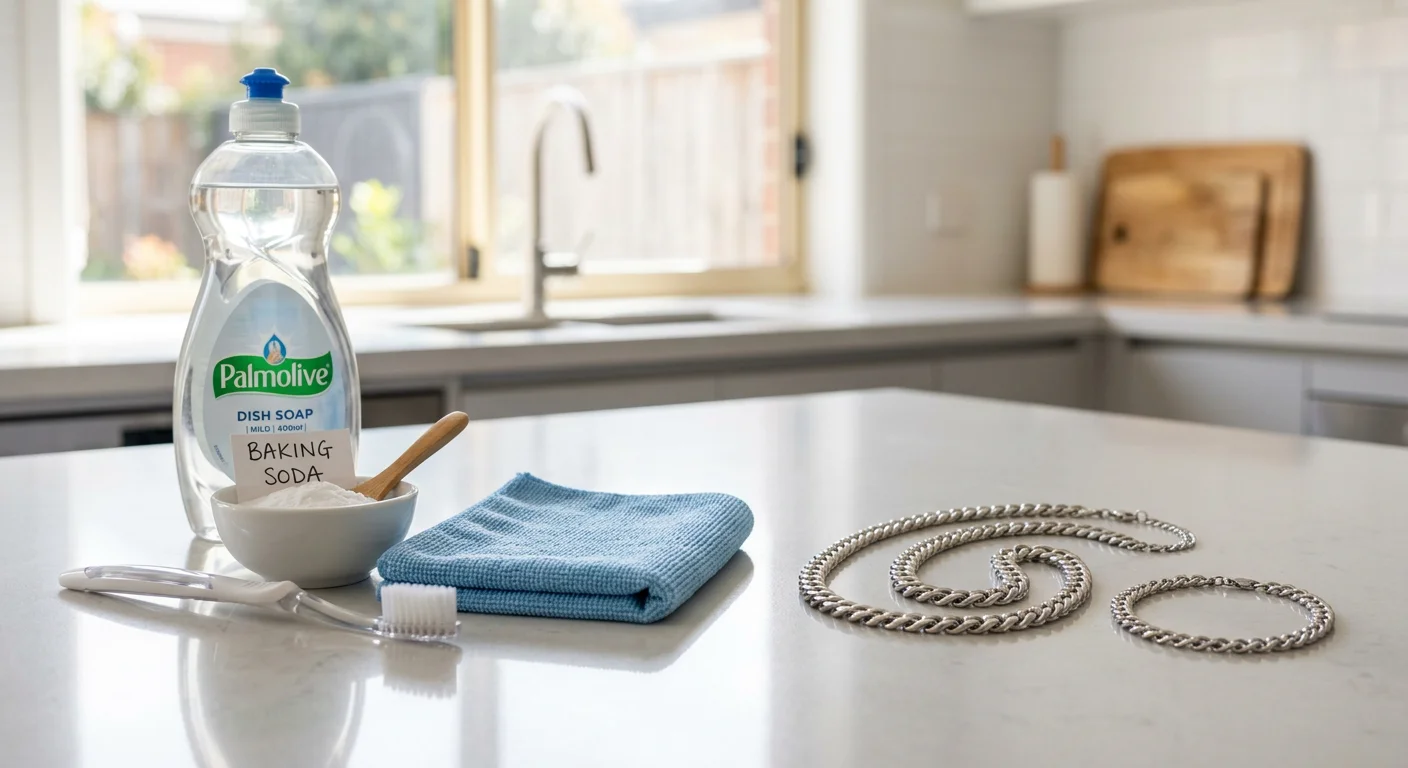
If you are wondering how to clean stainless steel jewelry, the good news is: you don’t need a trip to the jeweler or a cabinet full of specialty products. Everything you need is probably under your kitchen sink right now. Three methods. All simple. All effective. Here’s how to do each one.
Method 1: Mild Soap Solution — For Regular Maintenance
This is your go-to. Run it once a week and your pieces will hold their finish for years.
What you need: warm water, 2–3 drops of mild dish soap, a soft-bristled toothbrush, and a lint-free microfiber cloth.
How to do it:
1. Fill one bowl with warm water and add 2–3 drops of mild dish soap
2. Fill a second bowl with plain warm water — this is your rinse
3. Drop your jewelry in and let it soak for 5 minutes
4. Scrub with a soft-bristled toothbrush. Work along the grain. Pay close attention to chain crevices and engraved areas — buildup loves to hide there
5. Rinse in the clean water bowl
6. Dry right away with your microfiber cloth. Don’t air dry. Air drying leaves water spots
That last step matters more than most people think. Water spots are stubborn to remove. Dry the piece in full — links, clasp, all of it.
Method 2: Baking Soda Paste — For Stubborn Grime
Use this one when the soap soak isn’t doing the job. Sunscreen, lotion, and product buildup sometimes need more friction — not more chemicals.
Mix ratio: 2 tablespoons baking soda to 1 tablespoon water. You want a paste. Not a slurry.
How to do it:
1. Put the paste on a soft toothbrush and apply it to the jewelry
2. Scrub in circular motions across all surfaces. Keep the pressure light
3. Rinse with warm water until the paste is gone. Check all the grooves
4. Dry with a microfiber cloth and buff for shine
Don’t press hard. The baking soda does the work. Your job is just to guide the brush.
Method 3: Microfiber Cloth Wipe — For Quick Daily Polish
No water needed. This takes 5 to 10 minutes and clears fingerprints, smudges, and the thin film that builds up from a full day of wear.
Use a dry or lightly damp lint-free microfiber cloth. Start by wiping along the grain to lift residue. Then switch to small circular motions to bring the polish back.
Make this a habit — thirty seconds before you set the piece down at night. Do it consistently and deep cleans become much less needed.
What to Avoid (Regardless of Method)
A few things look harmless but will damage your finish over time:
-
Paper towels — the texture is rough enough to scratch the surface with repeated use
-
Abrasive polishing compounds — they strip the passivation layer that protects stainless steel from corrosion
-
Hot water or long soaks — this is a real risk on PVD-coated pieces, which can delaminate
-
Steam cleaners and industrial solvents — these cause genuine damage and are never necessary
Stick to the three methods above. Mild soap once a week. Baking soda paste for tough spots. A microfiber wipe each day. That’s the full system — and it’s all you need.
The Hidden Truth: Why Your Clasps & Jump Rings Turn Black
Look at your necklace. The chain still catches the light — clean, bright, unbothered. But the clasp? Dark. That little jump ring near the pendant? Almost black.
This isn’t random. And it isn’t your fault.
The Manufacturing Problem Nobody Talks About
That blackening at your joints traces back to one thing: how the piece was welded.
Traditional torch soldering hits temperatures up to 2000°F (1093°C). At that heat, the chromium protection layer on stainless steel can’t survive. It burns off at the weld point. What’s left is exposed, vulnerable metal. The technical term is heat tint oxidation. The result? A permanent black-brown stain right where your clasp meets your chain.
The base metal didn’t fail. The manufacturing process did.
Laser welding is the better standard. It keeps temperatures below 1000°F (538°C). That lower heat preserves the chromium oxide layer at every joint. Before you buy, check which method a brand uses — or just ask.
What Makes Joints Blacken Faster
Even on a well-made piece, clasps and jump rings sit at the highest-contact points on your body. They take the brunt of everything:
|
Factor |
What It Does |
What to Do |
|---|---|---|
|
Chlorine (pools, tap water) |
Corrodes alloys; makes joints brittle over time |
Remove before swimming |
|
Zinc oxide (mineral sunscreen) |
Wears down metal surfaces; about 1 in 3 rings leaves skin marks after use |
Put sunscreen on first, let it absorb, then wear your jewelry |
|
Sweat and salt |
Speeds up oxidation — up to 50% faster in humid or coastal climates |
Remove during workouts |
|
Acidic skin (pH below 5.5) |
Doubles corrosion speed at contact points |
Keep clasps clean and dry |
The Quick Fix
Three things worth doing right now:
-
Inspect: Hold the piece under light. Bright chain but dull, dark joints? That’s heat damage — not wear.
-
Protect: Put a thin coat of clear nail polish on the inner clasp surface. It blocks sweat and moisture from reaching the metal.
-
Demand better: Ask for laser-welded construction. That one detail separates a piece that lasts from one that doesn’t.
The joint is the weakest link — but only when the wrong process built it.
The Secret to Flawless Jewelry: Laser Welding vs. Traditional Soldering
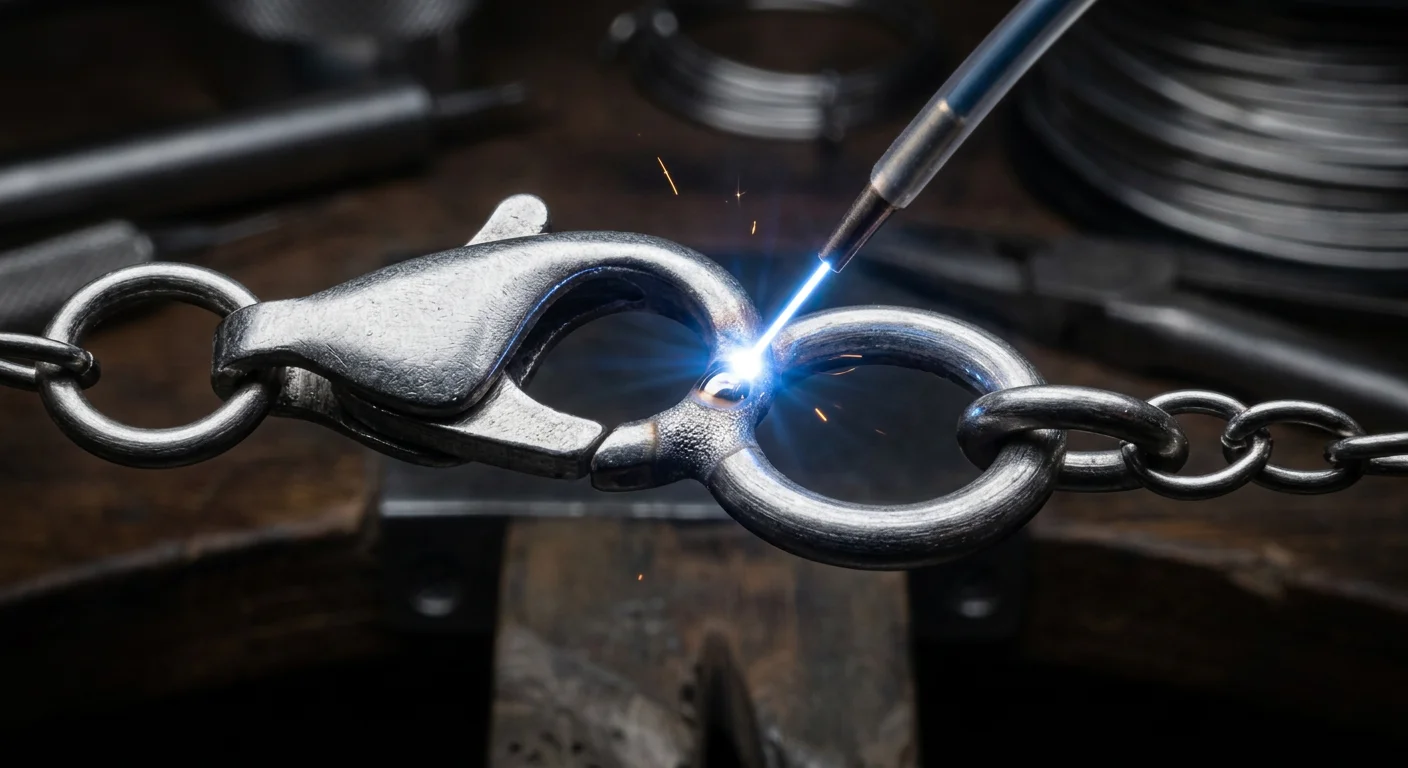
Two pieces of metal need to become one. The temperature used, the tool chosen, and the level of control applied — all of it shapes whether your jewelry still looks flawless five years from now, or starts darkening at the seams after five months.
Most brands won’t tell you this part of the manufacturing process. But it explains everything.
Why the Welding Method Changes Everything
Traditional soldering runs hot. Very hot — up to 2000°F (1093°C). At that temperature, filler metal spreads across the joint without stopping. It seeps into gaps it was never meant to reach. On chain jewelry, that means individual links can freeze together — a production flaw you won’t notice until you’re wearing the piece. Then there’s the discoloration. The blackening you see at clasps and jump rings isn’t wear. It’s not your body chemistry either. It’s chemistry baked into the piece during manufacturing.
Laser welding works on a different principle entirely. The heat zone shrinks to a single concentrated point — a power density of 10MW/cm². At that level of precision, the surrounding metal stays cool. The chromium oxide layer that shields stainless steel from corrosion? It survives intact. The joint bonds using the parent alloy wire itself — no foreign filler, no overflow, no discoloration. You end up with a seamless weld that’s invisible to the eye.
The strength difference is not small:
|
Aspect |
Laser Welding |
Traditional Soldering |
|---|---|---|
|
Joint Strength |
Up to 260x stronger |
Degrades over time |
|
Speed |
10x faster |
Slower cycles |
|
Finish |
Seamless, no discoloration |
Visible seams, blackens |
|
Post-Processing |
Minimal to none |
Extensive cleanup required |
|
Heat Damage |
Negligible |
Broad, material-compromising |
What This Means for the Jewelry You Buy
A laser-welded chain can be repaired at one single link — without touching the links on either side. A soldered chain can’t do that. The filler flows where it wants. There’s no precision in that process.
Production quality tells the same story. Laser welding cuts post-weld polishing steps by 50–70%. Output runs 2–5x higher compared to traditional soldering for small, high-volume pieces. Batches stay uniform. No downtime between cycles.
So before you buy, ask one direct question: how are the joints made? That answer tells you more about long-term durability than any material claim on the product page.
FAQs & Daily Care Habits to Extend Its Life
Here’s the thing about stainless steel jewelry: most pieces don’t fail on their own. The people wearing them do — not from neglect, but from a few small habits that work against the metal over time.
The good news? Fixing those habits takes almost no effort.
Does stainless steel jewelry turn skin green?
No. Flat out, no. Green skin is a copper problem. Copper oxidizes against your skin and leaves behind copper salts. Stainless steel has no copper in it. Your skin stays clean.
Can you shower while wearing stainless steel jewelry?
Yes — with one condition. Rinse the piece after. Shower gel and shampoo residue cling to chain links and engraved surfaces. That buildup sits there and dulls the finish over time. Thirty seconds under clean water clears it before it becomes a real problem.
Does stainless steel rust?
Not 316L grade. The chromium oxide layer in that grade handles moisture without breaking down. Rust needs iron, oxygen, and water — all without a protective barrier. The passivation layer on 316L stainless steel stops that from happening.
The One Wearing Habit That Protects Everything
Put the jewelry on last.
That’s it. Perfume first. Sunscreen first. Lotion first. Let everything absorb and dry before the bracelet or necklace goes on. Fragrance alcohol and zinc oxide from sunscreen are two of the fastest finish-killers out there. They don’t damage overnight — it’s a slow, gradual fade. Over months, the difference shows.
This habit costs nothing. It adds years to how good the piece looks.
A Simple Weekly Rhythm
|
Frequency |
Action |
|---|---|
|
Daily |
Microfiber wipe after wear |
|
Weekly |
Mild soap soak — 5 minutes, soft brush, dry right after |
|
As needed |
Baking soda paste for stubborn buildup |
|
Always |
Remove before pools, hot tubs, and intense workouts |
That’s the full system. Small, regular effort beats occasional deep cleaning every single time.
Conclusion
Are you a jewelry maker, designer, or studio owner tired of dealing with tarnished joints and customer complaints? The secret to flawless, long-lasting stainless steel jewelry starts at your workbench. Upgrade your production with MaxWave’s Precision Jewelry Laser Welders—zero heat damage, no black joints, and a perfect finish every time. Click here to explore our desktop welders and transform your craft.