
Buying a laser welder for a small workshop shouldn’t feel like choosing between a sports car and a bicycle. Yet that’s the gap between the Maxwave 3-In-1 laser welder and a Trumpf handheld system. One costs about what a used pickup truck runs. The other could fund a small house.
Price alone doesn’t tell the whole story. Brand reputation doesn’t either. What matters is which machine earns its keep on your shop floor, with your materials, on your budget.
This head-to-head laser welding machine comparison cuts through the spec-sheet noise. You get a clear, honest look at performance, versatility, real-world usability, and long-term ROI — so you walk away with a decision, not just more questions.
Maxwave 3-In-1 Laser Welder vs. Trumpf TruLaser Station 7000 Core Comparison Table
|
Core Comparison Dimension |
Maxwave 3-In-1 Laser Welder |
Trumpf TruLaser Station 7000 |
|---|---|---|
|
Power Range |
800–3000W (1000/1500/2000/3000W optional) Mainstream practical models: 1500W/2000W |
Up to 2000W (compatible with TruDisk/TruFiber/TruMicro laser sources) |
|
Max Weld Thickness |
Stainless steel: 5mm single pass, carbon steel: up to 8mm Aluminum/titanium alloys: 0.3–7mm full coverage |
Not publicly disclosed Optimized for small, complex 3D components, not thick-plate welding |
|
Welding Speed |
Conventional: 30–70mm/s, max: 120mm/s 3mm sheet metal: up to 2m/min |
Single-axis: 6m/min, multi-axis synchronous: 10m/min (1–3mm stainless steel: up to 600mm/s) |
|
Cooling System |
Air-cooled |
Water-cooled |
|
Gun/Equipment Form |
Handheld welding gun only 0.7kg, main unit 52–56kg with wheels for mobility 10m fiber cable, fully handheld portable |
No handheld welding gun, fixed enclosed 3D workstation 5-axis linkage, requires moving workpieces to the equipment for operation |
|
Core Functions |
Welding + Cutting + Cleaning (3-in-1) Cuts 3–4mm sheet metal, precisely removes rust/oxide with <0.5mm accuracy |
High-precision welding + Wire feeding function Optional automation modules such as rotary worktable/robot loading Equipped with image recognition and 5-axis positioning |
|
Beam Quality (M²) |
<1.5 |
1.1–1.3 (industrial-grade high consistency) |
|
Positioning/Repeatability Accuracy |
Positioning: 0.05–0.1mm, consistency: 0.1–0.2mm |
Positioning: 0.08mm, repeatability: 0.03mm |
|
Gap Tolerance |
0–0.2mm (bulges easily occur when >0.1mm) |
0.05mm (ultra-high precision adaptation) |
|
Applicable Materials |
Carbon steel, stainless steel, aluminum, titanium, galvanized steel (0.3–8mm) |
Stainless steel, aluminum, copper (including direct copper bonding) Suitable for precision small parts in medical/electronics industries |
|
Entry Price |
Approx. $6,900 (cost-effective entry-level option) |
Starting at >$28,900, full configuration: $350,000–$480,000 |
|
Annual Maintenance Cost |
$207–$345 (3–5% of purchase price) |
$14,400–$24,000 (3–5% of purchase price) |
|
Installation & Usability |
Plug-and-play with 220V mains power, installation takes only minutes No professional training required, ordinary technicians can operate directly Daily maintenance only requires cleaning lenses (basic skill) |
Requires professional site planning + water cooling infrastructure, installation takes days Requires certified operators, mastery of 5-axis calibration/parameter debugging Maintenance requires professional technicians |
Maxwave 3-In-1 Laser Welder Vs. Trumpf Handheld Laser Welder
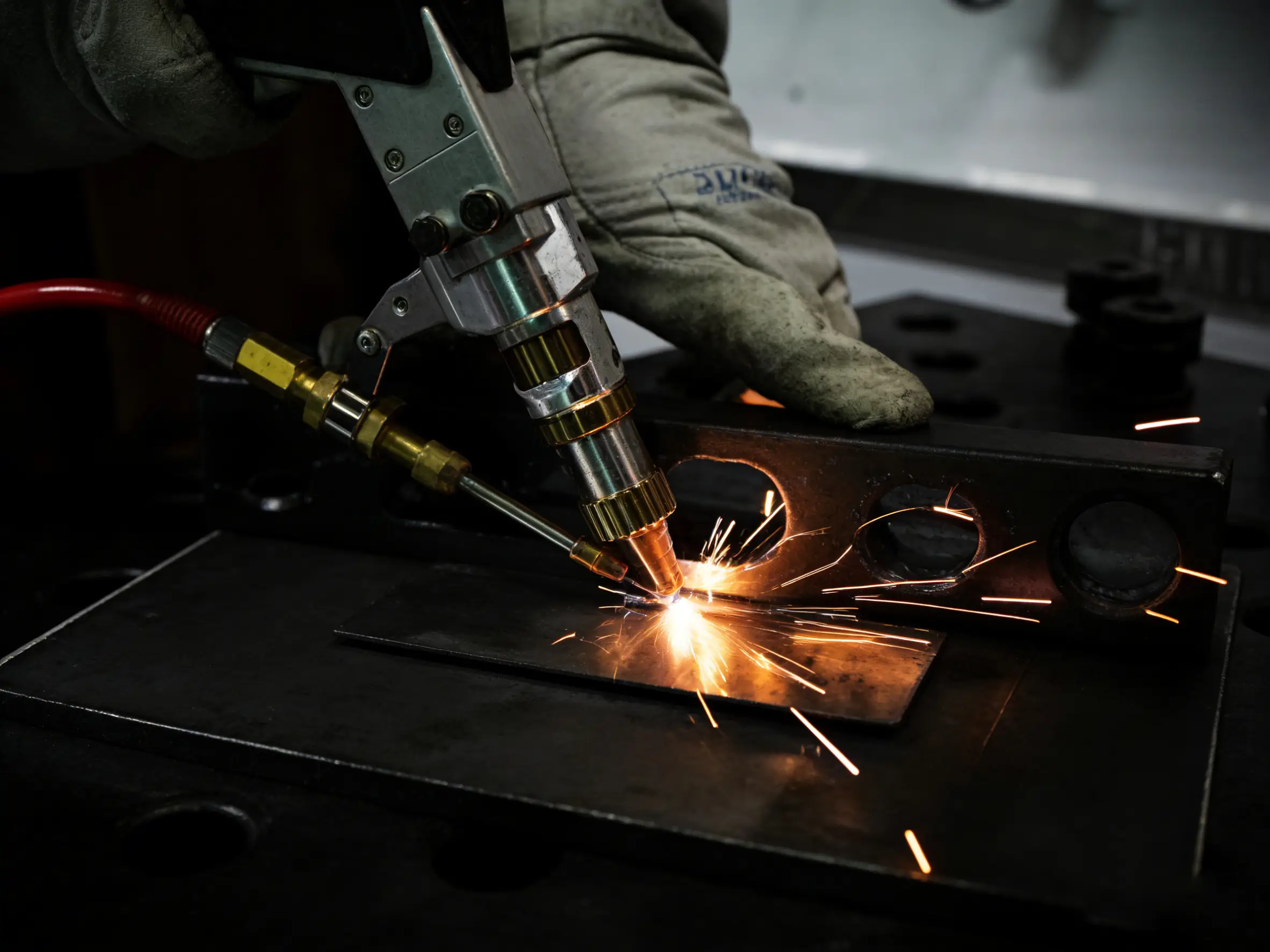
Two machines. Two very different ideas about what a small workshop needs.
The Maxwave 3-In-1 laser welder runs 1000–3000W. It welds stainless steel up to 5mm in a single pass. You also get three functions — welding, cutting, and cleaning — from one system. The Trumpf handheld pushes 1500–4000W and hits 8mm single-pass on stainless. It delivers tighter beam quality (1.1–1.3 M²), built for industrial-grade consistency.
Here’s the real difference: Trumpf gives you more raw power and deeper penetration. Maxwave gives you more value per dollar. You get a 0.7kg gun, air-cooled operation, and a solid working range — 0.3–7mm across stainless, aluminum, and titanium. That covers most small workshop jobs. No water-cooling setup needed. No premium price tag.
The table below lays out the tradeoffs clearly.
|
Feature |
Maxwave 3-In-1 |
Trumpf Handheld |
|---|---|---|
|
Power Range |
1000–3000W |
1500–4000W |
|
Max Weld Thickness (SS) |
5mm single pass |
8mm single pass |
|
Weld Speed |
Up to 120mm/s |
2–4m/min |
|
Cooling |
Air-cooled (standard) |
Water-cooled |
|
Gun Weight |
0.7kg |
~1.2kg |
|
Functions |
Weld + Cut + Clean |
Weld + wire feed |
|
Beam Quality (M²) |
<1.5 |
1.1–1.3 |
What Is the Maxwave 3-In-1 Laser Welder?
The MW-HW Series targets one specific buyer: the small workshop owner who needs real capability without a six-figure equipment bill.
At its core, this is a handheld fiber laser welder running 1000W to 2000W. It’s air-cooled and plugs into standard 220V. The welding gun weighs under 0.7kg. The main unit sits between 52–56kg — easy to move between job sites on a 10-meter fiber cable.
The standout feature is the 3-in-1 function set: weld, cut, and clean from a single machine. Here’s what that covers:
-
Welding — stainless steel up to 4mm (at 1500W)
-
Cutting — through 3–4mm sheet metal
-
Cleaning — rust and oxide removal with <0.5mm precision
Small workshops doing sheet metal, furniture frames, or auto bodywork will find this range covers most daily tasks. Power draw stays under 7kWh per hour.
What Is the Trumpf TruLaser Station 7000 Handheld Laser Welder?
Here’s the first thing you need to know: the TruLaser Station 7000 is not a handheld welder.
The name creates confusion. This is a fixed, fully enclosed 3D laser welding workstation. It has stationary axes, a table-mounted work area, and zero portability. No gun. No cable. You bring the part to the machine — not the other way around.
It targets precision series production: sensors, medical instruments, components with rotational symmetry, Direct Copper Bonds. These are industries where 0.03mm repeatability is not a bonus — it’s a baseline requirement.
The specs reflect that industrial focus:
-
Max laser power: 2000W (fiber-guided solid-state)
-
Positioning accuracy: 0.08mm; repeatability 0.03mm
-
Axis travel: up to 650mm (X) across 5 axes
-
Max simultaneous speed: 10 m/min
You can add optional automation too — rotary tables, robot loading — which makes it a solid fit for high-volume production runs.
For a small workshop? This is the wrong tool.
Head-to-Head Specs Comparison: Maxwave vs. Trumpf TruLaser Station 7000
The numbers here tell two very different stories. Let’s break them down.
|
Parameter |
Maxwave |
Trumpf TruLaser Station 7000 |
|---|---|---|
|
Power Range |
800–2000W (1000W/1500W/2000W/3000W options) |
Up to 2000W (TruDisk, TruFiber, TruMicro) |
|
Max Weld Thickness |
Steel up to 8mm |
Undisclosed (optimized for small, complex 3D assemblies) |
|
Axis Speed |
— |
6 m/min (individual); 10 m/min (simultaneous) |
|
Cooling System |
Air-cooled |
Water-cooled |
|
Positioning Accuracy |
0.05–0.1mm |
0.08mm linear; 0.03mm repeatability |
|
Functions |
Weld + Cut + Clean (handheld portable) |
5-axis automation, image processing, rotary loading |
|
Entry Price |
Value-tier (portable) |
Starts >$28,900 |
Where Each Machine Wins — and Where It Doesn’t
Raw material coverage is where Maxwave shines. It handles carbon steel, stainless, and aluminum up to 8mm using a 1080nm fiber laser. That covers most small workshop welding equipment jobs — frame fabrication, panel repairs, light structural work.
Trumpf’s TruLaser Station plays a different game. It competes on precision, not thickness. Here’s what sets it apart:
-
BrightLine Weld technology cuts down spatter
-
Green-wavelength TruDisk laser welds copper and aluminum without damaging the base material
-
0.03mm repeatability — the level that medical device makers and electronics producers need
Cooling tells the real story about each machine’s purpose. Maxwave runs air-cooled. That keeps the unit portable and ready to go with no setup time. For short welding bursts and mobile jobs, it’s enough. Trumpf uses water-cooling. That gives tighter heat-affected zone control during long, high-volume production runs. But that advantage only pays off if your shop runs that kind of work.
For most small workshop laser welder use cases, it doesn’t.
Welding Performance Deep Dive: Precision, Speed, and Weld Quality
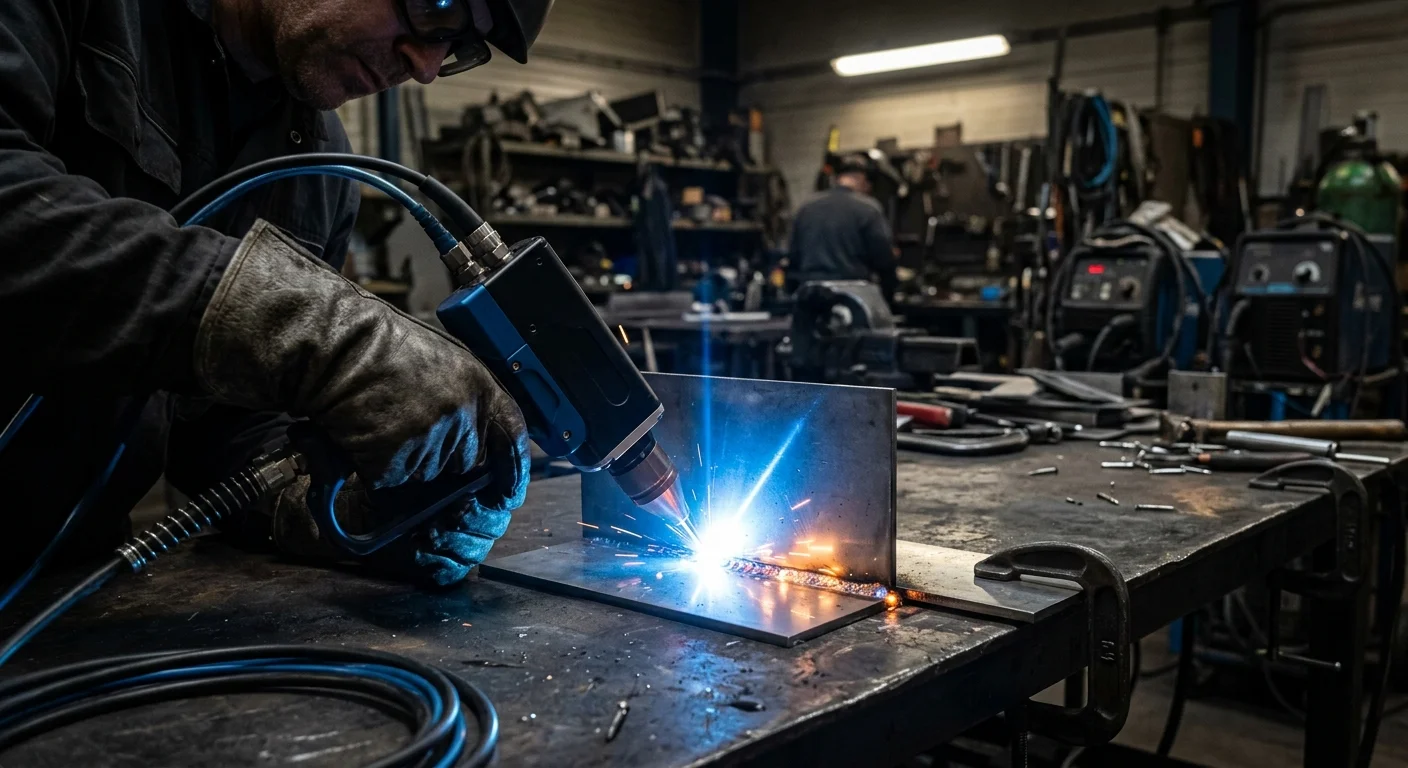
Numbers on a spec sheet are promises. What happens on the metal is the truth.
Here’s what the data shows when you put these two machines side by side on real materials.
Precision: Close Enough vs. Exactly Right
The Trumpf system delivers ±0.05mm positioning accuracy. That’s tight — far tighter than conventional GMAW tolerances, which run 0.1–0.5mm in bead geometry variation. But here’s the honest question: does your shop need that?
Maxwave users report 0.1–0.2mm consistency on stainless and aluminum. That covers around 80% of small workshop jobs without issue. The ±0.05mm Trumpf precision becomes essential for fatigue-critical parts that need sub-0.1mm tolerances — medical components, sensors, precision assemblies. For frame work, panels, and fixtures? It’s overkill sitting idle.
Speed: The Real Gap
Trumpf runs at 10 m/min (600 mm/s) on 1–3mm stainless at 2–4kW. Maxwave operates at 30–70 mm/s under the same conditions — about 2x slower.
But slower isn’t broken. At 40 mm/s and 1800W, Maxwave users hit 90% uptime, hold 0.15mm tolerance, and run 50 meters of stainless welds per day with zero rework. On aluminum at 50 mm/s zero-gap, bead width holds at 2.5mm with full penetration.
|
Parameter |
Trumpf |
Maxwave |
Quality Impact |
|---|---|---|---|
|
Speed Range |
600 mm/s |
30–70 mm/s |
Bead area –30% at 70 mm/s |
|
Gap Tolerance |
0.05mm |
0–0.2mm |
Bulging starts >0.1mm gap |
|
Power |
2–4kW |
1600W |
Full penetration at 60 mm/s |
Push beyond 50 mm/s on Maxwave and bead width drops 15–25%. Stay under 40 mm/s and blowholes disappear. For most laser welding speed and precision needs in small shops, that’s a solid operating window.
Trumpf users in small workshops face a different problem. They report 30% higher idle time versus Maxwave. The ±0.05mm precision goes unused on 70% of jobs. One fabricator called it “a big gun for small nails.”
3-In-1 Versatility vs. Single-Function Precision: Which Matters More for Small Workshops?
Most small workshops don’t have a precision problem. They have a space and budget problem.
A single m² footprint covering three functions isn’t a compromise — it’s a survival strategy. A tight shop floor means every tool needs to pull more than one job. That’s the math behind choosing the Maxwave 3-In-1 over a single-function system.
Here’s where it gets concrete. Dedicated machines excel at one thing. A laser-only welder cuts cleaner lines on thin aluminum. But it won’t clean the oxide off that same piece before the weld. It won’t trim the edge after, either. So you’re looking at three machines — or three separate workflows with three separate footprints.
Maxwave collapses that into one system. Weld. Cut. Clean. Same gun. Same fiber cable. Same floor space.
The tradeoff is real: Maxwave won’t match Trumpf’s ±0.05mm repeatability. But for fabrication work — panels, frames, fixtures — that precision gap rarely matters in practice.
The bottom line: versatility wins in small workshops. Precision wins in production lines. Know which floor you’re standing on.
Price and ROI Analysis: $6,900 vs. $480,000 for Small Workshop Budgets
The math here isn’t complicated. It’s just brutal.
A Trumpf system runs $350,000–$480,000. A Maxwave MW-HW starts at $6,900. That’s not a price difference — it’s a different category of financial decision. One fits on a business credit line. The other requires a capital investment talk that most small workshop owners will never have.
Total Cost of Ownership: Where the Real Gap Lives
Purchase price is just the opening number. The lifecycle cost is where you feel it.
Annual maintenance scales with what you paid:
– Maxwave at $6,900 → $207–$345/year (industry-standard 3–5% of purchase)
– Trumpf at $480,000 → $14,400–$24,000/year, every year
Then add consumables — welding heads, lenses, replacement parts. That’s a $5,000–$10,000 annual baseline for either machine. On top of that, count downtime and labor search costs. For a busy workshop, that’s $7,500–$8,000 per year. The Trumpf’s total operating burden adds up fast.
Payback Period: The Number That Matters Most
Take a real-world scenario: a 200-job-per-year small workshop switching from TIG welding.
-
Laser welding runs 3× faster than TIG — that’s a 66% cut in labor time
-
Annual savings: $10,000–$12,000+
-
Maxwave payback: under 12 months
-
Trumpf payback: 30+ years on identical savings
Run the standard ROI formula — [(Net Profit ÷ Total Investment) × 100]. A $6,900 investment generating $12,000 in annual savings delivers ROI above 70% in year one. A $480,000 machine generating those same savings won’t break even inside the standard equipment depreciation window — which runs 3–5 years for most manufacturing tools.
That gap isn’t close. It isn’t even a fair comparison.
Cash Flow Reality for Small Workshops
At $6,900, the Maxwave sits in cash-purchase territory for most small operations. No financing drag. No interest eating into your margins. No capital locked up for years waiting to pay itself off.
At $480,000, you’re financing. That means interest costs piling up each month. It means obligations you carry every month. Plus, it means capital you can’t put toward hiring, inventory, or growth — for a decade or more.
So for a small workshop laser welder ROI calculation, the Maxwave doesn’t just win. It wins by a margin that makes the comparison almost pointless.
Portability and Space Requirements: Real Constraints for Small Workshop Setups
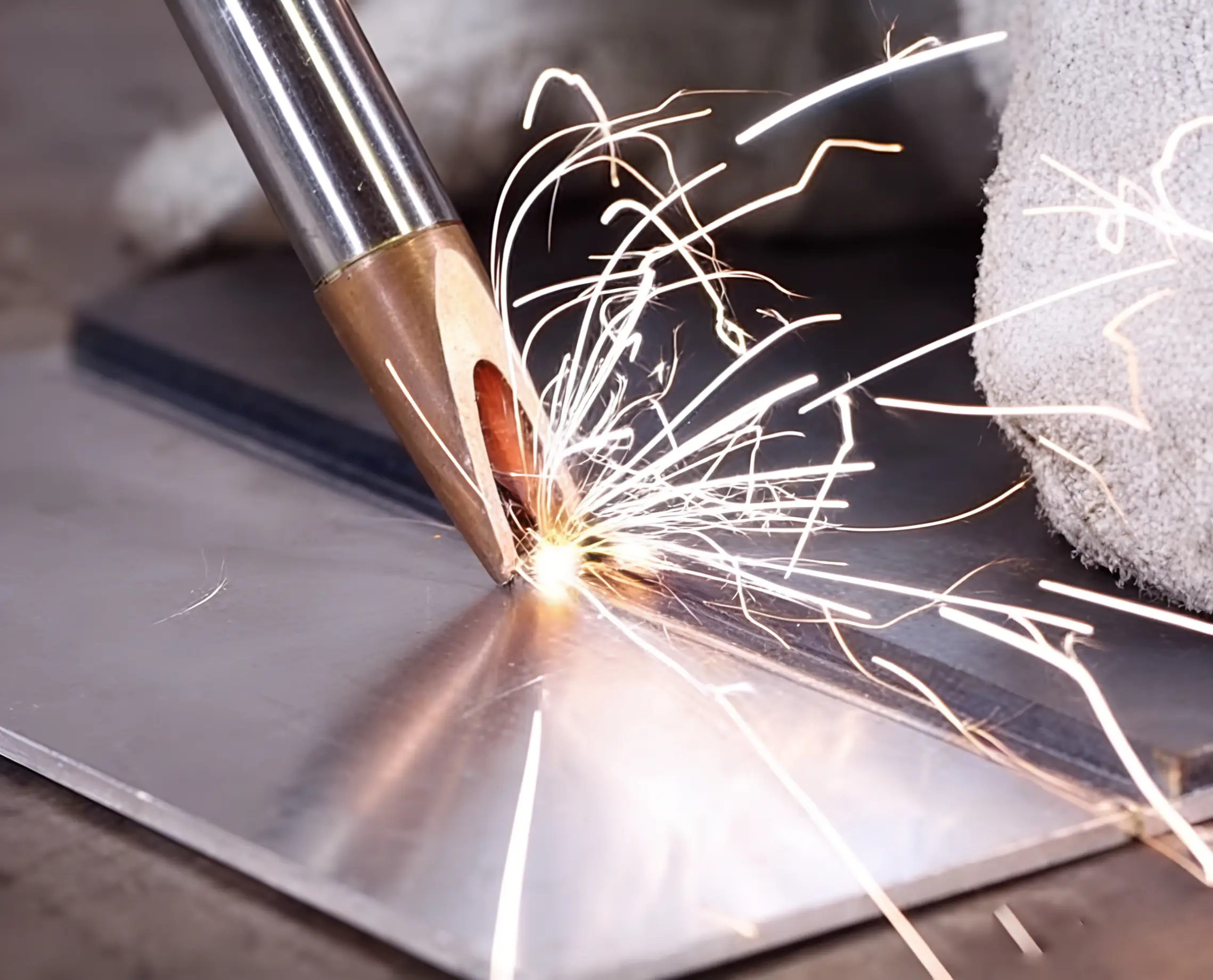
Floor space is a tax you pay every single day.
In a small workshop, every square foot has a cost. A fixed machine that takes one corner of your floor owns that corner — setup area, cooling lines, clearance zone, all of it. That space is gone.
The Trumpf TruLaser Station 7000 bolts in place. The work comes to it. You need dedicated floor space, water-cooling infrastructure, and a fixed layout. Change the job? The machine doesn’t move with you.
The Maxwave MW-HW works the other way around. The machine goes to the work. At 52–56kg on wheels, with a 10-meter fiber cable, it repositions in minutes. No plumbing. No fixed installation. Air-cooled design means plug it into standard 220V and run.
For a small workshop welding setup, that’s not a small perk. It’s the difference between a tool that fits your operation and one that forces your operation to fit around it.
Ease of Use and Learning Curve: Which Machine Can Your Team Operate from Day One?
A machine nobody knows how to run doesn’t save you money. It costs you time, morale, and jobs.
Maxwave MW-HW gets out of the way fast. Plug into 220V. Pick up the gun. Weld. No training documents. No certification. No complex parameter setup to figure out. Your generalist fabricator — the one running the TIG rig on Mondays — can start on it straight away. Upkeep each day means cleaning a lens and checking the welding head. Any non-specialist can do it.
Trumpf’s higher-tier systems ask more from your team. The TruLaser Station 7000 runs 5-axis operation with 0.03mm repeatability. To hit that precision, an operator must calibrate each axis and set source parameters across multiple laser types. That’s not a skill you pick up on day one. It’s a setup built for enterprises — ones that already have a dedicated, trained operator on staff.
|
Criterion |
Maxwave MW-HW |
Trumpf TruLaser Station 7000 |
|---|---|---|
|
Installation |
Minutes (plug-in) |
Multi-day, facility prep |
|
Training required |
None documented |
Certified operator |
|
Maintenance skill |
Basic (lens clean) |
Professional technician |
For small workshops with no dedicated laser staff, that gap matters a lot.
After-Sales Support and Long-Term Reliability: What Happens When Things Go Wrong?
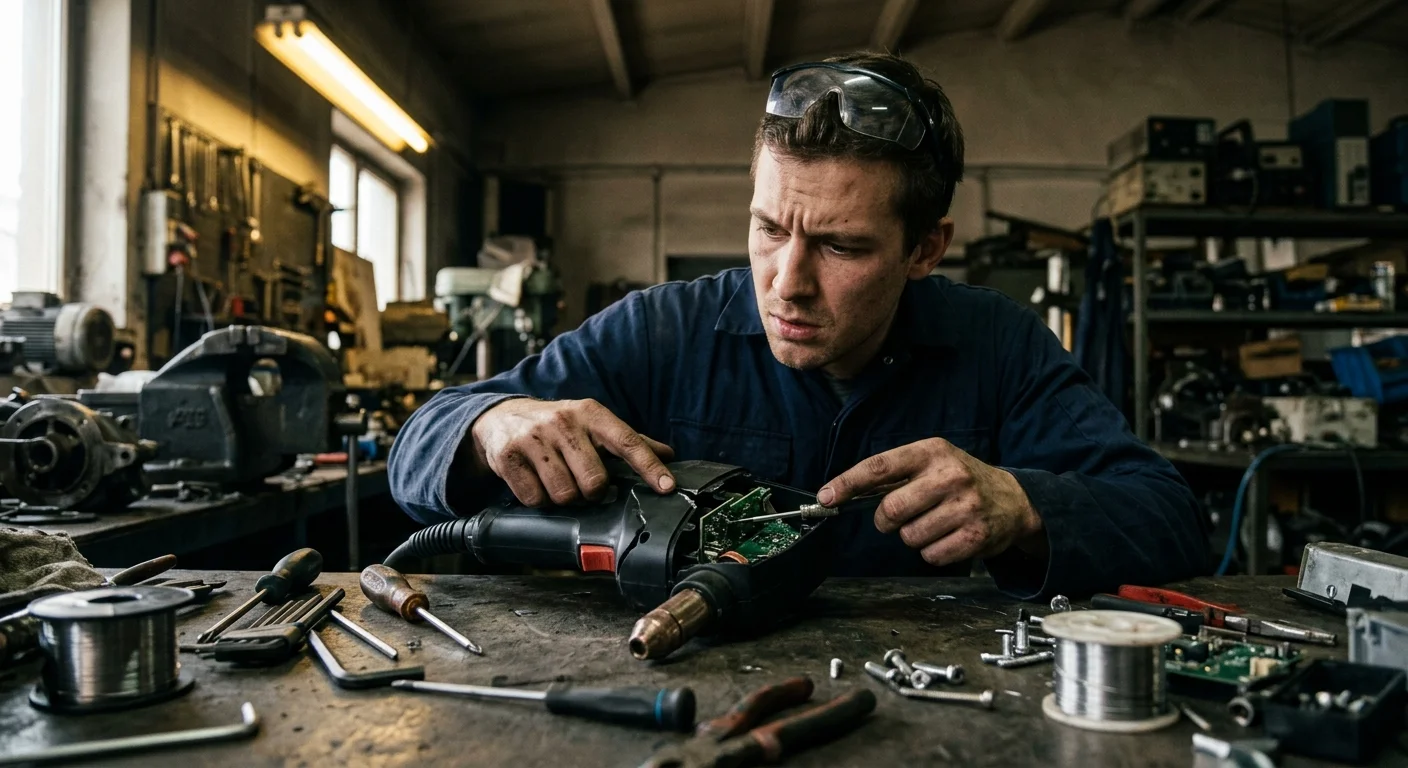
Every machine breaks at some point. The real question is what happens next.
Trumpf’s after-sales support stands out. The standard warranty runs 1–3 years. You can extend it beyond 5 years with a service agreement. Their Xchange program keeps 5,000+ spare parts in stock. Credit guarantees stay valid 4–10 years after purchase — even for discontinued machines. Most orders ship next business day across Europe, the Americas, and Asia. No adjustments needed. Plug and play.
Maxwave’s support picture is murkier. The standard warranty follows the typical Chinese manufacturer model: one year. There’s no confirmed local parts inventory outside China. No verified authorized distributor network exists in Western markets. So if core components fail — laser source, control board, galvo — replacement parts ship from China. Lead times run days to weeks, not hours.
That gap has a real cost. Every day your welder sits idle is revenue you’re not making.
One honest caveat worth noting: Trumpf’s support edge only justifies its price if your operation can’t afford downtime. For small workshops with lighter production schedules, Maxwave’s lower entry cost may balance out the slower parts pipeline. To make that work, though, you need to:
-
Build a spare parts buffer before you need it
-
Negotiate warranty terms in writing before you sign anything
Go in prepared, and the trade-off becomes more manageable.
Who Should Buy the Maxwave 3-In-1 Laser Welder?
Four shop types get the most out of this machine.
Auto body and sheet metal repair shops hit the sweet spot right away. The Maxwave handles stainless and aluminum from 0.5–5mm in a single pass. It runs 3–4 m/min on thin panels with no warping. Galvanized steel up to 3–4mm? That’s covered too.
Stainless steel kitchenware workshops get a lot of value from the built-in cleaning function. Rust, oil, and paint clear off before the first weld bead runs. Weld width stays tight at 0.1–0.5mm. That’s 4–5× faster than TIG, and material strength holds on 0.3–7mm stock.
Wrought iron and decorative metal studios will love the 0.7kg gun. It’s light enough to control on detailed pieces. Spot, seam, and repair modes all work without post-grind cleanup. Titanium and aluminum alloys up to 3mm come out clean.
Small fabrication contractors running mixed orders — brackets, panels, varied gauges — get the biggest return from the 3-in-1 setup. One machine welds, cuts 2–3mm sheet, and cleans. Speed reaches up to 120mm/s. No stopping to swap tools.
Know the Limits Before You Buy
The Maxwave is not the right fit for every job. Single-pass depth tops out at 5mm on stainless and 4–5mm on carbon steel at 2000W. Plates beyond 8mm need higher power and edge prep — no way around that. It’s also a manual handheld unit. There’s no path to plug it into an automated production line.
For most small workshops handling varied, moderate-thickness work on a budget under $10,000, the 1500W model is the solid pick. It handles 0.5–5mm stainless, runs across multiple metals, and delivers the full 3-in-1 function set at 2 m/min on 3mm stock. Go with the 2000W version if you are pushing 5–7mm seams on a frequent basis.
Who Should Buy the Trumpf Handheld Laser Welder?
Trumpf doesn’t sell to everyone — and that’s the point.
The real answer is simple: Trumpf systems are built for operations where a precision failure has a real dollar cost. Think medical device manufacturers. Aerospace component suppliers. Electronics producers where a 0.1mm variance kills an entire batch.
Your shop runs tight tolerances, certified quality requirements, and high-volume repeatability? The premium price pays for itself through defect reduction alone.
Here’s the short list of buyers who can justify the price:
-
OEM suppliers with contractual tolerance specs below 0.05mm
-
Medical or aerospace fabricators where documentation and repeatability are non-negotiable
-
High-volume production facilities already running dedicated laser operators on staff
-
Enterprises with capital budgets, existing water-cooling infrastructure, and multi-year equipment depreciation schedules
Your name isn’t on that list? The premium price isn’t worth it for you.
Small workshops doing panels, frames, mixed-metal repairs, or decorative work face a clear problem. Trumpf’s precision sits unused on 70% of those jobs. You end up paying for capability your floor never touches.
Final Verdict: Maxwave 3-In-1 vs. Trumpf — The Right Choice for Small Workshops
The answer isn’t hidden in the specs. It’s in your shop’s reality.
Run fewer than 500 parts a month? Work with mixed metals, tight floor space, and a budget under $10,000? Maxwave wins — and it’s not close. The average entry cost is $6,900 versus $480,000 for Trumpf. That’s 95% in savings. You get three functions in one gun. Setup takes minutes, not days.
Need high-volume precision batches where a 0.1mm variance scraps a full production run? Trumpf earns its price. But that’s a different shop — a different budget, a different scale.
|
Your Situation |
Right Tool |
|---|---|
|
Budget under $10k, multi-material, low-med volume |
Maxwave |
|
Budget over $100k, precision-critical, high volume |
Trumpf |
|
Need weld + cut + clean from one machine |
Maxwave |
|
Sub-0.05mm repeatability is non-negotiable |
Trumpf |
For most small workshops, the decision is straightforward. Under 500 parts per month, budget under $20k, materials from stainless to aluminum — get the Maxwave. Start with the 1500W model. Step up to 2000W once you’re pushing past 5mm seams on a consistent basis.
Buy the tool that fits the shop you have — not the shop you imagine you’ll need someday.
Conclusion
The math isn’t complicated. Trumpf builds great machines — for aerospace manufacturers. Not for the shop owner trying to grow a $200K operation without risking everything on one equipment purchase.
Small workshops need something different. The Maxwave 3-In-1 laser welder delivers what matters: weld-ready performance on stainless steel and aluminum, plus built-in cutting and cleaning. The price point leaves capital free for everything else your business needs.
You came here to make a decision. Here it is: your team needs a capable, portable fiber laser welding system. It should work from day one. No six-figure commitment required. Maxwave is that answer.