
Underwater welders earn $50,000 to over $300,000 a year. Yet most people don’t know what separates divers on entry-level wages from those pulling saturation diver salaries that beat most white-collar careers.
The gap isn’t luck. It comes down to certification, specialization, and knowing where to work.
Thinking about enrolling in a commercial diving program? Or maybe you’re ready to quit your current welding job? Before you do anything, get the real numbers — broken down by experience, location, and dive type.
That’s what you’ll find here. You’ll also get an honest look at the risks, the career path, and whether underwater welding is still the top high-income trade move in 2025.
How Much Does An Underwater Welder Get Paid?
The average underwater welder earns $100,131 in 2026. That’s more than most engineers, nurses, and accountants.
Here’s the full breakdown:
|
Experience Level |
Annual Range |
Hourly Rate |
|---|---|---|
|
Entry-level (0–3 years) |
$40,000–$60,000 |
$20–$30 |
|
Experienced (3–10 years) |
$75,000–$100,000 |
$35–$50 |
|
Saturation divers |
$200,000–$300,000 |
$1,000+/day |
Most underwater welders earn between $54,000–$93,000. To break the $100,000 mark, you’ll need offshore certification, 5+ years of experience, or a specialty in hazardous environments.
The extras add up fast:
– Depth pay: $1–$4 per foot of submersion
– Per diem: $50–$100 per day
– Annual bonuses: $5,000–$12,000
– Offshore premium: 40–60% above inland rates
Surface welders earn $40,000–$70,000 by comparison. The underwater pay gap is real — and it’s significant.
Underwater Welder Salary Breakdown
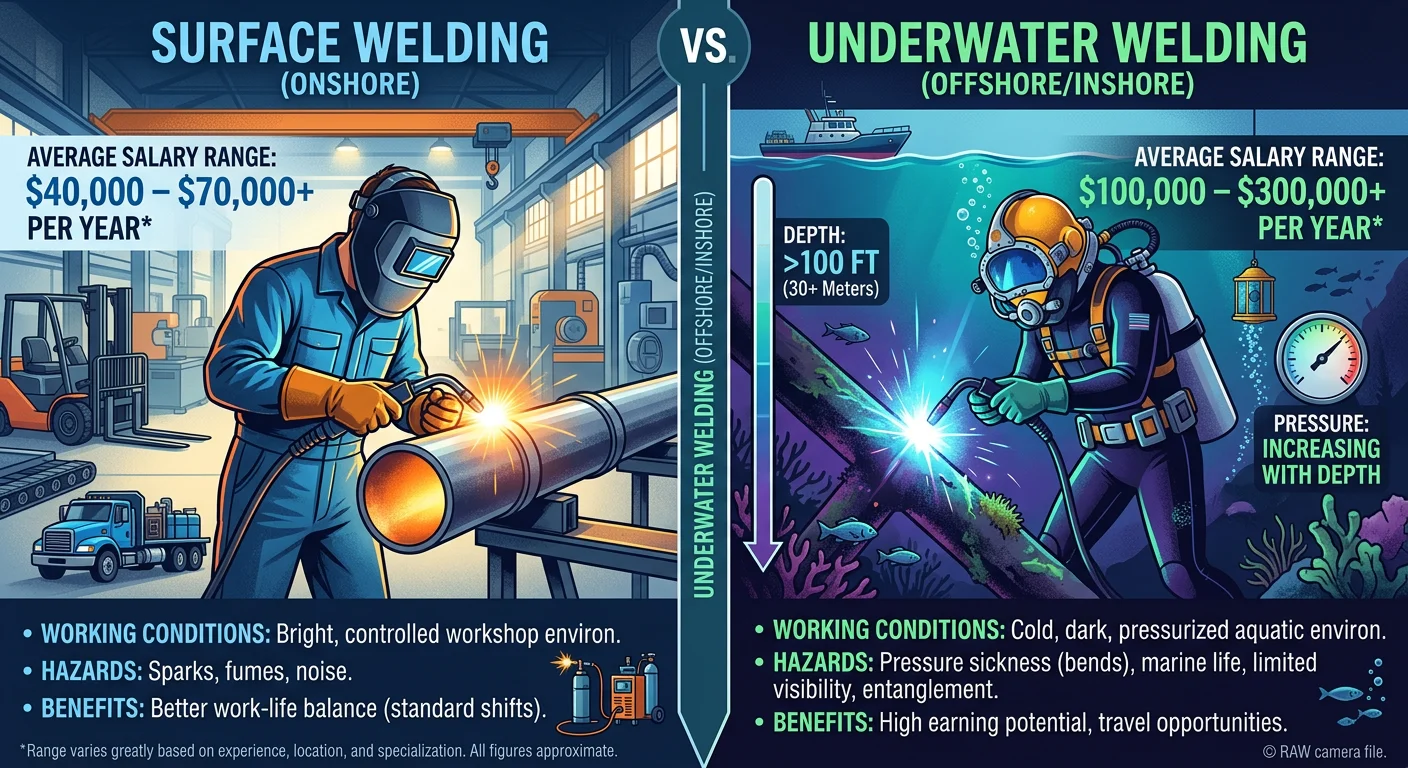
Underwater welding pay isn’t one fixed number. It’s a range that shifts based on four variables: depth certification, location, work type, and experience.
Here’s how those four variables break down.
Depth Certification: The Biggest Salary Lever
Your certification level controls your earning ceiling more than anything else. This isn’t a small gap. It’s the difference between a decent trade income and a life-changing one.
|
Depth Range |
Certification Required |
Hourly Rate |
Annual Earning Potential |
|---|---|---|---|
|
0–60 ft |
Basic |
$25–$35 |
$35,000–$50,000 |
|
60–200 ft |
Advanced |
$35–$55 |
$50,000–$80,000 |
|
200–500 ft |
Deep Air |
$55–$85 |
$80,000–$150,000 |
|
500+ ft |
Saturation |
$100–$200+ |
$200,000–$400,000 |
A Class A diver-welder certification adds a 50–75% pay premium over basic-certified divers. Saturation certification goes further. It moves you into a different income tier — one most welders never reach.
Location: Where You Work Multiplies Everything
Geography is the second most powerful pay driver. Inland freshwater work starts at $35,000–$50,000. Move to the Gulf Coast and that number jumps fast. Texas averages $91,000 per year ($44/hour) — running 25–35% higher than Great Lakes assignments.
Go offshore and the pay gap gets even bigger:
|
Work Environment |
Annual Range |
Premium vs. Inland |
|---|---|---|
|
Inland / Freshwater |
$35,000–$50,000 |
Base |
|
Coastal / Nearshore |
$45,000–$70,000 |
+25–40% |
|
Offshore Oil & Gas |
$80,000–$150,000 |
+120–200% |
|
International Operations |
$120,000–$300,000 |
+240–500% |
Offshore assignments pay 40–60% more than onshore work. International contracts in high-demand regions push total pay close to the $300,000 mark.
Emergency Work: The Income Spike Nobody Talks About
Hurricane response and emergency pipeline repair jobs pay 3x the standard hourly rate. These aren’t steady gigs. But experienced divers with the right certifications get the call first. One emergency contract can match months of regular work income.
Pay Structure: How the Money Arrives
Most underwater welders don’t earn a straight salary. Pay comes through a mix of methods:
-
Hourly contracts: $20–$100+/hour based on depth and hazard level
-
Project-based fees: Common for specialized underwater jobs
-
Profit sharing: $0–$2,000 depending on employer
-
Annual bonuses: $5,000–$12,000 for performance and retention
-
Hazard premiums: 40–60% above base pay on offshore assignments
So what does this add up to? An early-career diver with 1–4 years of experience can pull in $72,000 in total compensation. That’s well above what surface welding pays at the same career stage.
Salary Differences by Location and Industry
Your zip code and your industry sector are the two variables most underwater welders underestimate. Together, they can shift your annual income by $80,000 or more.
City-by-City Pay Gaps in the US
New York City sets the baseline. Every other major market measures against it. Here’s how salaries stack up across key US cities for underwater welders and commercial divers:
|
City |
Estimated Annual Salary |
vs. NYC Baseline |
|---|---|---|
|
San Francisco, CA |
$125,000 |
+4.17% |
|
Seattle, WA |
$115,000 |
−4.17% |
|
Chicago, IL |
$110,000 |
−8.33% |
|
Denver, CO |
$108,000 |
−10.0% |
|
Houston, TX |
$102,000 |
−15.0% |
|
Miami, FL |
$105,000 |
−12.5% |
|
Raleigh, NC |
$95,000 |
−20.83% |
San Francisco leads the list. California’s regional pay premium sits at 126.6% of the national average across skilled trades — that’s a big reason wages there run so high. Seattle and Boston both hover around 108% of the national benchmark. Wages stay strong in both cities, even without a heavy oil industry presence.
Houston catches a lot of people off guard. It’s the center of Gulf Coast offshore work, yet city-level wages fall below San Francisco. The cause is straightforward: Houston has a large pool of commercial divers, which pushes base rates down. That said, offshore premiums and hazard pay can lift total earnings for experienced workers.
Industry Sector Shapes Your Ceiling
Location covers half the picture. The industry you work in covers the other half.
-
Oil & Gas: Top-paying sector. Offshore platforms, pipeline inspection, and subsea infrastructure keep demand high for certified saturation divers all year.
-
Shipping & Maritime: Hull inspection and repair work stays steady. Pay is competitive but sits below oil and gas.
-
Civil Infrastructure: Bridge, dam, and port maintenance contracts. Schedules are more predictable and risk premiums are lower.
-
Military & Government: Contract rates vary a lot. A security clearance opens pay levels most civilian divers never reach.
The pattern holds across skilled trades: high-demand industries with dangerous conditions pay premium rates. Underwater welding checks both boxes. That’s why saturation divers on Gulf of Mexico oil fields out-earn registered nurses in San Francisco — a profession that tops out at $101,300 in one of the country’s priciest labor markets.
Choose the right city and the right industry sector. Your income ceiling shifts in your favor in a big way.
The Reality of Underwater Welding
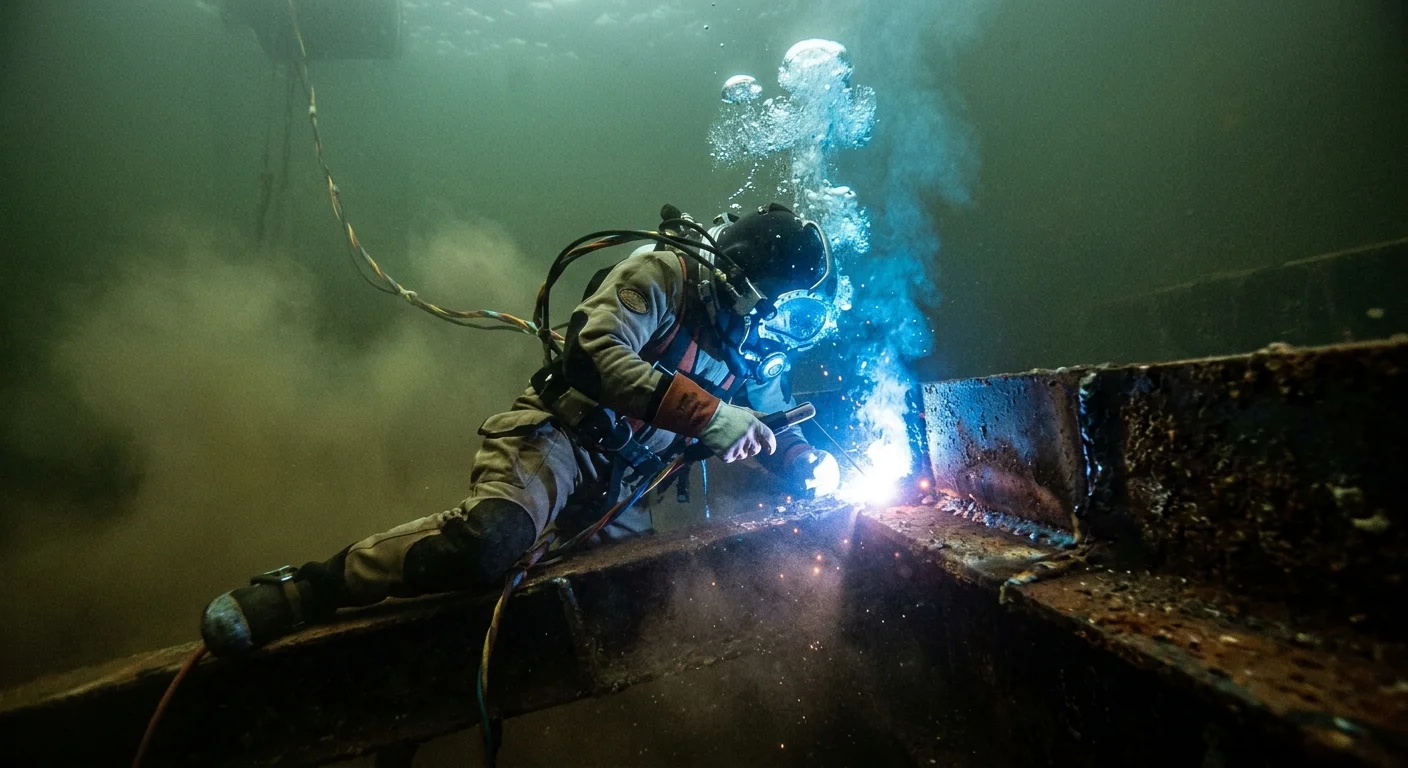
The high salary exists for a reason. Underwater welding has a fatality rate of 15% — that’s 1,000 times higher than the national industrial average. Higher than logging. Higher than commercial fishing. Higher than almost any other job you can name.
Here’s what that looks like in practice:
-
Drowning accounts for 70% of fatalities — entanglement, equipment failure, sudden currents, or a tender who misses a distress signal all play a role
-
Decompression sickness causes 20–25% of deaths — nitrogen bubbles form in the bloodstream during a fast ascent
-
Electrocution and explosion make up 15–20% — welding arcs burn at 7,000–11,000°F and build up hydrogen/oxygen gas pockets in tight spaces
-
Equipment failure covers the rest — air line breakdowns, seal breaches, heavy machinery incidents
The working conditions push every risk higher. Visibility drops to near zero in dirty ports. Cold water wears your body down fast. At 500+ feet, high pressure forces nitrogen into your tissues on the way down. It pushes back out on the way up.
No solo dives. No exceptions. Every certified operation requires backup support, waterproof equipment checks, and a strict decompression schedule. None of that is optional.
The money is real. So is what you’re trading for it.
Why Do Underwater Welders Get Paid So Much?
Three forces push underwater welder pay far above every other trade: scarcity, skill stacking, and danger. Remove any one of them and the salary drops. All three together explain why saturation divers out-earn most surgeons.
Scarcity: The Market Rewards What’s Rare
Very few people can do this job. Class A diver-welder certification takes years to earn. It also commands 50–75% higher rates than basic certification. Saturation diving credentials are even harder to get — and they open up projects paying $200,000–$400,000 a year.
The Gulf Coast makes this gap even wider. Oil and gas operations run year-round. They need qualified divers on short notice. That pressure pushes Gulf Coast rates 25–35% above Great Lakes assignments. Supply stays thin. Demand stays constant. Wages move in one direction.
Skill Stacking: Two Trades in One Body
A surface welder earns $40,000–$70,000. An underwater welder earns 20–50% more for the same weld — because they’re also a certified commercial diver. That dual-credential premium doesn’t shrink over time. It compounds.
Add hyperbaric welding mastery and the premium grows by another $15–$25 per hour. Saturation certification alone adds $10,000–$20,000 a year on top of base pay. Each extra certification shrinks the qualified talent pool. That gives you more negotiating power with every credential you add.
Risk Premium: Hazard Pay Is Built Into Every Rate
Danger has a price tag. Offshore and deep-sea assignments carry hazard pay that raises total compensation 40–60% above onshore rates. Emergency response work — hurricane season pipeline repairs, for example — can triple the standard hourly rate in a matter of days.
International contracts push this even higher. Remote, high-risk jobs in international waters pay $120,000–$300,000. That’s a 240–500% premium over inland baseline work.
Plus, per diem, travel allowances, and equipment stipends add another $10,000–$30,000 per year to total compensation. The salary isn’t just high — it’s built from the ground up to reflect what this job truly costs a person to do.
Alternative High-Paying Welding Careers
Underwater welding isn’t the only path to a six-figure welding income. Several trades sit in the same high-pay bracket. Some of them carry less risk too.
Here’s where the real money is:
-
Pipeline Welder: $63,000–$133,500/year. Oil and gas demand keeps this field growing. Conditions are brutal — Alaska cold, Gulf heat, long shifts. But the retirement savings potential is very real.
-
Oil Rig Welder: Averages $77,000/year. Top certified welders stay in high demand. Errors here aren’t just expensive — they’re catastrophic. That risk is built into the pay.
-
Nuclear Industry Welder: $67,000–$140,000/year. Radiation protocols exist for a reason. Follow them. You’ll find this becomes one of the most stable, high-income welding roles out there.
-
Boilermaker: Strong industrial pay, with 61% skills overlap with standard welding. Experienced boilermakers often retire at 55 with solid savings.
The pattern across all of them is the same: specialized certification drives the salary jump. AWS credentials, pipeline certs, nuclear clearances — each one shrinks the qualified talent pool. That pushes your rate up.
Why Laser Welding Is Becoming a Better Opportunity
The laser welding market hit USD 2.9 billion in 2025 — and it’s not slowing down. A projected 5% CAGR through 2035 means this isn’t a trend. It’s a structural shift in how manufacturing works.
Here’s what’s driving it:
Automation is rewriting the rules. The laser welding automation sector has grown at a 19% CAGR since 2020 — faster than every traditional welding technology. Automated laser systems boost productivity by 40% compared to conventional methods. Less rework. Fewer errors. Faster cycle times.
The industries adopting laser welding aren’t small players either:
-
Electric vehicles — battery pack welding demands zero thermal distortion
-
Medical devices — micro-precision welds that arc welding can’t deliver
-
Aerospace — strict quality standards with no margin for defects
-
Electronics — designs keep getting more compact, and that means minimal heat-affected zones are a hard requirement
AI is pushing this forward fast. Companies like TRUMPF have deployed AI-powered systems that detect and correct weld misalignments in real time. Machine learning controls welding parameters on its own, based on material properties. Quality control happens during the weld — not after it.
Fiber laser systems are leading this shift. You get superior beam quality, strong energy efficiency, and flexibility across high-mix, low-volume production. That combination makes them the go-to choice for smart factory setups.
The bottom line: skilled laser welding operators who understand automation integration, AI-assisted systems, and precision manufacturing are stepping into one of the fastest-growing segments in the entire welding industry.
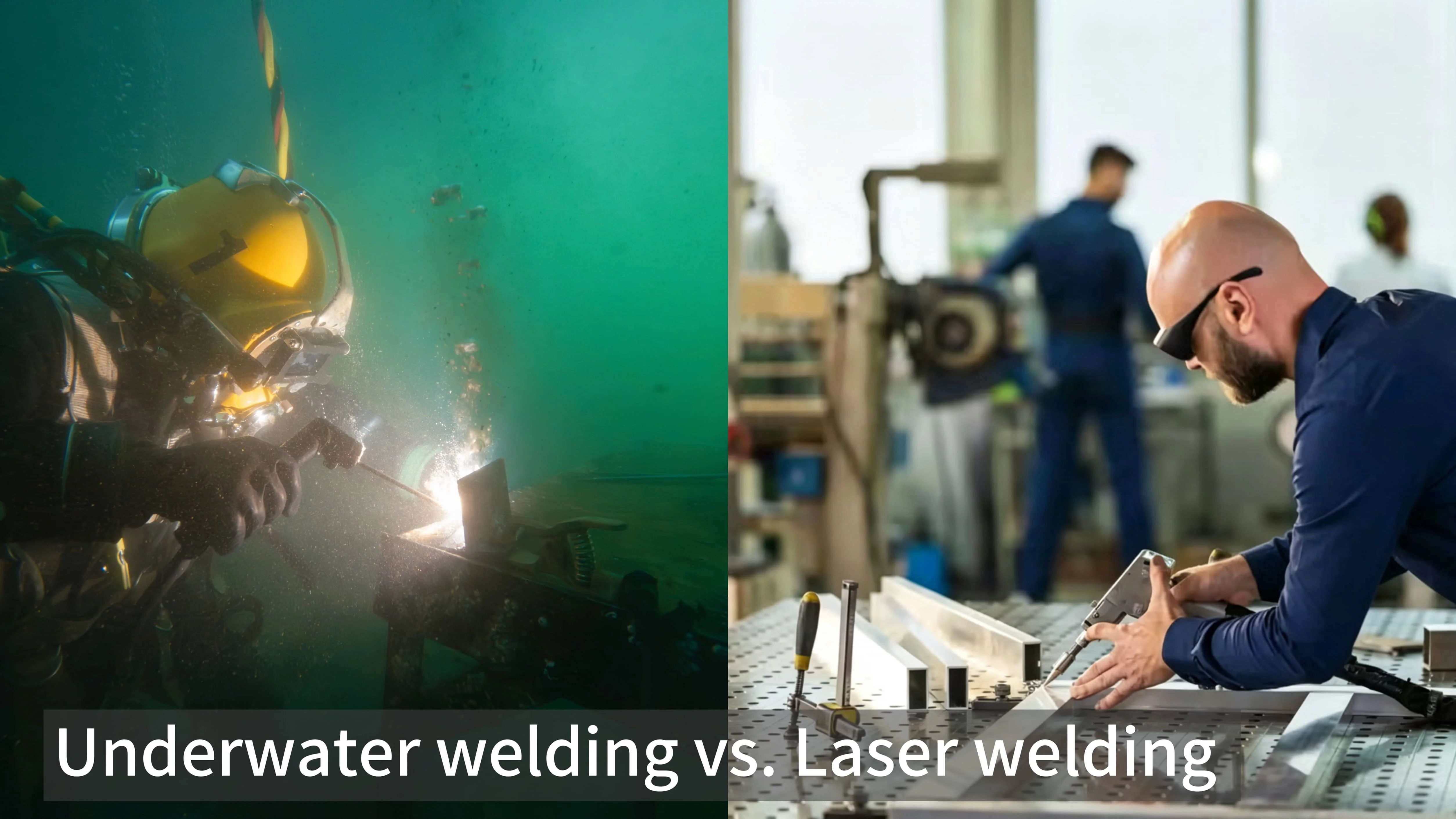
Income Comparison: Underwater Welding vs Laser Welding
Two welding jobs. Two very different income stories.
Underwater welding hits peak earnings most workers never reach — saturation divers can clear $200,000–$300,000 a year. But that income is unstable and hard on the body. It’s tied to risk. No contracts, no cash.
Laser welding operators earn less on paper — around $1,250–$1,750/month at current market rates. The trade-off? You get steady work, lower physical risk, and a career that won’t wear your body out before retirement.
Here’s what makes laser welding a strong choice from the employer side: automation cuts total labor costs 30–40% below traditional welding. That cost edge keeps laser operators in steady demand — even as individual wages stay moderate.
The real comparison isn’t just peak salary. It’s earning years multiplied by stability. Underwater welding pays more per job. Laser welding pays longer.
Can You Start a Welding Business Instead?
Some welders skip the saturation diving path — and build six-figure businesses without ever touching saltwater.
Starting a traditional welding business can cost over $160,000, with months to break even. The income is there:
-
Mobile repair: $110/hour
-
Custom fabrication: $90/hour
-
Contractor work: $50–$150/hour
But most shops hit the same ceiling — limited by labor, speed, and consistency.
That’s where laser welding changes the equation.
A handheld laser welder delivers faster welds, cleaner seams, and minimal rework. Jobs that take hours with traditional methods can often be finished much faster — with more consistent quality.
This allows you to move into higher-margin work:
-
Clean stainless steel fabrication
-
Thin metal welding with low distortion
-
Premium custom projects
It also reduces reliance on highly skilled labor, making it easier to scale.
The welding market is still growing. But the real shift isn’t demand — it’s how the work gets done.
Traditional welding builds a job.
Laser welding builds a business.
Is Underwater Welding Worth It?
The honest answer depends on who you are.
If you’re in the top 1% — elite physical condition, high risk tolerance, saturation diving credentials — underwater welding can pay $200,000–$300,000 a year. The demand is real. Robots can’t replace you yet. High-paying states like California, Florida, and Washington keep qualified divers in steady, consistent work.
For everyone else, the numbers are hard to ignore:
-
Death rate is 40x higher than the average US worker
-
Decompression sickness is a real, ongoing risk
-
Delta P forces can reach hundreds of pounds of pressure
-
The average underwater welder earns $53,990 — not much more than a skilled surface welder working safe, predictable 40-hour weeks
That gap doesn’t justify the risk for most people.
Here’s a smarter path forward: Certify in standard welding first. Build your skills toward laser welding and fabrication. Then scale a business — not a dive depth. You get comparable income, 30+ solid career years, and you come home every night.
Underwater welding is a remarkable career. It’s just not the right fit for most people.
Conclusion
Here’s the honest truth: underwater welding pays well — but not well enough for everyone.
The underwater welder annual income can crack six figures. Saturation divers earn more per month than most professionals earn per year. That’s real. That’s documented. But the physical demands are real too. So are the career longevity limits and the occupational risks that come with every dive.
What you’ve read here isn’t meant to talk you out of it — or into it. It hands you the complete picture so you can make the smartest call for your situation.
The numbers excite you? Your next move is clear:
-
Research ADCI-certified training programs
-
Map out your certification path
-
Start talking to working commercial divers
The risk-reward math doesn’t add up for you? Laser welding and welding entrepreneurship are building serious wealth — without the pressure at 200 feet.
View laser welder pricing, real case studies, and complete solutions.