
That dark, hardened layer on your historic limestone or marble isn’t just dirt—it’s gypsum black crust, a sulfate-rich layer chemically bonded to the stone surface. The wrong removal method can destroy centuries of detail in minutes. This guide compares all major removal techniques, with a special focus on modern laser cleaning technology.
Quick Comparison: 4 Cleaning Methods
|
Cleaning Method |
Best For |
Cost |
Time |
Risk to Stone |
Skill Level |
|---|---|---|---|---|---|
|
pH-Neutral Cleaner + Soft Brush |
Light surface film (<0.5mm) |
$20-50 |
1-2 hours |
Low |
⭐ |
|
DOFF Steam Cleaning |
Light organic growth, surface soot |
~$200/day rental |
Several hours |
Low-Medium |
⭐⭐ |
|
Chemical Poultice (Ammonium Carbonate + EDTA) |
Moderate to heavy sulfation crust (0.5-2mm) |
$100-500+ |
1-3 days |
Medium (acid risk) |
⭐⭐⭐⭐ |
|
Laser Cleaning |
All crust types, especially fine carvings |
$150–600/project |
1-4 hours |
Very Low |
⭐⭐⭐⭐ |
Black crust on historic stone carvings is a gypsum-pollutant compound that is eroding the stone. High-pressure washers or acid cleaners will cause permanent damage. This article compares 4 cleaning methods: pH-neutral cleaner for DIY, DOFF steam cleaning for semi-DIY, chemical poultice for professional use, and laser cleaning for high-precision restoration. Choose based on crust depth, stone type, and budget.
Method 1: pH-Neutral Cleaner + Soft Brush
Best for: Very light surface films (<0.5mm) — soot, light organic growth.
Steps:
-
Dilute pH-neutral stone cleaner (e.g., MB-5) at 1:10 ratio
-
Apply to damp surface. Leave for 2-5 minutes
-
Brush in circles with a soft nylon brush (bristles <0.3mm) at 30-45°, pressure <1 lb
-
Rinse with low-pressure water (<40 psi)
-
Pat dry with lint-free cloth
Never use: Vinegar (pH<6), bleach, abrasives coarser than 200 grit.
Limitation: Only works for very shallow contamination. Cannot remove gypsum crust bonded into the stone.
Method 2: DOFF Steam Cleaning
Best for: Light organic growth (moss, algae) and surface soot layers (<1mm).
Steps:
-
Rent a DOFF Tornado steam cleaner (~$200/day)
-
Hold nozzle 10-20cm from surface. Sweep at 5-10cm/second
-
150°C steam at 5-10 bar pressure. No chemicals added
-
Let stone air-dry naturally after treatment
Results: 90% organic removal rate. Soot clears in 1-2 passes. Moss regrowth suppressed for 6-12 months.
Limitation: Limited effect on gypsum crust (>1mm). Cannot remove chemically bonded sulfates.
Method 3: Chemical Poultice (Acid-Base Conversion)
Best for: Moderate to heavy sulfation crust (0.5-2mm). Professional conservator required.
Chemistry: Ammonium carbonate converts gypsum (calcium sulfate) into soluble ammonium sulfate. EDTA helps complex metal ions.
Formula (approx. 1kg):
-
680g water + 35g ammonium carbonate (5-10% concentration)
-
230g sepiolite clay + Arbocel cellulose fiber
-
For stubborn crust: add 2% EDTA (pH adjusted to 7)
Procedure:
-
Apply poultice evenly over black crust using a wooden spatula
-
Cover immediately with polyethylene film to prevent drying
-
Leave for 24-48 hours
-
Scrape off bulk poultice by hand. Clean residue with soft brush
-
Rinse thoroughly with low-pressure water. Test runoff with pH strips — target 6.5-7.5
Most common failure point: Incomplete rinsing. Residual soluble salts migrate into the stone, recrystallize as it dries, and cause the same structural stress you started with.
Limitation: Acidic formula etches carbonate stone surfaces. Multiple treatments cause cumulative damage. Thick crust (>2mm) may need 3-4 rounds.
Method 4: Laser Cleaning — High-Precision, Low-Damage Professional Solution
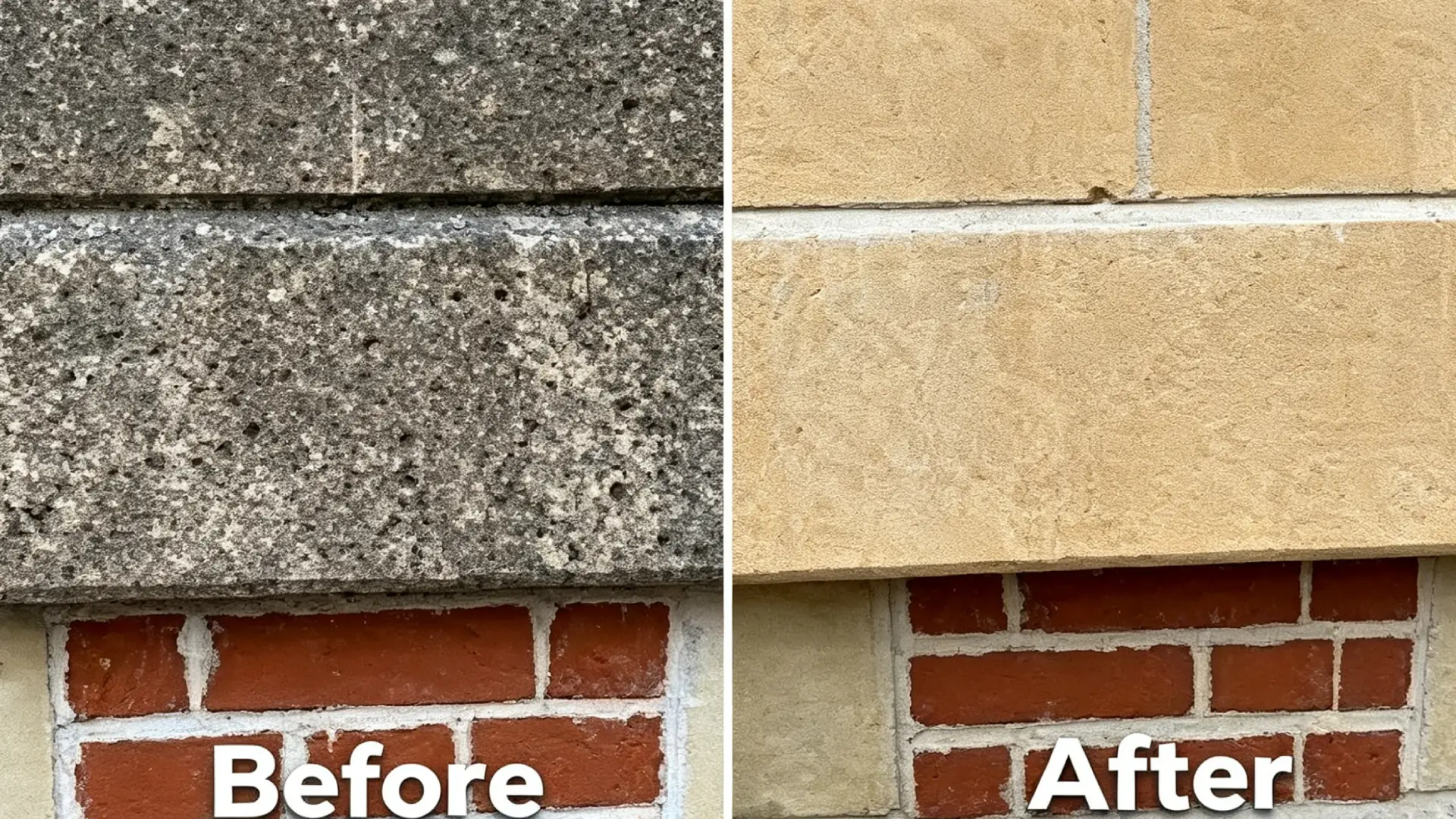
When chemical poultices risk etching the surface and steam can’t reach deep crust, laser cleaning offers a superior solution.
How Laser Cleaning Works
Laser cleaning uses pulsed laser beams (typically 1064nm wavelength). The energy is absorbed by the black crust layer, causing:
-
Contaminants heat up instantly to vaporization point
-
Micro-shockwaves blast particles off the surface
-
Each laser pulse removes only 0.01-0.1mm thickness
-
Stone substrate temperature rise is minimal (heat-affected zone <1mm)
The entire process is photothermal/photomechanical — no chemicals, no surface contact.
Laser cleaning has become a preferred choice for heritage stone conservation due to its non-abrasive, selective, and controllable properties. It uses targeted laser energy to vaporize black crust, soot, sulfation deposits, and biological contaminants while leaving the original stone intact.
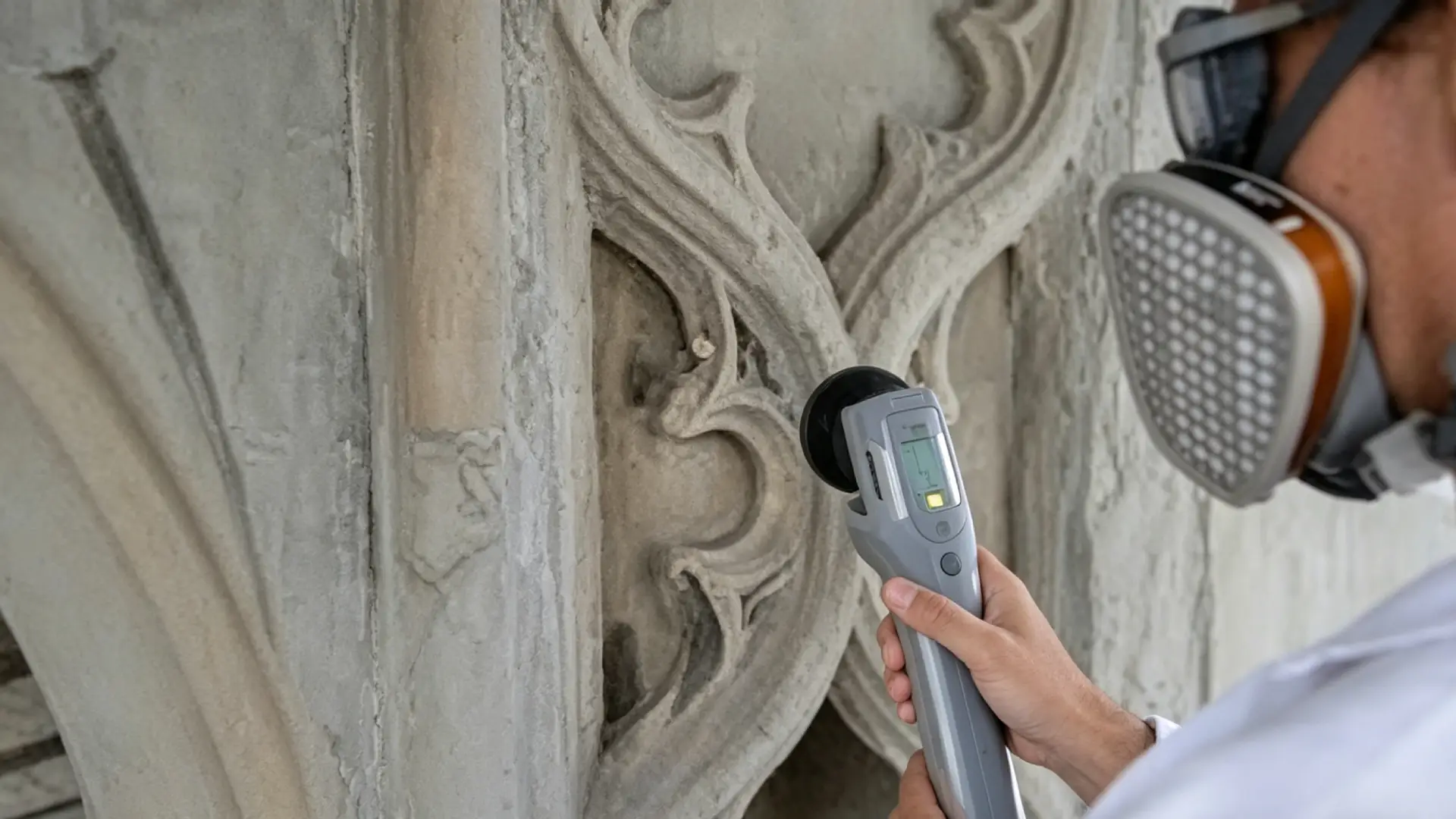
Unlike mechanical or chemical methods, laser cleaning acts only on the contaminated layer without scratching, etching, or leaving chemical residues. It reaches crevices and fine carved details that brushes or poultices cannot access, ensuring uniform removal across complex surfaces.
The process is dry, eco-friendly, and generates minimal waste. Parameters such as power, frequency, and scanning speed can be precisely adjusted to match stone type and crust depth, reducing risks for fragile or aged substrates. It supports both on-site restoration and workshop treatment, shortening workflow while improving consistency.
For protected heritage facades, intricately carved limestone, and marble artifacts, laser cleaning balances effectiveness and protection better than many traditional approaches. It avoids structural stress from moisture penetration or salt expansion, supporting long-term preservation.
Laser Cleaning Procedure
-
Assessment and testing: Scan a hidden area to find the “cleaning threshold” — the minimum energy that removes crust without damaging stone
-
Parameter setting: Adjust energy density (0.5-5 J/cm²) and frequency (10-100Hz) based on stone type and crust thickness
-
Layer-by-layer stripping: Start with low energy. Multiple passes. Don’t aim for complete removal in one pass
-
Real-time monitoring: Check results with magnification (10-20x). Adjust as needed
-
Post-treatment: Remove residual powder with soft brush or low-pressure air
Time comparison for 1 square meter of limestone with 1-2mm black crust: Laser cleaning takes 1-2 hours. Chemical poultice takes 2-3 days (including poultice setting time).
Which Method Should You Choose?
|
Your Situation |
Best Choice |
Estimated Cost |
Who Does It |
|---|---|---|---|
|
Garden ornament, light soot |
pH-neutral cleaner DIY |
$20-50 |
Yourself |
|
Garden statue, light moss |
DOFF steam cleaning |
~$200/day rental |
Yourself (with training) or rent equipment |
|
Limestone wall, 0.5-2mm crust |
Chemical poultice |
$5-15/sq ft |
Professional conservator |
|
Fine carved artifact, crust >1mm |
Laser cleaning |
$10-50/sq ft |
Professional conservator |
|
Any legally protected structure |
Check permit → laser/poultice |
Varies |
Certified conservator |
Core principles:
-
Shallow, simple → DIY steam or pH-neutral cleaner
-
Medium, standard → Hire a conservator for chemical poultice
-
Deep, fine, high-value → Laser cleaning is the best choice
All three professional methods (poultice, laser, biocleaning) work. The differences: poultice is slowest and may leave chemical residues; laser is fastest but has high equipment requirements; biocleaning is gentlest but has strict conditions. For high-value stone with complex carved details, laser cleaning offers unmatched precision and safety.
Conclusion
Removing black crust from historic stone represents the fundamental challenge of conservation: how to intervene without erasing. Traditional methods all involve some degree of compromise—abrasion removes original material, chemicals leave residues, moisture causes new damage.
Laser cleaning represents a paradigm shift by offering what seemed impossible: complete removal of damaging crust with zero impact on historic substrate. It’s not just another tool; it’s a different philosophical approach where precision itself becomes the means of preservation.
For professionals ready to adopt this technology, Maxwave offers industrial-grade systems specifically engineered for cultural heritage applications. Our portable laser cleaners provide the precision required for delicate stone work without the cost of institutional-scale systems. Contact our conservation specialists to discuss how laser technology can serve your next restoration project.