
What is the biggest fear when welding thin stainless steel? Burn-through and warping. When you see that glaring hole in the weld or the entire sheet warping like a potato chip, you know all the previous effort was wasted. This article gets straight to the point, comparing the burn-through resistance of different processes and providing specific operating parameters and troubleshooting guidance.
|
Process Choice |
Recommended Thickness Range |
Core Method to Prevent Burn-Through |
Application Scenario |
|---|---|---|---|
|
TIG (GTAW) |
0.5 – 3.0 mm |
Low current, Pulse mode, High-frequency tack welding |
High cosmetic requirements, Precision parts |
|
MIG (GMAW) |
1.5 – 6.0 mm |
Short-circuit transfer, Small-diameter wire, Fast travel speed |
Medium thickness, Priority on efficiency |
|
Laser Welding |
0.1 – 2.0 mm |
Extremely low heat input, Non-contact, High speed |
Ultra-thin parts, Zero distortion requirement |
Main Causes of Weld Burn-Through
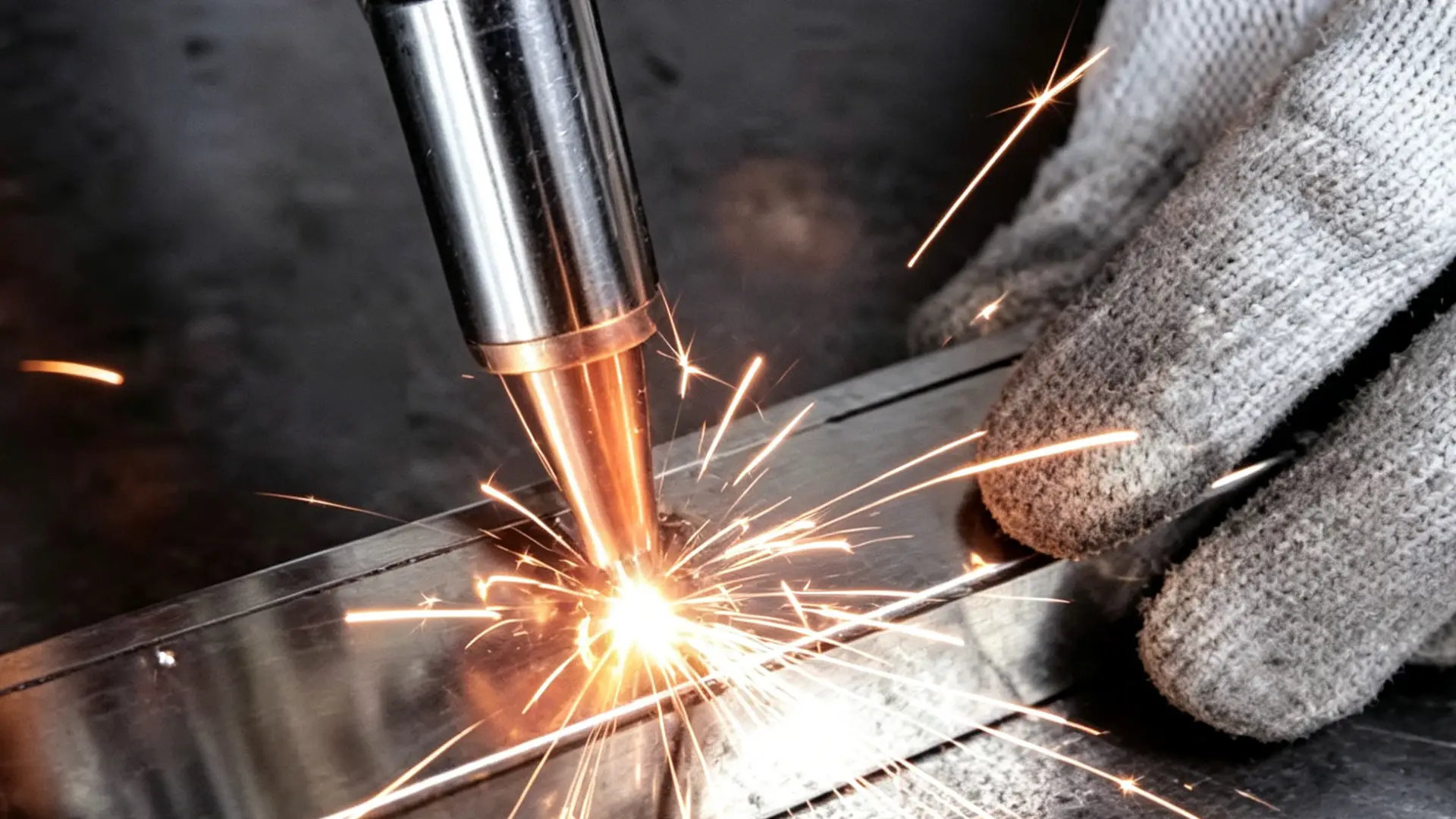
Thin stainless steel (typically ≤2mm) is prone to burn-through due to its physical properties of low thermal conductivity and thin cross-section.
-
Heat Has Nowhere to Go: The thermal conductivity of stainless steel is only about one-third that of carbon steel. The heat generated by the arc does not quickly dissipate to the surrounding area but accumulates in a very small zone directly under the arc.
-
Insufficient Heat Capacity: Thin sheets lack enough metal mass to absorb and store heat. Once the heat input exceeds a critical point (e.g., power density > 10⁶ W/cm²), the metal melts and collapses instantly.
Operational Pitfalls Leading to Burn-Through:
-
Excessive Current: The most common mistake for beginners, trying to use parameters meant for thick plates on thin sheets.
-
Travel Speed Too Slow: Staying in one spot for more than a second allows heat to accumulate to dangerous levels.
-
Excessive Gap: If the butt joint has a gap >0.5mm, the arc will directly “bite” off the edge.
TIG Welding : Precise but Demanding Skill
TIG welding is the traditional first choice for welding thin stainless steel, but it places extremely high demands on the operator’s technique.
Key Anti-Burn-Through Parameters (Example: 304 Stainless Steel)
|
Sheet Thickness (mm) |
Current (A) |
Tungsten Diameter |
Filler Wire Diameter |
Shielding Gas |
|---|---|---|---|---|
|
0.5 |
25 – 35 |
1.0 mm |
0.8 mm (optional) |
Pure Argon 99.99% |
|
1.0 |
35 – 50 |
1.6 mm |
1.0 mm |
Flow Rate 8-12 L/min |
|
1.5 |
50 – 70 |
1.6 mm |
1.2 mm |
Cup #5 – #7 |
Practical Techniques to Prevent Burn-Through
-
Use Pulse Function: Set peak and background currents. During the background period, the weld pool cools, preventing heat buildup. Example: Peak 60A / Background 20A.
-
Skip Welding: Do not weld a long seam in one continuous pass. Weld 1-2 cm, then stop, skip to the next spot, wait for the previous section to cool, then return to fill the gaps. This effectively distributes heat.
-
Use a Backing Bar: Place a copper or aluminum plate behind the weld joint. The high thermal conductivity of copper quickly draws heat away, acting as a “heat sink” for the thin sheet. This is the ultimate physical tool to prevent backside oxidation and burn-through.
MIG Welding : Fast but Has a Threshold
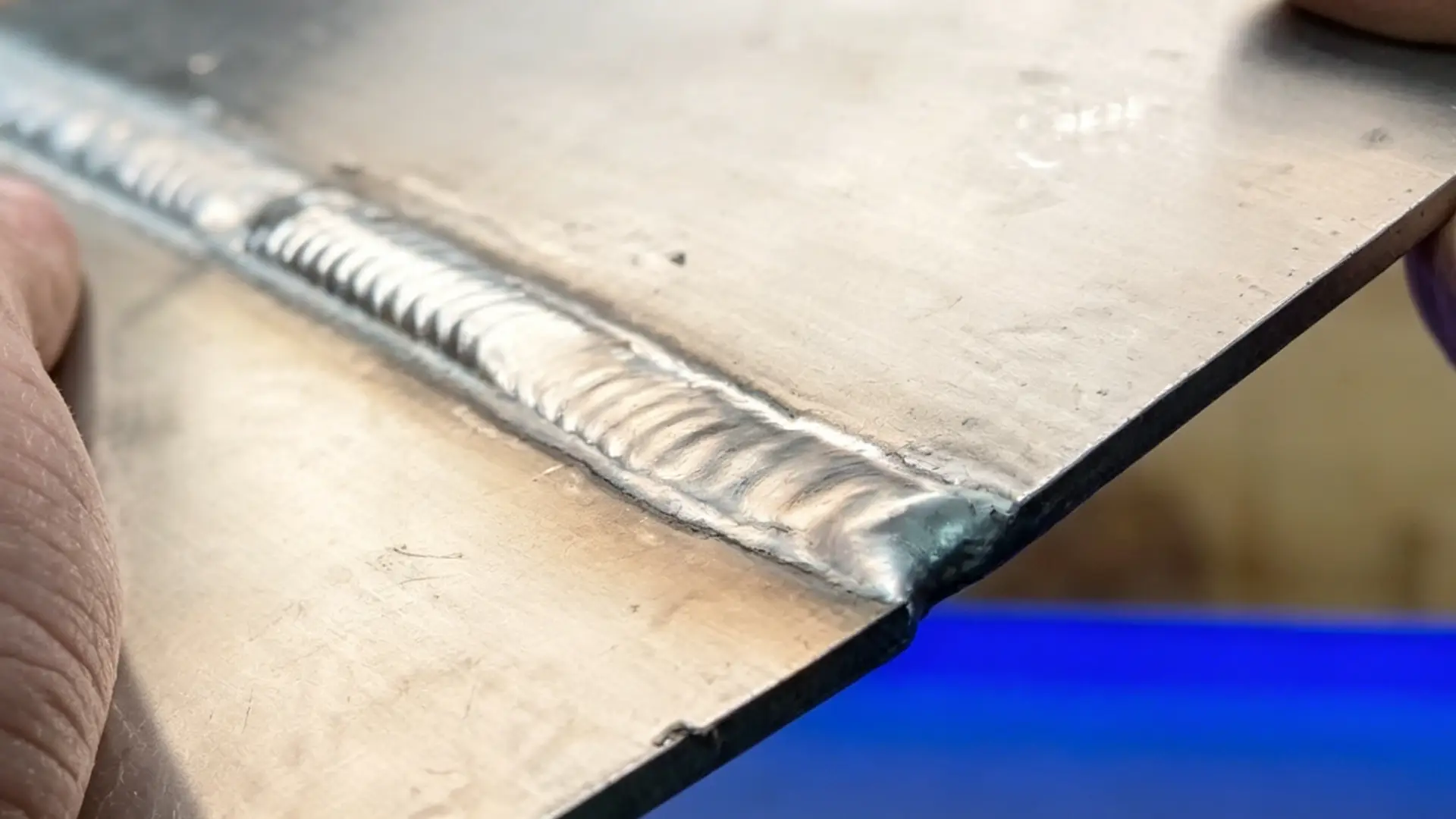
MIG welding is generally not recommended for ultra-thin sheets below 1mm, but it offers advantages in high-volume production for sheets above 1.5mm.
Key Settings
-
Mode: Must use Short Circuit Transfer (SCT), avoiding the high heat of Spray Transfer.
-
Wire: Use thin wire (0.8mm or 0.9mm). Thicker wire requires higher current, which can easily cause burn-through.
-
Parameters: Voltage slightly lower than standard (e.g., 16-18V), paired with a higher wire feed speed for fast, “cold” welding.
MIG Anti-Burn-Through Mantra: Thin wire, Low voltage, Fast travel. If you see the weld pool glowing bright and sagging, immediately increase travel speed or decrease voltage.
Laser Welding: The Ultimate Solution for Ultra-Thin Sheets
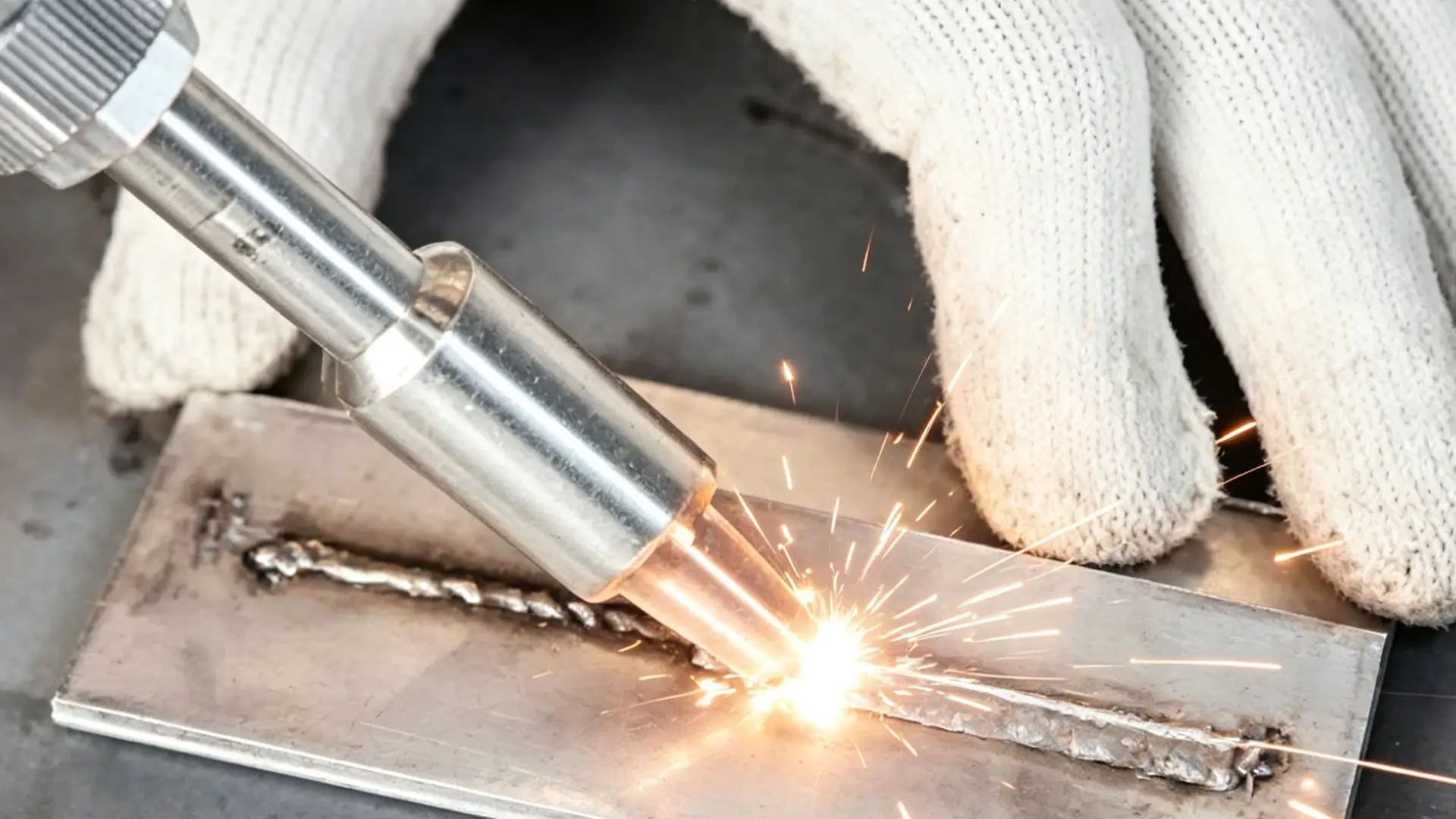
When thickness falls below 1mm, especially entering the sub-0.5mm realm, the margin for error with TIG and MIG plummets. Laser welding, with its extremely low heat input and minimal heat-affected zone (HAZ), becomes the ideal process to solve burn-through and distortion in thin sheets.
How Laser Welding Prevents Burn-Through
-
Highly Concentrated Energy: The laser beam has an extremely small diameter (micrometer scale) and very high energy density. It completes the melting-solidification process in milliseconds, leaving no time for heat to conduct to the surrounding material.
-
Non-contact Process: There is no electrode wear or arc force impacting the weld pool, resulting in exceptionally uniform weld bead formation.
-
Digital Parameters: Power, frequency, and pulse width are fully controllable. Once parameters are optimized, they can be repeated indefinitely, completely eliminating reliance on the “master’s touch.”
Distortion Control: Laser vs. Traditional Processes
When welding 0.8mm stainless steel sheet:
-
TIG Welding: Even with the best technique, it is difficult to completely avoid slight wavy distortion, often requiring subsequent flattening.
-
Laser Welding: Thermal distortion is typically controlled within 0.1mm, often invisible to the naked eye, allowing the part to proceed directly to the next process step.
Conclusion
The core logic to prevent burn-through in thin stainless steel welding is controlling heat input. TIG welding relies on pulse and technique, MIG welding on short-circuit transfer and speed, while laser welding fundamentally redefines the heat source from a physical principle standpoint, inherently avoiding the risk of burn-through.
If you are processing a large volume of thin stainless steel workpieces (0.1mm-2.0mm) like precision sheet metal, battery casings, kitchenware, or electronic components, and are struggling with high rejection rates and distortion issues, upgrading to laser technology is the inevitable choice to improve yield and efficiency.
MaxWave, as a professional provider of laser equipment solutions, offers handheld laser welders and automated laser welding systems precisely designed to tackle the extreme challenges of thin-sheet welding. We are committed to helping you standardize complex thin-sheet welding processes through stable, low-heat-input laser technology, making “burn-through” and “distortion” a thing of the past. Contact MaxWave now for a free welding sample test on your specific materials.