
A cracked stainless steel sink not only affects the aesthetics of the kitchen but also easily causes water leakage, damp cabinets, metal corrosion and other problems, which may lead to unnecessary property losses in severe cases. Many homeowners either blindly replace the sink at a high cost or use the wrong repair method, resulting in repeated cracks. Many homeowners assume replacement is the only solution, but most small to medium cracks are repairable quickly and affordably.
Comparison Table of Stainless Steel Sink Crack Repair Methods
|
Repair Method |
Applicable Scenarios |
Operation Difficulty |
Repair Cost |
Durability |
Core Advantages |
Limitations |
|
Epoxy Putty Repair |
Hairline cracks, surface small cracks (<1mm) |
Low (operable for beginners) |
20-50 RMB |
2-5 years |
Simple operation, extremely low cost, no professional tools required |
Only applicable to surface cracks, cannot repair structural damage |
|
Waterproof Tape Sealing |
Small pinholes, slight water seepage (<2mm) |
Extremely low (immediate operation) |
15-25 RMB |
2-4 years |
Quick water plugging, no need to wait for curing |
Adhesion depends on surface cleanliness, easy to fall off |
|
Double-Side Sealing Repair |
Medium-width cracks (1-5mm) |
Medium (simple operation experience required) |
30-40 RMB |
3-6 years |
Good reinforcement effect, eliminating bottom water seepage |
Tedious construction steps, time-consuming |
|
Traditional TIG Welding |
Structural cracks, wide damage (>5mm) |
High (professional skills required) |
100-300 RMB |
5-8 years |
High repair strength, suitable for severe damage |
High cost, easy to cause plate deformation, requires professional personnel |
|
Laser Welding Repair |
All types of cracks (including structural, wide), exclusive for stainless steel materials |
Medium (easy to get started, no senior experience required) |
Cost-effective (more cost-saving for long-term use) |
8-15 years |
No deformation, high repair precision, strong durability, and aesthetic appearance |
Special laser welding equipment required |
Practical Guide to Traditional Repair Methods
For most minor damages such as surface cracks and pinholes of household stainless steel sinks, traditional repair methods are simple to operate and low in cost, making them the first choice for daily emergency and basic repair. The following details the specific operation steps, which can be completed by yourself without professional skills.
Epoxy Putty Repair: Suitable for Hairline Cracks
Epoxy putty is the preferred material for household repair. It has strong adhesion and good waterproof performance, and can firmly adhere to the stainless steel surface. It is suitable for repairing hairline cracks with a width of less than 1mm. The specific steps are as follows:
Step 1: Clean and polish. First, dry the crack and its surrounding area with a dry cloth to remove oil, water stains and loose impurities. Then gently polish the surface of the crack with 220-400 grit sandpaper to make the surface rough. After that, wipe it clean with isopropyl alcohol to ensure there is no dust or oil on the surface — a dry and rough contact surface is the key to the firm adhesion of epoxy putty.
Step 2: Knead the material. Cut an appropriate amount of epoxy putty and knead it fully by hand until the color is uniform (no variegated stripes). Note that the epoxy putty cures quickly, so it needs to be constructed within 15 minutes after kneading to avoid the material hardening and being unusable.
Step 3: Fill and compact. Press the kneaded epoxy putty firmly into the crack to ensure it is completely filled without gaps. Then smooth the surface with a plastic putty knife and extend the edges by 1-2mm appropriately to enhance the sealing effect and avoid water seepage later.
Step 4: Let it cure completely. After construction, place it in a well-ventilated and dry place. The initial curing takes at least 1 hour, and it is recommended to wait 24 hours before using water normally. At this time, the epoxy putty will form a strong waterproof sealing layer, which can effectively prevent the crack from seeping water again.
Waterproof Tape Sealing: Suitable for Small Pinholes and Slight Water Seepage
If there are small pinholes (0.5-2mm) or slight water seepage in the sink, it can be quickly solved with waterproof repair tape without complex operation, which is suitable for emergency water plugging. The steps are as follows:
First, thoroughly clean the water seepage area to remove old adhesive marks, oil stains and scale on the surface, especially around the pinholes, because the adhesion of waterproof tape completely depends on a clean metal surface. If there are impurities, it is easy to fall off.
Then, cut a piece of tape of appropriate size to ensure it can completely cover the pinhole or water seepage point, with 1-2cm of extra edge around. After tearing off the backing, press firmly from the center of the tape to the surrounding area to expel air, avoid wrinkles and bubbles, and ensure the tape is closely attached to the sink surface.
Finally, let it stand for 24 hours. After the tape is completely bonded, fill the sink with water and let it stand for 1-2 hours to check for water seepage. If there is no water seepage, it can be used normally. This method is simple to operate and can quickly solve the problem of slight water seepage.
Double-Side Sealing Repair: Suitable for Medium-Width Cracks
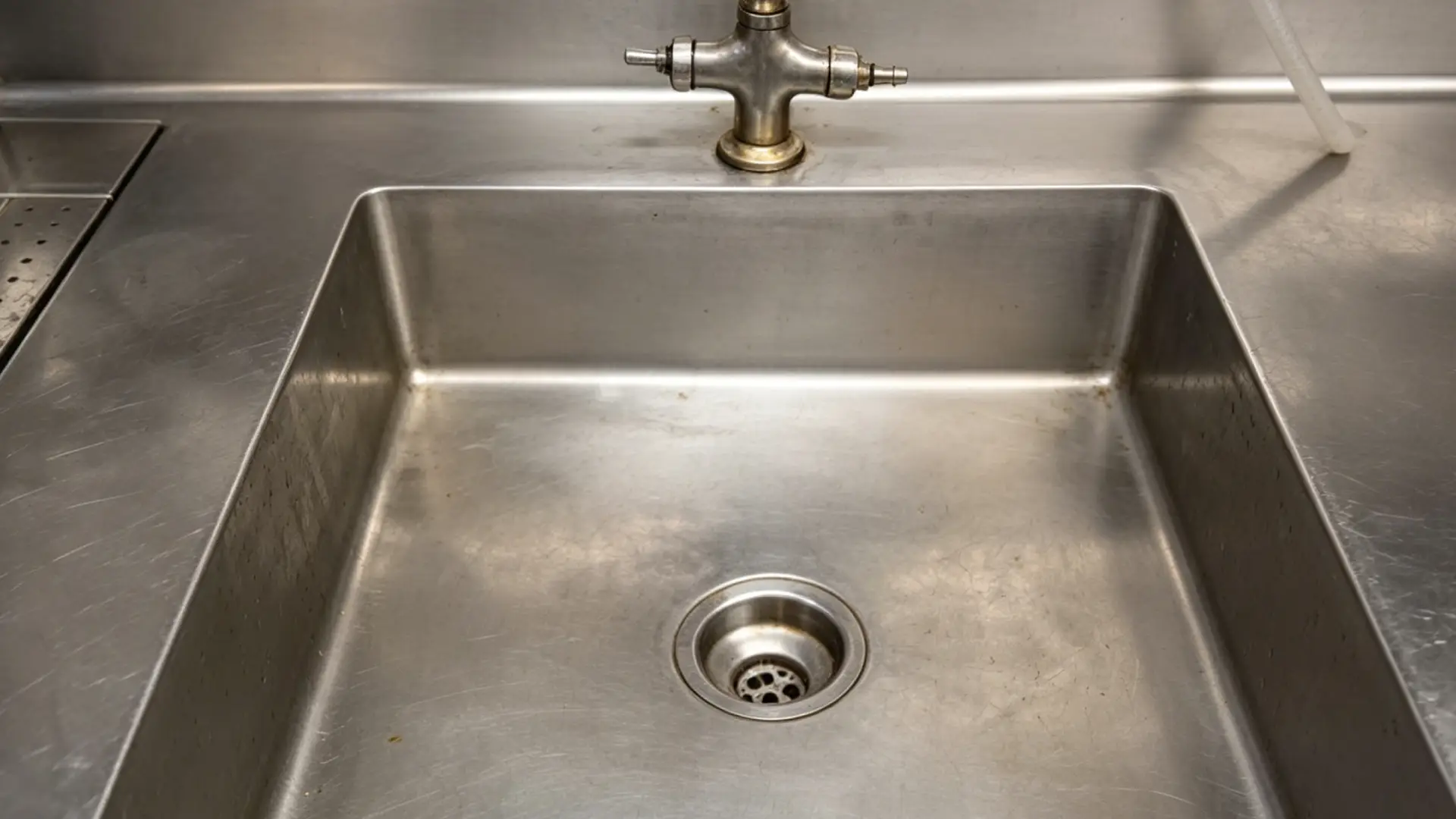
For medium-width cracks of 1-5mm, single-layer repair is easy to fall off due to water pressure and material pulling. Using the double-side sealing method can greatly improve the durability of the repair. The steps are as follows:
Step 1: Comprehensive cleaning. Use a steel wire brush to clean the loose impurities in the crack, then wipe the front and back of the sink with isopropyl alcohol to ensure there is no oil or dust around the crack, and proceed to the next step after drying.
Step 2: Add support at the bottom. Place closed-cell backer rod or bond breaker tape on the back of the sink (corresponding to the crack) and closely attach it to both sides of the crack. This can limit the excessive adhesion of the sealing material, improve the elasticity of the sealing layer, and reduce the risk of deformation and falling off later.
Step 3: Double-side filling and sealing. First, fill the crack with sealing material from the back of the sink, inject it slowly to ensure there are no gaps. After standing for 1 hour until the surface is semi-cured, fill the crack with sealing material from the front of the sink, smooth the surface with a scraper to be flush with the sink surface, and finally let it stand for 24 hours until it is completely cured before use.
Traditional TIG Welding: Suitable for Severe Structural Cracks
If the sink has structural cracks with a width greater than 5mm, through damage, or the crack is located in a stressed part such as around the drain or corner, the effect of traditional epoxy or tape repair is poor, and TIG welding repair can be used, but this method has obvious limitations:
TIG welding requires professional welding equipment and senior operation experience, which ordinary homeowners cannot operate by themselves, and the charge is relatively high (100-300 RMB/time); at the same time, the stainless steel sink plate is relatively thin (usually 16-22 gauge), and improper heat control during welding can easily lead to plate deformation, new cracks, and even damage the overall structure of the sink. Therefore, unless it is severe damage, it is not recommended to choose it first.
A More Efficient and Durable Choice: Laser Welding for Stainless Steel Sink Repair
Although the above traditional repair methods can solve the problem of cracks in the short term, they all have the disadvantages of insufficient durability and limited repair effect — epoxy putty and tape will age and fall off with the passage of time and water erosion, double-side sealing steps are tedious, and traditional welding is easy to deform. Laser welding repair just makes up for these shortcomings and becomes a better solution for stainless steel sink repair (especially for severe damage).
Laser welding repair relies on high-precision laser technology, which can accurately control heat output to avoid deformation of stainless steel plates. At the same time, the laser can penetrate deep into the crack to achieve seamless welding. The repair strength is far higher than that of traditional methods, and the durability can reach 8-15 years, almost the same as the service life of a new sink.
Compared with traditional TIG welding, laser welding is simpler to operate, does not require senior professional skills, and can be quickly mastered by beginners. Moreover, the repaired surface is flat and smooth, which does not affect the appearance of the sink and does not require additional grinding and polishing; it is suitable for all types of cracks (surface fine lines, wide cracks, structural damage), especially for stainless steel, a special metal material, which can maximize the retention of the original structure and performance of the sink.
More importantly, laser welding can not only repair sink cracks but also solve problems such as oxidation, scratches and corrosion on the surface of stainless steel sinks, completing repair and maintenance in one stop. For homeowners who pay attention to durability and aesthetics, as well as scenarios that require batch repair of stainless steel components, laser welding is undoubtedly a more cost-effective choice.
Conclusion
In the face of a cracked stainless steel sink, there is no need to replace it blindly. You can choose the appropriate repair method according to the width, location and damage degree of the crack: for minor surface cracks and pinholes, epoxy putty or waterproof tape can solve the problem at low cost; for medium-width cracks, double-side sealing repair is preferred to improve durability; for severe structural damage, laser welding repair is recommended, which combines high efficiency, durability and aesthetics.
Traditional repair methods are suitable for emergency and minor damage, with simple operation and low cost, but limited durability; laser welding repair is more suitable for scenarios pursuing long-term effects and focusing on repair quality, especially for stainless steel materials. Laser welding can maximize the retention of material characteristics and avoid secondary damage.
For professionals in metalworking, renovation, or property maintenance, investing in a handheld laser welder is not just a tool for sink repair but also a means to expand business capabilities. From window guards to kitchenware, from art restoration to equipment maintenance, precise laser welding technology is transforming the traditional repair industry.