
Those orange-brown streaks on your stainless steel sink don’t mean your appliances are cheap. And no, it doesn’t mean you’ve failed at adulting either. It’s a common chemistry problem — and a fixable one.
Don’t grab the harshest scrubber you own just yet. Removing rust from stainless steel fast is doable with things already sitting under your kitchen sink.
Here’s what you’ll get from the next few minutes:
- Why rust streaks happen on stainless steel in the first place
- The fastest DIY removal methods, matched to your rust level.
- What NOT to do — so a small stain doesn’t turn into permanent surface damage
Quick Reference: Match Method to Severity
| Rust Severity | Best Method | Time Required |
| Light (fresh spots, faint tint) | Baking soda paste | 15–20 minutes |
| Moderate (established stains, clusters) | White vinegar soak | 20–40 minutes |
| Moderate + stubborn | Vinegar + baking soda combo | 30–45 minutes |
| Heavy (deep staining, pitting) | Bar Keepers Friend (oxalic acid) | 10–15 minutes |
| Large-Scale / Time-Consuming (outdoor fixtures, long railings) | Portable laser cleaning | Seconds per sq. inch |
One rule applies to all levels: always finish with a full rinse (if using chemicals) and dry the surface right away. That’s not an optional step. It’s the step that decides whether the rust comes back next week.
Brief Science: Why “Stainless” Steel Still Rusts
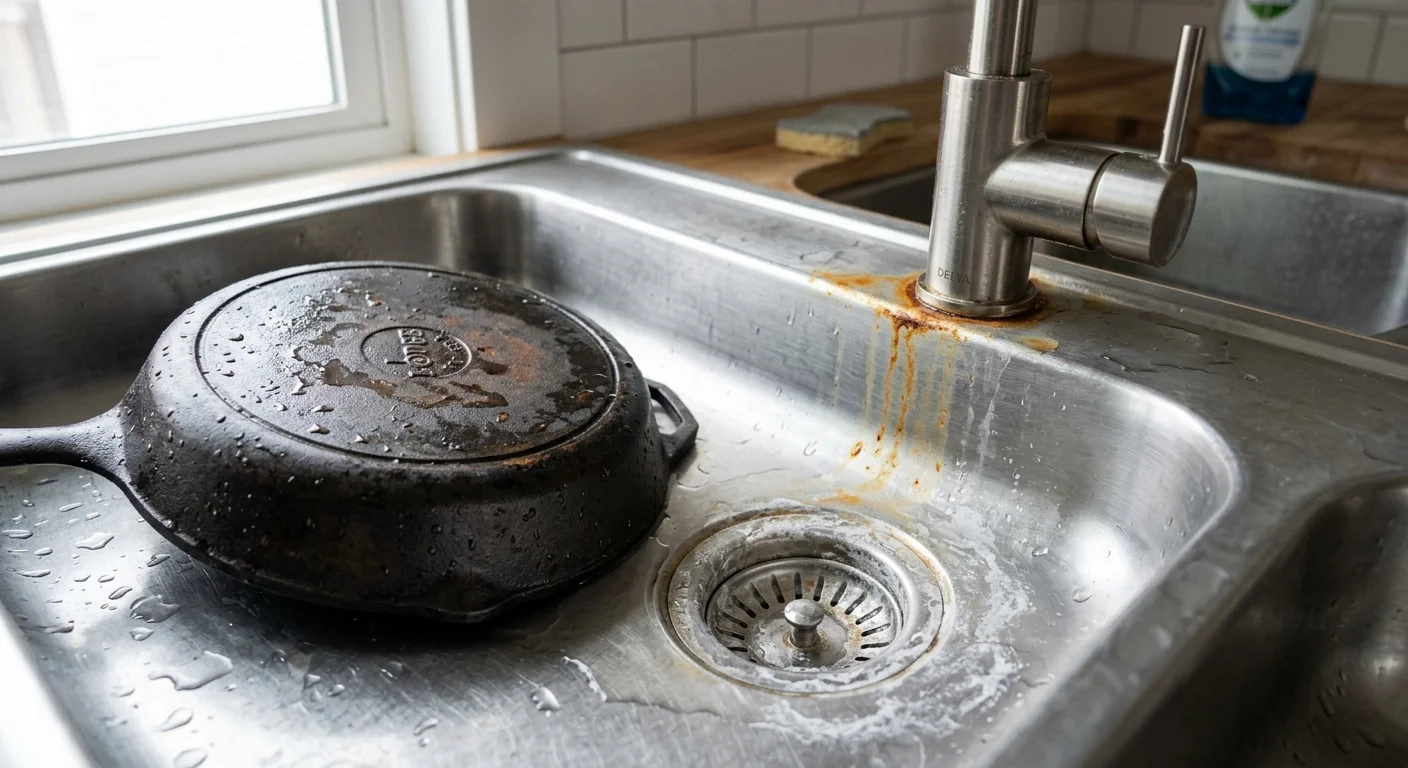
Stainless steel isn’t actually rust-proof; it’s just highly rust-resistant. Its secret weapon is an invisible, microscopic layer of chromium oxide on the surface. As long as that film is intact, the steel can self-heal and stay shiny. But when that defense breaks down, rust takes over.
The two most common culprits are:
- Surface Oxidation (The Broken Defense): Prolonged exposure to standing water, salt, or chlorine/bleach-based cleaners will eat away at that protective layer.
- Contact Rust (The Hitchhiker): This is actually the most common scenario. The rust you see might not even belong to the stainless steel. It’s often just rusting iron particles left behind by a wet cast iron pan, cheap utensils, or a steel wool pad sitting on the surface.
Crucial: What NOT to Do Before You Start Remove Rust from Stainless Steel
Put down the scouring pad and step away from the heavy-duty spray! More often than not, permanent scratches and dull spots on stainless steel are caused by people trying to clean it the wrong way. Before you start, you must remember these four golden rules:
- Never use steel wool: This is the deadliest mistake. It leaves microscopic carbon steel shards embedded in your stainless surface. Those shards will aggressively rust on their own, making the problem ten times worse while leaving permanent scratches.
- Step away from bleach and chlorides: Chlorine is the natural enemy of your chromium oxide layer. It will literally eat away at your stainless steel on a molecular level.
- Never scrub across the grain: Look closely at your stainless steel; it usually has a brushed directional grain. You must always wipe with the grain. Scrubbing across it will carve tiny scratches into the finish, dulling the shine and creating perfect little traps for dirt and future rust.
- Don’t skip the final rinse and dry: Whether you use vinegar or a commercial cleaner, they are all acidic. If you let leftover acid air-dry, it will continue to etch into the metal. A thorough rinse and an immediate wipe-down with a dry cloth are non-negotiable if you want to keep the rust from coming right back.
Fast Removal Methods by Severity (Fast DIY Methods)
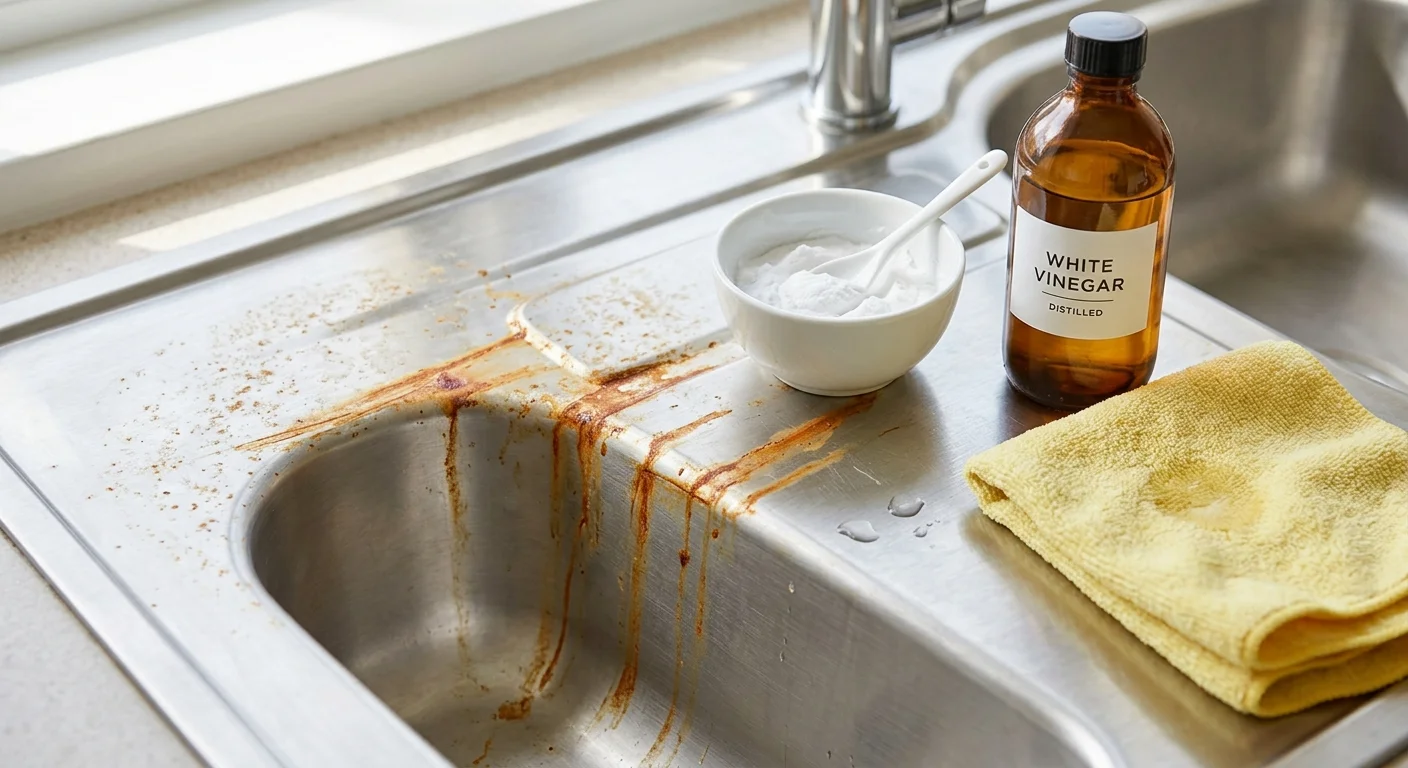
Removing rust from stainless steel isn’t a one-size-fits-all job. A faint spot by the sink takes five minutes, while restoring outdoor furniture requires a completely different approach.
The rule is simple: to work fast, match your tool to the scale of the job. The wrong method guarantees wasted hours or a scratched surface.
To save you from trial and error, we’ve broken the solutions down into four progressive levels—ranging from everyday kitchen staples to modern tools for larger projects. Find your tier and get to work.
Level 1: Light Rust Stains (Surface Discoloration, Fresh Spots)
This is the easy win. Light rust shows up as a faint orange tint — maybe a ring where a wet utensil sat, or a thin streak running down from a faucet fitting. The chromium oxide layer is barely touched. No harsh chemistry needed here. Just mild abrasion and a little patience.
Baking soda paste is your first call.
Here’s how to do it:
- Mix two tablespoons of baking soda with just enough water to form a thick paste — think peanut butter, not soup.
- Put the paste onto the rust stain with your fingers or a soft cloth.
- Let it sit for 10–15 minutes. Don’t rush this part. The mild alkalinity needs time to lift the iron oxide.
- Scrub with the grain using a soft-bristle toothbrush or a microfiber cloth. Never across it.
- Rinse with clean water.
- Dry right away with a clean towel.
That’s it. For fresh rust stains, baking soda rust removal on stainless steel works on the first try most of the time. No fumes, no damage risk, costs almost nothing.
What to expect: The stain lifts clean. The surface stays matte and smooth. Light residue left behind? A second pass handles it.
Didn’t work? Don’t jump to something harsher yet. Add a few drops of dish soap to the paste and try again. A light stain sometimes has a thin grease layer on top. That grease blocks the baking soda from reaching the rust.
Level 2: Moderate Rust Stains (Established Discoloration, Multiple Spots)
Moderate staining means the rust has had time to settle in. You’re looking at deeper orange-brown patches, clusters of spots, or staining that baking soda couldn’t clear. The chromium oxide layer has taken real damage in those spots.
White vinegar is the right move here. The acetic acid in vinegar dissolves iron oxide without scratching the surface — which is what you need after baking soda paste falls short.
How to use vinegar to remove rust from stainless steel:
- Pour undiluted white vinegar onto the stained area. Or soak a paper towel in vinegar and lay it flat over the rust.
- Leave it for 10–30 minutes based on how deep the staining is. Check at the 10-minute mark — slight fizzing or a color change means it’s working.
- Don’t leave vinegar on past 30 minutes. The acid stops removing rust and starts etching the surface.
- Scrub with the grain using a soft cloth or non-scratch pad.
- Rinse the surface. Get every trace of vinegar off.
- Dry right away.
For stainless steel sink rust clustered around a drain or faucet base, the paper towel soak method is your best option. It holds the vinegar in contact with the stain instead of letting it run off.
Combination approach (for stubborn moderate stains):
Some rust at this level needs a one-two punch. Put vinegar on first for 10 minutes, then layer baking soda paste on top. The two react together — yes, it fizzes, that’s fine. The baking soda adds mild scrubbing action while the vinegar handles the acid lift. Rinse well after. This combo clears most stainless steel corrosion jobs that either ingredient can’t finish on its own.
What to expect: Most moderate stains clear in one treatment. Older, denser spots may need a second round.
Level 3: Heavy or Set-In Rust (Deep Staining, Pitting, Large Surface Area)
Heavy rust is where DIY options start to hit their limits — but they haven’t hit them yet. Before buying a commercial rust remover for stainless steel appliances, try one more household option: Bar Keepers Friend.
It’s sold as a commercial product, but it costs under $5 and sits in more kitchen cabinets than most people expect. The secret to how to remove rust from stainless steel fast is its active ingredient: oxalic acid — the same compound found in professional stainless steel cleaning formulas — at a concentration safe for home use.
How to use it:
- Wet the stainless steel surface first.
- Sprinkle Bar Keepers Friend powder onto the rust. Use the liquid version for more precise application.
- Work it into a thin paste with a damp cloth.
- Let it sit no longer than 1 minute for regular stainless. For severe rust on a stainless steel sink, up to 2 minutes is fine — but keep an eye on it.
- Scrub with the grain using a non-scratch pad for flat surfaces and a toothbrush for edges and tight areas.
- Rinse the surface and dry right away.
At this concentration, oxalic acid handles surface oxidation that vinegar and baking soda can’t touch. It works especially well on stainless steel cookware with heat-discolored rust and on sink basins with years of contact rust from cast iron.
For large surface areas — a full sink basin or a stainless steel refrigerator door — work in sections. Don’t cover the whole surface at once. Rinse each section before moving to the next. That stops the acid from sitting on already-clean areas while you tackle the problem spots.
Level 4: Large-Scale or Stubborn Rust (The Pro-Level Game Changer)
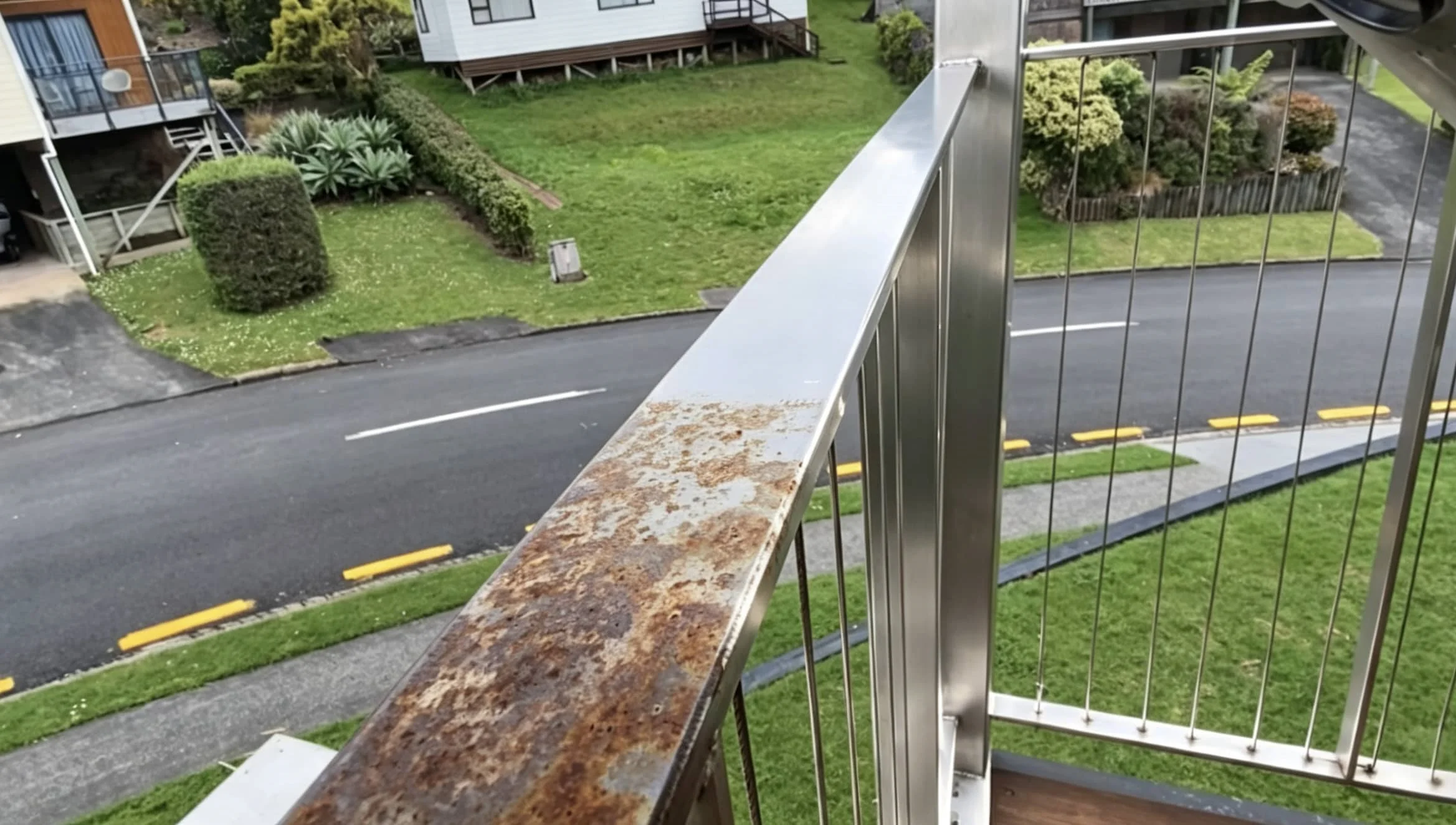
Large-scale rust is where elbow grease officially hits its limit. If you’re tackling 50 feet of outdoor railing or a weathered commercial BBQ rig, sponges and acids won’t cut it. Scrubbing by hand isn’t just murder on your wrists—it’s hopelessly inefficient.
Before you waste hours wringing out acid-soaked rags, it’s time for some “light” work: portable laser cleaning. It sounds like sci-fi, but the logic is exactly the same: lift the rust without harming the steel. While baking soda relies on abrasion and vinegar on soaking, laser cleaning relies on vaporization.
How to use it:
- Point the laser head directly at the rusted surface.
- Sweep the beam steadily across the metal.
- Watch as the rust and grime instantly absorb the specific wavelength of the light beam and vaporize into thin air.
- Keep the beam moving. Because stainless steel is highly reflective, the healthy metal underneath acts like a mirror to the light, leaving it completely untouched and undamaged.
- Wipe or blow away any dry residual dust. No rinsing or drying required.
Elbow grease has its limits. For massive jobs like 50 feet of railing or a commercial BBQ, hand-scrubbing is just wrist torture. Skip the rags and meet portable laser cleaner. It sounds like sci-fi, but the goal is the same: strip the rust, save the steel. Baking soda scrubs, vinegar soaks, b 7t lasers vaporize it.
You wouldn’t use it on a toaster, but for major renovations, it’s a cheat code that turns hours of sweating into seconds. No chemicals, no waiting, zero mess. Just sweep the beam, and the original shine comes right back. For huge projects, this is what “fast” really means.
Prevention Tips: Keeping Stainless Steel Rust-Free for Good
Removing rust is satisfying. Preventing it is smarter.
The stainless steel you just cleaned will rust again — unless you change a few habits. None of them are complicated. Most take under two minutes.
Dry It. Every Time.
Standing water is the primary villain here. Wash your sink, wipe your appliances, rinse your cookware — then dry the surface right away with a clean cloth. That one habit cuts your rust risk by a lot. Moisture sitting on the surface is what triggers almost every rust stain that comes back after cleaning.
The same logic applies to what you store on your stainless surfaces. Cast iron pans, metal canning lids, steel utensil holders — anything that traps moisture against the steel overnight is a rust stain waiting to form.
Apply a Protective Coating After Cleaning
A clean, dry surface is the right moment to add a thin protective layer. For stainless steel appliances and sinks, use a light coat of mineral oil or a dedicated stainless steel polish. This builds a barrier between the steel and common aggressors — hard water, salt, and humidity.
WD-40 works in a pinch for tools and hardware, but it fades within weeks. Pair it with a proper rust inhibitor for high-humidity spaces or coastal areas. That combo holds up much longer.
Control the Environment Around Your Steel
A humid kitchen or workspace — above 60% relative humidity — speeds up surface oxidation. The moisture in the air works against your steel every day. Place a small dehumidifier near problem areas. It cuts rust risk and costs far less than repeated deep cleaning.
What to Skip
Don’t paint over rust without removing it first. Don’t lean on WD-40 alone as a long-term fix. Both are short-term patches that create bigger problems within months.
The maintenance math is simple: a two-minute dry and wipe after every use prevents the 20-minute rust removal job next month.
Conclusion
Rust on stainless steel feels like a betrayal—this is the metal that isn’t supposed to do this. But now you know the truth: it can, it does, and you can fix it fast.
The real win is picking the right tool for the job. Light surface oxidation? A baking soda paste and five minutes does it. For those big outdoor projects that feel endless, a portable laser cleaner can turn hours of scrubbing into a few seconds of work. The specific method matters less than just getting in there and doing it right.
Just remember: prevention is always easier than removal. Dry it after use, store it properly, and check it now and then.
Now, close this tab and go fix that sink. And if you’re staring down a massive project or a piece of equipment that feels like too much for a sponge, don’t sweat it—reach out to our team today. We’ve got the pro-grade tools to help you bring that original shine back in no time.