
In industries such as industrial hardware processing, auto parts rework, mold renovation and metal repainting, cured powder coating features strong adhesion and dense hardness. Ordinary manual grinding or simple scraping cannot remove the coating completely. Residual coating or local peeling will directly ruin the adhesion and appearance of subsequent repainting.
Many factories and workshops initially rely on traditional removal methods, which are either time-consuming, labor-intensive, or cause workpiece damage and repeated rework, greatly increasing labor and time costs. To remove powder coating efficiently and safely without scrapping workpieces, choosing the right process is far more important than blind operation.
Comparison Table of Four Powder Coating Removal Methods
|
Method |
Best For |
Metal Safe? |
Speed |
Surface Damage Risk |
|---|---|---|---|---|
|
Chemical Stripping |
Detailed parts, heat-sensitive metals |
Aluminum ✓, Steel ✓ |
Slow–Medium |
Low (if rinsed properly) |
|
Abrasive Blasting |
Bulk steel parts, heavy coatings |
Steel ✓ |
Fast |
Medium (profile change) |
|
Thermal Burn-Off |
Large steel batches |
Steel only |
Fast |
High (aluminum warps) |
|
Laser Stripping |
Precision work, aluminum, partial removal |
All metals ✓ |
Fast |
None |
Method 1: Chemical Stripping – For Complex Geometries & DIY
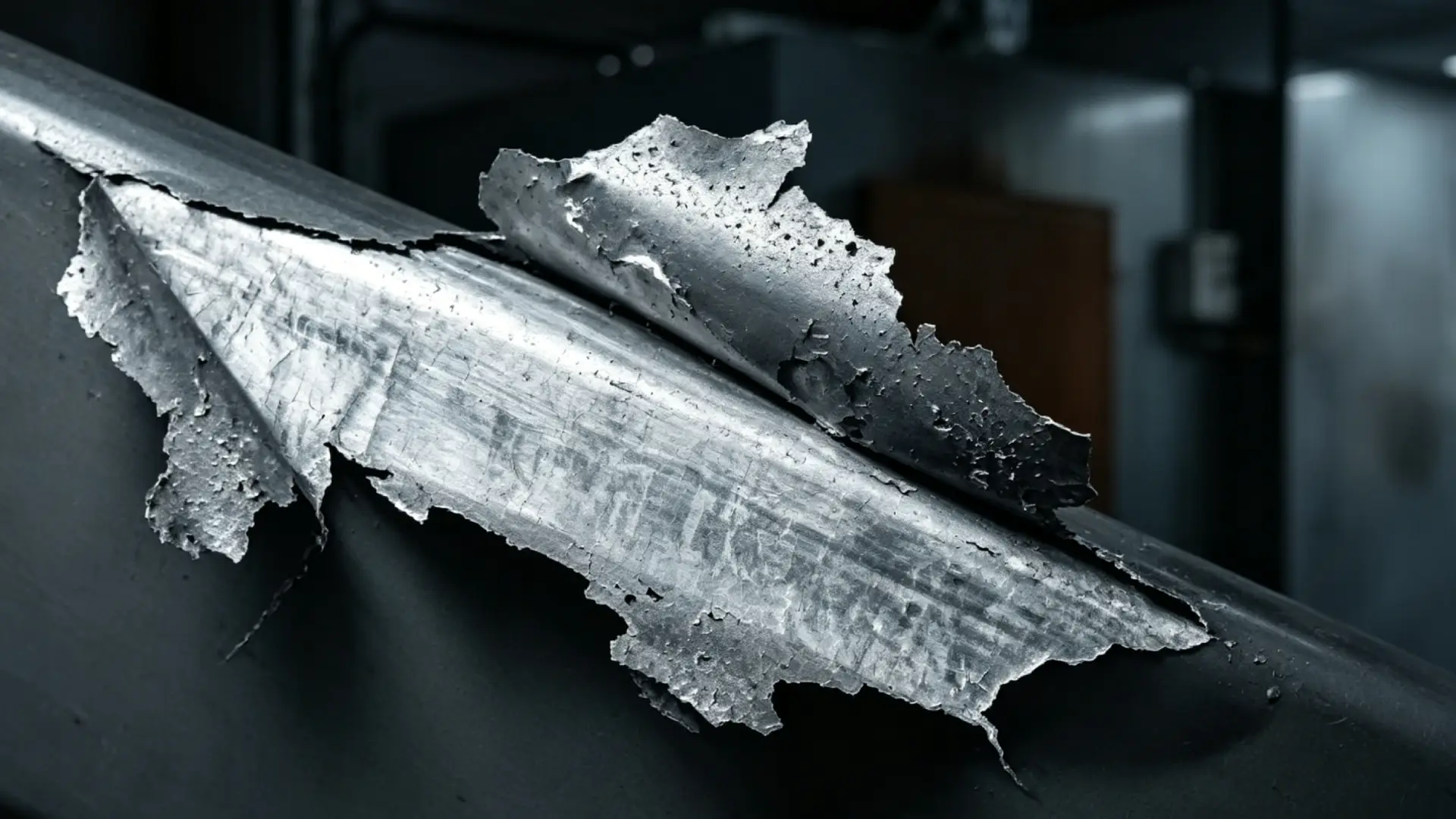
Chemical stripping is the most widely adopted method for small-batch and complex-shaped workpieces. Professional industrial coating remover penetrates into the powder coating, breaks the bonding force between the coating and metal substrate, and makes the entire coating bubble, wrinkle and fall off without violent physical grinding or impact.
Its biggest highlight is no limitation on workpiece shape. For parts with deep holes, threaded teeth, narrow gaps, curved irregular surfaces or enclosed inner cavities that blasting and high-temperature treatment cannot reach, chemical stripping can fully penetrate and clean powder coating from all dead corners thoroughly.
The operation process is mature and easy to follow. First, thoroughly remove oil, dust and dirt from the workpiece surface to ensure full adhesion and infiltration of the stripping agent. Apply a thick layer of remover on the coating; large workpieces can be soaked directly. For complex parts, wrap with plastic film to lock temperature and speed up chemical reaction. Once the coating bubbles and bulges completely, peel it off easily with a plastic scraper or high-pressure water gun, then perform neutralization cleaning, drying and rust prevention.
In terms of material compatibility, it works safely on carbon steel, aluminum alloy, galvanized sheet and castings. With controlled agent concentration and soaking time, it will not corrode the substrate, cause pitting oxidation, or damage original dimensional precision.
However, it also has obvious drawbacks. Thick powder coating cannot be removed in one pass and requires repeated application, standing and cleaning, leading to long overall processing time. The process produces slight chemical odor and requires well-ventilated workshops. Waste liquid and used chemicals must be disposed of in line with industrial environmental standards and cannot be discharged randomly. It cannot keep up with the efficiency of blasting or pyrolysis for large-scale assembly line production, making it more suitable for equipment maintenance, small-batch customization and special-shaped precision small parts.
Method 2: Abrasive Blasting – Fast but Aggressive for Batch Steel
Abrasive blasting is the most popular physical coating removal method in industrial workshops. High-pressure airflow drives abrasive particles to hit the workpiece surface at high speed, stripping the cured powder coating thoroughly while removing rust and oxide scale, finishing coating removal and surface preparation in one procedure.
A variety of abrasives are available. Aluminum oxide and steel grit are preferred for carbon steel with thick coatings due to strong impact and high stripping efficiency. Glass beads and walnut sand are used for aluminum alloy and soft metals to reduce surface scratches and erosion. For workpieces with specific surface roughness requirements, different mesh abrasives can create matte and frosted textures perfect for subsequent repainting.
Its advantages are obvious: low entry threshold and high equipment popularity. It supports continuous operation and is ideal for large batches of flat and integral workpieces with low labor costs per unit. It remains the top choice for ordinary steel structures, engineering machinery parts and profile frame coating removal.
It also has inevitable limitations worth noting. First, precise local removal is impossible. Any area covered by the blasting spray will be polished, so it cannot retain intact coating while cleaning only defective parts. Second, it is unsuitable for threaded parts, bearing positions and precision tolerance components, as blasting will wear threads and assembly dimensions and cause workpiece scrap. Third, thin aluminum plates and stainless steel sheets are prone to impact deformation and surface dents. Fourth, heavy dust is generated during operation, requiring complete dust removal and environmental protection equipment as well as full protective gear for operators.
Overall, abrasive blasting is only suitable for ordinary steel structural parts that do not require high precision tolerance and allow slight surface abrasion with full overall coating removal. It is not recommended for precision parts, aluminum parts or special-shaped components.
Method 3: Thermal Burn-Off – Fastest for Bulk Steel, Risky for Aluminum
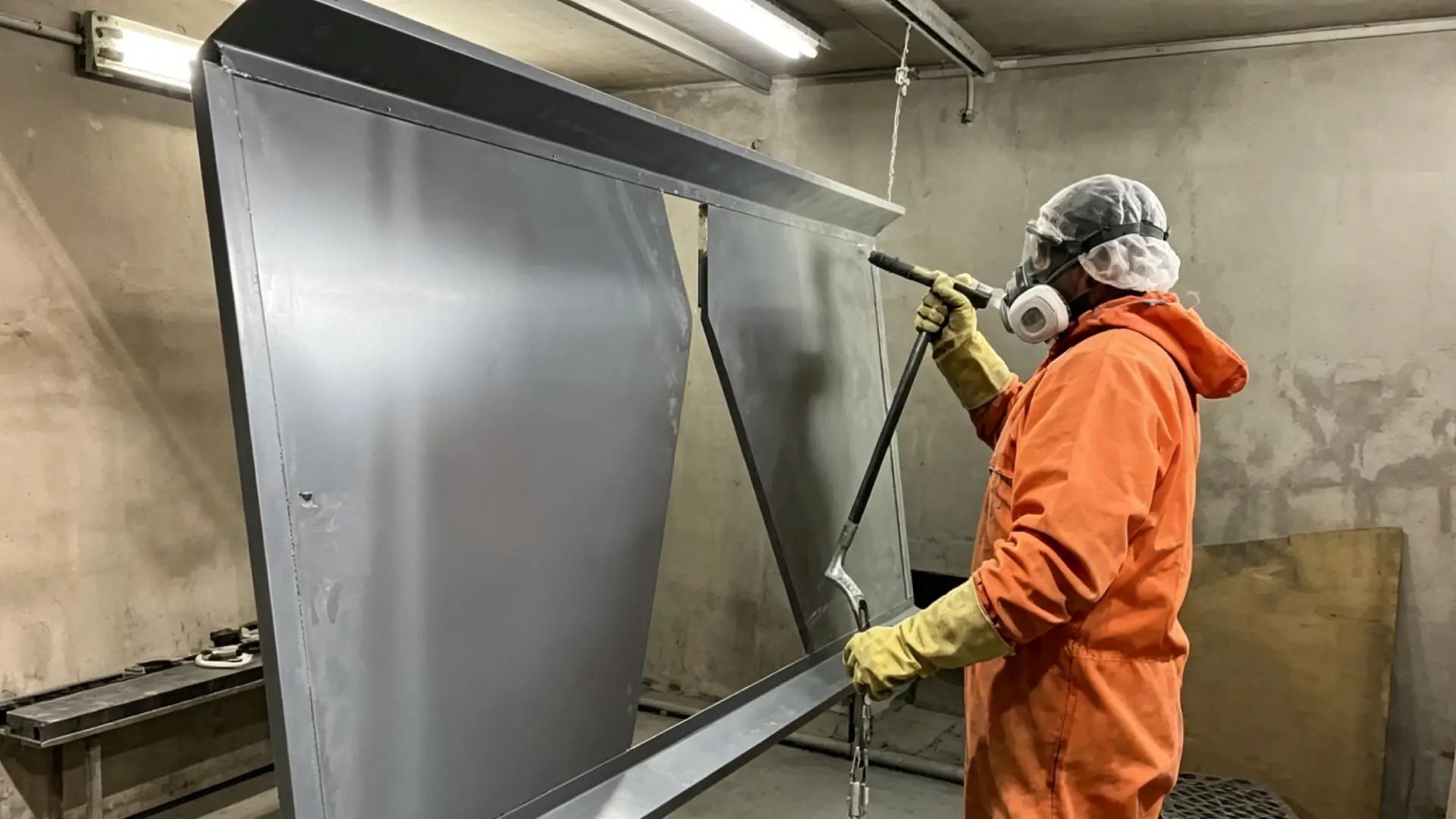
Thermal pyrolysis is an industrial-grade mass stripping process. Workpieces are placed in a professional high-temperature pyrolysis furnace under controlled low-oxygen conditions, allowing the surface powder coating to gradually carbonize, decompose and burn into ashes, which can be removed easily by simple air blowing and cleaning.
This method is designed for large-scale mass production scenarios, ideal for heavy steel structures, standard profiles and mass general hardware parts. A large number of workpieces can be loaded in one batch without manual piece-by-piece operation, perfectly matching assembly line production. The unit cost remains low for long-term mass processing with no chemical residue and simple post-cleaning procedures.
However, it has extremely strict material restrictions and is only applicable to carbon steel and cast iron. Aluminum alloy, magnesium alloy and thin-walled metal parts are absolutely prohibited. High temperature will directly change the internal structure of aluminum materials, causing severe distortion, reduced strength and surface oxidation peeling, resulting in complete workpiece scrap. Even for steel parts, prolonged high-temperature burning may lead to material annealing and hardness reduction, so load-bearing parts with mechanical performance requirements must be used with caution.
In addition, thermal pyrolysis requires high equipment investment, large floor space, professional furnace body, temperature control system and flue gas treatment devices, making it unnecessary for small processing factories. It consumes high energy with long heating and cooling cycles, unsuitable for scattered small orders and emergency rework. It is only suitable for large factories with fixed product categories and regular mass processing demands.
Method 4: Laser Stripping – Precise, Substrate-Safe, Universal for Metals
With traditional stripping methods all having limitations in material and scenario adaptation, laser coating removal has become the top choice for precision parts, high-end rework, aluminum alloy components and high-tolerance industries.
Fiber laser outputs precise energy, acting only on the powder coating surface to instantly gasify and peel off the coating. The energy is strictly controlled within the threshold to remove coating while keeping the metal substrate completely unharmed, fundamentally solving the problems of material damage, deformation and precision loss caused by traditional methods.
Compared with chemical stripping, blasting and pyrolysis, its advantages are irreplaceable:
First, precision fixed-point removal. It only cleans defective coating locally while keeping intact areas untouched, no shielding or full rework required — perfect for mold surfaces, precision accessories and partial rework pieces.
Second, universal compatibility with all metals. It works safely on carbon steel, aluminum alloy, copper alloy, thin-walled shells, precision castings and aerospace hardware with no deformation, corrosion or dimensional tolerance change.
Third, no consumables, no waste liquid. No chemicals, abrasives or fuel needed. The whole process produces no dust, wastewater or exhaust gas, fully complying with environmental regulations.
Fourth, strong automation adaptability. It can connect with robotic arms and assembly lines to match factory production rhythm, and also support handheld flexible operation for both large special-shaped workpieces and tiny precision parts.
The only disadvantage is higher initial equipment investment than traditional processes. However, in the long run, zero consumable cost, zero workpiece scrap rate and reduced rework cost bring higher overall cost performance, especially suitable for high-end manufacturing, precision molds, automotive aluminum alloy parts and medical equipment components.
What Laser Stripping Does That Nothing Else Can
-
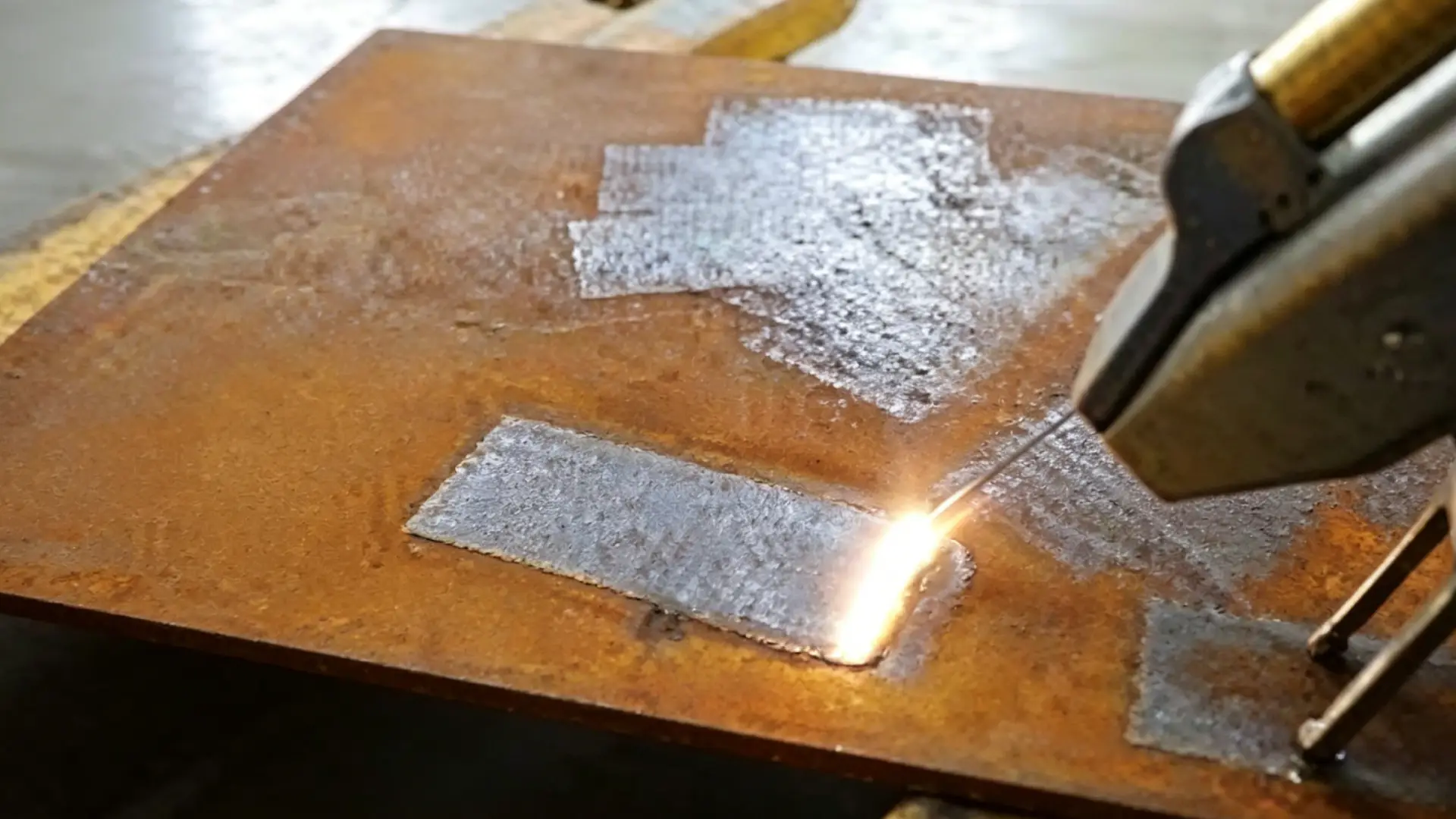
Partial removal on live surfaces – Strip one zone, leave the area next to it untouched. No masking needed.
-
Precision parts stay precise – Engine internals, machined bores, tight-tolerance aerospace components. Remove a 40-year rust layer without touching the base material beneath.
-
All metals, no exceptions – Steel, aluminum, copper. Burn-off fails on aluminum. Laser stripping doesn’t.
-
Layer-specific control – Systems with LIBS read each layer in real time. Strip the topcoat. Leave the primer. Stop exactly where you want.
Conclusion
Chemical stripping excels at special-shaped complex parts and small-batch rework with flexible performance and zero substrate damage. Blasting features fast speed and low cost for mass full-surface treatment of ordinary steel parts. Thermal pyrolysis dominates large-batch production of heavy steel structures but comes with strict material limits. Laser coating removal delivers unmatched advantages in precision processing, aluminum alloy parts, thin-walled components and fixed-point local stripping, balancing precision, safety and environmental protection.
If your workpieces are mainly aluminum alloy, precision hardware and mold parts, and you pursue non-destructive coating removal without deformation, scrap or repeated rework, professional laser cleaning equipment is the optimal long-term choice.
Maxwave has years of experience in R&D and manufacturing of laser cleaning and coating removal equipment. We provide complete mature solutions for metal surface stripping, rust removal and renovation. Our equipment features simple operation and stable performance, fully meeting industrial demands for powder coating cleaning. If you have needs for batch processing or equipment consultation, feel free to contact Maxwave for customized professional process solutions.