
Rust oxidation is the biggest enemy of farm equipment, easily damaging plow blades, tractor fittings, cutter blades and other core parts, affecting farming progress and shortening the service life of mechanical equipment. Traditional manual and chemical derusting methods have obvious flaws in efficiency, cost and protection of machine parts. To help farmers and equipment maintenance personnel quickly solve corrosion problems, this article sorts out four practical conventional derusting methods, and introduces the advanced industrial laser rust removal technology that is widely used in modern farm equipment maintenance, providing efficient and long-term derusting solutions.
Rust Removal Methods Quick Comparison
|
Method |
Best For |
Time |
Cost |
Scrubbing Needed |
|---|---|---|---|---|
|
Vinegar Soak |
Small parts, light-to-medium rust |
12-24 hrs |
<$5 |
Yes |
|
Baking Soda Paste |
Large flat panels, light surface rust |
<30 min – overnight |
~$0 |
Yes |
|
Oxalic Acid Soak |
Heavy rust on plow shares |
12-24 hrs |
$10-15 |
Minimal |
|
Laser Cleaning |
Any rust, emergency repairs, non-removable parts |
Minutes |
One-time equipment cost |
No |
Conventional household and chemical methods are suitable for small-batch, occasional and low-budget derusting scenarios, but they generally have low efficiency, large manual dependence or part damage risks. In contrast, laser rust removal breaks through all the limitations of traditional processes, compatible with all rust degrees and all farm equipment parts, with higher efficiency and no damage to equipment, becoming the mainstream industrial derusting method for modern agricultural machinery.
Identify the Rust Level First, Then Pick the Method
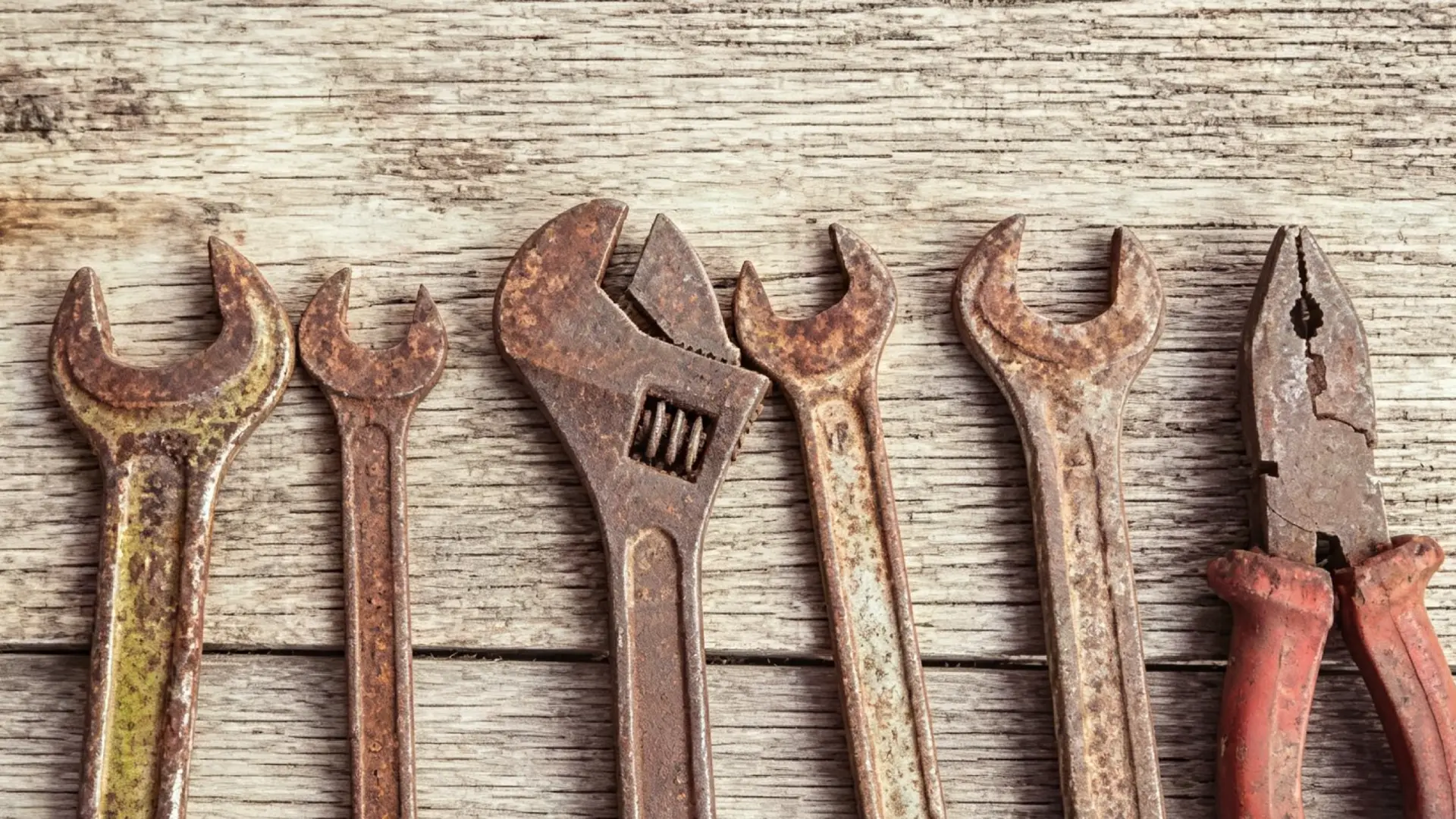
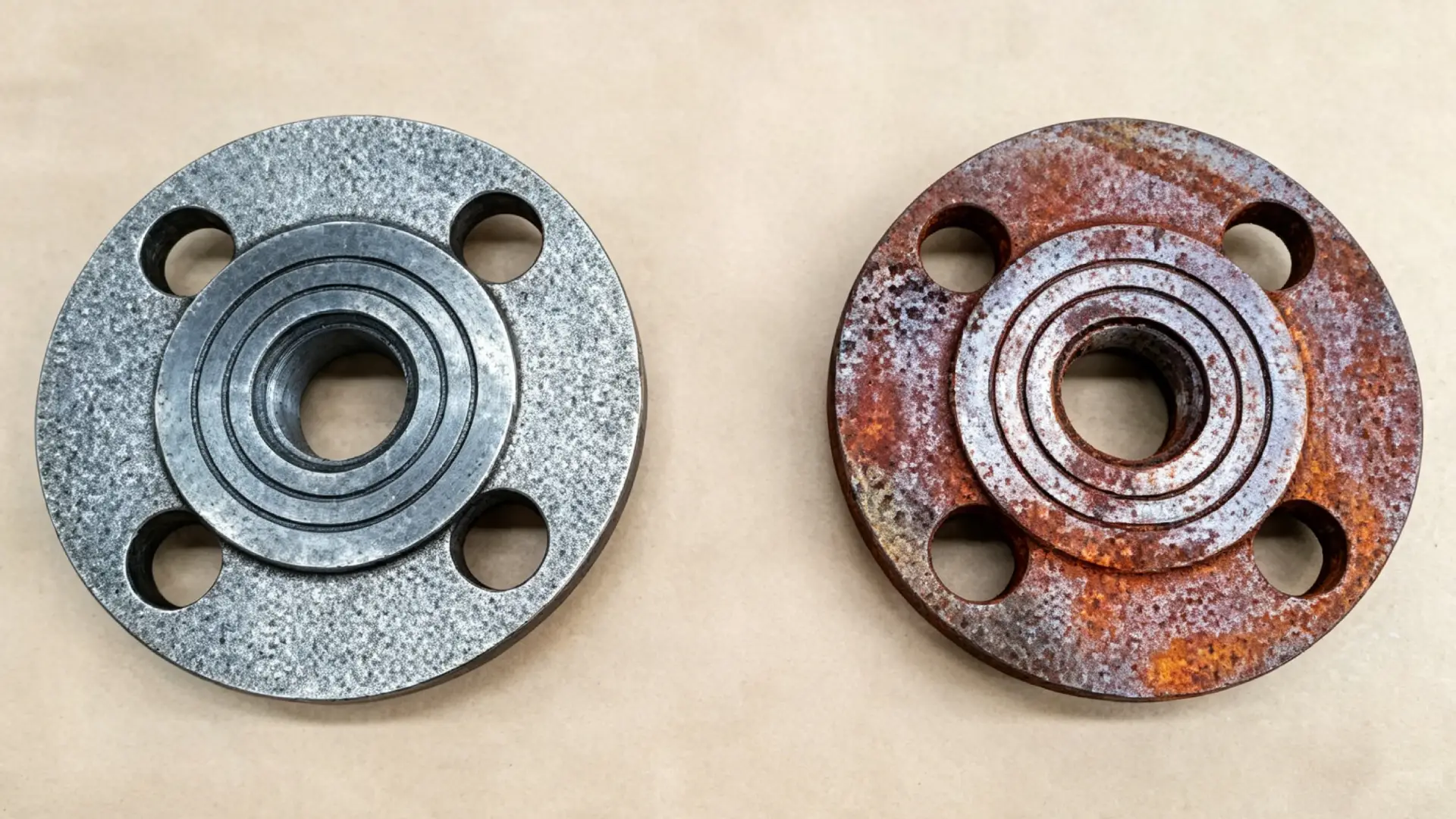
Run your hand over it. Flat and discolored? Surface rust – quick fix. Rough and flaky with bubbling paint? Scale rust – the base metal underneath is already exposed. Soft spots with visible pitting? Penetrating rust – you’re fighting to save the part. Choose the method that matches the damage.
Method 1: Vinegar Soak – Small Parts, Light-to-Medium Rust
Steps: Fully submerge the part in white vinegar. Add 2 tablespoons of salt per gallon. Soak 12-24 hours (medium rust needs closer to 48 hours). Remove and scrub with a wire brush. Rinse with water, then neutralize in a baking soda solution (2 tablespoons per gallon of water) for 10 minutes. Dry immediately. Apply oil for protection.
Pros: Very low cost, found in every kitchen, hands-off during soak.
Cons: Cannot exceed 48 hours – acid starts pitting the base metal. Requires scrubbing and neutralization. Large parts need a large container.
Best for: Plow fittings, nuts, bolts, small blades – removable small parts.
Method 2: Baking Soda Paste – Large Flat Panels, Light Surface Rust
Steps: Mix baking soda and water into a thick paste (1:1 by volume). Spread onto the rusted area. Light rust: wait 15-30 minutes. Thicker surface rust: leave overnight. Scrub firmly with an abrasive sponge – rust flakes off within a minute. Rinse and dry.
Pros: Nearly zero cost, already in your kitchen. Very convenient for large flat panels.
Cons: Only works on surface rust. If the metal is pitting or feels soft, this method won’t work. May lift old paint.
Best for: Large metal panels, hoe blades, parts too big to submerge in a container.
Method 3: Oxalic Acid Soak – Heavy Rust, Plow Shares & Thick Parts
Steps: Pre-clean the part. Mix 1 part oxalic acid crystals with 10 parts hot water until dissolved. Fully submerge the part for 12-24 hours (heavy rust needs the full 24). Immediately rinse after removal – bare metal will flash-rust within minutes. Dry and apply rust inhibitor or oil right away.
How it works: Oxalic acid converts iron oxide (rust) into water-soluble iron oxalate, which rinses away clean – minimal scrubbing required.
Pros: Chemical conversion of rust, almost no scrubbing needed. Effective on deep pitting. Lower cost than commercial rust removers.
Cons: Requires ventilation, gloves, and eye protection. 12-24 hour wait time. Requires neutralization.
Best for: Plow shares, axle housings, tough ferrous parts where scrubbing can’t reach the damage.
Method 4: Laser Cleaning – Any Rust, Fastest Speed, No Disassembly
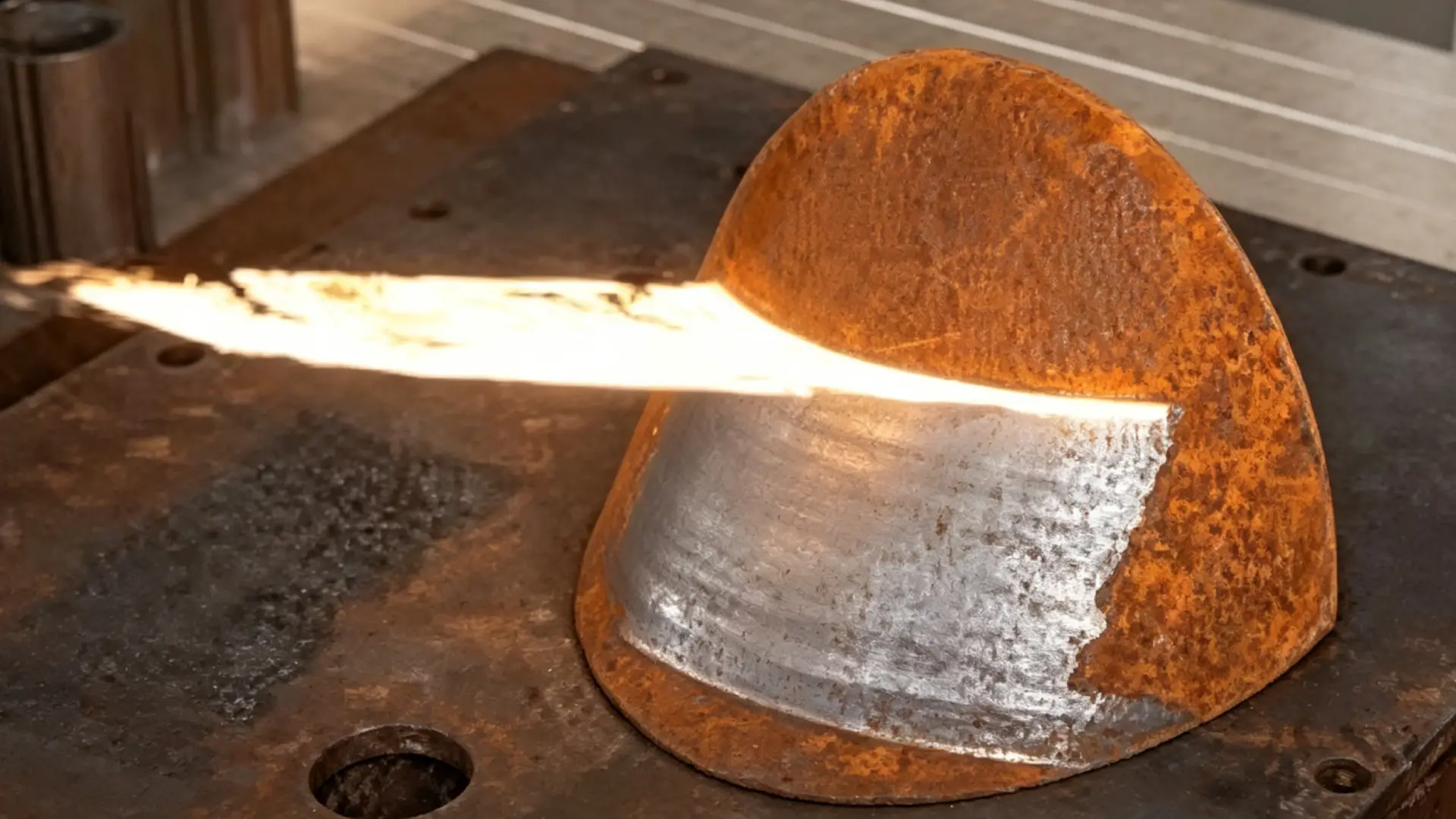
Steps: Point the laser cleaner at the rusted surface. Pull the trigger. The laser beam scans across the rusted area – the rust layer absorbs the energy and instantly vaporizes or turns to powder. The bare metal underneath reflects the beam and remains untouched. When done, the part is ready for oil or immediate use.
Pros:
-
No consumables – no vinegar, acid, baking soda, or wire brushes
-
No drying time – coat or use the part immediately after cleaning
-
No part size limit – large plow shares, tractor frames, combine headers all fit
-
No disassembly – clean rust on equipment that can’t be taken apart, including weld seams, tight joints, and corners
-
Minutes, not hours – what takes hours of soaking takes minutes with laser
Cons: One-time equipment investment. For very light surface rust, the cost isn’t justified compared to baking soda.
Best for: Any rust severity; emergency repairs when parts must go back the same day; large equipment that can’t be disassembled; fast turnaround on coating rework.
Aiming at the various pain points of traditional derusting methods such as low efficiency, limited application and easy damage to equipment, laser cleaning machine has become an upgraded alternative for farm equipment rust removal, which perfectly adapts to all agricultural machinery maintenance scenarios. Relying on high-precision laser technology, the equipment uses high-energy laser beams to instantly peel and vaporize rust, oxide layers and attachments on the surface of farm machinery parts.
Different from chemical soaking and mechanical scrubbing, laser rust removal requires no chemical materials, no manual polishing, no contact with the equipment surface, and will not cause wear, deformation or secondary damage to the base metal of plow shares, tractor parts and precision components. It can efficiently clean light surface rust, thick scale rust and hidden gap rust, with a cleaning speed far exceeding traditional processes. In addition, the laser cleaning equipment is portable and flexible, suitable for field on-site derusting and large-scale batch maintenance of farm equipment, with zero pollution and no subsequent cleaning work.
For long-term farm equipment maintenance, laser cleaning has obvious cost advantages. It only needs one-time equipment investment, no repeated purchase of chemical potions and auxiliary tools, which greatly reduces the later maintenance cost, and effectively prolongs the service life of agricultural machinery.
Conclusion
Each traditional farm equipment derusting method has its own applicable scenarios but has obvious bottlenecks in efficiency, effect and applicability, which can only meet temporary and small-scale maintenance needs. For modern agricultural production that pursues high efficiency, low cost and zero loss, laser cleaning technology is the most ideal derusting solution, covering all rust levels and all equipment parts, helping farmers quickly complete equipment maintenance and ensure farming progress.
If you are looking for professional, efficient and durable laser cleaning machines for farm equipment rust removal, Maxwave is your reliable choice. As a professional laser equipment manufacturer with 15 years of industry experience, we provide high-performance customized laser rust removal solutions.