
Antique metal objects—from bronze sculptures and iron artifacts to silverware, brass ornaments, and historical metal components—carry irreplaceable historical and aesthetic value. Over decades or centuries, they commonly suffer from oxidation, rust, patina build-up, dirt, oil stains, and paint residues. Traditional restoration methods such as mechanical scraping, sandblasting, and chemical dipping often risk scratching surfaces, eroding fine details, leaving chemical residues, or causing secondary damage. CleanLaser laser cleaning has emerged as a gentle, precise, non-contact restoration solution ideal for antique metal care, helping conservators and collectors revive aged metal while preserving original texture and patina.
Why is it a Revolutionary Choice for Antique Restoration?
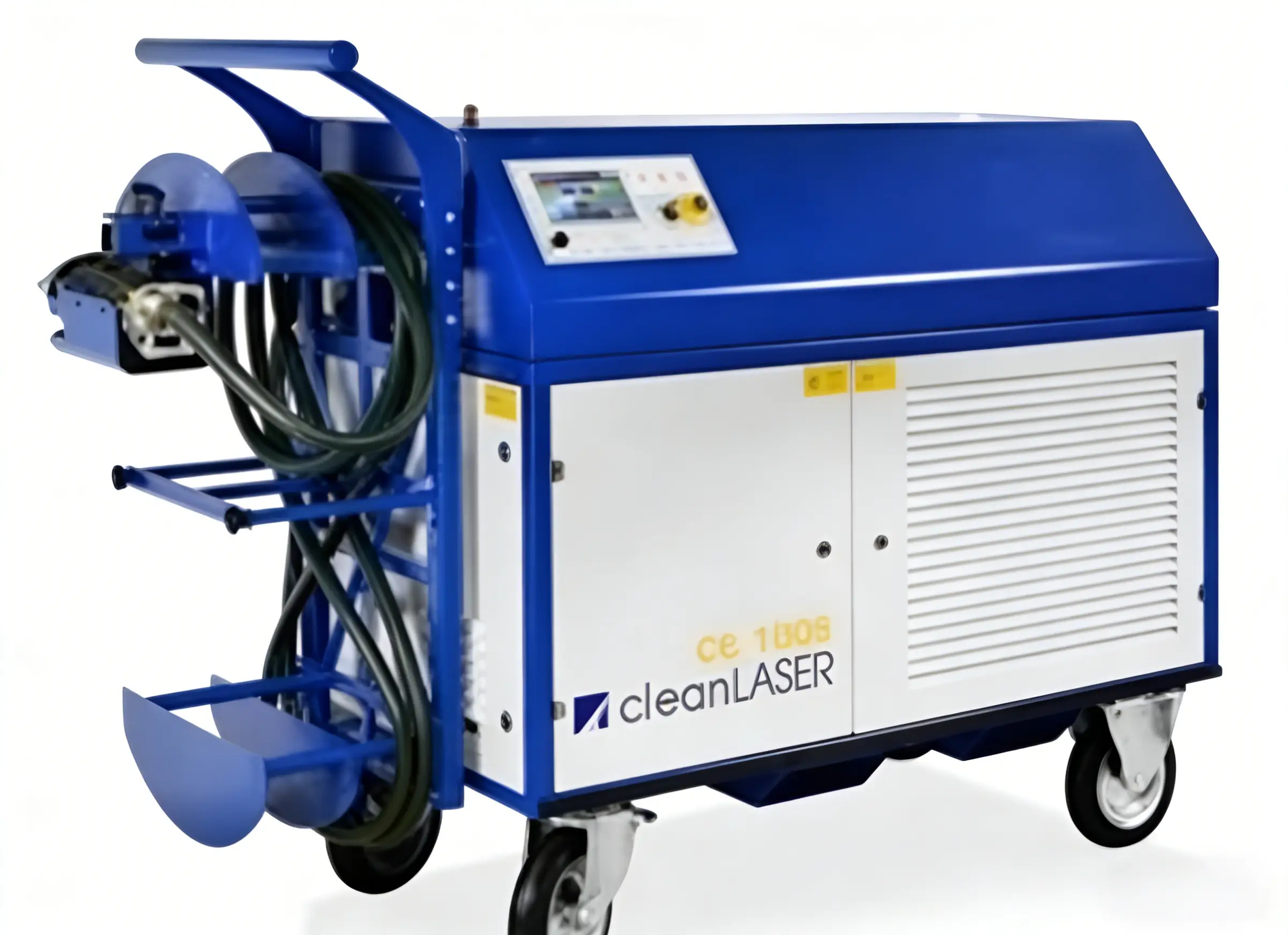
Laser cleaning, or laser ablation, operates on the core principle of using a high-energy, short-pulse laser beam directed at an object’s surface. Contaminants (such as rust, paint, grease) have a high absorption rate for the energy of a specific laser wavelength, while the base metal (e.g., copper, iron, silver) has a low absorption rate. In the instant of the laser pulse, the contaminant layer is rapidly heated, vaporized, or spalled off, while the base material, due to an extremely small heat-affected zone, remains virtually unaffected.
Absolute Advantages Compared to Traditional Methods:
- Non-contact Processing: The laser head does not touch the workpiece, completely eliminating the risk of scratches or deformation from physical friction.
- Ultimate Selectivity: Through precise parameter adjustment, it is possible to remove only the rust layer while completely preserving precious original patina or oxidation layers.
- No Chemical Residue: The entire process requires no chemical solvents, is environmentally friendly, harmless to the operator, and presents no subsequent chemical neutralization challenges.
- Remarkable Precision: Cleaning can be precise to the square millimeter, suitable for intricate patterns, inscriptions, enamel-filled areas, and other detailed sections.
- Digital Control: All parameters (power, frequency, scanning speed) can be set and repeated digitally, ensuring the controllability and reproducibility of the restoration process.
Essential Pre-Restoration Assessment and Preparation
The laser is a powerful tool, but successful restoration begins with meticulous preparation. Before powering on the system, the following steps are imperative:
- Artifact Condition Assessment:
- Material Identification: Determine the metal type of the object (e.g., bronze, iron, silver, gold alloy), potential inlays (e.g., gemstones, wood, enamel), and coatings (varnish, gilding).
- Pathology Diagnosis: Document in detail the types of contaminants (oxidation rust, soil crust, organic stains, old paint) and their distribution and thickness.
- Structural Stability: Check for any existing cracks or fragile joints; perform necessary physical stabilization first.
- Definition of Cleaning Objectives:
- Is the goal to clean thoroughly down to the bare metal substrate, or to partially preserve historical patina to maintain its aged character?
- Clearly define the boundaries of the area to be cleaned. Light marking with a removable pen can be used.
- Safety and Testing:
- Safety First: The operator must wear professional protective eyewear rated for the specific laser wavelength. The work area must be ventilated and equipped with a fume/dust extraction system.
- Parameter Testing: Testing on an inconspicuous area of the artifact or a sample of similar material is absolutely critical. Start with low power and high frequency, gradually adjusting to find the optimal combination that effectively removes contaminants without damaging the substrate. Record successful parameters for each material-contaminant combination.
Step-by-Step Operating Guide: From Local to Global
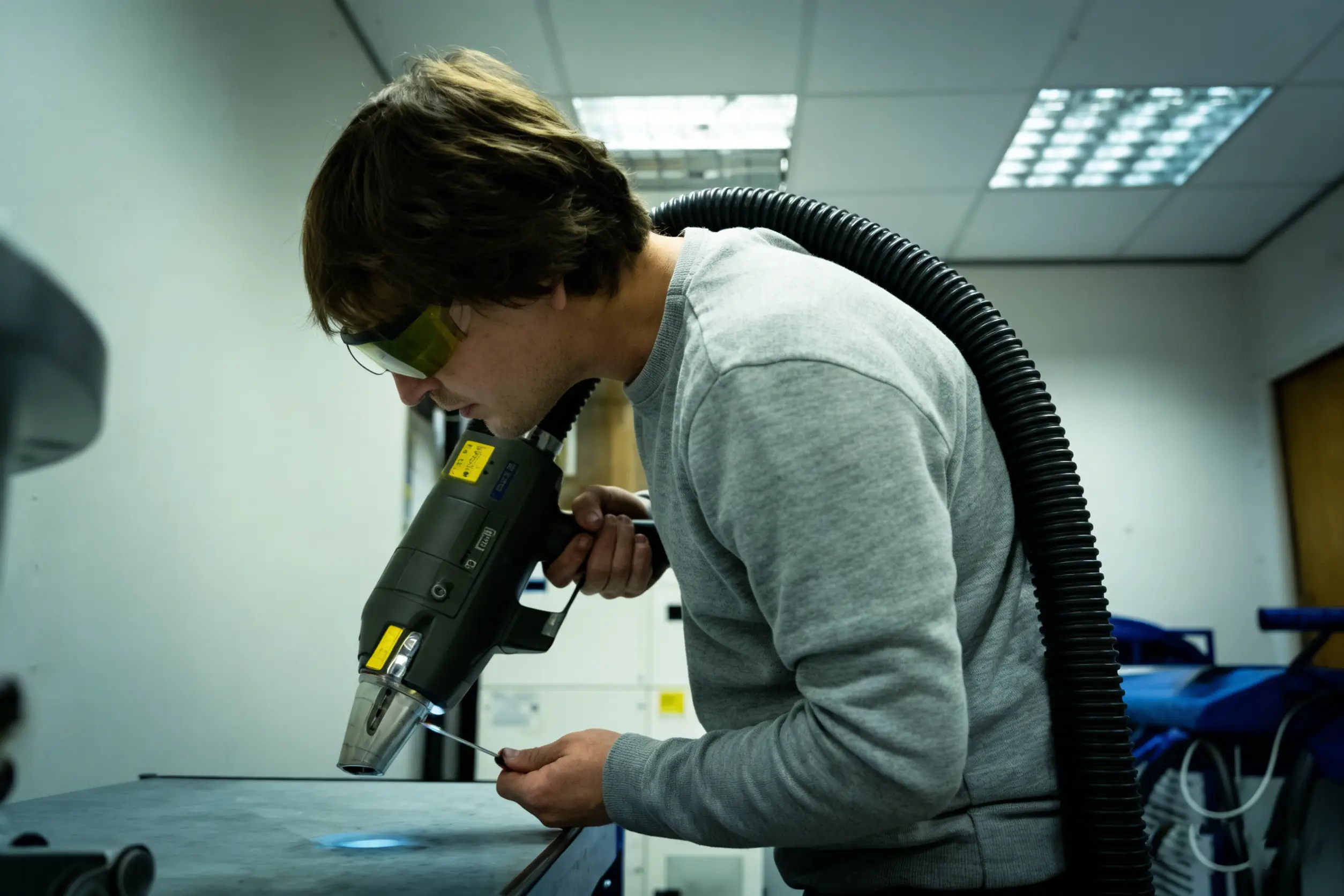
Follow the principle of proceeding from local to global, and from low-power testing to formal operation.
Step 1: Establish a Cleaning “Test Plot”
Select a small, inconspicuous area on the back or edge of the item for systematic parameter testing. Observe the cleaning effect, substrate reaction, and any color changes to confirm safe parameters.
Step 2: Zoned and Precise Cleaning
- For large areas of uniform corrosion, a raster scanning pattern can be used, maintaining constant speed and consistent overlap.
- For fine patterns or inscriptions, using a smaller laser spot is recommended. Control the path manually or with precision fixtures, working slowly. Microscope assistance may be necessary for highly detailed work.
- For layered contaminants (e.g., surface grease over iron rust), a phased approach with adjusted parameters for each layer may be required.
Step 3: Process Monitoring and Adjustment
Pause and inspect regularly during cleaning. Use a soft brush or blower to remove loosened particles and observe the cleaning depth. If the base material begins to change color or shows damage, stop immediately and reduce the parameters.
Step 4: Post-Cleaning Treatment
After laser cleaning, the surface is typically very clean. Depending on the final goal, options include:
- Stabilization Treatment: For iron artifacts, consider applying a minimal amount of corrosion inhibitor (e.g., Benzotriazole/BTA for copper) and allowing a stable oxide layer to form in a controlled environment.
- Surface Protection: For long-term display, a thin, reversible layer of conservation-grade microcrystalline wax or acrylic protective coating can be applied.
Key Parameter Considerations for Different Metal Types
While specific parameters depend on the equipment model, the following principles are universal:
- Bronze and Brass: Sensitive to laser. Use low power, high repetition rate to avoid overheating, which can convert desirable patinas (basic copper carbonates) into black copper oxide or damage fine corrosion layers. The goal is to gently remove harmful chloride salts while preserving stable patinas.
- Cast Iron and Steel: Relatively more tolerant. Medium power can be used to remove thick iron oxide rust layers. However, note that high power can cause surface re-melting, altering the metallographic structure, and must be absolutely avoided.
- Silverware: The goal is often to remove black tarnish (silver sulfide) and restore metallic luster. Extreme caution is needed as silver’s high thermal conductivity can lead to heat spread. Suggest starting with very low energy, short pulses.
- Gilded/Silver-plated Objects: The challenge is removing grime without damaging the extremely thin precious metal layer. It is mandatory to conduct extensive testing on an intact edge of the plating, using an extremely low energy density sufficient to break down the grime but below the ablation threshold of the plating itself.
Common Misconceptions and Advanced Techniques
- Misconception: Higher power means faster cleaning.
Reality: Excessive power is the leading cause of damage to artifacts. Use the minimum effective power that “just removes the contaminant.” Patience is key.
- Technique: Use color change for real-time monitoring. During cleaning, the instant the contaminant is removed, the surface reflectivity changes, often accompanied by an instantaneous change in color or brightness. This is a crucial visual cue for judging the completion of a single scan pass.
- Technique: Handling composite materials. For metal objects with wooden handles, ivory inlays, or enamel, non-metal parts must be meticulously shielded with laser-blocking material (e.g., aluminum foil) to prevent accidental laser damage.
- Advanced Application: Lasers can not only clean but also be used for Laser-Induced Breakdown Spectroscopy (LIBS) for in-situ compositional analysis, helping to precisely identify unknown materials and contaminants before cleaning.
Why CleanLaser Is the Future of Antique Metal Restoration
Traditional restoration often forces a choice between effectiveness and safety. CleanLaser laser cleaning solves this by delivering strong contaminant removal with substrate protection—critical for one‑of‑a-kind antiques. It supports reversible, minimal‑intervention conservation standards widely recognized in heritage preservation.
Whether you are a professional conservator, museum technician, collector, or restorer, CleanLaser laser cleaning helps you bring aged metal back to dignity while protecting its history for future generations.
Conclusion
Antique metal restoration demands precision, care, and respect for original material. CleanLaser laser cleaning provides a modern, reliable, and sustainable way to remove rust, oxides, dirt, and coatings without mechanical or chemical harm. With adjustable parameters, non‑contact design, and broad metal compatibility, it has become a preferred tool for high‑quality heritage preservation. For anyone serious about restoring antique metal safely and effectively, CleanLaser laser cleaning delivers professional, repeatable results that honor the past.