
If you’re in the market for a handheld laser welding machine, you’ve almost certainly come across the IPG LightWELD LW2000. As one of the most recognizable names in industrial laser equipment, IPG Photonics has positioned this 2kW fiber laser welder as a premium solution for metal fabrication, automotive repair, and aerospace manufacturing. But with a price tag that’s significantly higher than many mid-range alternatives, the big question remains: is the IPG LightWELD LW2000 worth the investment, or is it just overhyped and overpriced? In this 2026 expert review, we’ll break down its key features, real-world performance, pros and cons, and compare it to top competitors to help you make an informed buying decision.
What Is the IPG LightWELD LW2000?
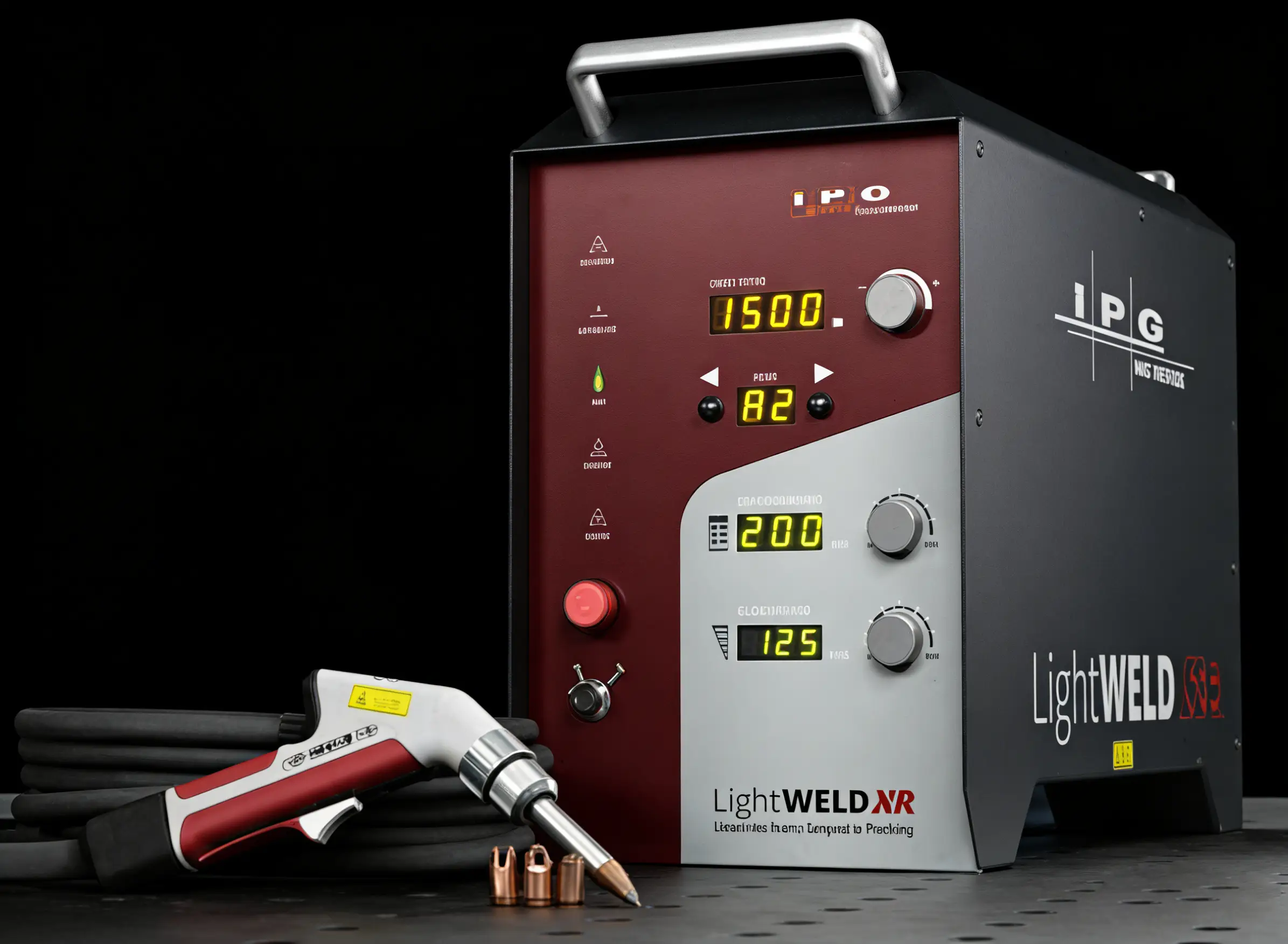
The IPG LightWELD LW2000 is a handheld fiber laser welding system designed to replace traditional MIG/TIG welding in industrial settings. Built on IPG’s proprietary fiber laser technology, it delivers 2000W of continuous-wave laser power, with support for wobble welding, pre-weld and post-weld cleaning, and multi-material compatibility. Marketed as a “game-changer” for small to large-scale fabrication shops, it promises faster welding speeds, lower heat input, and minimal post-processing compared to conventional welding methods.
Core Key Features
-
2000W Fiber Laser Power: Supports welding of stainless steel, aluminum, copper, and titanium up to 8mm thick
-
Integrated Cleaning Function: Built-in pre-weld rust/oxide removal and post-weld heat tint cleaning
-
Wobble Welding Technology: Expands weld seam width to 5mm, reducing gap sensitivity
-
4x Faster Than TIG Welding: Boosts production throughput for high-volume jobs
-
User-Friendly Interface: Simplified operation for less experienced welders
Real-World Performance: Strengths in Action
For industrial users, the IPG LightWELD LW2000 delivers on many of its promises. Its biggest advantage is speed: in side-by-side tests, it completes welds up to 4 times faster than traditional TIG welding, with far less heat distortion. This makes it ideal for thin sheet metal work, automotive body repair, and precision aerospace components where warping is a critical issue.
The integrated cleaning function is another standout feature. Instead of needing a separate laser cleaning machine for pre-weld surface preparation or post-weld oxide removal, operators can switch modes directly on the LightWELD, streamlining workflow and reducing equipment costs. The wobble welding technology also solves a common pain point for handheld welders: it accommodates larger gaps between workpieces, resulting in more consistent, aesthetically pleasing welds with minimal rework.
For high-volume fabrication shops, the LW2000’s reliability is a major plus. IPG’s fiber laser sources are known for long service life and low maintenance, with minimal downtime even in 24/7 production environments.
The Catch: Why the IPG LightWELD LW2000 Is Often Called Overpriced
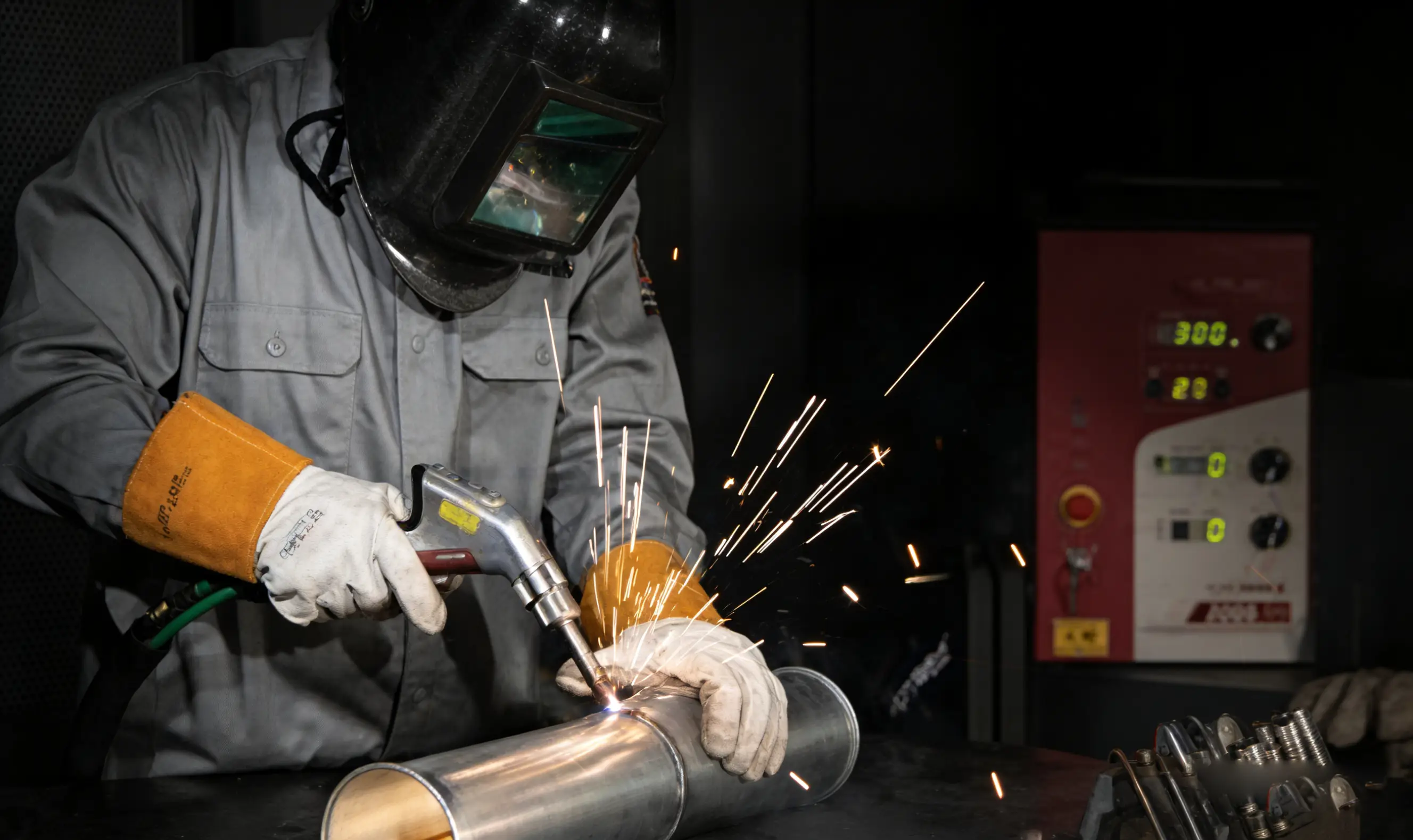
Despite its strengths, the LW2000 has significant drawbacks that make it a hard sell for many buyers, especially small businesses and hobbyists.
First and foremost is the cost. The IPG LightWELD LW2000 typically retails for 2–3 times the price of comparable 2kW handheld laser welders from other manufacturers. For many small shops, this upfront investment is prohibitive, even with the long-term efficiency gains.
Second, the setup and maintenance are far more complex than entry-level models. IPG systems require specialized technical expertise for calibration, software updates, and troubleshooting, which means additional training costs for in-house teams or expensive service calls from IPG technicians.
Third, while it’s marketed as “easy to use,” the LW2000 still has a steep learning curve for operators used to MIG/TIG welding. The advanced settings and parameter adjustments require hands-on training, which can delay production ramp-up.
Finally, for users who only need basic welding functionality, the premium features (like high-power deep penetration welding) are overkill, making the high price tag unjustified.
IPG LightWELD LW2000 vs. Top Competitors: A Quick Comparison
To put the LW2000’s value in perspective, let’s compare it to two leading alternatives:
|
Feature |
IPG LightWELD LW2000 |
Han’s Hybrid Welding Machine |
MaxWave Handheld Laser Welder |
|---|---|---|---|
|
Power |
2000W Continuous Wave |
2000W Hybrid Laser-Arc |
1000W-3000W Adjustable |
|
Key Function |
Welding + Integrated Cleaning |
Laser Deep Penetration + Arc Stability |
Welding + Cutting + Cleaning (3-in-1) |
|
Price Point |
Premium ($$$) |
Mid-Range ($$) |
Budget-Friendly ($) |
|
Setup Complexity |
High |
Medium |
Low |
|
Best For |
Large Industrial Shops |
Heavy-Duty Welding |
Small to Mid-Size Businesses |
|
Maintenance |
High |
Medium |
Low |
As the table shows, the IPG LightWELD LW2000 is a top-tier option for large industrial operations with deep pockets and high-volume needs. But for small to mid-sized businesses, there are far more cost-effective alternatives that deliver comparable performance for most common use cases.
Who Should Buy the IPG LightWeld LW2000?
Spending $30,000 on the wrong machine costs far more than spending $30,000 on the right one.
Buy it if you run high-volume production. Think aerospace contractors, sheet metal plants, and food-grade fabricators. These are operations where the machine runs 150+ hours a month and distortion control is non-negotiable. The 4X speed advantage over TIG grows bigger at scale. So does the 6X energy density improvement over older Light Weld models.
Buy it if weld quality is a liability concern. You get lower reject rates, minimal heat-affected zones, and 100+ preloaded presets that keep results consistent across operators. These aren’t just convenience features. They’re tools for managing real risk.
Buy it if you’re planning cobot integration. The LW2000’s graphical interface needs no coding. Manual teaching takes minutes. Automation moves from a future idea to something you can act on now.
Don’t buy it if your welding schedule is irregular. A machine this capable sitting unused is wasted capital. Plain and simple.
Don’t buy it if copper is your main material. The 3mm copper ceiling is a firm limit. There’s no workaround for it.
Don’t buy it without in-house maintenance support. Optical systems running at 2000W need specialized care. Shops without trained technical staff or access to authorized service will run into serious problems fast. That gap shows up in downtime, repair costs, and frustrated operators.
The LW2000 pays off well for the right operation. For the wrong one, the cost creeps in through underutilization, surprise repair bills, and ROI that never materializes.
Final Verdict: Overpriced or Worth It? Our Score & Recommendation
The LW2000 is not overpriced. It is misunderstood — and that misunderstanding costs shops real money. They buy the wrong machine. That’s the actual problem.
|
Category |
Score |
|---|---|
|
Welding Performance |
9/10 |
|
Usability |
8/10 |
|
Long-Term Reliability |
6/10 |
|
Value for Right Buyer |
8/10 |
|
Value for Wrong Buyer |
3/10 |
That reliability score isn’t a knock on IPG’s engineering. It’s a warning about optical maintenance at 2000W. Skip that maintenance and the machine will let you know. Stay on top of it and the score climbs.
The bottom line: Running 150+ hours a month on stainless, aluminum, or aerospace-grade work? The LW2000 pays for itself. Not hitting those numbers? It doesn’t.
Purchase priority guide:
– High-volume industrial shops → LW2000, full stop
– Moderate volume, lighter material → start with the 1500 XR
– Budget-constrained, lower throughput → Dynalasers 1800W earns its price
– Low volume, varied repair work → keep your TIG
FAQ: IPG LightWeld LW2000 Top Questions Answered
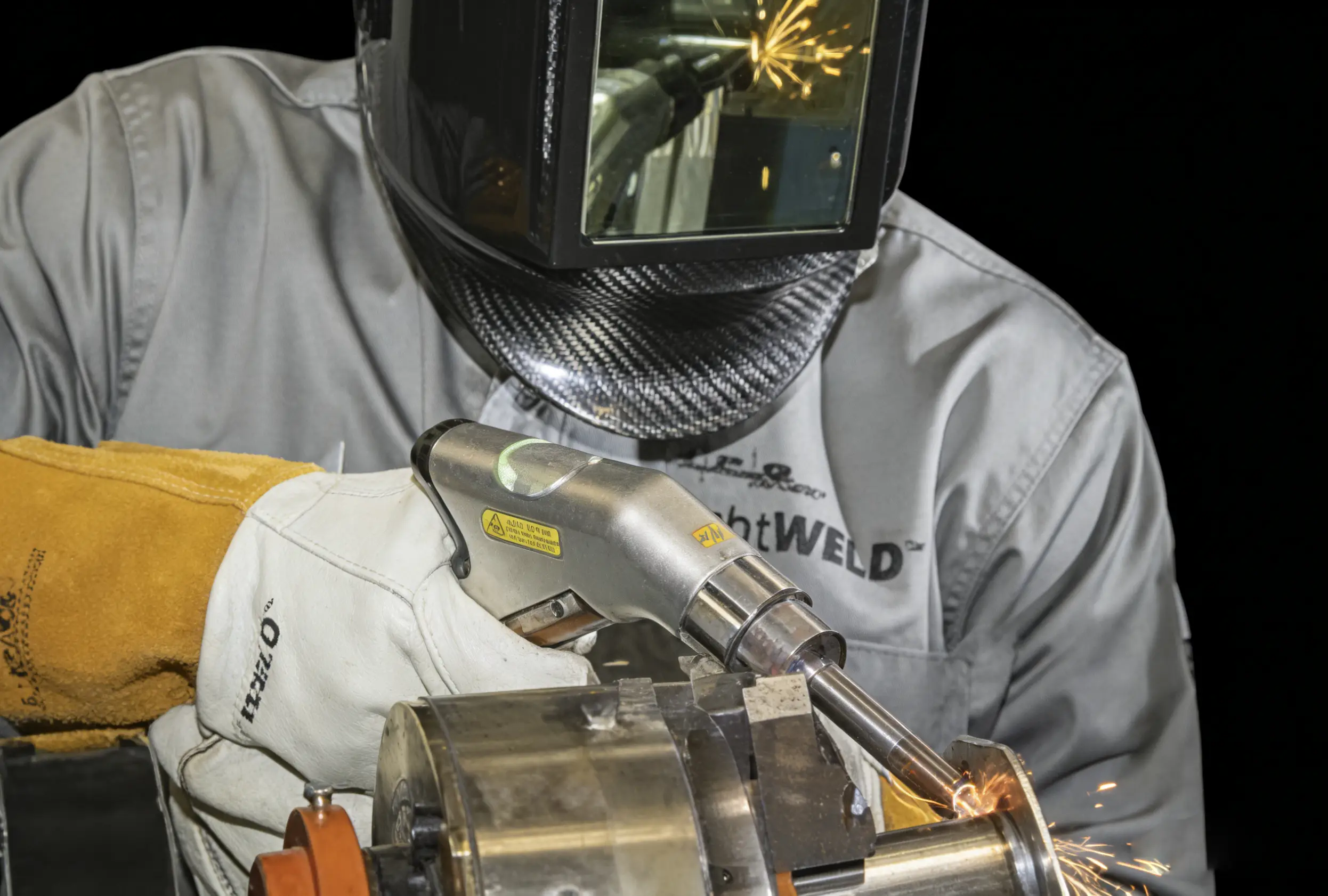
These questions come up every time someone gets serious about the LW2000. Here are straight answers.
How long does it take to learn?
Hours, not months. New operators lay clean, certifiable welds within a few hours of first use. TIG takes years to master. The LW2000 doesn’t. That alone kills the learning curve argument against laser welding.
Can it weld aluminum?
Yes. And that’s just the start. The LW2000 welds aluminum to dissimilar metals — copper, stainless steel — across tee, butt, corner, lap, and edge joints. Material thickness flexibility comes built in. You don’t need add-ons or workarounds.
How many welding modes does it have?
Seven. Wire, Fusion, Pulsed, Tack, Stitch, High Peak Power, and Wobble. That last mode runs up to 5mm width at 300Hz. It’s built for bridging poor fit-up gaps that would stop other machines cold.
What’s the duty cycle?
100% at full 2000W. No throttling. No overheating. Most competitors can’t hold those numbers — they slow down or burn out before getting there. This machine holds steady.
Can it weld out of position?
Vertical, overhead, upside-down — the LW2000 handles all of it. Spatter stays low. You don’t need extra consumables for any position.
Is it faster than MIG or TIG?
Travel speed runs up to 4X faster. Fixturing gets simpler — or disappears. Post-weld grinding drops by a wide margin. These aren’t small gains. The time you save restructures your production economics in a real way.
Conclusion
For large industrial enterprises with unlimited budgets and in-house technical expertise, the IPG LightWELD LW2000 is a solid, high-performance investment. But for 90% of small to mid-sized businesses, it’s simply overpriced and overkill.
If you’re ready to upgrade your welding process without breaking the bank, MaxWave offers the perfect balance of performance, affordability, and support. Visit our websiteto learn more about our 3-in-1 handheld laser welders, laser cleaning machines, and custom industrial laser solutions, or contact our team for a free quote and product demonstration.